
The Vano tomato has excellent agricultural qualities. This large-fruited, delicious pink hybrid tomato tolerates extreme weather conditions, is easy on soil, and requires little maintenance.
Experienced gardeners give it the highest ratings and best reviews. The Vano tomato variety grows well and produces a high yield in almost all regions, adapting well to climate and soil. However, the plant requires specific care and proper cultivation.
Description and characteristics of the variety
Vano F1 tomatoes are considered an early-ripening variety. The period from the first shoots to the first ripe fruits takes an average of 100 to 105 days. The plant is determinate, reaching a maximum size of 90-100 cm.
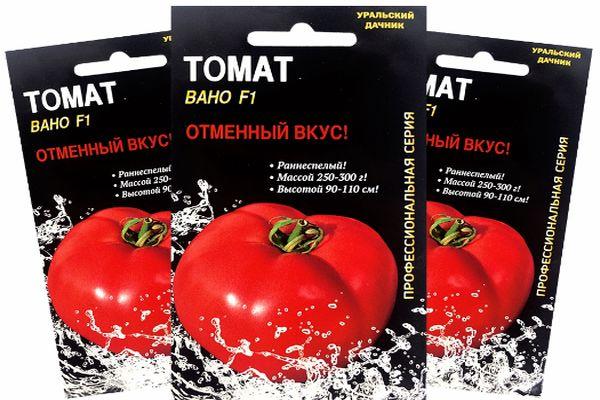
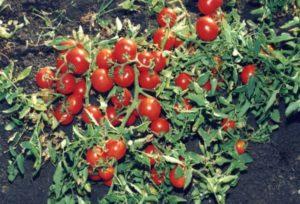
The bushes have a compact appearance, a strong trunk, and branches that are not spreading but slightly upward. Experts recommend training the bush into two trunks.
The foliage is of a normal shape, rich green in color, and does not fill the bush very densely.
Vano tomatoes are grown both in greenhouses and hotbeds, as well as in the open field. Greenhouse conditions, provided all agricultural requirements are met, produce larger and more robust fruits.
Tomatoes have a typical inflorescence, gathered into a single cluster. The first cluster forms above the sixth or seventh leaf, and subsequently after every one or two leaves. To ensure large, juicy fruits, side shoots must be removed.
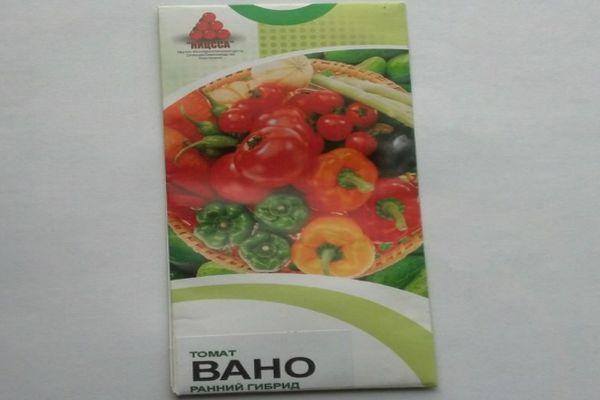
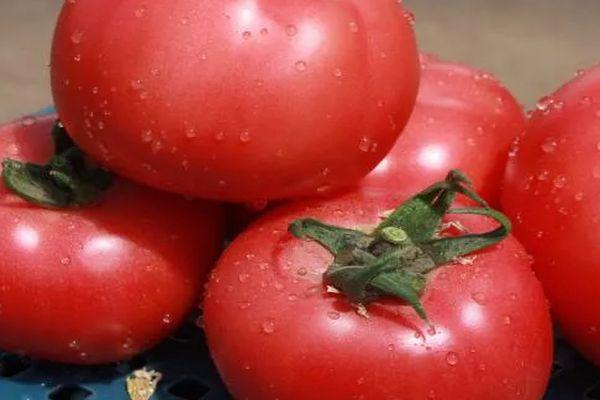
The Vano F1 variety produces large, round fruits, weighing up to 200 g. A ripe tomato is pink, almost crimson, and has juicy, firm flesh with six seed chambers.
The tomato's skin is thin and smooth. Despite this, the tomatoes transport well and store for at least 2-3 weeks. The Vano tomato can be picked green and is capable of ripening on its own.
This variety has a high yield. A single bush can produce up to 5-6 kg of tomatoes per season.
The tomatoes have excellent flavor. The fruits are perfect for fresh consumption and for making various tomato-based products.
The description of the Vano variety indicates that the plant has good resistance to various fungi and pests. Thanks to its rapid growth and maturation, the bush avoids late blight.
You can grow the crop on your plot using seedlings.
Growing and care rules
Seeds for seedlings are sown in the first half of March. They are planted 1-1.5 cm deep in the soil and covered with peat.
You can purchase planting soil at specialty stores or prepare it yourself by mixing peat, turf, and sand.
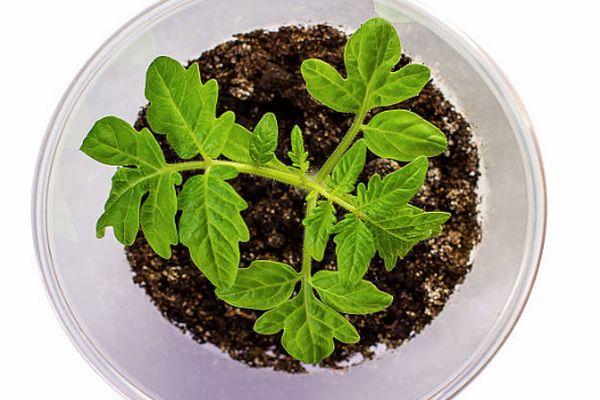
Seedlings are kept in wooden boxes or special containers. The container with the planting material is covered with plastic film until the young shoots emerge, after which the box is placed in a warm, well-lit area.
Seedlings need to be watered regularly. However, excess moisture can lead to dampness or mold. To prevent this, ensure adequate ventilation and water with a spray bottle to avoid washing the seeds out of the soil.
Pricking out should only begin when the shoots have two strong leaves. It's best to plant them directly into peat pots. This allows them to be planted directly into the ground without damaging the root system, allowing the plants to establish and adapt better to the soil. Experts recommend feeding the seedlings with mineral fertilizer. Humin-based fertilizers are particularly effective.
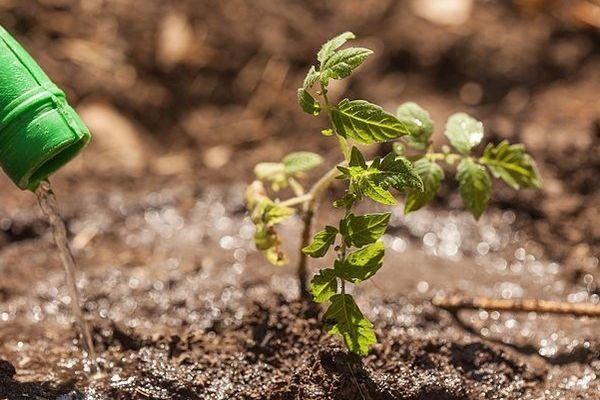
The plant is transplanted to the garden beds 60-65 days after sowing. Before planting, the soil should be dug and fertilized with humus or potassium, nitrogen, and superphosphate. The beds should be well-watered, and holes should be made for each plant. The distance between them should be at least 35-40 cm, and 50-60 cm are left between rows; on average, 3-4 plants are planted per 1 m².
Take a look Also

After planting, the holes are mulched. Natural materials such as straw, hay, or sawdust are best. Water the beds regularly, preferably with settled water. Feed the plants with mineral fertilizer 10 days after planting. Periodically loosen the soil and remove weeds.
For those who decide to grow tomatoes in a greenhouse, gardeners recommend sowing seeds for seedlings in the first half of February and transplanting them in March. Planting material is transferred to the greenhouse once the plant has a well-formed first cluster. If these requirements are met, the first harvest can be harvested as early as late May.
The Vano F1 tomato variety has a number of advantages, making it a favorite among gardeners. This variety consistently produces a good, high-quality harvest that can be used in a variety of ways.
Related posts:
 80 Best Eggplant Varieties for Different Regions with Descriptions and Characteristics
 The best eggplant varieties for growing in a polycarbonate greenhouse: planting and care
 The best grape varieties for growing in the Urals, planting and care rules in summer
 Descriptions of the 20 best cherry varieties for the Moscow region, their planting and care
 Description and characteristics of the best seeds of pea varieties and types
 Descriptions and names of varieties and the best types of radish, planting and care
 Description of the Velika grape variety, cultivation and care tips
 Description of the best potato varieties of domestic and foreign selection