
Yamal tomatoes are suitable for growing outdoors. Their low-growing bushes don't require support or pinching, making care much easier. This makes them a top choice among gardeners.
Description
This is a very productive variety that is easy to care for. It is characterized by densely foliated bushes up to 40 cm tall. It is an early variety, with the harvest ripening period taking an average of 95 days.

Description of fruits:
- average weight - 110 g;
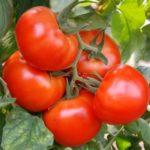
- round shape;
- red;
- good taste;
- Suitable for fresh consumption, all types of canning, and making tomato juice.
Experienced gardeners can harvest up to 10 kg from a single plant. This can be achieved with proper care and timely watering. In many catalogs, this variety is listed as the Yamal 200 tomato.
The first fruits are larger, the weight of subsequent ones ranges from 70–80 grams.
Growing
The southern and southwestern regions of the country are more suitable for cultivating tomatoes, but the Yamal variety is also successfully grown in other regions.
The soil for tomatoes is prepared in the fall. If the soil is highly acidic, it should be tilled with humus or lime. The seeds of the variety are sown approximately 50 days before planting in open ground. Pricking out occurs when the plants have two true leaves.
To grow strong seedlings, it is important to maintain temperature, watering, and light conditions.

To improve seed germination, gardeners germinate the seeds before sowing. To disinfect the soil, they water them with a weak solution of potassium permanganate. Planting occurs in moist, warm soil.
Please note! To grow good seedlings, it is recommended to use turf, humus, and sand (in a ratio of 4:8:1).
The distance between rows should be at least 3 cm, and the planting depth should be 1 cm. Place the seedling trays in a warm place and wait for the first shoots to emerge. For best results, cover the trays with plastic bags.

Once the first shoots emerge, remove the cover and place the container with the seedlings in a bright window. The room temperature should be 15°C (59°F) during the day and 12°C (55°F) at night. Lower temperatures will reduce the growth and quality of the seedlings.
Water sparingly when the top layer of soil begins to dry out. In sunny weather, watering becomes more frequent, as the soil dries out faster.

Subsequently, watering is combined with fertilizing with mineral fertilizers. It's important to remember that seedlings should not be fertilized before transplanting.
After the spring frosts have passed, the seedlings are planted in open ground. The soil temperature should not fall below 15 degrees Celsius. The holes for the tomatoes are dug so that the plants feel comfortable. The seedlings are transplanted along with the root ball.
Growing tomatoes does not require special care, but you need to know some of its features.
Care
After planting, the seedlings are watered with water containing Fitosporin, providing the first step in preventing late blight. Once the seedlings are sufficiently moistened, they are hilled and covered with dry soil. For the first seven days, water only in extreme heat. Subsequently, water once a week. The water temperature should not fall below 20 degrees Celsius.
When tomatoes begin to bloom, watering frequency increases to twice a week. During extreme heat and drought, water three times a week. Once the fruit has formed, watering is reduced.
Fertilize tomatoes two weeks after planting. Use mineral fertilizers with microelements. Subsequently, fertilize every two weeks.

To strengthen the root system and increase the yield of the variety, double hilling is carried out.
The Yamal tomato variety doesn't require pruning, but for an early harvest, you can remove side shoots below the first flower cluster. However, this will result in fewer fruits.
Growing tomatoes requires timely preventative measures against various diseases, including late blight. Chemical treatments are recommended only during the early stages of growth; it's better to immediately resort to biological or traditional methods of protecting against diseases and pests.

Advantages and disadvantages
The characteristics of the Yamal variety make it a favorite among gardeners. Numerous positive reviews indicate that the crop has no growing drawbacks. Its advantages include:
- the compactness of the bush, which eliminates the need for additional care;
- resistance to various diseases;
- early ripening of fruits;
- fruiting period;
- high yield, regardless of weather conditions;
- even size and shape of tomatoes.

Pests and diseases
Although this variety is pest-resistant, tomatoes are sometimes susceptible to disease. The most dangerous of these is late blight. This fungal disease causes characteristic brown spots on leaves and stems. Gradually, a pale green area develops around these spots, and a thick white coating appears on the underside of the leaves.
The tomatoes become soft and unfit for consumption. Optimal conditions for the disease's development are humidity and dampness. Dry weather slows the progression of the disease.
To reduce the risk of late blight, tomato seeds are disinfected before planting, and the first preventative spraying with fungicides is carried out immediately after planting the seedlings.

Another disease that can affect Yamal tomatoes is blossom-end rot. Its development is stimulated by dry weather. The risk of infection increases in sandy soils. It manifests itself as water-soaked spots on the top of the tomato, darker than healthy areas. The spots quickly spread and darken. The disease can only be prevented if the tomatoes receive sufficient moisture. A calcium deficiency in the soil can also trigger the disease.
Harvesting and storage
Harvesting begins in the last ten days of August. The first tomatoes are larger in size, while subsequent tomatoes are noticeably smaller and better suited for canning. Tomatoes are not suitable for long-term storage. Picked ripe tomatoes will keep for no more than 5 days. However, if you pick green tomatoes to ripen them, their shelf life will be significantly increased (up to 20 days).


All fruits must be harvested before the onset of frost. At the beginning of ripening, harvesting occurs every 2-3 days, and daily during mass ripening.
Harvesting tomatoes for processing and storage requires careful selection. The sorted fruits must be healthy, whole, and not overripe. Well-dried tomatoes are stored in special containers, stem-side up. The container should not contain more than 10 kg of tomatoes, otherwise the lower layers will be damaged by the pressure.
Gardeners' reviews
Natalia Korolenko, city of Tambov:
"At first, the variety's excessive foliage scared me. But once we formed the trunk and removed the excess shoots, the bush produced a huge number of ovaries. Yamal's yield is truly high. Moreover, the long fruiting period is pleasing. We harvested until mid-September."
Ivan Osadchy, city of Kirov:
"This was the earliest fruit I had last season. Other varieties were just setting fruit, but this tomato was already ripening, and the fruiting period lasted longer than the others. The fruits, although small, are delicious, making them a great choice for canning. The only thing is that you can feel the skin a bit, but that's an acquired taste. I saved the seeds for next year."
Related posts:
 What is the best way to feed tomato seedlings to make them plump?
 What varieties of tomatoes are best to plant in a polycarbonate greenhouse?
 Description of the best varieties of black tomatoes for open ground and greenhouses
 What fertilizers and when to use for feeding tomatoes in a greenhouse
 The best and most productive tomato varieties for greenhouse cultivation in the Urals, with descriptions
 The best tomato varieties for growing in the Leningrad region for greenhouses and open ground
 Which tomato varieties are best for open ground?
 Description of the best tomato varieties for open ground in the central zone