
The Zhar tomato belongs to a group of varieties used for salads, juices, pastes, sauces, and winter canning. Its thick skin protects it from mechanical damage, making it suitable for long-distance transportation. Its shelf life is 6-7 days. After that, it's only suitable for ketchup production.
Technical parameters of the plant
The characteristics and description of the tomato Zhar Goryachiye Ugi are as follows:
- Fruit ripening occurs in 115-124 days, counting from the moment the seedlings are planted in the ground.
- The height of the bush reaches 150-170 cm. The leaves on the stems are colored in light shades of green.
- From 2 to 4 fruits can form on 1 brush.
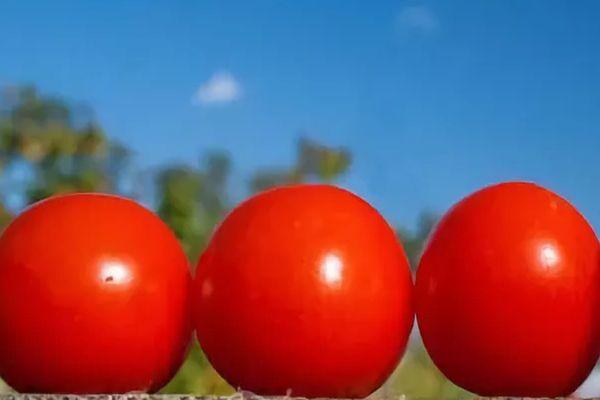
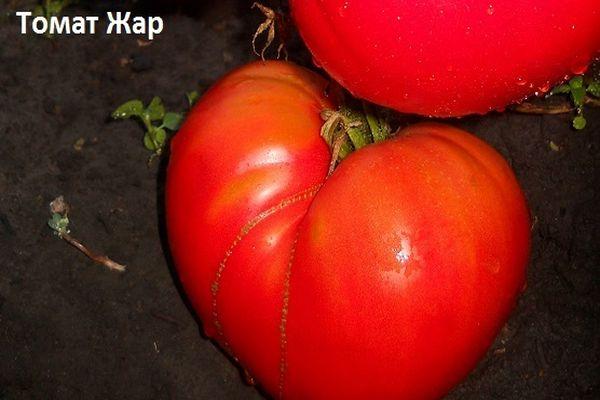
- The berries of the Zhar variety resemble a sphere flattened at the poles. They are colored in vibrant shades of red, similar to the vibrant color of burning embers.
- The fruit weighs between 0.25 and 0.35 kg. The berries contain numerous seed chambers, but the seeds themselves are relatively few.
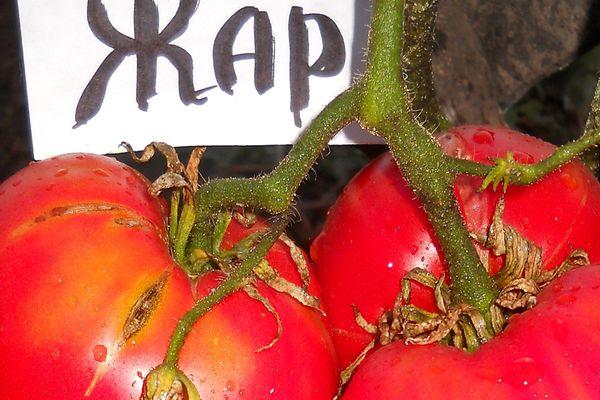
Reviews from gardeners growing this variety indicate that the yield of Zhara is 4-5 kg per bush. For a good harvest, it is recommended to train the plant into two stems. No more than three bushes are planted per square meter of garden bed.
Farmers point out the variety's weak resistance to nightshade diseases.
Zhar can be planted in open areas in the southern regions of Russia. If a farmer lives in the central part of the country, a plastic greenhouse is recommended for growing this variety. Gardeners in Siberia and the Far North should grow tomatoes in well-heated greenhouses or hotbeds.
Growing tomatoes using seedlings
It is recommended to sow Zhara seeds in separate boxes with homemade or purchased soil 60 days before the expected time of planting the seedlings in permanent soil. Farmers calculate this timeframe based on climate conditions in each region.

The seeds are disinfected in a weak solution of potassium permanganate or hydrogen peroxide. After planting the seeds 15 mm deep in the soil, they are watered with warm water from a watering can. When the first sprouts appear (after 5-7 days), they are fed with manure or peat. Nitrogen fertilizers can also be used. Water the seedlings carefully to prevent the soil from becoming too wet or too dry.
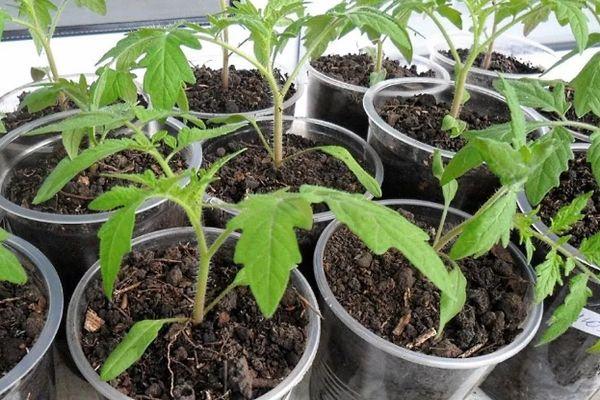
During the first week, the temperature in the room containing the seedlings is maintained at 18–20⁰C, then increased by 6–7°C. Young seedlings require plenty of light, so the seedling trays are moved to a bright location or placed under electric lamps. Daylight should last up to 16 hours, otherwise the seedlings will stretch out and become very weak.
The seedlings are fed with complex mineral mixtures or various growth stimulants. After two leaves have developed, the plants are pricked out. They are transplanted into individual containers to encourage each seedling to develop strong roots. This method produces plants with strong stems.
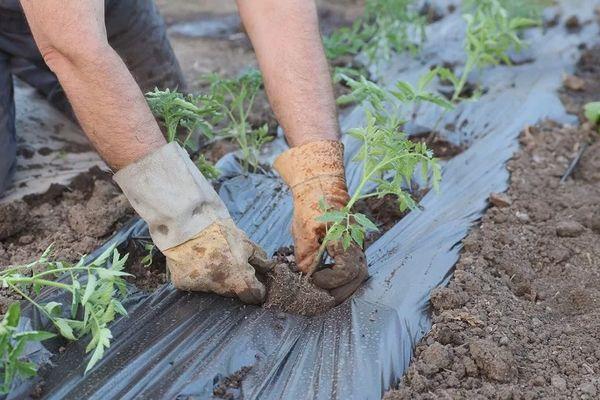
Approximately 9-12 days before transplanting tomato plants to their permanent soil, harden off the young plants. Before planting, loosen the soil and add manure. The planting pattern is 0.5 x 0.6 m.
Caring for tomatoes before fruit appears
The bush is formed into 2-3 stems by removing side shoots. The plants must be tied to sturdy supports or trellises, otherwise the branches will not support the weight of the resulting fruit and will break.
Weeding is done weekly. This process helps eliminate certain types of garden pests and prevent the development of fungal diseases.
It is recommended to loosen the soil twice every 5-6 days. Combined with mulching the soil in the beds, this preventative measure helps retain moisture and oxygenate the plant's root system.
Tomato plants are first fertilized 7 days after transplanting. Potassium and nitrogen fertilizers are used for this. The next two fertilizing sessions are carried out with complex mixtures during flowering and the appearance of the first fruits. The fertilizer used should be high in phosphorus.

 The Zhar variety has a rather weak resistance to disease, so breeders recommend spraying the bushes with various preparations to prevent the development of fungal or bacterial infections. Fitosporin is most often used for these purposes. If the disease persists, the affected bushes are removed by hand and then destroyed outside the site.
To combat garden pests, you need to use folk remedies (such as soap solution or copper sulfate) and commercially available chemical pesticides. Some insects, such as Colorado potato beetles, are collected by hand and then burned. To repel slugs, use wood ash, which is added to the soil around tomato roots.
Related posts:
 Description of the best varieties of black tomatoes for open ground and greenhouses
 80 Best Eggplant Varieties for Different Regions with Descriptions and Characteristics
 The best eggplant varieties for growing in a polycarbonate greenhouse: planting and care
 The best grape varieties for growing in the Urals, planting and care rules in summer
 When and how to properly transplant tomato seedlings, the best days in 2025
 Characteristics and description of pepper-shaped tomato varieties, yield and cultivation
 Methods for planting and propagating cherries at home
 50 Best Pumpkin Varieties with Descriptions and Characteristics for Outdoor Planting