
- Rosa Santana: selection and description of the variety
- Features of flowering – the period of activity and rest
- Advantages of using in landscape design
- Landing
- Preparation of planting material
- Choosing a location
- Planting dates and patterns
- Further care
- Watering regime
- What and when to feed the plant
- Trimming dry inflorescences
- Transfer
- Preparing for the winter period
- Diseases and pests of the variety
- Reproduction methods
- Mistakes and difficulties encountered when growing Santana
Climbing roses are used in gardens for vertical landscaping. Their long stems can be grown over arches, pergolas, and trellises. They can also be used to conceal unsightly structures. Santana rose is a beautiful plant with striking red blooms. Read on for information on its flowering characteristics, the benefits of using this variety in landscape design, and how to grow it in your backyard.
Rosa Santana: selection and description of the variety
The cultivar was developed by German specialist Hans Jürgen Evenson at the Matjes Tantau nursery. He crossed two hybrids: Max Graf and Vishurana. The new variety was registered in 1985.
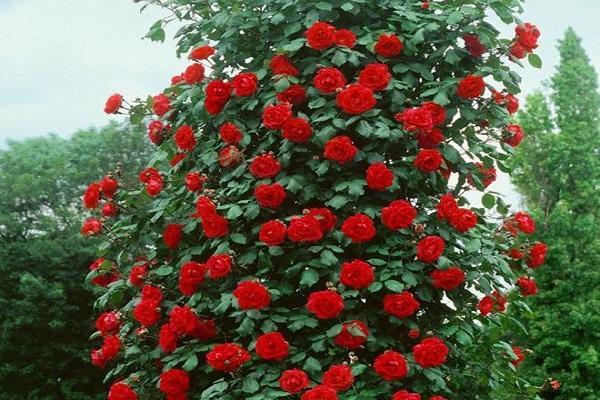
The shoots of this plant reach 2.5-3 meters in length. The bush spreads to 2 meters in width. The branches are densely covered with glossy dark green leaves. The shoots form inflorescences consisting of 3-7 blood-red buds. This climbing rose is beautiful, easy to care for, and disease-resistant. For these qualities, it has long been popular among gardeners.
Features of flowering – the period of activity and rest
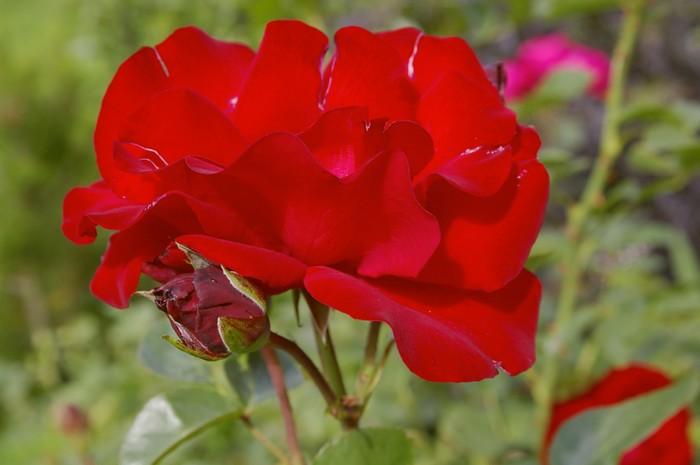
Buds with semi-double petals open in June. Flowering lasts 1-1.5 months. Initially, the buds are goblet-shaped, later becoming cup-shaped. The diameter of the flower when fully open is 8-10 centimeters.
After the initial flush of bloom, there's a short break. In early August, the Santana rose bush is once again covered in red buds. Several flower clusters appear on a single shoot. The fragrance is very light or absent. Blooming continues until frost.
Advantages of using in landscape design
Santana roses are used in open ground as solitary specimens, paired with low-growing varieties. The bushes are used to create hedges and are planted near gazebos. Long vines are used to climb arches and pergolas.
The advantages of using roses in a landscape are as follows:
- gives the area a beautiful appearance;
- flowering lasts almost the entire season;
- long shoots are used in vertical gardening;
- bushes hide unsightly outbuildings;
- the rose is unpretentious in care;
- The variety is frost-resistant.
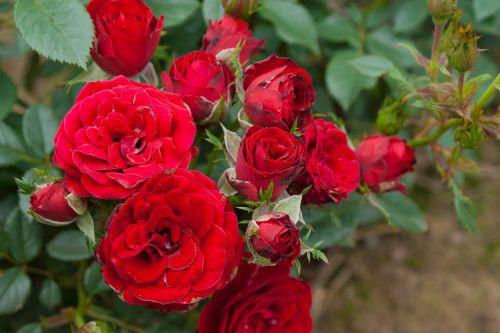
A minor drawback is the lack of fragrance in the rose.
Landing
Seedlings are purchased from trusted sellers. Before purchase, the bushes are carefully inspected. Plants should be free of dents, spots, or dried-out fragments. Healthy roots look fresh, free of kinks and fungal growth.
Preparation of planting material
After a long journey, the rose's root system needs to be moistened. To do this, place it in a container filled with water. A few crystals of potassium permanganate can also be added to disinfect the plant. If the shoots are too long, trim them back to 2-4 buds. Sprinkle the cuts with charcoal.

Choosing a location
With proper care, the plant can grow in the same location for many years, so the site should be chosen carefully. Santana roses prefer well-lit locations protected from cold winds. The groundwater level in the chosen planting area should be low. Otherwise, the root system may be attacked by fungus.
For this reason, it is better to plant the crop on a raised platform and place drainage at the bottom of the hole.
Planting dates and patterns
Santana roses are planted in the spring, after warm weather sets in. Recurrent frosts should be avoided. In warmer regions, planting is permitted in the fall, up to mid-October. Planting later risks freezing of the shoots and root system. Rooting occurs in about a month.
Planting of seedlings is carried out as follows:
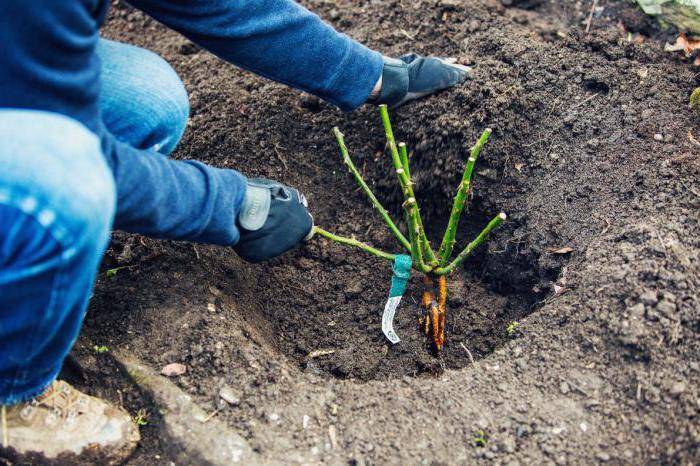
- dig a hole 60 centimeters deep and in diameter;
- a 10-centimeter layer consisting of expanded clay and small stones is poured onto the bottom;
- fill with fertile soil;
- make a hole, place a seedling in the middle, and straighten the roots;
- fill with soil, lightly compact, water.
The area around the rose can be mulched. This will help retain moisture in the soil and slow down weed growth.
Further care
Caring for the Santana rose involves watering, fertilizing, and mulching. In addition, faded buds are removed. After this procedure, new shoots and flowers will begin to grow.
Watering regime
The frequency of watering depends on the soil quality and the amount of rainfall. If the soil is moderately loose, water about once a week. Pour 15-20 liters of water under the bush. If the rose is planted in sandy soil, water it twice a week. Water in the morning or evening, before sunset.

Important! Overhead watering can lead to disease.
What and when to feed the plant
In spring, roses are fed with urea or carbamide. These substances promote rapid shoot growth. During budding, potassium and phosphorus are added to promote abundant flowering. In summer, a complex mineral fertilizer is added. Foliar feeding is applied periodically in the morning or evening. Daytime application can cause leaf burn. Perform the procedure in clear, windless weather.
Take a look Also

Trimming dry inflorescences
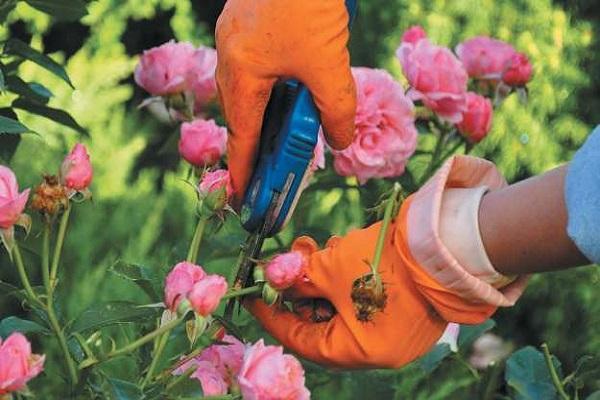
To shape the plant, shoots are pruned in the spring. Sanitary pruning is also performed throughout the season, removing damaged, dry, and diseased branches. After the first flush of bloom, stems with faded buds are cut off. This process awakens lateral buds. From these, branches grow, which will form new inflorescences. If faded buds are not removed, a second bloom in August may not occur.
Transfer
Sometimes a rose doesn't take root in its intended spot, refusing to grow and bloom. Or a gardener realizes the plant doesn't fit into the landscape design. In such cases, the bush is dug up with a lump of soil and replanted. This procedure is performed in spring or fall. Care must be taken to ensure the grafting site isn't buried too deep.
Preparing for the winter period
Stop applying nitrogen fertilizers in the summer. If the rose continues to grow new shoots until late fall, it may not survive the harsh winter. To increase winter hardiness, water the rose in October to replenish moisture.
When steady frost sets in, the bushes are earthed up. They can be covered with spruce branches. In cold regions, a frame is erected over the roses. This is covered with lutrasil, spunbond, or agrofibre. When warmer weather arrives, the covering material is removed.
Diseases and pests of the variety
Rosa Santana may be susceptible to the following diseases and pests:
- Powdery mildew. A white coating appears on leaves and shoots. To prevent this, spray the bushes with a copper sulfate solution in the spring.
- Black spot. Pathogenic microorganisms cause black spots to form on leaf blades. To prevent the disease, plants should be fed with potassium and phosphorus.
- Bacterial canker. It manifests itself as growths on the root system. The disease is prevented by treatment with copper-based preparations.
- Aphids. These insects appear on young shoots. They feed on plant sap, weakening the plant. They are controlled by spraying with an insecticide solution.
- Spider mites appear in hot, dry weather. They cover the plant in webbing, interfering with growth and flowering. They are washed off with running water. If this doesn't help, an insecticide is used.

Important! Chemical treatments should be carried out in dry, windless weather.
Reproduction methods
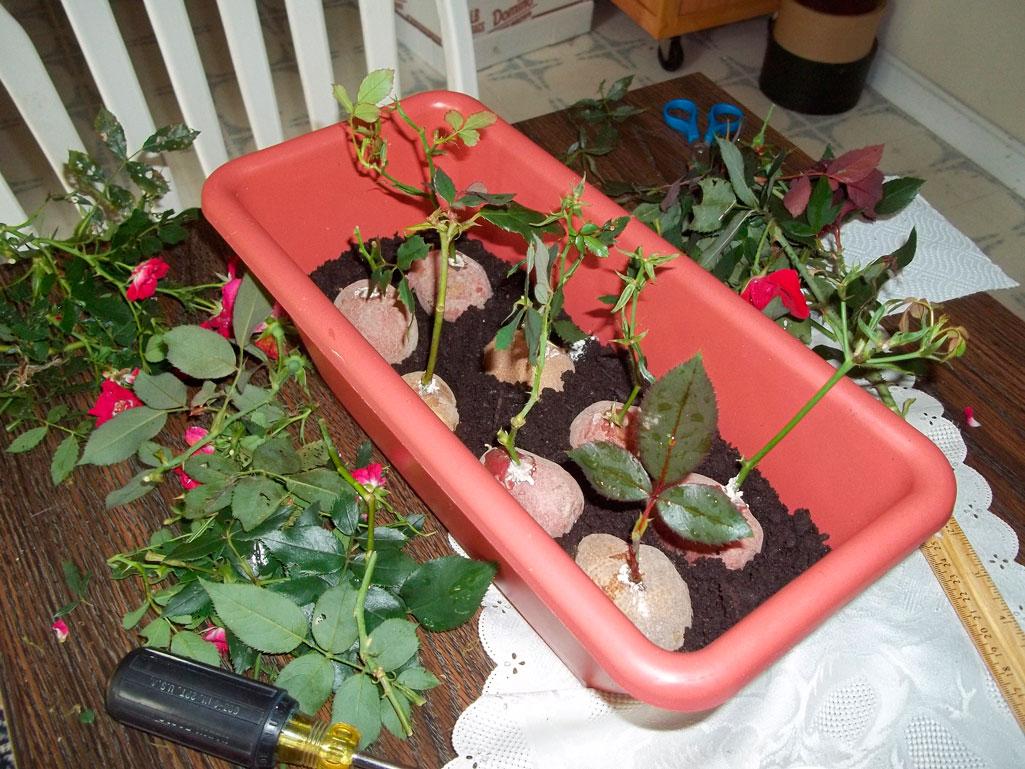
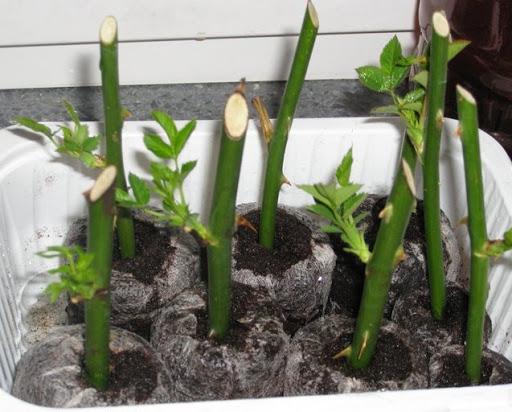
Santana roses are propagated vegetatively, using either cuttings or layering. This is done after the first flush of flowering. For the first method, cuttings are cut into 15-20 cm long pieces and planted in soil or a pot. They are kept under plastic wrap, which is removed after the shoots have rooted.
Because the Santana rose has long stems, it's easy to propagate by layering. To do this, the branches are stripped of foliage, laid in prepared furrows, and covered with soil. After about a year, they are separated from the mother plant and planted separately.
Mistakes and difficulties encountered when growing Santana
Planting and caring for the plant are simple. Problems may arise only for novice rose growers without sufficient experience. The most common mistakes and difficulties inexperienced gardeners face are:
- The bushes are planted too deeply. This error results in poor growth and flowering. When planting, ensure the root collar is buried no more than 5-6 centimeters deep.
- Frequent watering. Excess moisture can expose the root system to fungal diseases. Roses are typically watered once a week.
- Nitrogen is applied not only in spring but also in fall. As a result, abundantly growing shoots don't have time to mature and can freeze in the harsh winter. In summer and fall, the emphasis is on potassium and phosphorus.
- After the first flush of flowering, don't remove the buds. When dried-up blooms remain on the plant, it's difficult for it to form new shoots. This mistake may prevent the plant from blooming again.
- Fertilizer is applied to dry soil. This burns the root system, stunting the plant's growth. Fertilizer is added to the soil after watering.
Rosa Santana attracts attention with its long stems and striking buds. By studying the information on growing this plant and following the tips and recommendations, gardeners will admire its blood-red blooms for years to come.
Related posts:
 Growing Climbing Roses and the Top 10 Varieties, Planting, and Care in the Open Ground
 Top 12 Floribunda Rose Varieties: Planting and Care in the Open Ground
 Top 4 indoor rose varieties, their cultivation and care at home
 Description and characteristics of the Gloria Day rose, planting and care instructions
 Top 8 varieties of hollyhocks and rules for planting and caring for them in open ground
 Description and characteristics of the Rosarium Uetersen rose, its planting and care
 Description and characteristics of the Leonardo da Vinci rose, planting and care
 Top 50 best new rose varieties of 2025 with descriptions and characteristics