
The popularity of pumpkins remains strong year after year. Small varieties with fruits weighing up to 5 kg, such as the Karavai pumpkin, are particularly popular.
These days, many summer residents, villagers, and residents of rural areas across the country grow pumpkins. This is unsurprising, as the benefits and nutritional qualities of pumpkin are truly invaluable. The vegetable's only drawback is its large size, which makes both harvesting and storage difficult. This has been addressed by developing varieties whose fruits are easy enough for even a child to pick.

Description of the variety
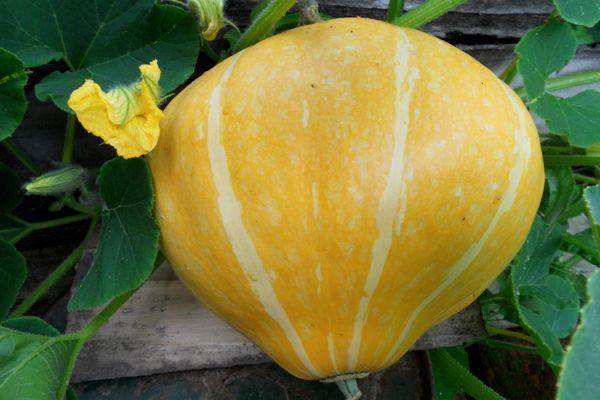
The Sladkie Karavai pumpkin is a high-yielding, early-ripening, and easy-to-grow, shade-tolerant plant. It takes only 90-100 days, or 3.5 months, from germination to full ripening. The average yield is up to 17 kg per plant. This bush-type variety has a medium-length braid. Its fruits are rounded, turban-shaped (elongated upward). A ripe pumpkin weighs 2 to 5 kg. The bark is medium thick, with narrow, light-colored stripes running longitudinally.
The flesh has a vibrant red-orange color, a crisp texture, a rich sweet flavor, and a melon-like aroma. It retains its flavor for several months in storage.
Karavai pumpkins are versatile culinary ingredients. Thanks to their persistent aroma and sweet flavor, they are used in baby, daily, and dietary nutrition as porridges or purees. They are also eaten fresh, baked, juiced, added to desserts, and used in salads.
For proper and long-term storage of Karavai pumpkins, it is recommended to store them in a cool, shaded area. A cellar is the ideal storage option for pumpkins. For long-term storage, pumpkins should be cut with the stems facing upward. It is also recommended not to store the harvest in a pile. It is important that the fruits do not touch each other.

Basic rules of cultivation
The Sladkiy Karavay pumpkin variety is grown both from seedlings and by direct sowing. The best time to sow seeds for seedlings is in March or April. Planting should only occur after 3-4 true, strong leaves have emerged. The plant tolerates morning frosts, so transplant seedlings only into warm soil (at least 14°C).
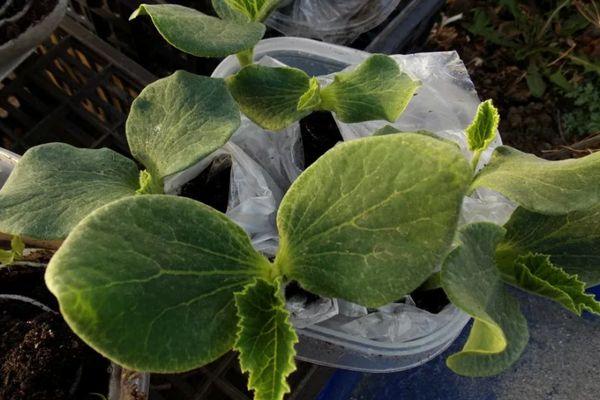
The first feeding is done 10 days after planting the seedlings. The second feeding is done only after the shoots have formed. The third feeding is done only as needed during the flowering season.
Sow seeds directly into the ground only in late May or June. For comfortable plant growth, use a 60x60 cm planting pattern. Plant seeds 4-5 cm deep in heavy soils or 8-10 cm deep in light soils. Karavai pumpkins prefer neutral or slightly acidic, sandy loam or loamy soils fertilized with manure or compost. Soggy or clayey soils are not suitable for growing.
On the 60th day after germination, you can pinch the growth point of the shoots. After the formation of 2-3 strong ovaries, the tops of the shoots are carefully removed, which will provide the plant with adequate nutrition until the ovaries fully ripen.
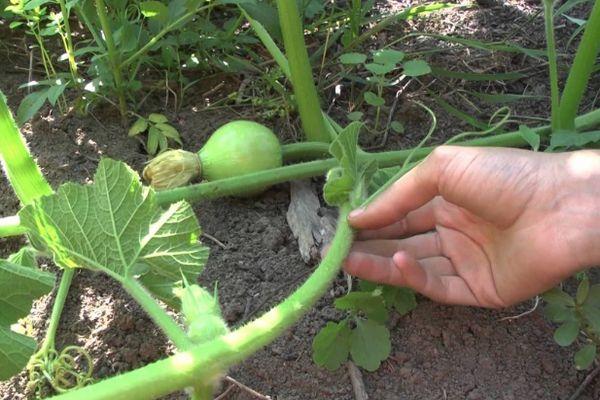
For normal growth and development, the crop requires well-aerated soil. Compacted soil reduces oxygen supply to the roots, significantly reducing plant productivity. Proper soil cultivation is essential for high yields.
Plant care begins even before the seedlings emerge. This involves cultivating the soil: loosening it, removing weeds, thinning the seedlings, fertilizing, periodic, deep watering, and protecting against pests and diseases.
The first soil cultivation is carried out at the leaf emergence stage. After heavy rains or watering, loosening the soil around the plants is beneficial. This prevents crust formation and soil drying. The second soil cultivation is carried out to a depth of 8-10 cm after 4-5 true leaves have formed. Subsequent loosening is carried out as needed, with the appearance of weeds or soil compaction, but no more frequently than every 10-15 days. Fertilize the plants simultaneously with loosening the soil.
Productivity
The yield of pumpkin crops directly depends on the soil and the quality of fertilizer. Pumpkins tolerate all types of fertilizers well. The plant responds favorably to nitrogen fertilizers at the beginning of stem formation and potassium fertilizers during the fruit growth phase.
The best predecessors for the Karavai pumpkin variety are potatoes, tomatoes, cabbage, onions, carrots or legumes.

In northern regions, light, well-heated areas of the garden are allocated for crops:
- along a well-lit fence that does not allow drafts;
- southern slopes protected from the cold north wind;
- the land near well-lit walls of outbuildings.
This will help protect the plant from morning spring frosts and prevent unused soil from sitting idle. In southern regions, pumpkins are often planted in semi-shaded areas (near compost heaps and soil piles), where other plants cannot thrive.
Signs of fruit ripening include the stem drying out and becoming corky. The bark should be firm and have a well-defined pattern.
Related posts:
 Growing and caring for pumpkins in open ground, planting rules for a good harvest
 50 Best Pumpkin Varieties with Descriptions and Characteristics for Outdoor Planting
 Why do pumpkin ovaries turn yellow, fall off, and rot in open ground, and what can be done about it?
 Rules for growing pumpkins on a balcony at home and how to choose the right variety
 How often should you water pumpkins in open ground in August during hot weather?
 Description of the 20 best varieties of large-fruited pumpkin, growing and care rules
 How to shape and pinch pumpkins in open ground to get a good harvest
 14 step-by-step recipes and instructions for making pumpkin compote for the winter