
- Characteristics of the product
- Chemical composition of sapropel
- Fertilizer release form
- Mechanism of influence on vegetable crops
- Benefits of using the product in the garden
- Efficiency
- Period of exposure
- How to use correctly: application rates
- When growing seedlings
- Processing of plantings in open ground
- We use the preparation for compost preparation
- Compatibility with other drugs
- Toxicity of the substance
- Precautionary measures
- Substitutes
- Vegetable growers' reviews of sapropel
Growing plants requires nutrient-rich soil. Farmers especially value natural fertilizers, which enhance vegetable growth while maintaining their eco-friendliness. Sapropel is widely used as a natural fertilizer not only due to its effectiveness but also because of its availability and low cost of extraction. The substance's unique composition positively influences vegetation and restores the fertility of poor, depleted soils.
Characteristics of the product
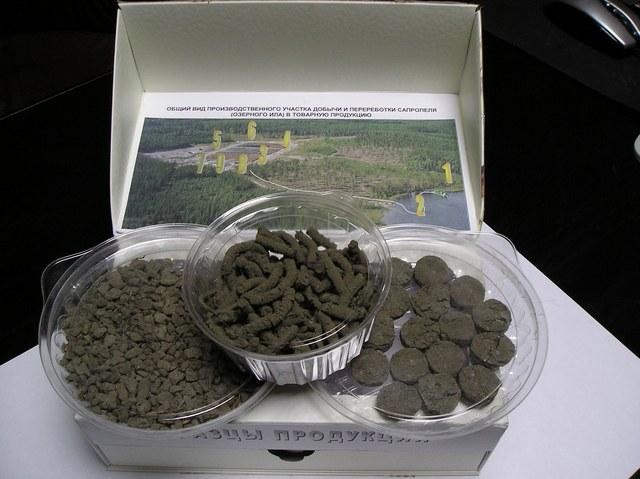
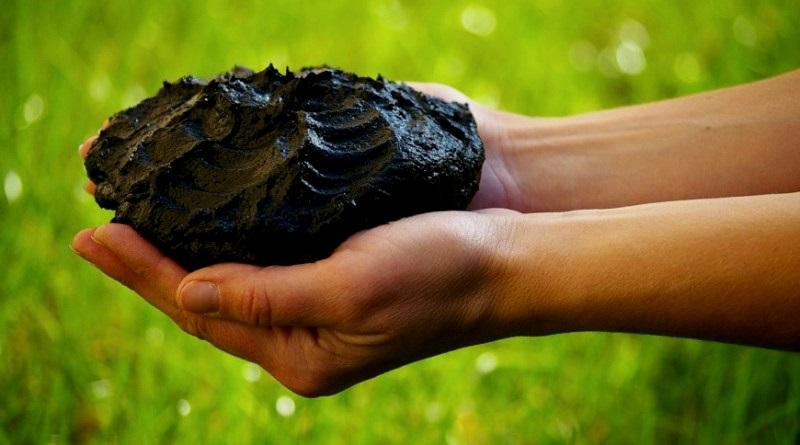
Sapropel forms naturally on the bottoms of freshwater lakes. A key prerequisite for the substance's formation is the absence of flowing water. The remains of lake animals, fish, and algae settle to the bottom of the reservoir and undergo all stages of anaerobic decomposition. When extracted, sapropel has a thick consistency because all its components are bound together. Subsequent processing involves drying and pressing the fertilizer.
The color of the substance is gray, ranging from light to almost black, as well as brown with a red tint, dark olive, yellowish, and bluish. Dry lake silt has no unpleasant or strong odor.
Chemical composition of sapropel
The nutrient content of lake silt depends on where it is mined. The richest fertilizers are found in the following regions of Russia:
- Upper Volga;
- Moscow region;
- Leningrad region;
- North-West region;
- Southern Urals.
The organic matter in the fertilizer is represented by the following components:
- nitrogen compounds;
- lingon humus;
- carotenoids;
- natural antibiotics;
- sugar;
- vitamins;
- growth stimulants;
- bitumen;
- humic acid.
Important mineral salts in sapropel:
- phosphates;
- sulfates;
- carbonates.
 Sapropel, which is predominantly organic, is the most valuable fertilizer for farmers. Large amounts of minerals, including silicon, iron, and aluminum, reduce the fertilizer's quality, while the content of potassium, magnesium, manganese, copper, and sodium increases it.
Fertilizer release form
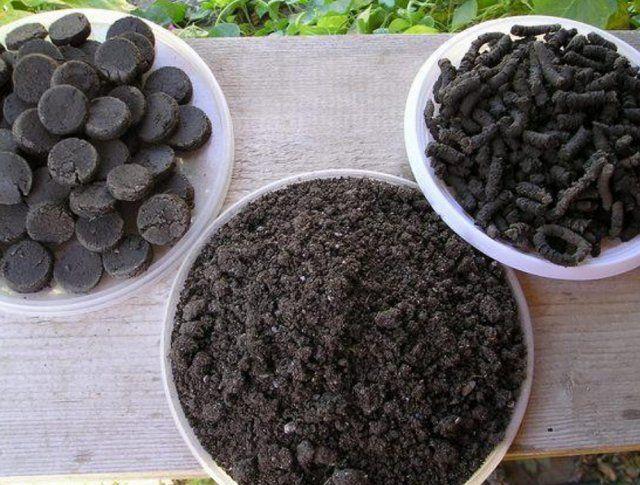
Sapropel is a fairly common fertilizer, which is produced in various forms adapted to the type of use:
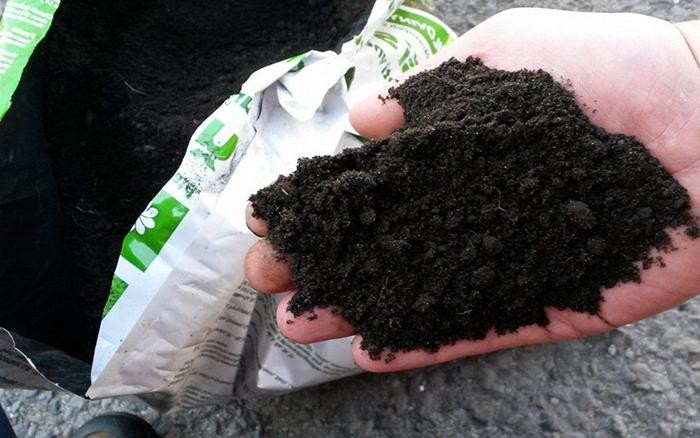
- Fine-grained, free-flowing. The substance is a gray powder with a bluish tint. Packaging varies from 1 liter to 10 liters.
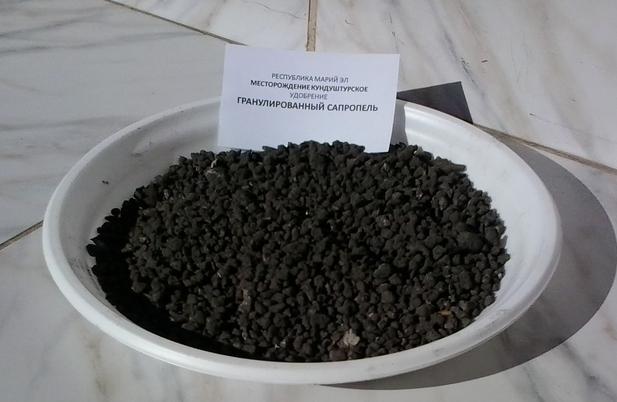
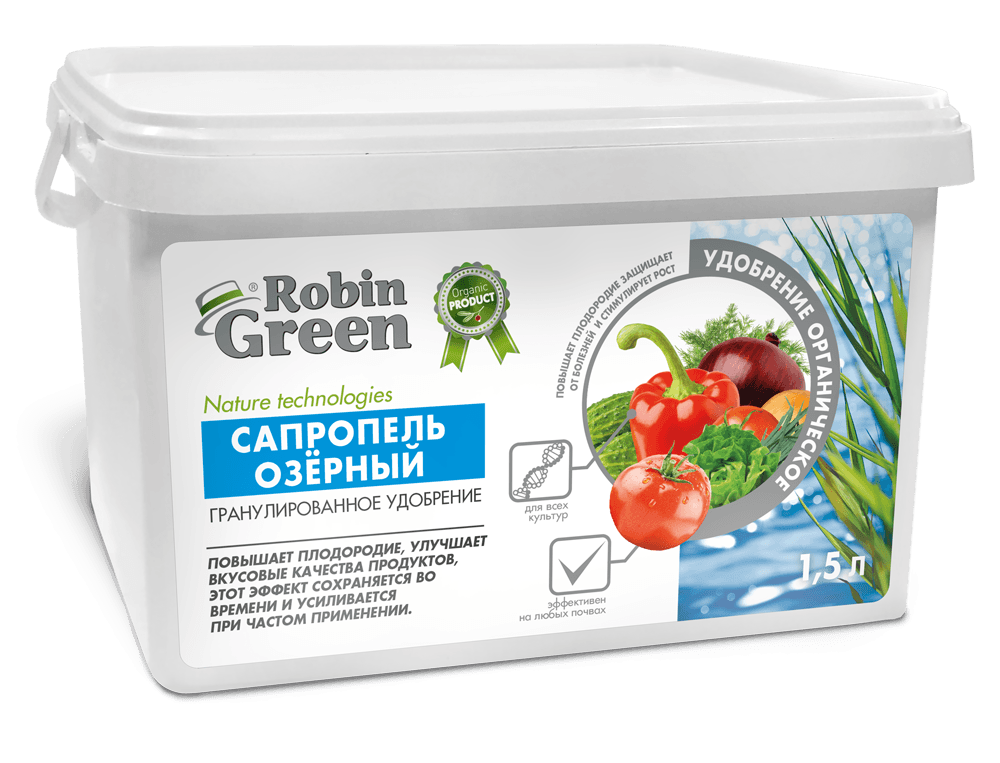
- Granular. Dried sapropel is formed into granules of various shapes. Packages vary in size, but the fertilizer structure inside is always uniform.
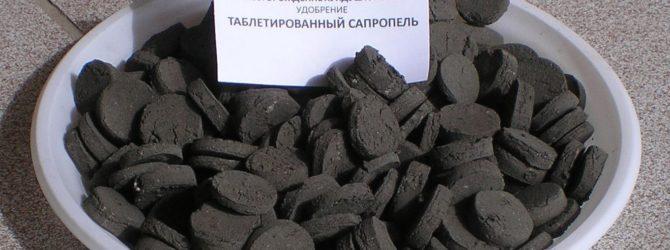
- Tableted. Dry lake silt is pressed into tablets up to 3 cm in diameter, which must be crushed before use.
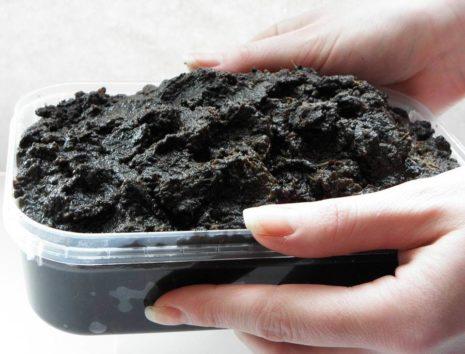
- Semi-liquid. The product is available as a paste, which is convenient for topical application.
- Liquid. It is a ready-to-use mixture for fertilizing certain crops.
Mechanism of influence on vegetable crops
In addition to its rich composition, sapropel converts these nutrients into a form most suitable for plant roots. Special bacteria in lake silt break down complex compounds into simpler ones, allowing vegetable crops to grow more vigorously. Fertilizing with sapropel helps restore the microflora of poor and degraded soils. Fertilizing with sapropel accelerates plant growth and flowering, increases future yields, and increases the size of fruits.
Benefits of using the product in the garden
The application of sapropel significantly improves soil quality and has a positive effect on vegetable crops:
- heavy loams become looser;
- sandstones gain increased viscosity;
- the negative impact of pesticides is reduced;
- the amount of humus in the soil increases;
- soil moisture capacity increases;
- the root system of plants is strengthened;
- obtaining minerals in an accessible form;
- good survival rate of seedlings;
- activation of flowering;
- stimulation of fruiting;
- antibacterial effect.
Efficiency
Sapropel affects agricultural crops in different ways:
- Cereals, grasses, legumes, and industrial crops planted in large areas increase yields. Furthermore, their protein content increases.
- The yield of root crops and other row crops increases due to the enlargement of the underground part and an increase in the number of tubers.
- Garden trees and shrubs produce more numerous and larger fruits, and the plants themselves better tolerate external negative influences.
Period of exposure
Unlike other fertilizers, sapropel can be applied at any time, regardless of season or soil quality. Restoring depleted soil requires 2-3 years of active decomposition of lake silt. The structure of the soil layer is maintained for an additional 5 years.
How to use correctly: application rates
General rules for using sapropel include:
- Adding fertilizer to compost or directly to the soil.
- It is necessary to monitor the acidity of the soil due to the leaching properties of lake silt.
- Most crops receive maximum nutrition when the product is mixed with soil in a ratio of 1 to 3.
- In autumn, fertilizer is added to the soil before digging, 2-3 litres per square metre of the plot.
When growing seedlings
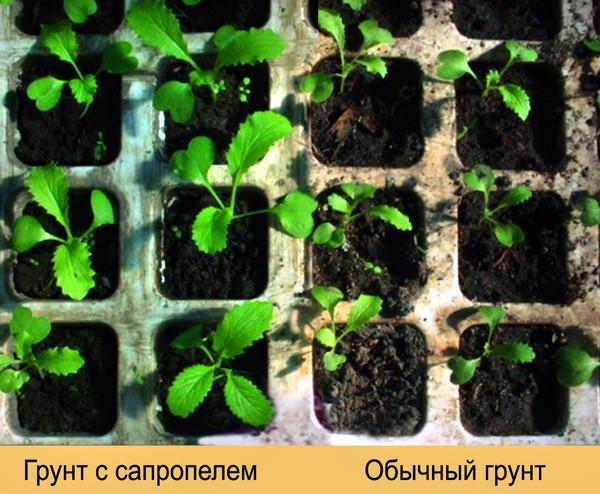
To fertilize seedlings, use a dry fertilizer in any form. There are several different recipes for preparing the soil for sowing seeds:
- For cabbage, mix soil with sapropel and sand in a ratio of 2:3:4.
- Pepper, eggplant and tomato seedlings are sown in a mixture of 7 buckets of soil, 2 buckets of sand and a bucket of lake silt.
- Cucumbers and melons are sown in a substrate of sapropel, sand and soil in a ratio of 3:4:6.
- In other cases, part of the crushed fertilizer is mixed with 3 parts of turf.
Processing of plantings in open ground
When sowing vegetable crops in open ground, you can add sapropel directly to the soil:
- Before planting carrots, beets, radishes and greens, dry crushed fertilizer is evenly distributed over the beds and buried to a depth of 10 cm.
- For potatoes, tomatoes, peppers and pumpkins, 250 ml of lake silt is added to each hole.
- Sapropel mixed with three parts soil is placed in the planting hole for shrub and tree seedlings.
We use the preparation for compost preparation
Composting sapropel significantly increases its nutritional value. In addition to lake silt, the compost includes liquid and dried manure, peat, food and plant waste, weeds, and straw. All components are placed in pits or boxes in layers, starting with the sapropel. After aging for three months, the compost becomes rich in easily digestible nitrogen compounds.
Compatibility with other drugs
Sapropel combines well with other fertilizers. Depending on the amount of phosphorus and potassium, lake silt can be mixed with manure or mineral fertilizers. However, using them together is not always effective, as it can lead to nitrogen overload.
Toxicity of the substance
Industrial sapropel, which is sold as fertilizer, is safe. It is classified as a low-hazard substance, corresponding to hazard class 4.
When extracting on your own, it is necessary to check the toxicity of the lake silt, which is related to the environmental conditions of the extraction site.
The presence of chemical and biological pollutants, including heavy metals, in a reservoir can make sapropel unsuitable for agriculture.
Precautionary measures
When storing large quantities of sapropel for long periods, it's important to prevent groundwater contamination. To achieve this, store the fertilizer on concrete pads with high sides and a roof. Excess moisture should be removed through drainage; dry sawdust can also be used to absorb the liquid.
Substitutes
There's no complete substitute for sapropel, as it combines organic and mineral substances that don't interfere with each other's absorption. The mineral component of sludge can be replaced with nitrogen and humic fertilizers. The organic component can be replaced with manure, peat, bird droppings, vermicompost, and green manure.
Vegetable growers' reviews of sapropel
Igor: "I've been using lake silt in my garden beds for several years. It's completely replaced manure and mineral fertilizers. The garden no longer suffers from late blight and powdery mildew, and the soil's acidity is always within the normal range."
Anna: "I've been using sapropel for a couple of years, and the results are already very good. The soil has become very soft, absorbs water well, and remains loose. Plus, there are significantly fewer weeds."
Victor: "Over two seasons of using lake silt, the vegetable yield has increased significantly. Tomatoes, pumpkins, and tubers have become noticeably larger. Salad vegetables and herbs have more than doubled in size compared to previous years."
Related posts:
 The beneficial properties of river silt and how to use it as fertilizer
 The use of peat as a fertilizer for potatoes and other crops and its differences from humus
 How to use and prepare manure as a fertilizer, its types and composition
 The use of phosphate rock as a fertilizer, its composition and beneficial properties
 What is the best way to feed carrots? Fertilizers and preparations, using folk remedies.
 How to feed and what fertilizers are best for blueberries, soil acidification
 Description of varieties of sowing peas and cultivation, to which family they belong
 What is the best way to feed tomato seedlings to make them plump?