- Characteristics of Kibray dill
- Description of leaves
- Productivity
- Sustainability
- Pros and cons
- Where is the plant used?
- Landing rules
- Time
- Selection and preparation of seeds
- Soil and plot
- Sowing pattern and depth
- Favorable and unfavorable neighbors
- Care
- Watering
- Top dressing
- Soil care
- Pests and diseases: treatment and prevention
- Reviews from gardeners
The Kibray dill variety is among the top 20 varieties, making it the most popular garden plant. Gardeners love to grow this variety due to its numerous medicinal properties and its low maintenance. To ensure high-quality greens, it's important to understand the specifics of growing Kibray before planting.
Characteristics of Kibray dill
The Kibray variety is classified as a type of dill that has a medium ripening period.
Description of leaves
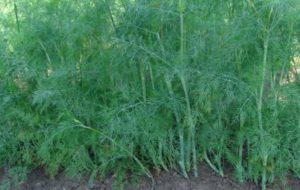
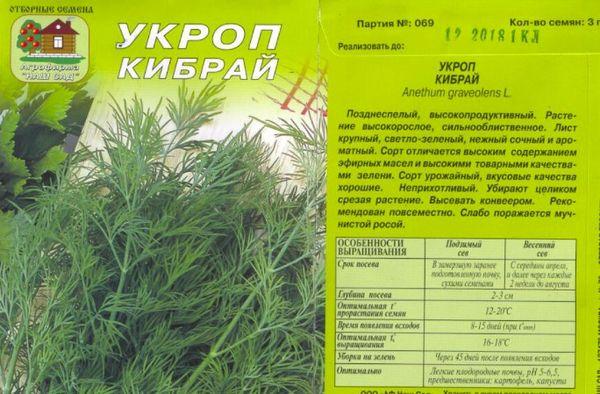
The Kibray variety has a large rosette of leaves, the height of which reaches 30-40 cm.
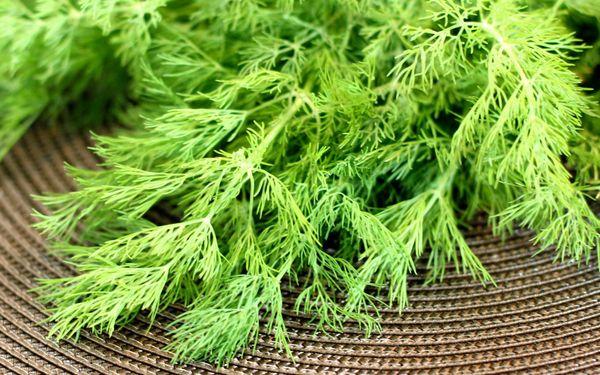
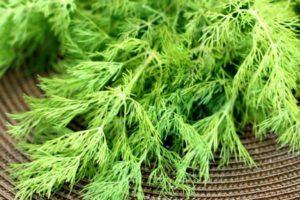
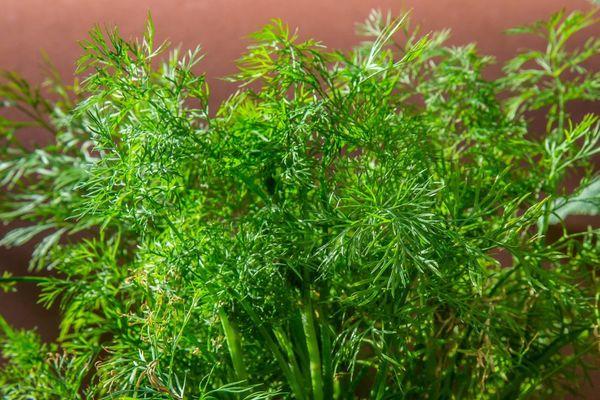
The leaves are large, light green with a yellow tint. They have a light waxy coating and are 6-7 times dissected. The terminal segments are long, wide, and densely arranged. They reach 20-25 cm in length and 17-20 cm in width. The petiole can be 11-14 cm long. Dill is tender and juicy.
Productivity
Kibray is considered the highest yielding variety. For example, about 3 kg of dill can be harvested from 1 square meter. When grown as a spice, the yield is 1.5-2 kg per square meter.
Yield is affected by the amount of light in the garden bed. Even slight shade can significantly affect the dill's ability to produce foliage.
Sustainability
The crop tolerates low temperatures well. The plant is frost-hardy, and the seeds can germinate at temperatures of 3 degrees Celsius.
For normal planting, 8-10 degrees is required; the greens also tolerate frosts down to -5.
This species loves moisture; with prolonged drought, the juiciness of the crop is quickly lost.
Pros and cons
The benefits of greenery include:
- good yield;
- high commercial and taste qualities;
- universal use of dill;
- possibility of growing in open ground;
- the possibility of wide use for the prevention and treatment of various pathologies;
- containing a large number of useful substances.
Take a look Also
Dill has no significant drawbacks, other than its low drought tolerance, which is acceptable for all varieties of the crop. Gardeners also believe that Kibray's disadvantage is its late ripening period.
Where is the plant used?
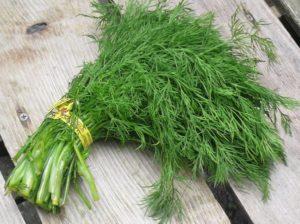
The greens are consumed fresh and also as a spice in various dishes. Kibray adds a rich flavor to salads and is often used in marinades.
The beneficial substances in dill are perfectly preserved when the leaves are frozen, as well as when dried.
Landing rules
When choosing a place to sow dill, you need to give preference to open, well-lit areas.
Time
Since Kibray is a cold-resistant crop, planting can be done when the soil warms up to +3 degrees, and the air – to +8-10.
Typically the crop is planted in early April, as soon as the snow melts, or at the end of May.
Selection and preparation of seeds
To ensure optimal germination, seeds are pre-prepared. Place them in cheesecloth and immerse them in hot water at 60°C (140°F) for 2 minutes. Then, soak the seeds in water at room temperature for 2 days. Change the water every 8 hours, and rinse the seeds.
After soaking, the seeds need to be dried in a dark place.
Soil and plot
The area for sowing is prepared in the fall:
- Cleared of plant debris.
- Digging around.
- Fertilized with saltpeter, potassium salt, superphosphate.
You can also use compost and chicken manure for fertilizer. Before sowing in the spring, loosen and moisten the soil.
Sowing pattern and depth
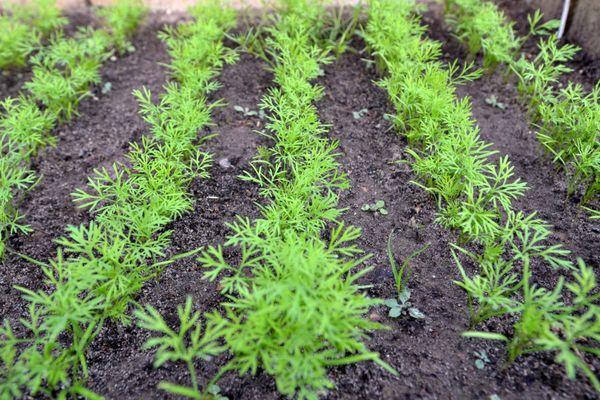
To sow the seeds, form a pit 5 cm wide and 2-3 cm deep, with a 25 cm spacing between the rows. Cover the seeds with soil. 15 grams of seeds are required per square meter.
Favorable and unfavorable neighbors
It's not recommended to plant dill near carrots, parsley, or caraway. It pairs well with nearby potatoes, onions, cabbage, cucumbers, and garlic.
Care
Like any crop, dill requires care, although it is considered an unpretentious plant.
Watering
To prevent the plant from drying out and turning yellow, regular watering is required—once every 2-3 days. Water the plant in the evenings. It's best to use warm water, pouring it under the roots.
Top dressing
If the soil was fertilized in the fall, then no additional feeding is necessary. Fertilizer is added if:
- the leaves are turning yellow;
- Early flowering is observed.
These symptoms indicate a nitrogen deficiency. This problem can be corrected by adding urea.
Soil care
The soil is loosened to improve moisture and air permeability and prevent the formation of a hard crust. Loosen the soil after watering and precipitation, every 2-3 weeks.
Weeds must be removed as soon as the crop emerges.
Pests and diseases: treatment and prevention
Dill beds are being attacked by powdery mildew. To prevent the disease, water the plants with a weak sulfur suspension.
The plant suffers from aphid infestation, which can be eliminated with an alcohol solution.
Preventive measures.
- Planting greenery taking into account multi-field system.
- Digging up the garden bed to a greater depth after harvesting the crop.
- Moderate watering of beds.
Reviews from gardeners
Elena Chernyshevskaya from Omsk has been planting Kibray for four years. She chose the greens based on online reviews and the bush's appearance. Dill is frost-resistant and produces abundant greens. Caring for the plant is simple: water frequently and fertilize occasionally.
Moscow gardener Alexandra Dolokhova grows Kibrai as both a cultivated plant and a weed. She tends to it by watering it but not fertilizing it. It's important to plant it in a sunny spot.
Related posts:
 How to choose the best dill varieties for growing greens without umbrellas in open ground and greenhouses
 Description of the best dill varieties for open ground and for greens, what the plant looks like
 Recipes for pickling fresh dill for the winter at home in jars, proportions, and storage
 Growing bush dill for greens, describing its varieties, and harvesting
 Basic rules for growing and caring for dill: how many days it takes for it to sprout, how it grows, and when it ripens into greens
 Characteristics and description of the Alligator dill variety
 What are the diseases and pests of dill and how to deal with them, simple methods
 How to freeze dill in the refrigerator for the winter: the best recipes