
- How garlic ripening depends on:
- Varieties
- Spring
- Winter
- Climatic factors
- Landing region
- What are the signs that indicate the maturity of the heads?
- The dangers of early and late harvesting
- When to harvest winter and summer garlic in 2025 in different regions
- In the Saratov region
- In Samara and the Samara region
- Ulyanovsk
- Penza
- Volga region
- Volgograd and the Volgograd region
- Ufa
- Rules for collecting bulbs
- Preparation of heads and storage methods
Many residents of the Saratov region wonder when to dig up garlic. The time to harvest should be based on weather conditions, the variety, and the planting region. The timing varies slightly by region. Typically, it falls in mid-July for winter varieties and in late August for spring varieties.
How garlic ripening depends on:
When harvesting ripe bulbs, it is necessary to take into account the variety, climatic factors, and planting region.
Varieties
There are two types of garlic: those planted in the fall and those planted in the spring. Each type is further divided into varieties. These have specific maturity dates and are suitable for growing in specific climate zones.
Spring
Its growing season lasts 100–120 days. Seeds are planted in mid-May, so harvesting begins in late August or early September.
Winter
This variety is planted in the fall. The cloves survive well in the soil during severe frosts, and when the time comes, they begin to sprout. Harvest occurs in mid- to late July.
Climatic factors
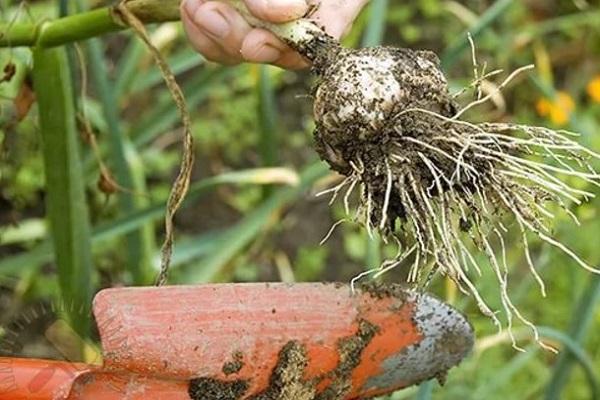
Climate plays a significant role in determining the timing of bulb harvesting. In cases of frequent rainfall, harvesting is done earlier, as the garlic begins to rot in the soil. This can lead to a loss of some of the harvest. In arid climates, garlic is harvested 7-10 days before the harvest date, as a lack of water prevents it from developing properly, and three months may not be enough time for the bulbs to establish.

Landing region
Planting times vary slightly depending on the region. In the south, harvesting occurs more quickly, especially with regular watering. Winter varieties are dug up around July 10, and spring varieties in mid-August.For temperate regions, it is typical to dig up bulbs on the 15th–20th of July for winter garlic and at the end of August or the first days of September for the spring variety.
In the north, harvesting times vary significantly, as the summer period is quite short. In this region, winter varieties are preferable, as spring varieties may die or not have time to ripen. Autumn garlic is harvested in late July, and spring garlic in September.
What are the signs that indicate the maturity of the heads?
Before digging, make sure the garlic is ripe. Ripeness is determined by the following signs:
- An ovary with seeds formed on the arrow, and the capsule burst.
- The lower leaves became dry and the upper ones began to turn yellow.
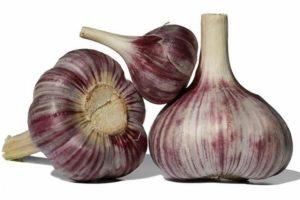
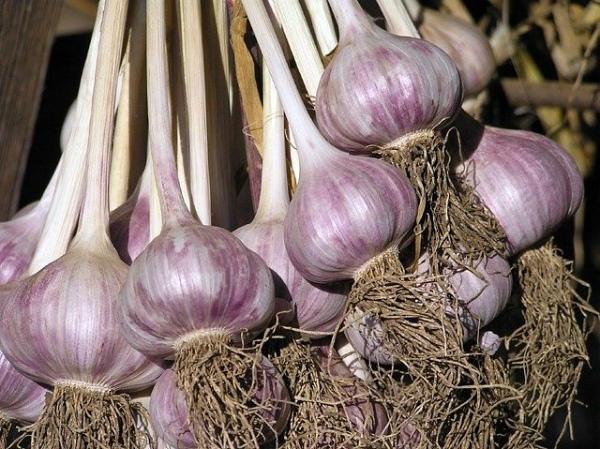
- When digging up several bulbs, a white-purple color of the husk is noted.
- The skin adheres tightly to the cloves.
- The fruits are dense and emit a characteristic smell.
- There are young roots on the bulb.
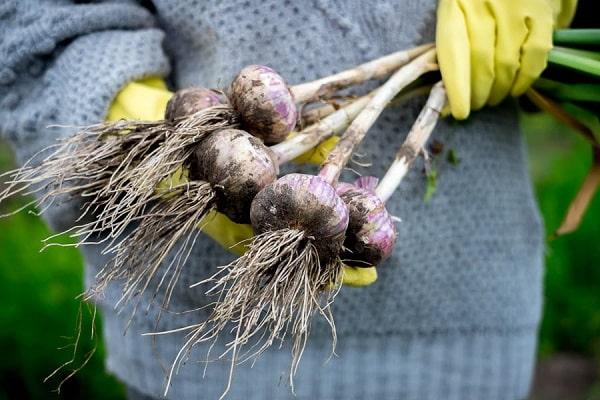 Important! To accurately determine ripeness, it is recommended to dig up several bushes and inspect the heads.
The dangers of early and late harvesting
If you dig up the harvest too early, the bulbs won't have time to develop properly. There's a lack of clove separation. The fruits are firm, the skin doesn't peel off easily, and it's difficult to remove.
Garlic doesn't ripen after being dug up, so pre-dug bulbs don't store well. They don't have time to accumulate the necessary amount of micronutrients.
Late harvesting can cause certain symptoms. Vegetables overripen quickly, and a few extra days in the ground can completely ruin the fruit. These symptoms include:
- Faint garlic smell.
- Cracks on the teeth.
- Soft fruits.
- Rot forms on the roots.
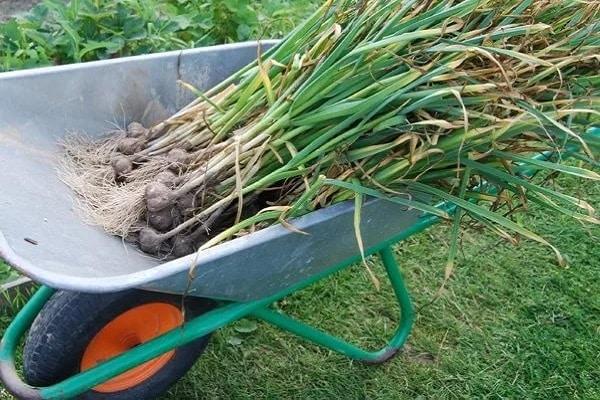
This garlic doesn't keep well; it begins to rot, and the entire harvest is lost. It's unfit for consumption.
Take a look Also
![When to harvest garlic in the Urals in [year], growing and care](https://harvesthub.decorexpro.com/wp-content/uploads/2019/04/chesnok1-300x200.jpg)
When to harvest winter and summer garlic in 2025 in different regions
The deadlines vary slightly for each region, depending on local climate conditions.
In the Saratov region
This region experiences long, hot summers with occasional rainfall. Temperatures remain stable, and they don't begin to drop until August 22. Winter garlic is harvested from July 10 to 15, and spring garlic from August 8 to 16.
In Samara and the Samara region
The climate here is moderately cold. Winter varieties are preferred for cultivation. Summer rainfall is high, so harvesting begins 5 to 7 days earlier than in other regions. For spring varieties, this time falls in mid- to late August, and for autumn varieties, in mid-July.
Ulyanovsk
The region has a temperate continental climate, characterized by sparse precipitation. In midsummer, July is the driest month. Winter crops are harvested from July 15th to 20th, and spring crops from August 20th to 30th.
Penza
This region enjoys a temperate climate, but there is little rainfall in the summer. Garlic harvesting begins in mid-July for winter varieties and in late August for spring varieties. Before harvesting, inspect the crop for signs of ripening.
Volga region
Summers are warm, with average temperatures of 24–26°C. The region experiences moderate rainfall. Garlic harvesting begins between July 15 and 20 for winter varieties and from August 25 to early September.
Important! Before harvesting garlic, inspect it for signs of ripening and take weather conditions into account.
Volgograd and the Volgograd region
The region has an arid climate with little rainfall. Garlic is harvested beginning in early July for winter varieties and beginning in mid-August for spring varieties.
Take a look Also
Ufa
The region has a temperate climate, characterized by warm, long summers with consistent temperatures and moderate rainfall. Harvesting for winter varieties begins in mid-July, and for spring varieties in late August.
Rules for collecting bulbs
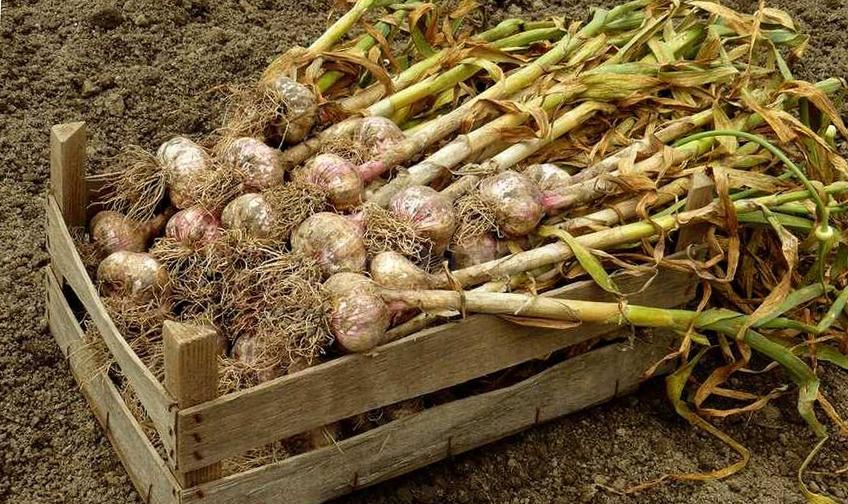
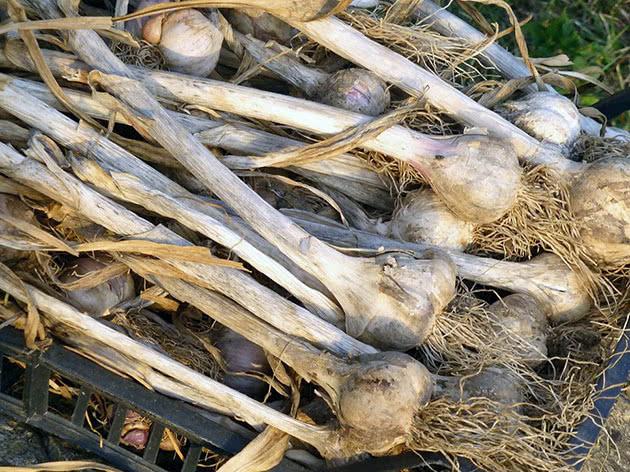
A few days before the end of the garlic growing season, the bushes are dug up to a depth of 20-30 cm, slightly exposing the root area. Then the bushes are dug up, all the bulbs are cleared of soil, and the garlic is moved to a ventilated area under a canopy. The garlic is left there for 7-10 days to dry.
Preparation of heads and storage methods
Once the stems and bulbs have dried, they need to be packaged for storage. The roots must be trimmed first; this must be done within the first month, or the bulbs will begin to grow. The tops should be trimmed depending on the chosen storage method. There are several alternatives, including:
- braiding;
- bundling;
- storage in nets in a suspended state;
- use of cardboard boxes.
Important! For braiding and buns, leave the tops at least 30 cm long.
Related posts:
 The best varieties and types of early and winter garlic with descriptions and names
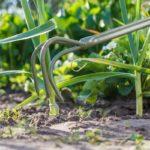 When to dig up garlic in the Moscow region in 2025
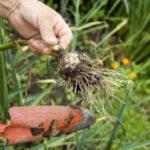 When to dig garlic in Russia, harvest timing depending on region and variety
 When can spring garlic be harvested in 2025? Harvesting from the garden and storage
 Garlic harvesting dates in the Urals in 2025, cultivation and care
 How to properly grow and care for spring garlic in open ground and when to tie it into knots
 When to harvest winter garlic in Siberia, planting and storage times, varieties
 When to dig garlic in Kursk and other regions of Russia, signs of maturity