
- Signs of winter garlic ripening
- When to dig up garlic
- Depending on the variety
- Winter
- Spring
- Depending on the growing region
- Siberia
- Moscow region
- In Primorye
- In Kaliningrad
- In the Krasnodar region
- In the Rostov region
- In Izhevsk
- In the Volgograd region
- In the Arkhangelsk region
- In Khabarovsk
- When to dig up spring garlic in 2025 according to the lunar calendar
- Favorable days
- Unfavorable days
- How to properly harvest vegetables from garden beds
- The nuances of storing garlic heads
Many gardeners in Russia wonder when to start digging up garlic. To determine harvesting time, they consider the growing region, its climate, planting time, and the seasonal weather conditions. When digging, it's important to pay attention to the signs of ripening; this is the most reliable indicator of harvesting time. There are also lunar calendars for each season, which detail harvesting, planting, and watering dates.
Signs of winter garlic ripening
To correctly determine the ripening time of root crops, focus on certain signs that indicate the bulbs are ready to be removed from the ground:
- Well formed teeth.
- The skin fits tightly to the fruit and does not crack.
- The slices separate easily from the stem.
- The hands stop curling and straighten out.
- The plant stops producing new leaves.
- The stem is thin and dried out at the base.
- The husk separates easily and rustles.
To identify these signs, dig up 1-2 bulbs. If the bulbs have cracks or exposed cloves, this indicates they are overripe. This type of harvest does not store well.
Unripe fruits have their own characteristics:
- The husk is thick and difficult to remove from the cloves.
- The stem is dense and juicy at the base.
- The teeth are separated with difficulty.
Important! During periods of frequent rainfall, dig up the crop 2-3 weeks earlier; during periods of drought, dig up 2-3 weeks later.
When to dig up garlic
The start of harvesting depends on the planting region. This period typically occurs in late or mid-August. Spring varieties are harvested 2-3 weeks later than winter varieties. Harvesting is based on signs of crop ripening; the timing may shift depending on the seasonal weather conditions.

Depending on the variety
Depending on the variety, garlic is harvested at different times of the season. Each type has its own ripening characteristics. Varieties are divided into winter and spring varieties.
Winter
This variety is planted in the fall. Active growth and development begins in early spring. Ripening takes an average of 110-115 days. Digging begins in late July or early August. Sunny, hot weather extends the ripening period, while rainy weather shortens it. Preparation for harvesting is as follows:
- Stop watering 2-3 weeks before the expected ripening.
- A month after the emergence of seedlings, the shoots are torn off, leaving 2-3 specimens to guide them in determining the ripeness of the fruit.
- The leaves of plants are tied into knots so that nutrients are used to form fruits.
 Important! In dry climates, it is necessary to follow the watering schedule.
Spring
Spring varieties are planted in the spring. The average maturity period is 125-130 days. Planting is most often done in mid-May, and harvesting occurs in late August or early September. This variety stores well throughout the winter.
If spring and winter varieties are planted together, the spring variety is usually dug up 17-21 days after the winter variety.
Depending on the growing region
Harvesting time varies depending on the growing region. Southern regions of Russia begin harvesting earlier. Temperate climates begin harvesting in mid-July for winter varieties and early September for summer varieties. Northern regions harvest 2-3 weeks later than temperate climates.

Siberia
Winter varieties of this vegetable are dug up in mid-July. By this time, seed pods have formed at the ends of the stalks. Spring varieties are harvested in mid-September, depending on the planting and ripening periods.
Moscow region
In temperate climates, harvesting occurs in early or mid-July for winter varieties. For spring garlic, the harvesting period shifts to late August or early September. The harvesting period begins when the first variety ripens, while spring garlic is dug up 2-3 weeks later.
In Primorye
In the northwest, ripening times depend on the planting period. Winter varieties are planted in late September and harvested 100 days after the first shoots appear. Autumn varieties are planted in mid-May and dug up for the winter harvest. If there is frequent rainfall, the roots are dug up 2-3 weeks earlier.
In Kaliningrad
In Kaliningrad, the harvest begins later than in other regions. Harvesting begins in late July for winter varieties and in late August or early September for autumn varieties. Winter varieties are considered more suitable for this region.
In the Krasnodar region
Due to the warm climate and adequate watering, winter garlic varieties ripen in late June. Summer varieties ripen by mid-summer. Both varieties are grown in this region; they thrive and produce large fruits.
In the Rostov region
The Rostov Region harvests bulbs from August 18 to September 8. These dates apply to spring varieties. For winter varieties, harvesting begins from July 24 to August 5. The periods vary depending on weather conditions.

In Izhevsk
Izhevsk has a temperate climate, so winter garlic harvesting occurs in mid-July, while summer garlic harvesting occurs in the last month of summer or early fall. It's important to consider planting time and weather conditions, as harvesting times can vary. It's also worth paying attention to signs that the crop is ready for harvesting.
In the Volgograd region
The Volgograd region is characterized by hot summers. Spring garlic ripens by the end of August if planted in early May. Winter garlic, on the other hand, produces fruit by mid-season. It is harvested 100-105 days after the first shoots emerge.
In the Arkhangelsk region
Spring garlic is harvested in the north from August 23 to September 5. Winter garlic is ready for harvest from July 10 to July 25. Harvesting dates may vary depending on when the seeds are planted and weather conditions.
In Khabarovsk
In Khabarovsk, winter garlic is planted from September 20 to October 5. Harvesting begins 100-105 days after the first shoots appear. This period falls in late July or early August. Spring varieties are selected in late August or early September. Because the region typically experiences frequent rainfall, harvesting is reduced by 2-3 weeks.
When to dig up spring garlic in 2025 according to the lunar calendar
Many gardeners rely on the lunar calendar when harvesting. It lists favorable days for harvesting bulbs. It's easy to use. Choose one of the favorable days on the calendar and dig up the bulbs on that day. The lunar calendar also indicates favorable days for watering, cultivating the soil, and planting.

Favorable days
Two months are suitable for digging: July and August. In July, the following are considered favorable days:
- from 5 to 7;
- from 15 to 16;
- from 19 to 20;
- from 23 to 30.

For August, good days are considered:
- from 1 to 3;
- from 11 to 12;
- from 15 to 16;
- from 29 to 30.
Important! It is recommended to compare lunar calendar dates with ripening signs and weather conditions.

Unfavorable days
All other days not indicated in the lunar calendar are considered unfavorable for garlic harvesting. However, if the calendar dates and the ripeness of the garlic don't align, it's best to rely on the signs of ripeness.
How to properly harvest vegetables from garden beds
Harvesting is carried out in compliance with several rules:
- Stop watering completely 1 month before the expected digging date.
- Two weeks before, the soil is removed from the plant so that the condition of the root stem can be seen.
- Digging is carried out in dry, sunny weather.
- Garlic should be picked using a shovel or other equipment; it should not be pulled out by hand.

The nuances of storing garlic heads
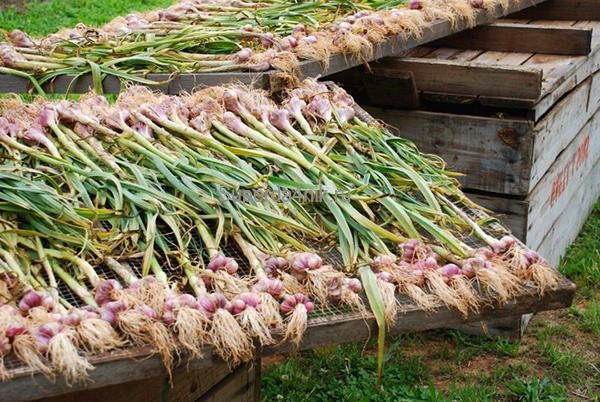
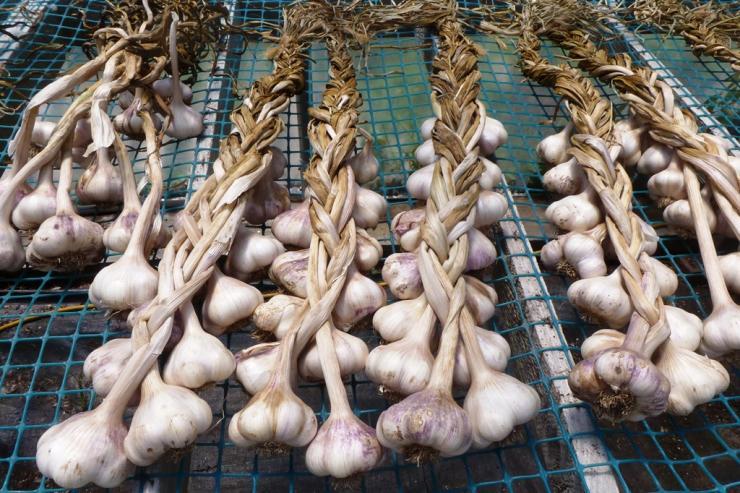
The harvested crop is moved to a well-ventilated area where it is dried for 10-14 days. Each bulb is laid out separately to speed up the drying process and prevent rotting. Drying is carried out with the stems intact. The roots and leaves are trimmed off after drying. Store the bulbs in a cool, dark place. Peel the cloves before using.
Garlic is used for homemade preserves, salads, and fresh consumption. The cloves infuse any dish with a pleasant aroma and add a piquant flavor. The crop is grown for both home consumption and commercial sale.
Related posts:
 When to dig up garlic in the Moscow region in 2025
 Garlic harvesting dates in the Urals in 2025, cultivation and care
 How to properly grow and care for spring garlic in open ground and when to tie it into knots
 When can spring garlic be harvested in 2025? Harvesting from the garden and storage
 When to dig up garlic in the Saratov region and other regions
 When to harvest winter garlic in Siberia, planting and storage times, varieties
 When to dig garlic in Kursk and other regions of Russia, signs of maturity
 How to properly dry winter garlic after digging and where to store it at home