
- Description of varieties
- History of Dutch crop selection
- Appearance
- The size of the cloves and the weight of the onion vegetable
- How it grows and when it ripens
- Comparative characteristics
- Susceptibility to insects and diseases
- Resistance to low temperatures
- Necessary conditions for growing the crop
- Illumination
- Humidity
- Temperature conditions
- Required soil composition
- How to plant garlic in your garden
- Nuances of crop care
- Methods of reproduction
- Reviews of Messidor and Hermidor
Messidor is a Dutch garlic variety that has won the hearts of gardeners and farmers worldwide. This variety boasts strong disease resistance, low maintenance, high yields of approximately 500 kilograms per 100 square meters, large heads, and long shelf life. Most gardeners who grow commercial crops choose Messidor, which is suitable for both large fields and small garden plots.
Description of varieties
Garlic seeds were first bred in Holland and are now widespread worldwide. Like any variety, Messidor has its own history and distinctive appearance.
History of Dutch crop selection
The Netherlands deservedly ranks second among the top three global seed sellers thanks to its high-quality seeds. Billions have been spent on Dutch selective research for many years, and scientists have developed new varieties distinguished by exceptional yields, strong immunity, and long shelf life.
Despite its stable position, the Netherlands continues to develop its breeding institute and regularly delights gardeners around the world with new varieties of plants and vegetables.
Appearance
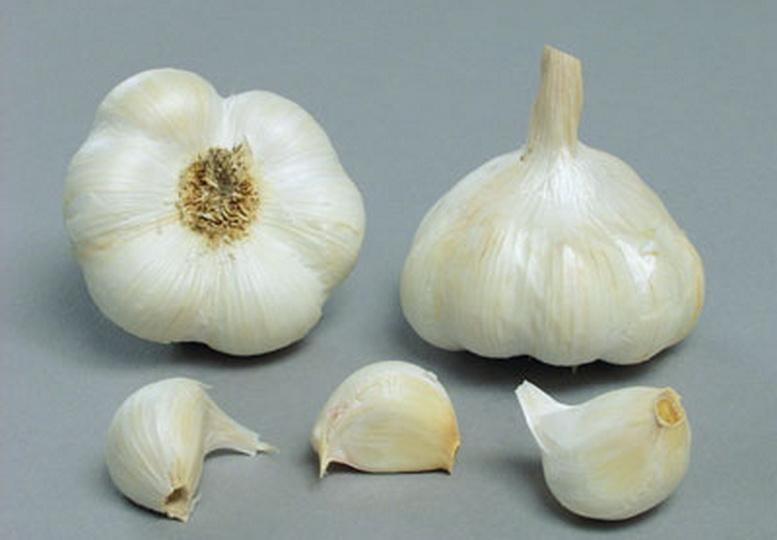
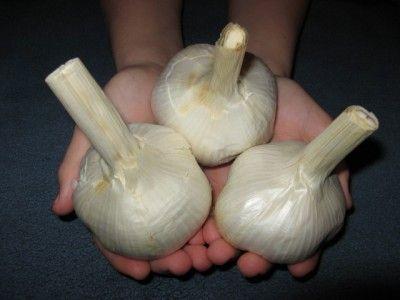
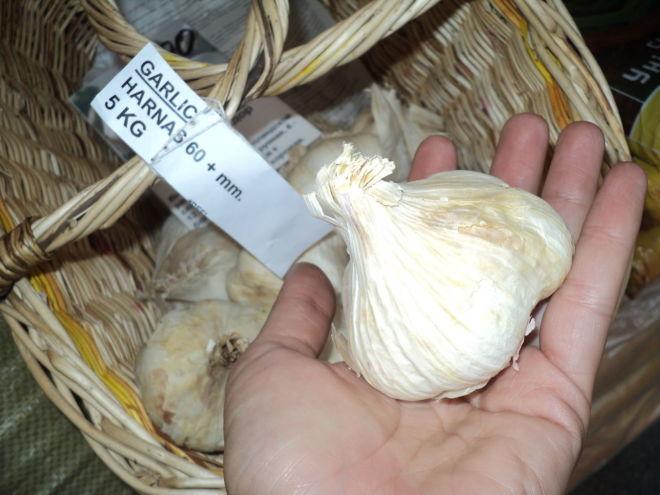
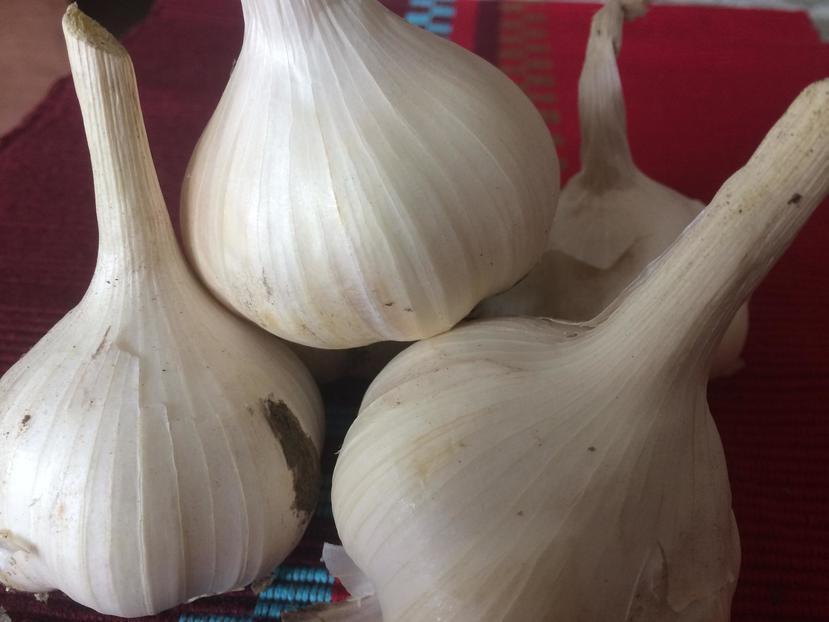
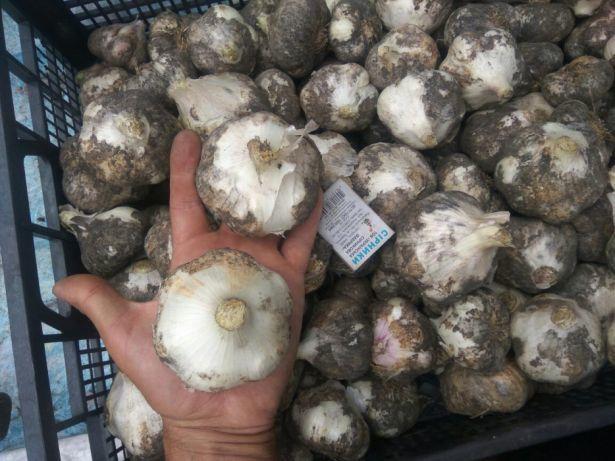
Dutch garlic Messidor is distinguished by its large, round white head and long, dark green leaves, 12 on each. Each garlic scape is up to 2.5 centimeters wide and up to 70 centimeters long. The bulb structure is simple.
The size of the cloves and the weight of the onion vegetable
Each head of garlic contains 8-14 cloves, which have a bitter taste and a distinct garlic aroma. They contain sugars (23.3%) and ascorbic acid (9 milligrams). The total weight of a bulb ranges from 100 to 160 grams, allowing for a harvest of over 20 tons per hectare.
How it grows and when it ripens
Messidor is a winter variety, meaning it grows in winter. It ripens early and, unlike other winter varieties, sprouts as early as June in good weather, early August in cloudy and rainy weather, and late July in dry weather. Signs of garlic maturity:
- If the shoots are cut off, the main indicator will be the leaves: the lower ones will dry out, and the upper ones will turn yellow;
- if the arrows are left, then the shell of the aerial bulbs should burst;
- You need to dig up the soil around some vegetables – the scales of the head should be dry and strong; if they break easily, then the garlic is overripe.
Take a look Also
Comparative characteristics
Dutch Messidor has distinctive characteristics that give it advantages over other varieties.
Susceptibility to insects and diseases
Messidor is distinguished by its high resistance to the following diseases:
- bacteriosis;
- various types of mold;
- white rot.
Resistance to low temperatures
Garlic is frost-resistant, surviving temperatures down to -15°C in snow-free fields. In areas with snow, it tolerates even lower temperatures, down to -21°C.
Necessary conditions for growing the crop
Despite garlic's unpretentiousness, gardeners should still follow simple growing rules to ensure a healthy and abundant harvest.
Illumination
Messidor loves light, so you should choose areas that receive sun all day.
Humidity
When planting garlic, it is necessary to choose soil that is not flooded by melting snow or rain, as well as one where there is no accumulation of groundwater, since Mesidor does not grow in swampy areas.
Temperature conditions
Despite its frost resistance, garlic should be planted at least a month before the onset of persistent cold weather, so that the root system has time to take root, although the stems and leaves have not yet had time to sprout.
Required soil composition
To replenish the necessary components in the soil, before planting it is necessary to dig, disinfect the soil with a solution (1 gram of boric acid, potassium permanganate and copper sulfate per 1 liter of water) and add fertilizer (humus - 5 kilograms, 30 grams of superphosphate and 25 grams of potassium salt).
It's best to choose soil that has been used for growing cucumbers, new potatoes, peppers, tomatoes, pumpkins, or eggplants. Planting in soil where late potatoes, carrots, turnips, or radishes were grown is not recommended. Also, avoid planting Messidor in the same spot to avoid fungus or pests. If the soil is clayey or acidic, add sand.
How to plant garlic in your garden
When planting Messidor, you should follow several rules:
- 10 teeth (with the sharp part facing up) per running meter;
- the distance between rows should not exceed 120 centimeters;
- planting depth – 3-6 centimeters;
- when adding sand, make furrows 15 centimeters deep;
- fill with sand to a depth of three centimeters;
- deepen the cloves by 3 centimeters;
- then water and cover with soil.
Planting time is from October to mid-November, when temperatures can drop to -5°C, a month before the onset of stable cold weather. Remember to replace the planting material every four years to ensure large, healthy garlic plants.
Nuances of crop care
To ensure Messidor garlic produces a bountiful harvest, it needs to be cared for properly:
- If the winter is not snowy, the garlic beds should be covered with agrofibre, pine needles or fallen leaves, or mulched with straw or humus;
- fertilize the soil when sprouts appear, during flowering and before harvesting;
- Be sure to water the garlic in dry weather, but do not flood it;
- clear the beds of weeds;
- Regularly loosen the soil to allow oxygen to enter.
Methods of reproduction
Winter garlic Messidor is propagated vegetatively and by seed. Features of vegetative propagation:
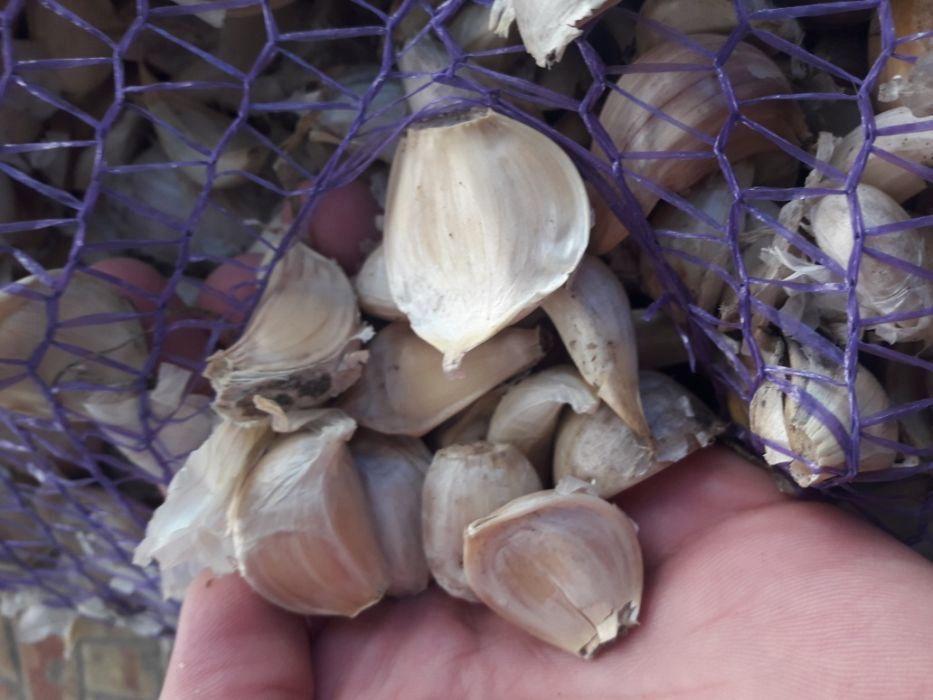
- the vegetative method or the method using cloves involves selecting suitable planting material - the cloves must be strong, large, healthy, dense, without visible damage;
- Having selected the appropriate material, you should soak it for two hours in an ash solution (mix 400 grams of ash with 2 liters of water, boil for half an hour, strain after cooling).
The second method of propagation is by seeds or bulblets. A bulblet is an aerial bulb on a stem that contains seeds. To obtain suitable seeds for sowing, the plant must be at least two years old. In the first year, only a single clove (set) emerges from the bulblet; in the following year, a larger, single-clove bulblet emerges, and finally, a full head with numerous garlic cloves emerges.
Options for planting onion sets:
- with replanting and planting in the autumn of the same year;
- left in the ground for the winter.
 Before planting the bulblets, make sure they are ripe. The first sign is the covering scales bursting. After this, the inflorescences, along with the stems, should be cut off at a height of 20 centimeters and dried for 30-40 days before planting. This propagation method takes longer than the first, but the yield increases and the quality improves.
Reviews of Messidor and Hermidor
Anatoly, Saratov
"I first encountered Mesidor many years ago, but I still can't forget the impression my first harvest made. The garlic berries were large and heavy, and the quantity was incredibly satisfying. Even though I only planted two beds, just to try it out, the garlic lasted a whole year. Another definite plus is that it doesn't require much attention and doesn't pick up any diseases. Now I'm always carrying Mesidor, and I recommend it to all my gardening friends."
Daria, Moscow
"I first tried Germidor three years ago, following a neighbor's advice. Admittedly, I'd only grown garlic once before, and the results weren't impressive. But Germidor was a delight. The fruits were large, juicy, and had a real garlic flavor. One clove was enough to infuse an entire dish with its aroma. I now plant Germidor regularly, but next year I plan to try a bed of Messidor for comparison."
Antonina, Tver
"After reading reviews of Messidor and Germidor, I decided to plant both at once and see for myself which was better. The results were impressive. The Germidor was slightly smaller, but both varieties produced a bountiful harvest and demonstrated disease resistance. That year, my garden was attacked by white rot, but the garlic was unharmed. Frankly, the difference between the fruits is minor, so when choosing between the two, go with either one—you won't go wrong."
Related posts:
 The best varieties and types of early and winter garlic with descriptions and names
 When can spring garlic be harvested in 2025? Harvesting from the garden and storage
 Why does garlic turn blue and green when pickled, how to avoid this, and is it safe to eat?
 Garlic cultivation technology in open ground, planting times, and care guidelines for a good harvest
 Features of planting and caring for family garlic, description of varieties, pest control
 How to properly grow and care for spring garlic in open ground and when to tie it into knots
 Why is the garlic in my garden growing small and not separating into cloves? What should I do?
 Description and cultivation of Chinese garlic, cultivation and care