
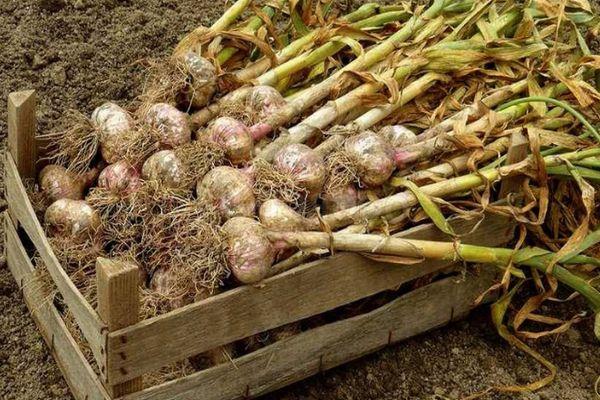
Gardeners are curious about the appearance of garlic that is planted as whole heads. Some homesteaders prefer to grow bush garlic in their plots. This term can be confusing for inexperienced gardeners, but to clarify the matter, it's enough to say that this is heirloom, or multi-bud, garlic.
This is garlic, which is planted whole. If planted, it will produce a single, full-fledged root vegetable. Despite the debate among experts about the existence of such a vegetable, gardeners claim that it is entirely possible to grow it.
Description and characteristics of garlic
Sometimes, a forgotten head of garlic in the garden produces a rather large plant. Gardeners prefer to use the young leaves obtained from these "forgotten" heads for salad dressings and other dishes. However, some gardeners decide to grow bush garlic until it fully matures, thereby obtaining several small garlic heads.
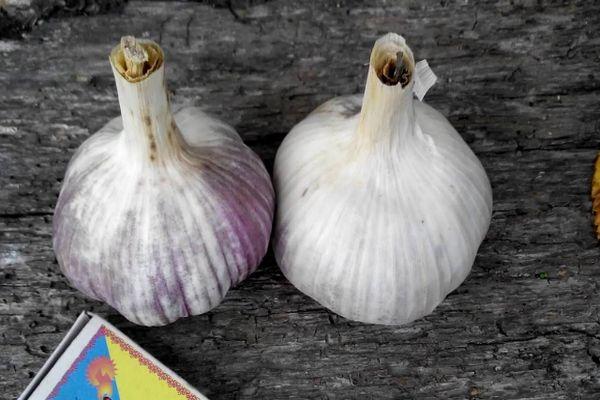
Gardeners claim that planting garlic bulbs is possible and even entirely worthwhile. These gardeners are willing to accept the fact that the root vegetables will be quite small, as this saves space. It's important to understand that the taste of garlic grown from bulbs is in no way inferior to that of garlic grown from seed.
Almost any garlic variety can be planted this way. Some gardeners prefer to exchange "special" varieties of the root vegetable, which produce better results. Growing it in nests can produce much larger heads. Experts believe this is a common regional variety that is simply planted as heads. If you plant several cloves separately, a larger head will grow.
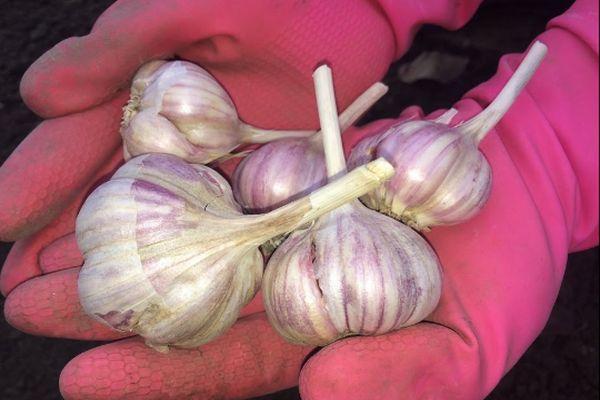
To ensure a harvest, experts recommend planting the winter variety. After the snow melts, the first light-green shoots will emerge from the soil. Gardeners recommend digging up the heads from the edges and placing them on the dining table.
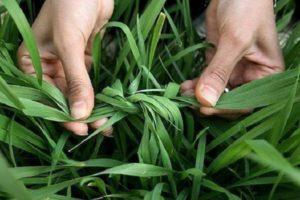
Spring vegetables should also be planted whole. This saves space in the garden. The garlic tops will be firmer and coarser, and the part below ground will store better.
How to grow garlic heads?
Winter root vegetables grown as heads should be planted 10-15 days before the first frost. In temperate climates, this occurs in late September or early October. The cloves should have time to root without sprouting new shoots. This will ensure the plant overwinters in the most comfortable conditions.
To get a good harvest, you need to follow these rules:
- Garlic planted whole is frost-resistant, but it quickly becomes waterlogged. Gardeners should pay close attention to this factor and choose a location that won't be flooded by spring meltwater.
- During periods of starvation, mice may eat heads left in the soil. Therefore, experts recommend installing special protection on the sides, such as fine-mesh netting.
- In some regions with harsh climates, winter crops need to be additionally covered with non-woven white material. Once the snow melts, this material should be removed.
- Spring garlic heads can only be planted once the soil has completely thawed. Before planting garlic, the soil should be fertilized with mineral fertilizer. If such fertilizers are not available, use ash—one cup per square meter.
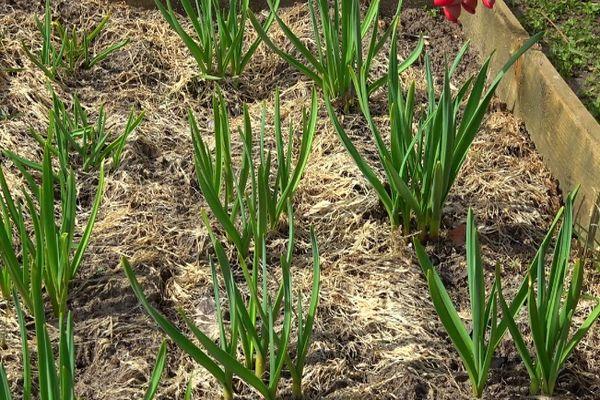
Caring for garlic grown from whole bulbs is no different from caring for any other vegetable. Here are some guidelines to follow:
- Strictly follow the specified planting dates.
- Carefully select the soil where you'll plant your root vegetables. It should be well-drained, moisture-permeable, and aerated.
- The soil needs to be loosened at least 3 times per season.
- The soil must be fertilized at least once, and this should be done immediately before planting.
- It's important to remove the stems by breaking them off. Otherwise, they will weaken the root crop.
Careful consideration should be given to choosing a planting location. It's best to plant garlic near strawberries or fruit trees. Avoid planting garlic near onions, other varieties, or any bulbous flowers.
 Garlic, which is planted as heads, does not like a large amount of organic matter, so it is best to apply only mature compost or humus as fertilizer, carefully monitoring its quantity.
![When can you harvest garlic in [year] according to the lunar calendar, timing and storage rules](https://harvesthub.decorexpro.com/wp-content/uploads/2019/04/chesnok-2-300x188.jpg)
This growing method has its pros and cons. The advantages include:
- An opportunity to save space on your garden plot.
- Unpretentious in care and cultivation.
- Good taste, which is in no way inferior to garlic grown in the traditional way.
- Benefits for nearby plants: They will receive constant loosening and fertilizer.
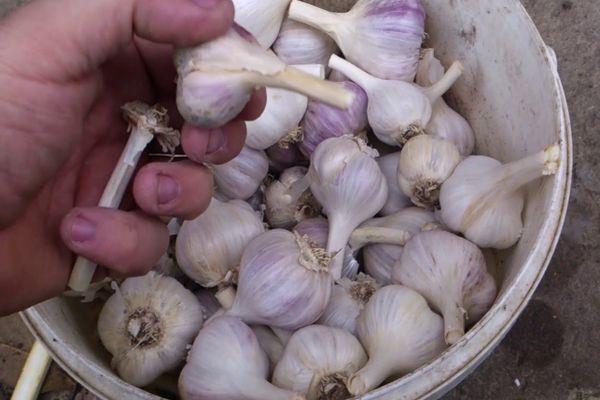
Opponents, however growing garlic This method claims that no advantage can compensate for garlic's small size and the difficulty of harvesting it. When the plant matures, it has to be dug up from the edges to find the small bulbs. If you eat the vegetable in moderation, you can find a suitable place to plant it.
The plant is very susceptible to rot and mold if improperly watered or exposed to rainy weather. Fertilizing with unhealthy organic matter can also cause disease. However, if you follow all the instructions correctly, you can achieve good results and avoid diseases.
Related posts:
 The best varieties and types of early and winter garlic with descriptions and names
 When can spring garlic be harvested in 2025? Harvesting from the garden and storage
 Why does garlic turn blue and green when pickled, how to avoid this, and is it safe to eat?
 How to properly grow and care for spring garlic in open ground and when to tie it into knots
 Why is the garlic in my garden growing small and not separating into cloves? What should I do?
 The best recipes for pickled garlic heads at home for the winter, like those found at the market, and the shelf life
 The 15 best ways to store garlic after digging it up at home
 Features of planting and caring for family garlic, description of varieties, pest control
I only have a small space in my garden for garlic, so I grow it this way. The bulbs are small, but the aroma and flavor are intense. The plants don't require any special care.