
Many gardeners prefer the Bashkir 85 garlic variety. This variety was developed in Bashkortostan at the end of the last century (at the Research Institute of Agriculture and Vegetable Breeding) and was approved for use without restrictions throughout Russia in 1990.
Garlic is a popular spice grown in almost every garden and has special significance for humans. The plant contains a host of beneficial substances, including those capable of counteracting viral pathogens.
To get a good harvest, you need to know and follow the proper growing techniques for your specific garlic variety. But simply harvesting enough heads isn't enough; you need to ensure they're stored throughout the long winter—and there are rules for that, too.
Description of the vegetable
It is characterized by the following indicators:
- early maturing (growing season from germination to maturity is 85-91 days);
- winter-hardy, resistant to bacterial diseases and nematodes;
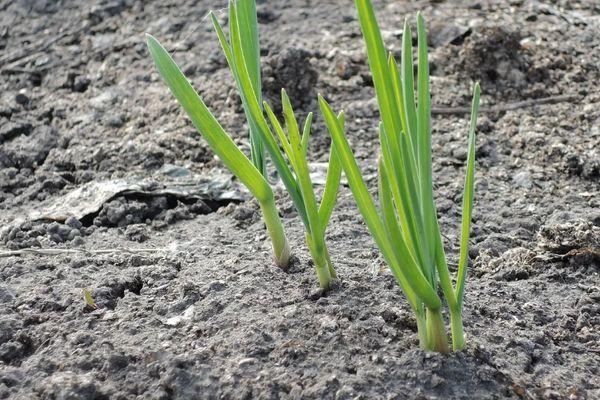
- light green stems are strong, with characteristic 5-8 leaves 30-35 cm long and 2.0-2.5 cm wide;
- height of flower stalks: 0.7-0.9 m;
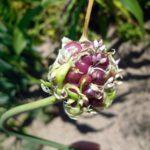
- The aerial bulblets are large, with a purple tint, each containing 80-90 bulblets with a total weight of 16-20 g; for annual seed renewal, they are planted at a rate of 100 g/m² to obtain monocotyledonous heads;
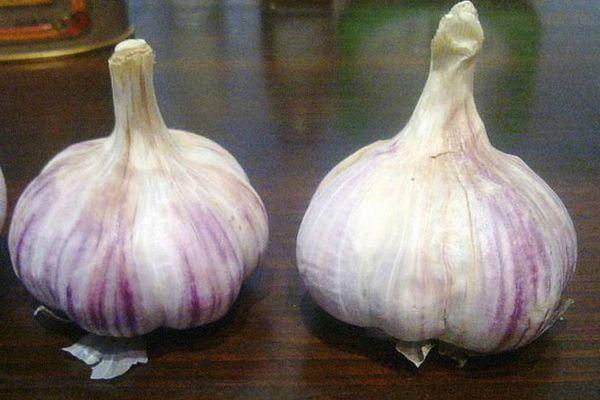
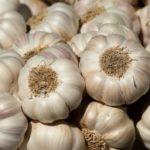
- the bulbs are dense, round, of simple structure, with 4-6 cloves with a total weight of 60-70 g; the pulp is dense, with a sharp taste and an essential oil content of 0.2-0.5%; the outer dry shell is purple with white stripes;
- On average, 700 g are collected from 1 m².
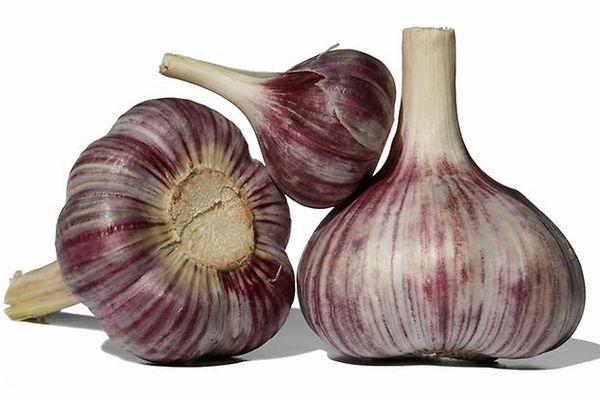
According to gardeners, the Bashkir 85 variety has large and juicy cloves with excellent taste.
Planting a crop
Plant the bulbs of the Bashkir 85 variety in the fall before frost or at the end of summer, combining harvesting and selecting part of the material for re-burying in the garden bed.
The soil is prepared in advance: weeds are removed, debris is cleared, and fertilizers are added depending on the soil type:
- clay soil requires the addition of (per 1 m²): peat - 1 bucket, potassium salt - 20 g, superphosphate - 30 g;
- Sandy loam soil is well suited for garlic - it is dug to a depth of 20 cm and humus is spread at a rate of 5-6 kg/m² (do not use fresh manure!);
- Loamy soil is fertilized with chalk or dolomite flour.
Nitrogen fertilizers are not recommended in the fall, as they stimulate the growth of green mass, while the root-fruiting portion is more important for garlic. Two days before planting, select bulbs are wrapped in damp cloth to promote gradual germination. Avoid beds where onions or garlic have recently been grown. Plant the bulbs 15-20 cm deep, with row spacing of 25 cm and clove spacing of 13-14 cm. Finish by covering with soil and watering thoroughly.
Caring for garlic
Like any vegetable crop, this hot spice responds well to maintaining comfortable growing conditions.
The crop is unpretentious, but the basic rules for obtaining a good harvest should be followed:
- Soil moisture should be optimal. Avoid localized precipitation accumulation, and water less frequently than other plants. The water should be warm, at least 20°C. It's best to stop watering during the last month of ripening.
- Soil composition and structure. A good soil mix for garlic is peat moss with sand and clay. Weeding and loosening the soil, as well as fertilizing with compost during the ripening period, will help maximize the vitamin content, resulting in larger, more nutritious garlic bulbs.
- The stems divert some of the plant's nutrients to the formation of aerial bulblets, which aren't always needed. Removing long flower stems increases the rate of fruit growth.
- Illumination of the garden bed. The plantings should not be in the shade, otherwise the bulbs may not have time to ripen before autumn.

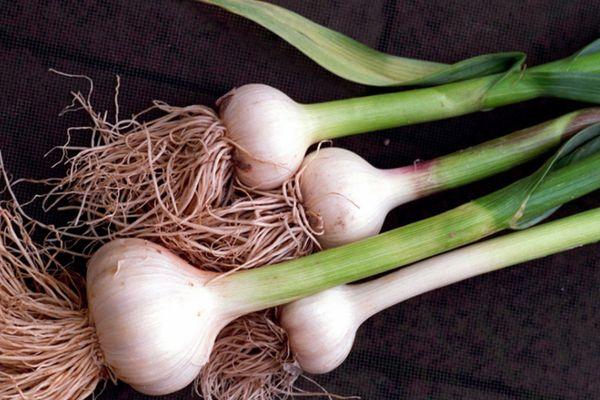
You can also grow garlic indoors on a windowsill, harvesting it year-round. Moreover, the vegetable is resistant to pests and diseases.
Preserving the harvest
The ripeness of the heads is recognized by the stems: they do not produce new shoots, turn yellow and bend towards the ground.
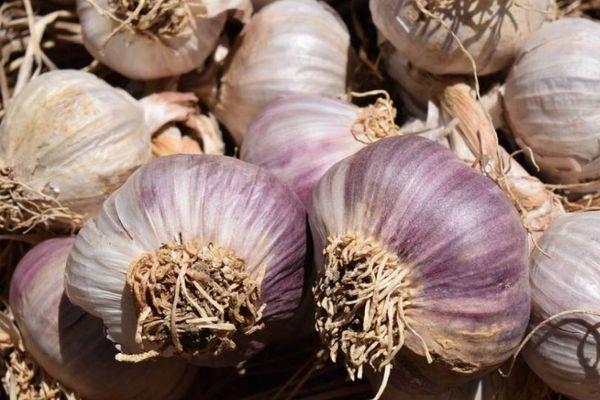
After digging up the bulbs, they are washed and dried, after which they are stored in one of the following ways:
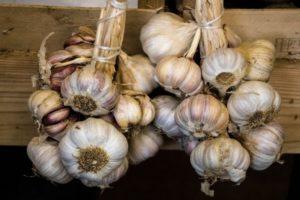
- leave 20 cm of stem to braid and hang in bunches in the kitchen for better ventilation;
- Place them in small cardboard or plywood boxes in 4-5 layers, sprinkling each layer with table salt, covering the top layer to a thickness of 3 cm (you can use wood ash or sawdust);
- place the heads in nylon tights or stockings and hang them in a dry, ventilated place;
- Place peeled cloves in a glass jar, pour in vegetable oil, close with a regular lid and put the ready-to-use garlic in the refrigerator.
The winter variety Bashkirsky 85 stores slightly worse than spring varieties, so it's important to maintain humidity at 70-75% and adequate ventilation. The optimal storage temperature is -3 to +1ºC.
Related posts:
 The best varieties and types of early and winter garlic with descriptions and names
 When can spring garlic be harvested in 2025? Harvesting from the garden and storage
 Planting and growing garlic from bulblets in open ground, care and harvesting
 Why does garlic turn blue and green when pickled, how to avoid this, and is it safe to eat?
 How to properly grow and care for spring garlic in open ground and when to tie it into knots
 Garlic cultivation technology in open ground, planting times, and care guidelines for a good harvest
 Features of planting and caring for family garlic, description of varieties, pest control
 Description and cultivation of Chinese garlic, cultivation and care
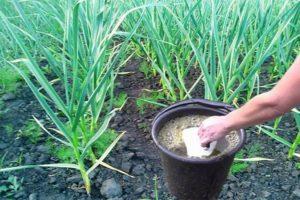
I love this variety; the garlic grows quite large and is very aromatic. I have no problems with its germination, and I always useBioGrow", a high-quality growth bioactivator.