
- The History of the Kolkhoznitsa Melon
- Description of the variety
- Main advantages and disadvantages
- Features of crop cultivation
- Preparing seedlings
- Preparing seeds for growing
- Let's start sowing
- Caring for seedlings
- An alternative way to grow seedlings
- Selecting and preparing a planting site
- Landing rules
- Subtleties of caring for the variety
- Watering and fertilizing
- Formation of bushes
- Temporary shelter
- Protecting melons from diseases and pests
- Harvesting and storage
- Regionalism
- Growing in the Urals
- Moscow region
- In Siberia
- How to choose a delicious melon
- Reviews of the Kolkhoznitsa melon
Of all the melon varieties, the Kolkhoznitsa melon gained the greatest popularity back in Soviet times. Many other varieties have now appeared, many of them larger, but thanks to its sweet taste and strong aroma, the Kolkhoznitsa remains a popular choice. Although native to the south, it's not particularly difficult to grow—even a novice gardener can handle planting and care.
The History of the Kolkhoznitsa Melon
This melon variety was added to the State Register of Breeding Achievements in 1943, though it had appeared even earlier, in 1939. Kolkhoznitsa was developed at the Biryuchekutskaya Experimental Station in the Rostov Region. It was the specialists at this station who applied for Kolkhoznitsa to be included in the register, but it took another five years for the application to be accepted.
Despite its small size, Kolkhoznitsa is one of the two varieties most commonly found in stores. In fact, its only competitor is Torpedo melonKolkhoznitsa itself has many virtues beyond its taste, which is why it has been grown by professionals and amateurs for over 80 years.
Description of the variety
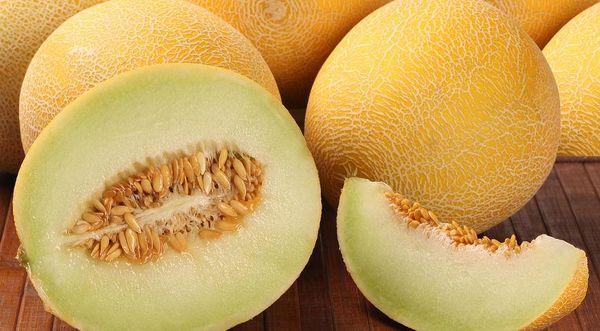
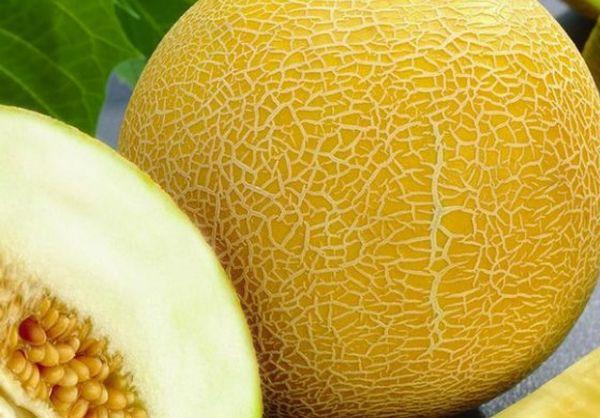
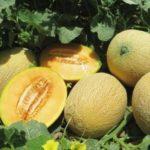
Kolkhoznitsa is a mid-season variety, with the first fruits ripening 2-3 months after planting. The bush resembles a cucumber. The only difference is the light, rounded leaves, which have no serrated edges. The melon fruits have the following characteristics:
- weighs from 0.7 to 2 kilograms;
- spherical;
- in diameter - about 20 centimeters;
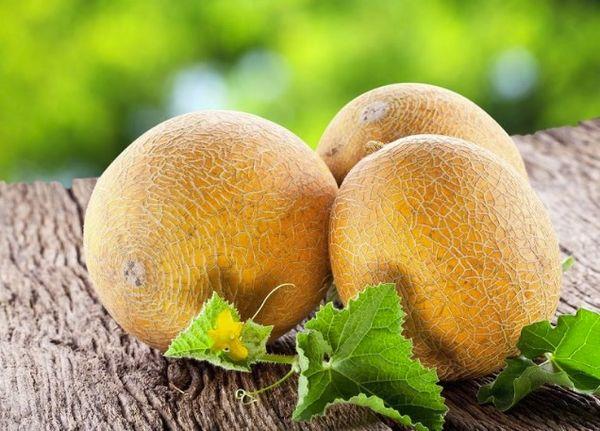
- the skin is colored orange, yellow, and may have a green tint;
- The surface of Kolkhoznitsa is smooth, sometimes it can have a rough mesh;
- the bark is both flexible and dense, of medium thickness;
- due to its small size, the pulp layer is thin, the pulp itself is white and slightly crispy, with fibers, sweet;
- There are many seeds in one melon fruit.
Main advantages and disadvantages
Due to the peculiarities of the culture, this melon variety has many advantages and brings many benefits:
- Does not get damaged during transportation thanks to its dense bark.
- It has a pleasant and sweet taste.
- You can eat one piece at a time and the pieces won't stay around.
- Not a very long growing season.
- The remaining seeds are suitable for planting because Kolkhoznitsa is not a hybrid.
- Contains many vitamins and microelements, quenches thirst, and flushes the kidneys.
- It is characterized by low calorie content.
There are also a few downsides to consider before planting:
- Although Kolkhoznitsa is an unpretentious variety, in a cool climate and when grown in shady places the melon becomes less sweet.
- If grown in a greenhouse, it requires manual pollination.
- Susceptible to fungal diseases.
- Most other melon varieties are larger.
- When grown in northern regions, the crop may taste bitter if not cared for properly.
Kolkhoznitsa melon can be harmful if consumed in excess. Diabetics should exercise caution, especially when consuming it. It is also contraindicated to consume it on an empty stomach or in combination with alcohol or fermented milk products.

Features of crop cultivation
The most important thing to remember is that Kolkhoznitsa doesn't tolerate cold well. When planting outdoors or indoors, the nighttime temperature shouldn't drop below 10 degrees Celsius. Moreover, under such conditions, melons stop developing and may die if temperatures don't rise.
As for timing, for an August harvest, plant melons in the second half of May or earlier; if you want to harvest the fruit in July, move the planting date to April.
Use weather conditions to determine whether to plant Kolkhoznitsa in a hotbed, a greenhouse, open ground, or as seedlings at home.
Preparing seedlings
Selection of planting material and preparation of seedlings plays a major role in growing melons.
Preparing seeds for growing
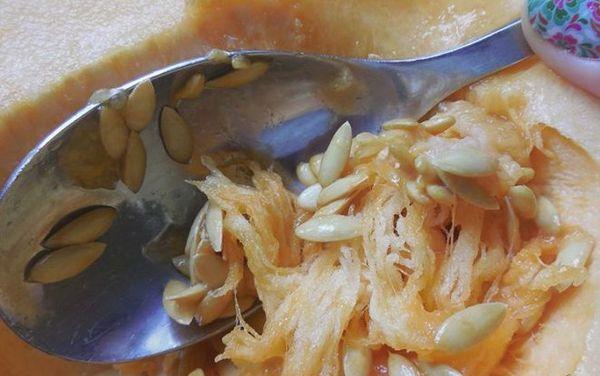
First, select the appropriate Kolkhoznitsa seeds. They must meet the following requirements:
- large;
- without damage or defects;
- dense (do not sag);
- not empty.
You can check for empty seeds by soaking them in water. Empty seeds will float immediately. To protect melons from fungal diseases, gardeners recommend disinfecting the seeds:
- Place in an opaque solution of potassium permanganate for 15-20 minutes.
- Rinse.
- Keep in hot water at a temperature of about +50 for another 5-10 minutes.
Next, the seeds need to germinate. To do this, soak them in a growth accelerator for 2 days. After the sprouts appear, they need to be hardened off. This is done in the refrigerator, where the seeds are stored for 15-20 hours, wrapped in cheesecloth.
Let's start sowing
Peat or even regular cups are suitable for Kolkhoznitsa seeds. Their size depends on the time required for growing:
- 2-3 weeks – 159-200 milliliters;
- 4 weeks – twice as much.
For filling, you can use a ready-made substrate or a mixture of garden soil, peat, ash, and sand. Once the planting site is ready, proceed as follows:
- Bury the seeds 5-6 centimeters deep. Place two melon seeds per glass; remove any excess later.
- Pour water with room temperature.
- Sprinkle the soil with sand to prevent root rot.
Caring for seedlings
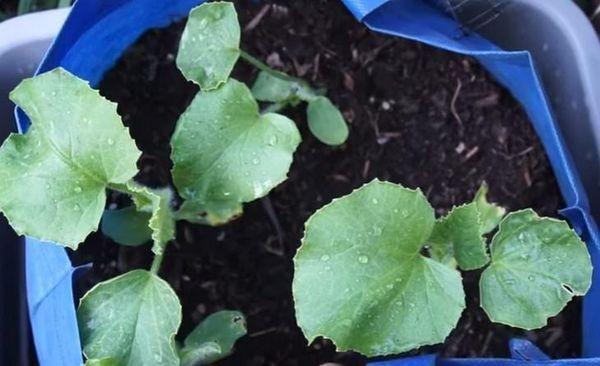
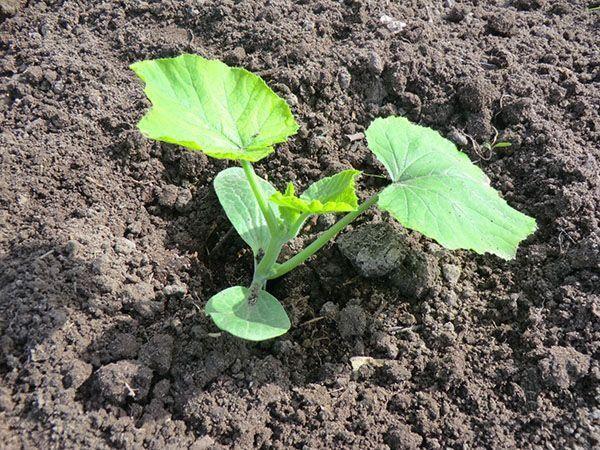
The seedlings should be kept in a sunny, warm location. The ideal temperature for Kolkhoznitsa is 20 degrees Celsius or higher. Regular watering is also essential, making sure the soil never dries out. Fertilizing is not necessary if you've selected the right soil. As soon as three true leaves appear, pinch off the top ones to encourage shoots to emerge from the sides. The melons will take a month to grow, after which they can be planted in the ground or under plastic.
An alternative way to grow seedlings
Using this method, you can make melon seeds grow without soil for up to two weeks:
- Take a regular plastic bag or film. The film should be 10-15 centimeters wide and twice as long as the number of seeds. Simply fold the bag in half.
- Place 2-3 layers of toilet paper on top.
- Spray with water.
- Start laying out the seeds at a distance of 2-3 centimeters from the top edge, leaving 1-2 centimeters between them.
- Roll into a roll and secure.
- Place it in a glass so that the water in it covers the bottom edge of the paper.
Once the leaves emerge, the Kolkhoznitsa seedlings can be transplanted to their permanent location. If this isn't possible in time, add a layer of soil (1-2 centimeters thick) and roll it up again. The paper can be easily torn off when planting.
Selecting and preparing a planting site
Kolkhoznitsa is very picky about its growing location. The site must meet all the following conditions:
- light or loamy soils;
- groundwater level – 2-3 meters;
- wind protection;
- plant melon in a place where green manure, onions, potatoes, and cabbage were previously grown;
- do not use the area after cucumbers and melons;
- the soil is dry, without stagnant water.

If the groundwater level is too low, you can place the same amount of natural material (branches, grass, etc.) under a 20-centimeter layer of soil. It's also important to properly prepare the soil for Kolkhoznitsa. For the greenhouse, soil is collected after frosts to prevent pests from getting in. Also remove all weeds, dig up the soil, add ash, lime, humus or manure.

When planting in open ground, preparation is carried out in two stages:
- In autumn, add a tablespoon of superphosphate and potassium fertilizer per square meter.
- In spring – half a liter of ash and a bucket of compost or humus.
- It is also important to loosen the soil with sand, leaves, and branches.
Landing rules
Once you've grown Kolkhoznitsa seedlings indoors, you can only plant them if the nighttime temperature doesn't drop below 10 degrees Celsius. The planting pattern for the melon is as follows:
- Remove or tear apart the cups to prevent them from becoming crusty.
- Bury it at the same depth at which the melon grew before.
- Do not damage the roots under any circumstances.
- Fill the holes with sand.
- During the first week, cover with spunbond or bottles.
In open ground, plant melons using a 140x100 cm (55x40 in) spacing. If you plan to grow them in a greenhouse and tie them to a trellis, use a 70x70 cm (28x28 in) spacing.
Subtleties of caring for the variety
Kolkhoznitsa is not a demanding variety, but improper care can cause significant harm to the plant.
Watering and fertilizing
Watering schedules differ for young and mature plants. However, in any case, avoid excessive moisture to prevent fungal growth:
- The soil under young melons should always be slightly moist.
- In dry weather, water adults once a week.
- When fruits are formed, watering should be increased.
- Half a month before full maturity, watering should be stopped completely.
Fertilizer should be applied 3 times:
- when two leaves appear - bird droppings and water in a ratio of 1 to 15;
- after 2 weeks – half a liter of a solution of superphosphate, potassium salt and ammonium nitrate per hole;
- The previous mixture is repeated after another 3 weeks.
During berry growth, ash can be used instead of mineral fertilizer. It's scattered over the soil, then loosened and watered.
Formation of bushes
Without proper plant training, you risk not getting a harvest at all. This is because the main shoots usually produce "male" flowers that don't produce fruit. To avoid this, follow this pattern:
- To encourage branching, the plant needs to be pinched as the seedlings grow. However, in the south, no more than 3-4 shoots can be left, and in the north, only two.
- It's also important to monitor the fruit count. A large, vigorous plant can produce a maximum of six berries, while a weak plant can produce three. In unfavorable climates, the number of berries decreases. All berries should be evenly spaced, 30 centimeters apart.
- When the fruit ovaries reach the size of an egg, select and pinch off the shoots at a distance of 5 leaves from the last fruit. Also remove any side shoots.
- To protect the fruit from rotting, place foil or glass underneath it and remove all the petals.
Temporary shelter
Covering is necessary in case of frost. You can use plastic film to create a greenhouse. If the seedlings are still small, cover them with bottles.

Protecting melons from diseases and pests
The Kolkhoznitsa's main enemy is fungal diseases. Various insects may also appear. High humidity or high potassium levels cause fusarium wilt. Root rot is also possible; if it occurs, the plants are destroyed.
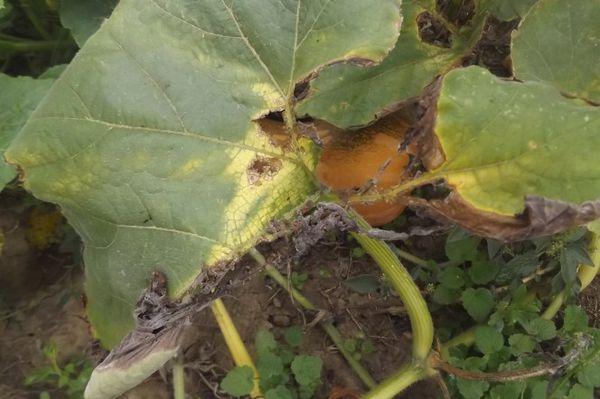
The following remedies can be used against other diseases:
- Powdery mildew - pesticides for prevention;
- before flowering and at the beginning of ovary growth, fungicides are used;
- against insects – insecticides, soap solution, tobacco dust.
Harvesting and storage
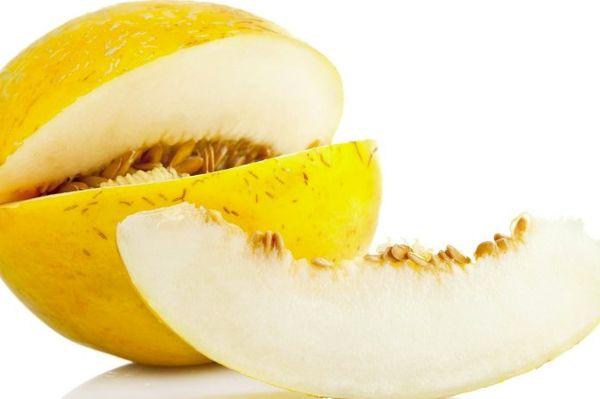
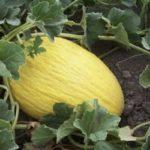
You can tell a melon is ripe by its bright yellow color, and the bottom of the fruit becomes soft and exudes a sweet aroma. After this, they are cut off, stems included, in the morning or evening. They can also be harvested a little earlier—up to a week before they are fully ripe. Although the fruits have a thick skin, they must not be damaged, otherwise ripe melons will rot. With careful handling, they will keep for 3-4 months. To do this, place each berry in a soft mesh bag and store in a cool place (1-3 degrees Celsius) with 70-80% humidity.
Regionalism
Melons ripen differently depending on the region, but in the north it is more difficult to achieve a harvest.
Growing in the Urals
Due to the short and cold summers, melons can only be grown in a greenhouse. However, with proper growing techniques, the fruits will be sweet.
Moscow region
This isn't the best spot for Kolkhoznitsa either. Seedlings need to be planted; seeds are sown in mid-April. The seedlings need to be covered at night. Regular feeding is also required.
In Siberia
Surprisingly, in Siberia, melons aren't grown exclusively in greenhouses. They can be raised in warm beds made from rotted manure, plant debris, and nitrogen fertilizer. Top this with a 20-25 centimeter layer of fertile soil. Frost protection is provided by smudging smoke from fires around the beds or by applying Epin.
How to choose a delicious melon
A ripe, high-quality melon will smell like honey and pear. If there's no scent, it's either unripe or was grown with artificial fertilizers. Also, avoid damaged melons. The skin is firm and makes a popping sound when struck.
The stalk is dry, the area around it is elastic, but not soft.
Do not eat the fruit if the flesh is hard or greenish near the rind. This indicates unripeness and can cause food poisoning.
Reviews of the Kolkhoznitsa melon
Many gardeners speak highly of Kolkhoznitsa. Even if you live in a hot summer, you can still get a good harvest. However, without proper care, it will be difficult to grow this variety. Heavy rainfall also damages it. Pest control is also crucial.
Related posts:
 How to grow melons outdoors, planting dates, watering, and care
 Rules for growing and caring for melons in Siberia in open ground
 Golden recipes for preparing pickled melon for the winter and storing the prepared products
 Why are my melon leaves turning yellow in open ground? How to treat and what to do.
 How to treat melons against pests and diseases, and can infected fruits be eaten?
 Why melons aren't setting fruit and what to do about it. Methods for hand pollination.
 Description and selection of the Torpedo melon variety, benefits and harms for the human body
 Description and cultivation technology of the Ethiopian melon variety