
- Suitability of the region for growing melons
- Melon varieties for Siberia
- Open ground
- Tender
- Altai
- Collective farmer
- Scythian Gold
- Greenhouse varieties
- Assol
- Moon
- Solar
- Extraordinary
- Specifics of growing melons in the region
- When should sowing be done?
- Preparing for landing
- Seeds
- Preparing the land
- Sowing melon in the ground
- Growing seedlings
- Timing and sowing scheme for greenhouses
- Caring for melons
- Watering and humidity
- Top dressing
- Formation of bushes and crop standardization
- Protection from diseases and pests
- Olive spot
- Powdery mildew
- Anthracnose
- Harvesting and storage
- Tips and advice from gardeners
Growing various agricultural crops in Siberia often presents challenges. However, breeding advances, and every year more and more varieties are being developed that can withstand the region's harsh climate. For example, it has become possible open ground cultivation in Siberian melon, which belongs to the southern crops.
Suitability of the region for growing melons
As is well known, melon is a heat-loving crop. Favorable growing regions are southern regions with early springs and very hot summers. Based on this crop's characteristics, it's not hard to guess that Siberian regions are unsuitable for its cultivation. However, you can try your luck and grow melon.
Of course, growing large melons like in the south won't be possible. Furthermore, only greenhouse cultivation is suitable for planting; harvesting melons in open ground is very difficult. Summer in Siberia begins late and ends quickly, and temperatures don't warm up to levels considered favorable for the plant. Therefore, to avoid wasting time, it's best to plant the seedlings directly in a greenhouse.
Melon varieties for Siberia
Any melon variety is unsuitable for planting in Siberia. Only frost-hardy hybrids specifically grown in this region should be sought.
Open ground
Frost-resistant and early hybrids are primarily suitable for open ground.
Tender
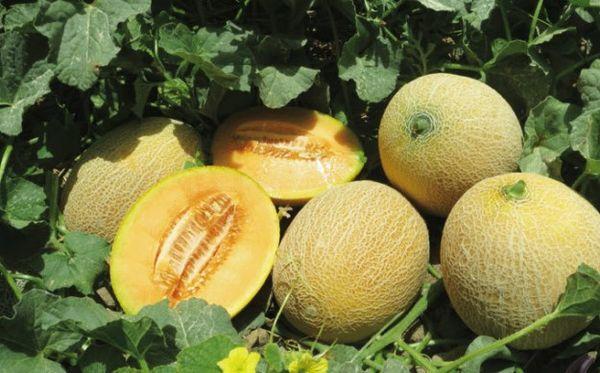
A mid-early variety with a growing season of 65 to 75 days. The fruits are round, with a firm, yellow skin. The flesh is yellow-green, sweet, and juicy.
Altai
This hybrid is ideal for planting in harsh climates, even outdoors. The melons are elongated-oval in shape. The melons are small, weighing up to 2 kg. The flesh is juicy and aromatic. This hybrid ripens mid-early.
Collective farmer
This hybrid is mid-season, with a growing season of 95 days. In a greenhouse, the ripening period is reduced to 87 days. Fruits weigh up to 1.5 kg. The ripe flesh is aromatic and sweet. The skin is thick.
Scythian Gold
A mid-early hybrid. Its advantages include resistance to powdery mildew and extreme weather conditions. The fruits are small, weighing 1 to 1.3 kg. The flesh is creamy and sweet.
Greenhouse varieties
In Siberia, melons are grown primarily in greenhouses, so it's best to choose varieties suitable for greenhouses.
Assol
This variety was developed by Russian breeders. It is classified as a mid-early ripening variety. The growing season lasts 80-95 days after germination. The fruits are oval-shaped, with a firm, lemon-colored peel. The flesh is sweet and juicy. The melons are small, averaging 900 g.

Moon
This hybrid is mid-early, with a ripening period of 90-95 days. The fruits are small, weighing up to 1 kg, and oval-shaped. The skin is thin and a rich lemon color. The flesh is not very sweet or juicy, fine-grained, and creamy.
Solar
This hybrid has excellent flavor. The flesh is sweet, aromatic, and juicy. The fruits are large, weighing up to 2 kg. The harvest is mid-early, with the melons ripening 86-94 days after sowing.
Extraordinary
A mid-early hybrid, the first ripe fruits appear in the garden 60-67 days after planting. The melons have an unusual flattened, round shape. The rind is ribbed and orange. The flesh is creamy, juicy, and sweet.
Specifics of growing melons in the region
Growing melons in Siberian regions is challenging, but entirely possible. You'll just have to devote as much time as possible to caring for the crop.
When should sowing be done?
There are no exact dates for planting melons in Siberia. The first step is to consider weather conditions. Seeds should be planted after warm weather has set in and the threat of night frosts has passed.
You can plant the crop indoors and then transplant the finished seedlings outdoors. In this case, the seeds are sown closer to the second half of March.
Preparing for landing
Before planting, it's essential to select a good location and prepare the soil. It's also important to carefully prepare the seeds to increase germination rates.
Seeds
If you plan to start the seedlings indoors and transplant them as seedlings, you'll need pots and peat moss. Germinate the seeds before planting. Place them in damp cheesecloth and store them in a warm, dark place. Seedlings should appear within 2-3 days. Then, plant them in the ground.
It's also recommended to germinate the seedlings before planting them outdoors. This ensures earlier germination.
Preparing the land
Melons aren't particularly demanding when it comes to soil composition or acidity. Light, fertile, well-drained soil is ideal for planting. A few days before planting seedlings or seeds, the soil is dug over and mixed with peat moss and humus.
The only limitation is that the plant does not like clay soils, so if the soil on your site is like this, you should first add sand to the soil.
Sowing melon in the ground
Before sowing melon seeds, it's important to ensure the soil is warm. Planting seeds in cold soil will result in not all seeds germinating, and the seedlings that do emerge will be weak and prone to disease, with fruit buds that may fall off.
Dig the soil and make shallow holes, leaving 50-60 cm between them. Plant the seeds and cover with a small amount of soil. It is not recommended to plant the seeds too deeply.
Germination problems may occur. At the end of planting, water the holes generously with warm water.
Growing seedlings
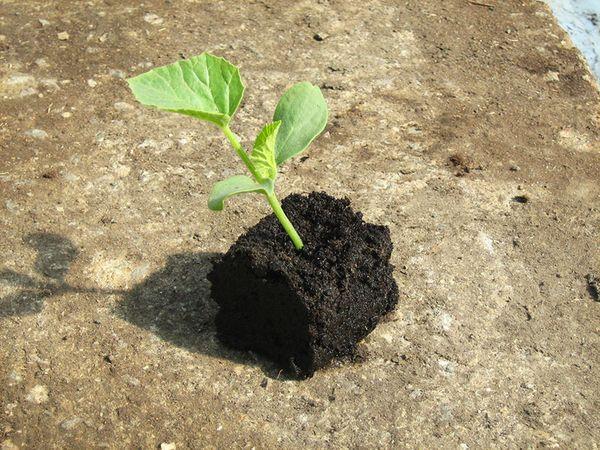
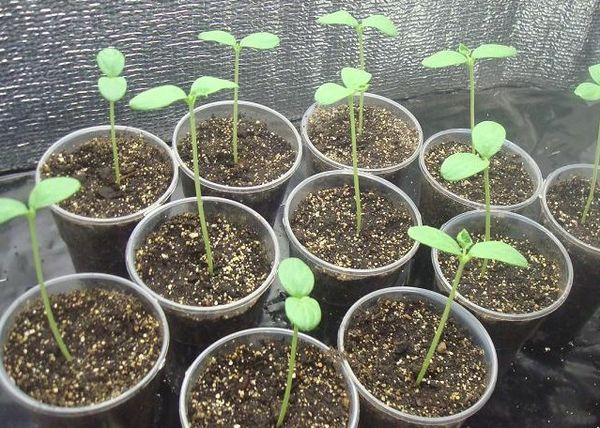
Melon seedlings should be grown in separate peat pots, which are then transplanted to a permanent location.
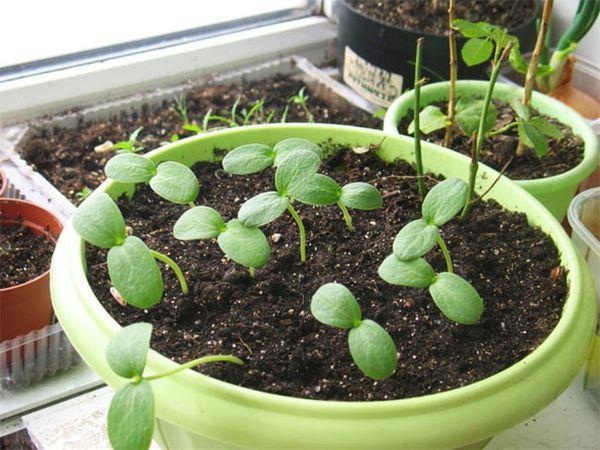
The process of planting seedlings:
- The pots are filled with peat.
- Plant the seeds, water them generously and cover them with cling film.
- The film is removed regularly to allow the soil to breathe and to water the future seedlings.
- After a few days, seedlings will appear, after which the film is removed.

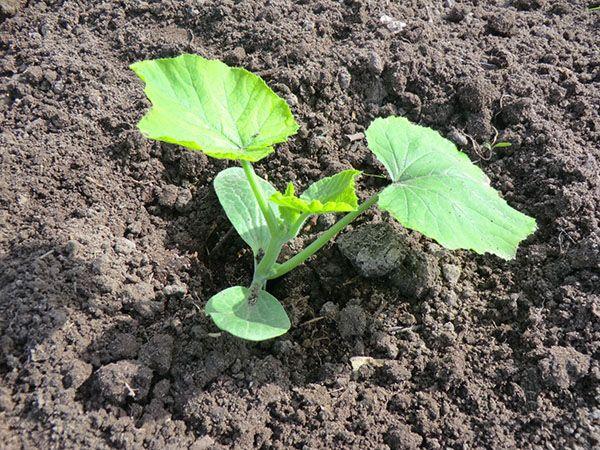
Seedlings are planted outdoors after a couple of full-fledged leaves appear. It's also important to consider the weather. If the soil hasn't warmed up and is still cold, reschedule the transplant for a more favorable time.
Timing and sowing scheme for greenhouses
In a greenhouse, seeds are planted when the weather outside also warms up. However, if the greenhouse is artificially heated, planting can be done at any time.
The planting pattern is the same as for open ground. The distance between the holes can be smaller if the greenhouse is smaller.
Caring for melons
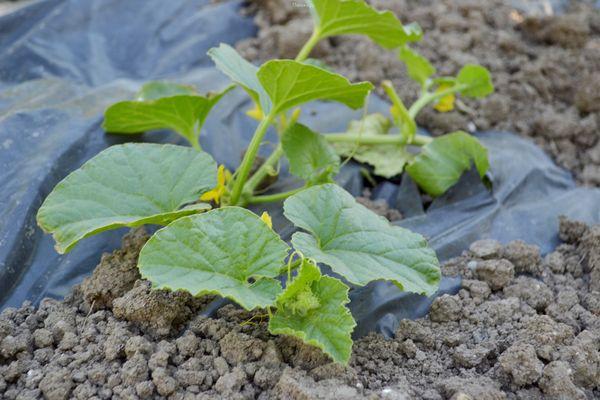
While melons can produce fruit normally in the south without any additional care, in Siberia, growing a decent harvest without it is impossible.
Watering and humidity
Melons don't like overwatered soil, so they don't require frequent watering. However, they do appreciate ample irrigation. The bushes should be watered generously until the fruit sets. After this, water less and less frequently. During the ripening period, to ensure the fruit is sweet, watering should be minimal.
Warm, sun-warmed water is suitable for watering. Cold water is not recommended. Water the soil in the evening, after the sun has set, to prevent leaf burn.
Top dressing
To ensure a decent harvest, regular fertilization is essential. Mineral fertilizers are first applied in the fall or immediately before planting. Complex mineral fertilizers are added to the soil.
When the ovaries appear, they are watered with nitrogen-containing fertilizers. After they have formed, the soil is fertilized with phosphorus and potassium.
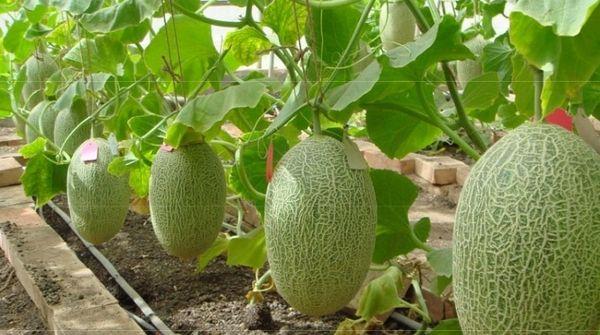
Useful organic fertilizers include humus, rotted manure, wood ash, and weed infusions. Humus and manure are added to the soil along with generous watering of the beds.
Formation of bushes and crop standardization
Formation of melon bushes is carried out until the lateral shoots become large enough.
Formation process:
- The first pinching of the seedling is carried out after 4-5 leaves have formed.
- The top of the shoot is carefully pinched off.
- After the stepsons have formed, two shoots are left and the rest are cut off.
- After two weeks, the tops of these shoots are pinched.
- Of the ovaries that appear, the largest ones are left and the rest are cut off.
You can also pluck off weak shoots.
Protection from diseases and pests
When growing melons, you may encounter diseases. At the first sign of trouble, treatment should be initiated immediately.
Olive spot
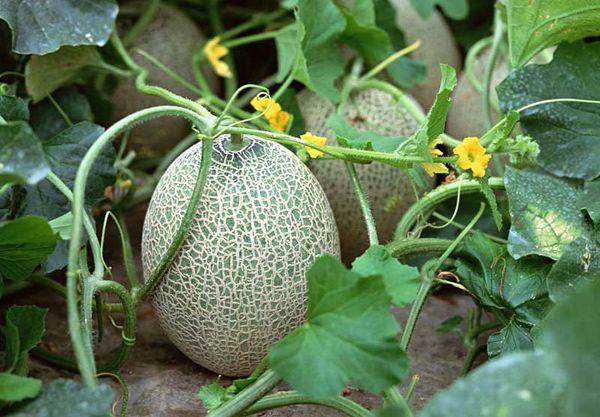
A characteristic sign of the disease is the appearance of oily spots on the fruit, which later turn brown. Ovaries constantly fall off. Olive spot is a fungal disease. At the first sign of the disease, the bushes are treated with a 1% Bordeaux mixture solution. As a preventative measure, you can treat the planting material beforehand.
Powdery mildew
Powdery mildew is a common disease of many agricultural crops. The first sign of the disease is the appearance of a whitish coating on the foliage and fruit. As the disease progresses, fruit buds continually drop, and yields decline. True powdery mildew appears on the upper surface of the leaf. False powdery mildew affects the lower surface.
Take a look Also
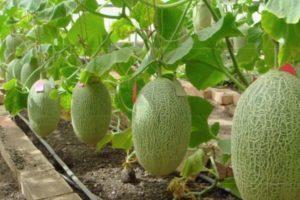
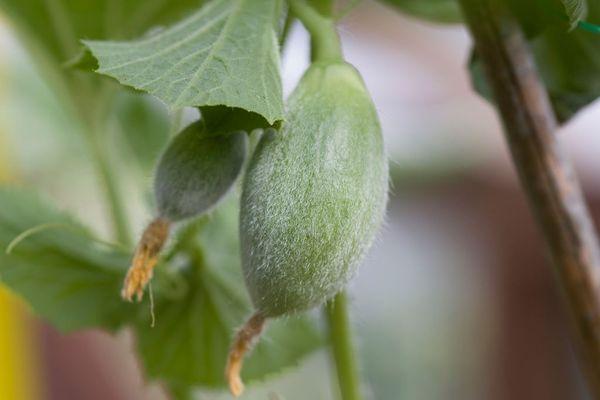
To combat powdery mildew, spray the bushes with a urea solution, Bordeaux mixture, or Topaz or Oxychom. Repeat the spraying after 10 days.
Anthracnose
If copper-colored spots begin to appear on the leaves, gradually increasing in size and then turning into holes, this indicates anthracnose. Infected fruits grow deformed and fail to reach maturity.
To prevent the disease, weed the soil after each watering. During the growing season, spray the bushes with Bordeaux mixture or dust them with sulfur powder. No more than four treatments are allowed during this period, with 12-day intervals between them.
Harvesting and storage
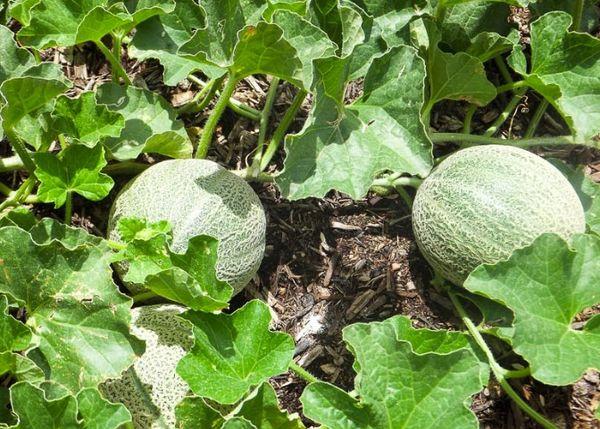
Melons are harvested as each fruit ripens. Leaving melons in the garden for too long is not recommended. The longer they remain in contact with the soil, the greater the risk of mold on the rind. The fruits can be harvested once the stems begin to dry out.
Store the harvested melons in a cool place, away from direct sunlight. Avoid storing them in a humid environment. It's best to store them in the refrigerator or pantry.
Tips and advice from gardeners
Tips from gardeners on growing melons in Siberia:
- You should water the soil around the bush, but be careful that water does not get on the root system.
- In hot weather, you can water the beds twice a day, but in rainy weather, you can completely stop watering for a while.
- Once a week before watering, the soil is loosened and weeds are pulled out.
- If there are shoots without ovaries, they are torn off along with the second-order inflorescences.
- During prolonged rains, you can place glass or a piece of wood under each fruit so that the fruit does not come into contact with the soil and begin to rot.
- Before planting, it is recommended to soak the seeds for 20-30 minutes in a weak solution of potassium permanganate to treat them.
- When growing in a greenhouse, you'll have to pollinate yourself. You can set up hives in the greenhouse or tap the flowers with a stick to release pollen.
- During the first period after planting in open ground, seedlings can be covered at night to prevent them from being killed by frost.
- It's best to use large seeds for planting; they're more likely to germinate. You can also soak them in salt water for 20 minutes beforehand. Seeds that float to the surface are not suitable for planting.
By following the necessary recommendations for growing melons in Siberia, you will be able to obtain healthy bushes and a decent harvest.
Related posts:
 How to grow melons outdoors, planting dates, watering, and care
 Growing Kolkhoznitsa melon in open ground: benefits and how to choose
 Golden recipes for preparing pickled melon for the winter and storing the prepared products
 How to treat melons against pests and diseases, and can infected fruits be eaten?
 How to Grow and Care for Melons in a Polycarbonate Greenhouse
 Why melons aren't setting fruit and what to do about it. Methods for hand pollination.
 Why are my melon leaves turning yellow in open ground? How to treat and what to do.
 Description and cultivation technology of the Ethiopian melon variety