
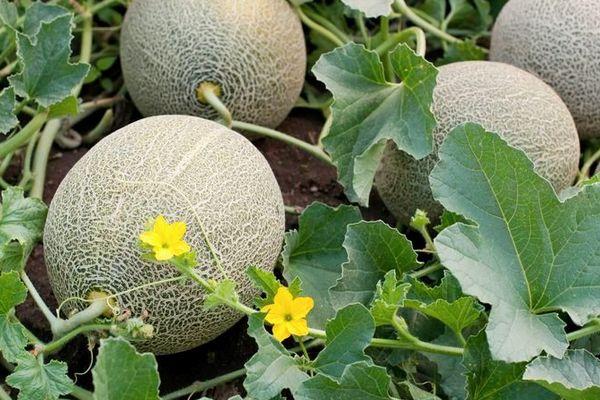
- What does a melon fruit look like when it is in full bloom?
- What melon doesn't accept
- Humid air
- Watering with cold water
- Cold damp drafts
- Acidic soils
- Concentrated fertilizers
- Methods of control
- Why are my melons not setting fruit at all?
- Barren flower on melons
- Why are there no "female" types of flowers on melons?
- Melon ovary drop
- Artificial pollination of melon
The yellow, aromatic, healthy, and delicious melon originated in Russia, having traveled all the way from warm Asia. Even Siberia and the Urals have learned to grow melons. Given the short summer season for ripening, greenhouses are used in colder regions. The resulting melons are small but delicious. The only thing that worries Russian farmers everywhere is why the fruit blooms, but produces "male" flowers without ovaries, or why the melons fail to set fruit, and what to do about it.
In the Far East, they say that melon has rejuvenating properties, making girls beautiful and men desirable.
What does a melon fruit look like when it is in full bloom?
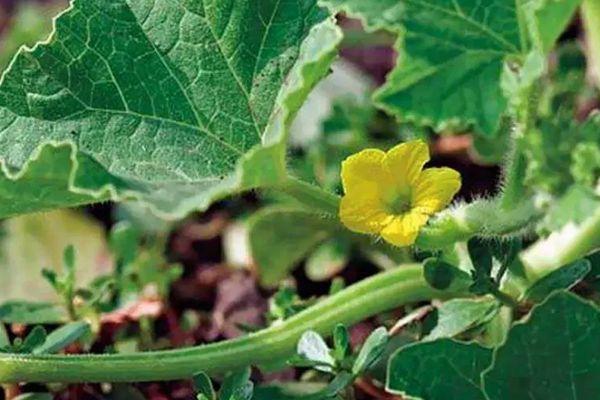
Melon is an annual plant. Its stem, with large, five-lobed leaves, reaches 1.5-3 meters in length. It blooms with delicate yellow flowers.
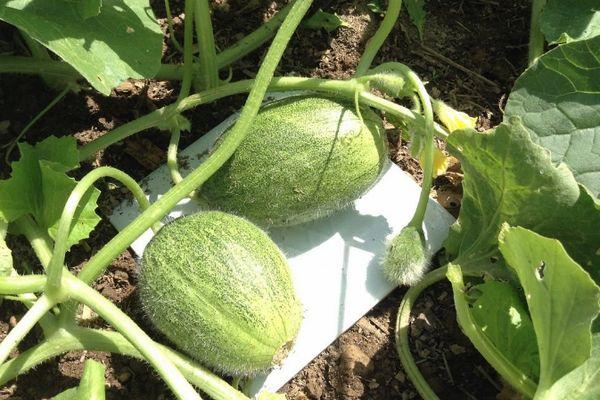
At the same time, up to 8 ovaries-fruits appear on each stem.
Male flowers open first: on the 2nd or 3rd leaf in early-ripening plants, and on the 4th or 5th leaf in late-ripening varieties. Female flowers do not form on shoots of the lower order or are sterile. These inflorescences form on shoots of the second or third order, are responsible for the fruiting process, and bloom for up to 30 days.
Pollination occurs early in the morning. Unpollinated buds bloom for another 1-2 days, while the "male" buds wilt immediately around lunchtime.
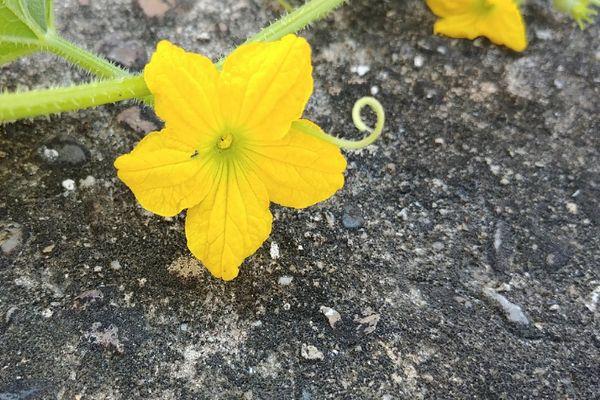
If most of the flowers turned out to be barren, and few female flowers were formed and quickly faded, it is worth paying attention to:
- insufficient lighting;
- improper watering;
- unsuitable fertilizers.
Each of these factors is discussed in detail below.
To ensure more melon ovaries, choose seeds that are 2-3 years old. Last year's seeds are not mature enough and will produce many "male" flowers.
What melon doesn't accept
Growing a bountiful melon harvest will be much easier if you consider what is not suitable for a picky melon patch:
- high humidity;
- low temperatures and sudden weather changes;
- excessive exposure to sunlight;
- abundance of fertilizers;
- weeds in the neighborhood;
- acidic and dense soils.
Melons, such as melons and watermelons, thrive in open spaces. Plant 1-1.5 meters apart.
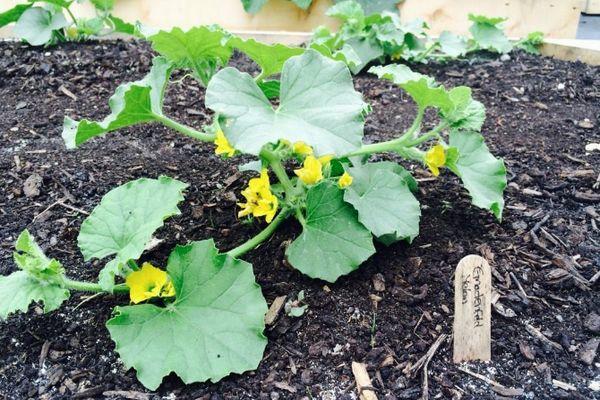
Humid air
The first negative factor for melon fruit set is rainy and cold weather with temperatures below 15 degrees Celsius. Excessive moisture leads to the development of fungal diseases, which are detrimental to the plant. Humidity can be regulated during planting using:
- ventilation of greenhouses;
- covering landing sites with polyethylene sheets;
- using the heating system.

When the crop ripens, cover it with plastic film stretched over plastic arches. Lift the film throughout the day to let in fresh air. This will remove excess moisture, which promotes fungal growth and impairs pollination, and preserve the fruit.
Watering with cold water
Don't over-water when fruit set. Melons only need water for growth. Be sure to monitor the water temperature. The water should be warm – 20°C (68°F). Once a week, you can treat the plant to warm water (up to 40°C (104°F)).
Cold damp drafts
Drafts, as well as cold, damp, and humid air, are the primary cause of melon crop failure. Greenhouses are equipped with a special ventilation system consisting of windows set into the ceiling and doors. Greenhouses should be opened during warmer months.
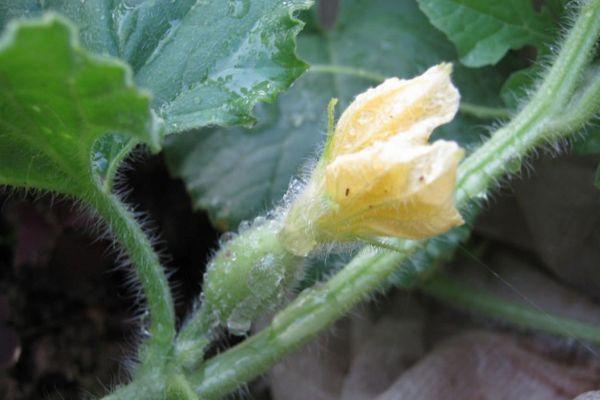
When planting melon plants in the soil, take into account the wind rose and select planting sites sheltered from the cold north wind.
Acidic soils
It's not advisable to plant in acidic or slightly acidic soil. In such soil, melons are more susceptible to diseases and pests, and the fruit will be small or will not produce fruit.
Gardeners test soil acidity with a special device. If necessary, they add lime, alkaline fertilizers, and dolomite powder.
Fertile soils for melons are considered to be:
- sandy loam;
- loamy.
The soil allows air to pass through and does not retain moisture in the root system.
Concentrated fertilizers
Traditionally, farmers feed their plants with nitrogen fertilizers after planting. For melons, this type of fertilizer will promote leaf and shoot growth but will reduce the number of fruit buds.
It's important to choose the right fertilizer for your melon patch, use it wisely, and apply it promptly. When planting, be sure to have the following:
- humus (1 liter);
- ash (0.25 cups);
- chemical preparation "Zdraven-turbo" (1 teaspoon).
After the ovaries have formed, apply only two additional fertilizers, using herbal infusion and monopotassium phosphate. Fertilizers (natural or chemical) should be diluted in plenty of water, avoiding excessive concentration.
The best time to plant melons is May 25–June 6. During this time, the waxing moon is aligned with the waning moon.
Methods of control
Even if you create favorable conditions for melon growth, you may not get fruit set. This is because the plant needs to be pinched back, otherwise it will produce barren flowers.
Take a look Also

The purpose of pinching is to remove excess shoots and direct the melon plant's efforts towards fruit formation. form melon bushes According to the instructions on the seed package. Some varieties require pinching above the fourth leaf, others above the third. Therefore, it is necessary to follow the recommendations, and if they are not available, use the traditional method.
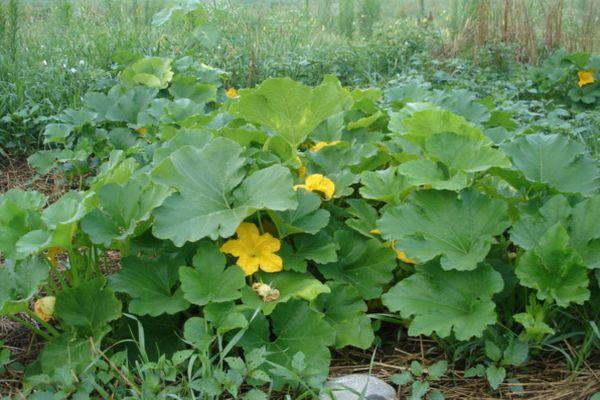
To do this, as soon as the plant produces its fifth leaf, pinch the bush above the third leaf. This will cause second-order shoots to emerge, of which the top two are left, and the rest are cut off with a sharp knife. New shoots will emerge on the remaining two, which should be pinched above the fourth or fifth leaf. This will result in the formation of shoots that bear fruit.
To increase the number of ovaries, melons are tied up starting on the fourth day of growth. Twine placed at a height of 2 meters is used for this purpose. Young shoots are supported by twine and, as the plant grows, tied with ties from left to right.
A bountiful harvest will only be achieved if each plant produces no more than six ovaries. The remaining fruits should be picked as they form.
25% of melons are grown in China.
Why are my melons not setting fruit at all?
When growing melons, people often encounter a problem: the plants bloom profusely, but there are no ovaries.
There are several reasons why there are no ovaries on a melon:
- The flowers remain unpollinated. Pollination is handled manually. Pollination occurs between 5-6 am and 12 pm. After this time, the pollen is no longer suitable for fertilization. Leaves are plucked from the "male" flowers and carefully applied to the "female" flowers. On sunny days, the melons are sprayed with honey or sugar water to attract bees and bumblebees.
- Insufficient light. A lack of sunlight causes "female" fruiting stems to form not on the 4th or 5th day, but on the 30th day.
Melons should be trained to prevent the development of barren flowers on second-tier shoots. To achieve this, the plant is pinched.
It's important to monitor, control, and count the number of fruits on the third-order shoots from the moment ovaries begin to form. One bush produces a maximum of four ovaries, and one wattle shoot produces one fruit.
Barren flower on melons
Even if you follow the recommendations and adhere to the rules for caring for and properly growing melons, sometimes barren flowers still appear. Several factors contribute to this: some bushes produce only "female" flowers, others produce "male" flowers, and still others have both but still produce barren flowers.
When asked what to do if you notice a barren flower on your melon, there are three answers:
- Adjust the number of "male"/"female" flowers; if the former are few, higher temperatures and shorter daylight hours can be used to achieve this.
- The abundance of "female" flowers and the lack of "male" ones can be corrected by artificial pollination. Pollen from other melons, such as pumpkins, can be used.
- But if the bush is covered in flowers but no fruit sets, the cause is a lack of pollinating insects. Artificial pollination is also a solution.
Why are there no "female" types of flowers on melons?
The most common reason for the absence of fruiting flowers is the absence of second- or third-order shoots. These shoots are the ones that produce fruit. However, the "female" flowers appear much later than the "male" flowers, after the 6th to 30th leaf. Therefore, melons are pinched after the 4th to 6th leaf appears.
Melon ovary drop
There are several factors that explain why the ovaries on the melon formed but then suddenly fell off:
- Hot air prevents pollination and impairs fruit nutrition.
- The seeds are planted close to each other.
- Poor lighting, dark landing site.
- Insufficient watering during growth.
- Constant temperature fluctuations lead to the absence of ovaries.
- Unsuitable or depleted soils.
Artificial pollination of melon
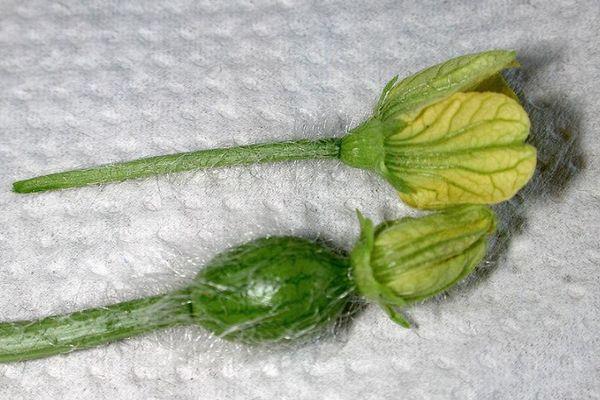
Pollination of melons, if there are no "male" flowers or pollinating insects on the melon crop, is done by hand. It is important to learn to distinguish between "male" and "female" flowers on the melon crop.
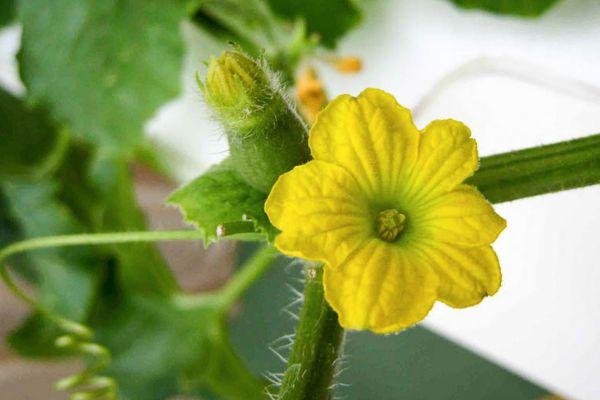
"Male" flower stalks are small and contain five stamens. Then select the largest "male" flowers, pluck the petals, place them on the "female" stamens, and twist them slightly. "Female" flowers, located closer to the root, produce a larger harvest.
Pollination of melons and gourds should only take place in the first half of the day (before 12 noon), as after this time the pollen loses its properties.
Melon takes about 3-4 months to ripen and cannot ripen completely once picked from the garden.
Related posts:
 How to grow melons outdoors, planting dates, watering, and care
 Golden recipes for preparing pickled melon for the winter and storing the prepared products
 Why are my melon leaves turning yellow in open ground? How to treat and what to do.
 Growing Kolkhoznitsa melon in open ground: benefits and how to choose
 Rules for growing and caring for melons in Siberia in open ground
 How to treat melons against pests and diseases, and can infected fruits be eaten?
 Description and cultivation technology of the Ethiopian melon variety
 Description and selection of the Torpedo melon variety, benefits and harms for the human body
I also encountered this problem, but in my case, the culprit was the wrong fertilizer. When I started using BioGrow, the situation has changed for the better.
Last summer I decided to grow melons, everything was fine until it grew too big, there were so many young shoots that I couldn’t keep up with removing them, a million fruits formed, I had to cut them off, in general it’s a hassle to grow.