
The Caramel melon belongs to a group of hybrids developed for commercial fruit production and rapid consumer sales. Caramel melons are varieties with minimal ripening times and are resilient to many local climate conditions.
Some information about the plant
The characteristics and description of the Karamelka melon are as follows:
- The growing season from planting seedlings to the appearance of the first fruits lasts 10-60 days, depending on local climate conditions. When melons are planted in southern Russia, the fruits ripen much faster than when grown in the central part of Russia or Siberia. On average, the growing season in Russia lasts 50 days.
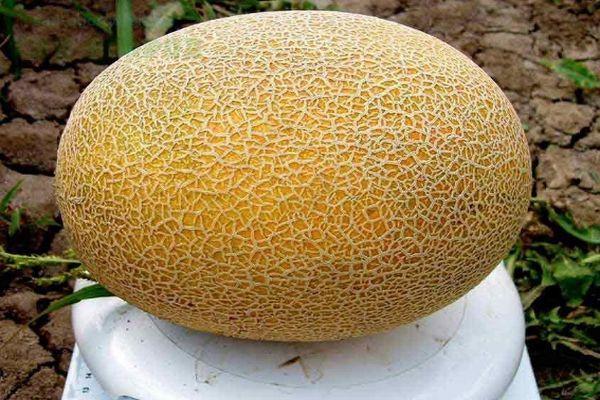
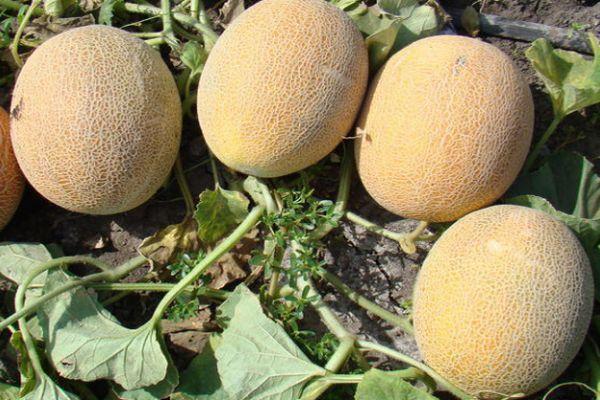
- The fruit is elliptical in shape. It is brightly colored yellow and covered with white, mesh-like veins. The rind is quite thick.
- The first fruits weigh between 2.7 and 3 kg. Subsequent fruits weigh between 1.7 and 2.4 kg.
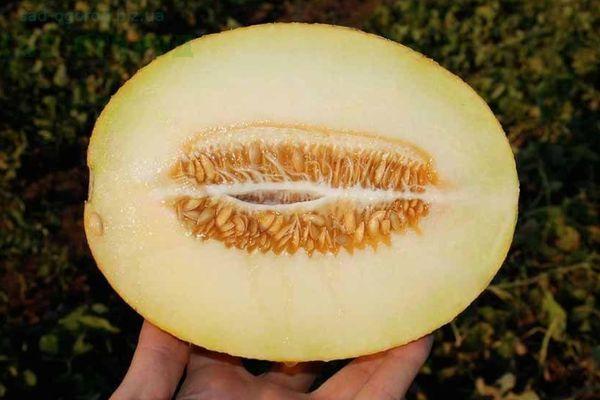
- The melon's flesh is almost white and has a caramel flavor. Inside the fruit are small seed chambers.
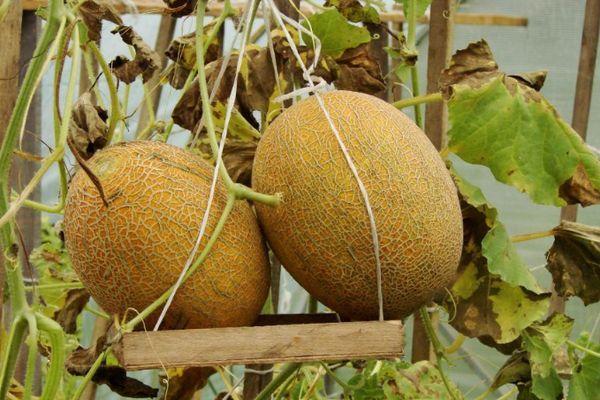
Reviews from gardeners who grow this fruit indicate that this variety tolerates high humidity, heat, and drought well. It is resistant to diseases such as fusarium and powdery mildew. When grown commercially, the yield is 90 tons per hectare.
The plant can be grown in open ground or in greenhouses. When using a greenhouse, gardeners can either use seedlings or sow the seeds directly into the beds. It is recommended to leave a distance of 0.6-0.8 m between the seedlings.
When grown in a greenhouse, the plant will need to be supported by a trellis. The greenhouse should be ventilated frequently to allow pollinating insects to reach the seedlings.
Melons are grown outdoors in regions where summers are free of cold nights and wide temperature fluctuations. It is recommended to plant melons in a new location each year, ensuring the site receives ample sunlight.
The soil should be fertilized. In open areas, plants are planted in furrows 0.7-0.8 m apart. After the first fruits appear, clean boards are placed underneath them to prevent the melons from lying on bare soil.
How to grow seedlings yourself
This method of seed germination is used in central Russia and its northern regions. The largest seeds are selected for planting. They are soaked in a solution of boric acid and zinc sulfate for 11-12 hours. If these substances are not available, a solution of potassium permanganate is used.

The seeds are hardened by first placing them in warm water (38-40°C), keeping them there for 5-7 minutes, and then cooling the liquid to room temperature. After this, the container with the seeds is placed in the refrigerator, lowering the temperature to 0°C. The container is removed, and the water temperature is raised again to 40°C. This procedure is repeated three times.
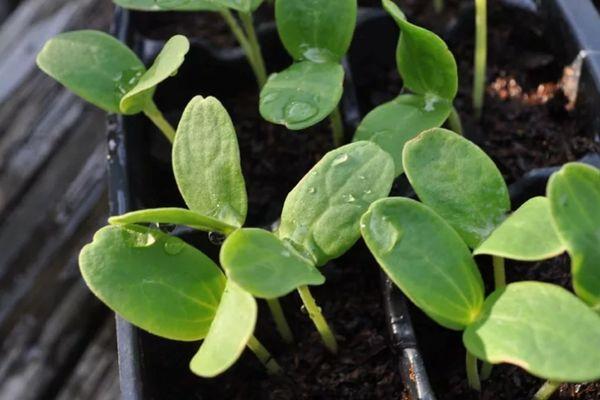
In mid-April, hardened seeds are planted in peat pots. The soil is made from 2 parts compost and 1 part each of turf and peat. Add 1 tablespoon of superphosphate mixed with wood ash to the resulting soil.
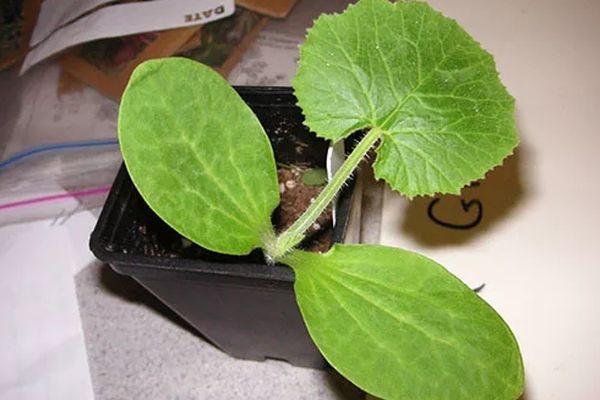
Plant 2-3 seeds in each pot. Once sprouts appear, select the strongest seedlings. To protect the young plants, cover them with plastic or glass for the first few days. Transplant the seedlings into the garden only when the soil temperature is above 15°C. If planting seeds in the ground, plant them 20-40 mm deep.
Plant care and disease control
Melons are watered once every 6-7 days. During hot or dry weather, water 2-3 times every 7-8 days. Weeding is necessary 3-4 times a week. Gardeners should regularly remove excess leaves that shade the ovaries. Plants should be hilled and pinched regularly. Melon should be fertilized with a complex fertilizer diluted in water. Melons do not like concentrated mixtures.
It's important to monitor the plants for stunted growth and wilting. If these symptoms appear, as well as spots on leaves and fruit, or uneven coloring of melons, it's recommended to treat the fruit with stress-relieving medications.
When the fruit turns black and begins to rot, humic fertilizers should be added to the soil to eliminate the problem. To prevent root rot or root damage, loosen the soil between rows of plants. If leaves are not growing well, they should be sprayed with a complex fertilizer. To prevent root necrosis, fertilize melons with potassium-containing fertilizers.
If a farmer notices garden pests such as melon flyIf melon aphids, cutworms, mites, and click beetles are present, it's recommended to use commercially available pesticides to eliminate these insects. If slugs appear, apply ash flour to the roots of the fruit.
Related posts:
 How to grow melons outdoors, planting dates, watering, and care
 Golden recipes for preparing pickled melon for the winter and storing the prepared products
 Growing Kolkhoznitsa melon in open ground: benefits and how to choose
 How to treat melons against pests and diseases, and can infected fruits be eaten?
 Rules for growing and caring for melons in Siberia in open ground
 Why melons aren't setting fruit and what to do about it. Methods for hand pollination.
 Description and cultivation technology of the Ethiopian melon variety
 Why are my melon leaves turning yellow in open ground? How to treat and what to do.
I planted this variety for the first year and was not disappointed. I grew the seedlings myself, and when transplanting them into open ground, I used a growth bioactivator. BioGrowWe may be in the south, but we're still Siberia. Nevertheless, with this activator, it took less than 50 days to ripen, while my neighbor's variety took longer. The melon is delicious, aromatic, and stores well thanks to its thick skin. I'll definitely be growing this variety next year.