
- History of selection
- Pros and cons of milk melon cultivation
- Varieties
- A gift from Ho Chi Minh's grandfather
- Yan Jun
- General characteristics of the variety
- Growing regions
- Appearance of the bush
- Characteristics of the fetus
- Beneficial properties and harm
- Growing seedlings
- Optimal timing
- Selecting containers and preparing soil
- Preparation of planting material
- Sowing technology
- Germination and care of seedlings
- Transplantation into the ground
- Necessary care
- Watering and fertilizing
- Formation
- Loosening the soil and removing weeds
- Harvesting and storage
- Diseases of the variety
- Pests
- Melon aphid
- Spider mite
- Wireworms
- Cutworms
- Melon fly
- Gardeners' reviews of Vietnamese melon
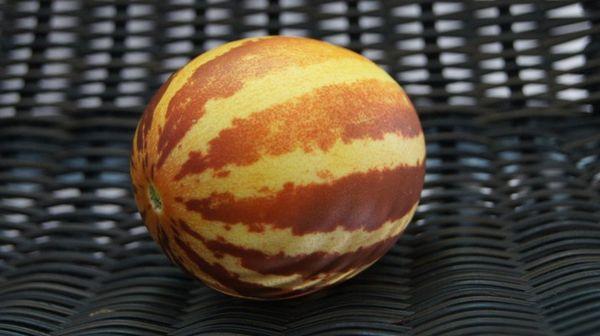
The Vietnamese melon is an unusual crop that has gained interest among many gardeners over the past decade and has been cultivated in many countries around the world. Its main characteristic is its relatively small fruits, weighing no more than 400 g. When ripe, they turn a deep orange, with thin, elongated yellow stripes appearing on them. The flesh has a rich aroma and a delicate and exceptionally tasty flavor.
History of selection
The Vietnamese melon is a product of selective breeding and belongs to the Cucurbitaceae family. Its closest relative is the cucumber. This product of selective breeding could be an excellent option for vegetable growers in central Russia.
Pros and cons of milk melon cultivation
The plant does not tolerate sudden temperature changes well; growing it in the middle zone will be difficult.
Large-fruited varieties produce 2-3 berries. During prolonged periods of bad weather, the fruits often fail to ripen and accumulate the required amount of sugar.
Compared to large-fruited varieties, the Vietnamese milk melon can produce around 30 fruits. This melon is early maturing, with the first harvest available as early as July. One of the variety's drawbacks is its small fruit size.
Varieties
Before you begin cultivating any variety of Vietnamese melon, you will need to understand the varieties, benefits, and characteristics of this crop.
The two most popular varieties are:
- Yan Jun;
- A gift from Ho Chi Minh's grandfather.
A gift from Ho Chi Minh's grandfather
Grandfather Ho Chi Minh's Gift is an early-ripening plant grown outdoors and also produces a good harvest in greenhouses. The fruits are small, weighing around 200 g. Due to this variety's unusual appearance, it is often used to decorate gazebos and fencing structures.
Yan Jun
Yan Jun is a mid-season variety of Vietnamese melon. It produces a large harvest. The first fruits appear within 1-2 months after planting. Fruits of this variety weigh between 200-400 g and have a pleasant aroma and excellent flavor.
General characteristics of the variety
A detailed description of the variety will help you understand its advantages and disadvantages.
Features of the species:
- resistant to various pathogens and parasites;
- has excellent commercial qualities that are not lost during long-term transportation;
- early ripening;
- loves warmth.
Growing regions
Southern regions offer the best conditions for growing this melon variety. Under these conditions, it quickly fills up with sugar and produces excellent fruit. In Siberia and the Urals, this crop is grown in greenhouses.
Appearance of the bush
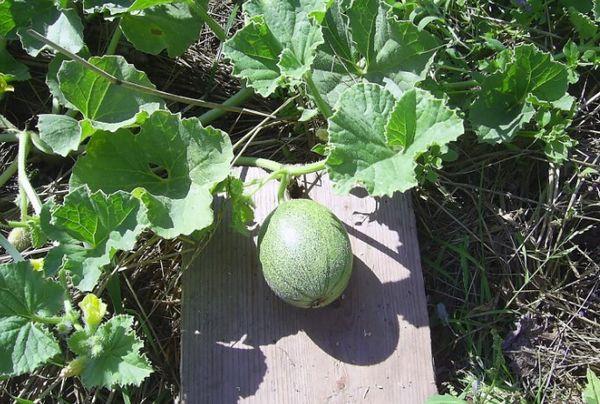
The bush of Vietnamese melon is wide and large.
Characteristics of the fetus
This culture is distinguished by:
- long and abundant fruiting;
- small weight (about 150-400 g);
- sweet, fragrant, juicy pulp;
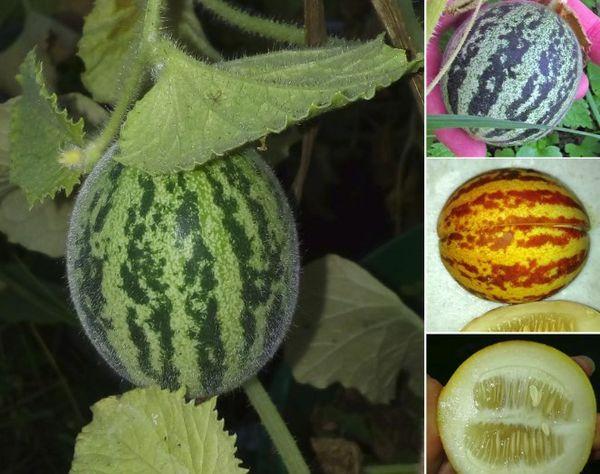
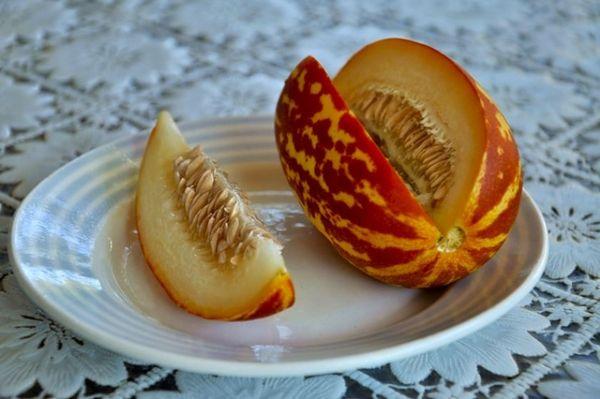
- ripe berries turn orange and stand out from other varieties with light stripes;
- The fruits usually take on an oval shape, but can also be round.
Beneficial properties and harm
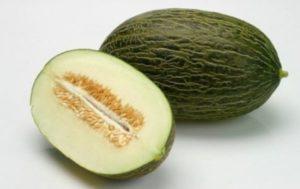
The main feature of this variety is its rich array of beneficial microelements and vitamins. The pulp contains vitamins C, B, and A, and is rich in iron, chlorine, potassium, and sodium. Therefore, this product is essential for people with genitourinary and stomach problems, as well as anemia, exhaustion, and atherosclerosis. This variety is also low in calories.
If consumed incorrectly, melon can be harmful to health. In some cases, the fruit can complicate illnesses and even cause vomiting.
It is forbidden to mix them with alcoholic drinks and milk.
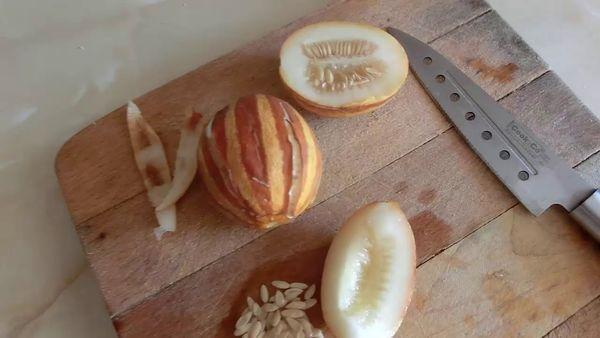
Do not eat if you have the following illnesses:
- acute liver and kidney disease;
- intestinal inflammation;
- obesity;
- diabetes mellitus.
Growing seedlings
A bountiful harvest can be ensured by proper care and following basic growing guidelines. This melon variety should be grown in southern regions. The warmer the climate, the sweeter the harvest.
Optimal timing
To grow seeds in temperate climates, they need to be hardened off. After soaking, they are kept at a temperature of 1-3°C for 2 days. This will increase the plant's resistance to temperature fluctuations. The prepared seeds should be planted around the second half of March.
Selecting containers and preparing soil
It is better to use peat pots for planting, since melons have a hard time taking root, even if they have intact roots.
Preparation of planting material
Avoid choosing one-year-old planting material. It produces few female flowers, which greatly impacts the yield. Three-year-old seeds are best, sorted and the largest ones selected. To ensure a bountiful and high-quality harvest, it is necessary to treat the seeds with micronutrients.
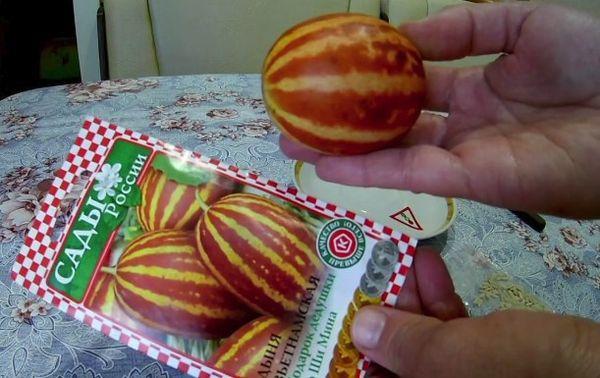
If Vietnamese melon is planted in cold regions, the seeds should be placed in a cool, bright place for 2-3 days before soaking. Afterward, soak them in a mild solution of potassium permanganate to identify poorly grown plants and protect them from swelling and pests.
The planting material should be kept in this solution for at least 1 day.
Sowing technology
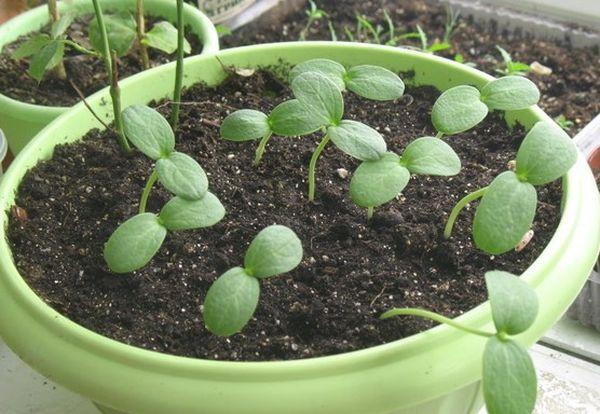
Sow the seeds in a container at a depth of about 3 cm. They germinate well at 25 degrees Celsius. Otherwise, the seedlings will stretch. Fertilize twice with a complex fertilizer: the first time when the leaves appear, and the second time 14 days later.
Germination and care of seedlings
When the seedlings emerge, maintain a temperature of around 20 degrees Celsius. In these conditions, the plant feels comfortable and grows vigorously. Water sparingly, once the soil has dried out slightly.
Transplantation into the ground
When the plant has 4-5 leaves, it can be transplanted into prepared soil. Seedlings are planted in holes dug 70 x 70 cm apart (in open ground) and 50 x 50 cm apart (in greenhouses). The planted plants are watered and mulched to prevent crusting.
To prevent fungal diseases, prepare a weak solution of potassium permanganate and water the plants with it. Seedlings are planted after frost, when the soil has warmed up.
To prevent root rot, don't cover the root collar with soil. It's also important to choose a planting location in advance. Melons don't transplant well.
Necessary care
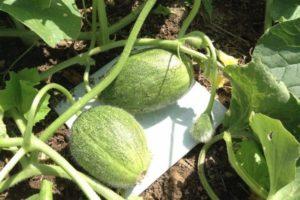
To ensure that the melon grows vigorously and produces a healthy and abundant harvest, it must be properly and timely cared for.
Particular attention should be paid to:
- watering and fertilizing;
- formation;
- loosening the soil and removing weeds.
Watering and fertilizing
To improve the quality and quantity of fruit, it's important to follow a specific fertilization regimen. Two weeks after planting the Vietnamese melon seedlings in open soil, the plant should be fertilized with a special nitrogen-rich fertilizer.
These include the following diluted fertilizers:
- saltpeter;
- mullein.
The second feeding is done when the ovary grows to the size of a walnut. The same solutions are used for this. Subsequent feedings are carried out regularly, every two weeks. Potassium and nitrogen fertilizers are applied when the Vietnamese melon begins to bloom. Fertilizing with ammonia and phosphorus is necessary for the plant during ovary formation.
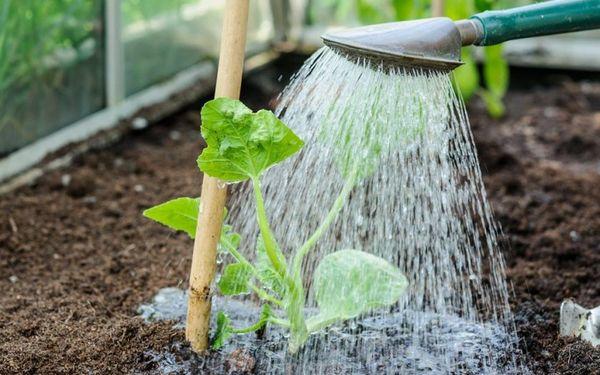
Avoid over-fertilizing the plant to avoid harming it by reducing its yield and increasing foliage growth.
Vietnamese melons are watered in the morning. Warm water is applied to the root system. This should be done carefully, avoiding moisture coming into contact with the leaves. Irrigate regularly during the ripening period. To enhance their flavor, watering should be stopped 20 days before they reach full ripening. This crop does not respond well to high humidity and does not require spraying.
Formation
An important aspect of Vietnamese melon care is plant training, which helps increase yield. The key is to pinch the plant correctly and at the right time. This also improves the fruit's flavor.
How is the formation carried out:
- When the fifth leaf appears, pinch the plant above the third. The main stem produces only male flowers, which should be trimmed back.
- After the first pruning, three second-order shoots are formed. The shoot at the bottom is removed, and the two remaining shoots are pinched off after the sixth leaf.
- Leave 2-3 ovaries and pinch off the top shoot. This will result in 6 shoots.
- After two weeks, the growing point is removed. This is done to speed up fruit formation.
Loosening the soil and removing weeds
Gardeners consider soil loosening to be essential. This process occurs when the soil is compacted. Loosening is done carefully to avoid damaging the root system. After the side shoots have formed, the melon is hilled up. The shoots are distributed manually over the surface. Weeds should also be kept in check. They should be constantly monitored and removed as soon as they appear.

Harvesting and storage
The timing of Vietnamese melon harvesting depends on the climate in which it is grown. The fruits are harvested 40-60 days after the first shoots appear. This period typically occurs in late summer. However, an exact date cannot be determined.
The ripening of this plant depends on various factors, including the microclimate and the effectiveness and frequency of care. Therefore, each fruit is individually checked for ripeness.
It is important to correctly determine how ripe a melon is based on the following signs:
- what condition is the pulp in (a ripe fruit always has firm, soft pulp);
- withered stalk (indicates that the fruit has finally filled out and the melon is ripe);
- peel (if the fruit is ripe, the peel color becomes bright and rich);
- aroma (a ripe melon has a characteristic sweet smell).
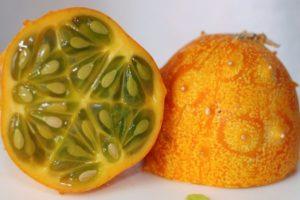
After harvest, melons have a shelf life of 30 days. However, this is often only a rough estimate. Even if kept in the refrigerator, melons will begin to lose their flavor sharply after just 14 days, and within a month they will be practically unfit for consumption. Therefore, after harvest, the fruit is often processed using various culinary methods to extend its shelf life.
Diseases of the variety
This melon variety has a high level of disease resistance. This characteristic is often due to its short growing season.
The most common diseases that Vietnamese melon is susceptible to are:
- root rot;
- downy mildew;
- anthracnose;
- Fusarium wilt;
- powdery mildew.
Pests
Vietnamese melon is susceptible not only to diseases but also to pests. Therefore, it's worth considering these risks in more detail.
Melon aphid
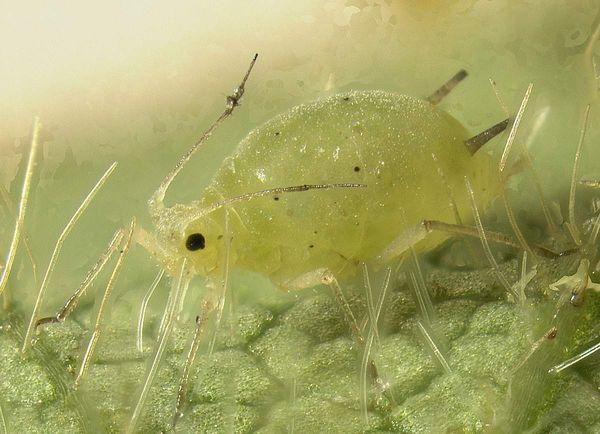
Melon aphids are considered minor pests that attack the undersides of leaves and stems. They reproduce quickly and prefer to feed on the sap of leaves and stems. Leaves damaged by aphids turn yellow, curl, dry out, and the flowers fall off.
To prevent melon aphids from infesting the plant, the area requires regular weeding and control of weeds. Melons are treated (before flowering) with "Karbofos" (10%) or a soap solution (after flowering) at a rate of 10 g per 10 liters of water.
Spider mite
The fact that the plant is affected by spider mites is indicated by thin webs in the axils of the leaves.
Spider mite control measures:
- weed;
- dig the ground deeply in autumn;
- perform crop rotation correctly.
Wireworms
These pests are the larvae of click beetles, which attack the lower part of the stem, causing the plant to die.
To combat wireworms, you need to regularly weed the melon and remove all remaining vegetation.
Cutworms
Cutworm caterpillars live deep in the soil or on the surface. They damage melons by attacking the stem, causing the plant to wither. To get rid of cutworms, weed, loosen the soil in the fall, and rotate crops.
Melon fly
The main enemy of this plant is the melon fly, which can damage up to 50% of the crop.
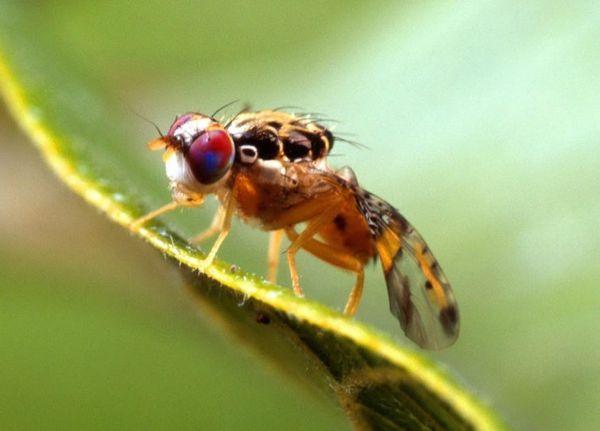 The pest pierces the upper tissues and lays its larvae inside the fruit. Bumps begin to appear on the melon, and a little later, holes.
Because of this, the crop quickly rots. To get rid of the melon fly, use a solution of "Kemifos" or "Rapira" (10 ml per 10 liters of water).
Gardeners' reviews of Vietnamese melon
Dmitry: "Vietnamese melon is effective in fighting cholesterol. The plant produces many tasty, juicy, and aromatic fruits. A big plus is that it doesn't require much care."
Olga: "Growing this variety of melon is a great pleasure. The fruit's pulp improves digestion, facilitating the digestive process. Melon is also rich in vitamins, and eating it strengthens and heals the body."
Ekaterina: "I liked the appearance of this melon variety. I was also pleasantly surprised by the quantity and quality of the harvest. Eating Vietnamese melon helps relieve heartburn."
Related posts:
 Names and photos of 37 best melon varieties, descriptions and characteristics of all types
 Golden recipes for preparing pickled melon for the winter and storing the prepared products
 How to grow melons outdoors, planting dates, watering, and care
 Growing Kolkhoznitsa melon in open ground: benefits and how to choose
 Rules for growing and caring for melons in Siberia in open ground
 Description and selection of the Torpedo melon variety, benefits and harms for the human body
 Why are my melon leaves turning yellow in open ground? How to treat and what to do.
 Description and subtleties of growing the Pineapple melon variety