
Agricultural crops require protection because they are susceptible to many fungal diseases. The dual-action fungicide "Akanto Plus" effectively protects against pathogens. This product has a pronounced physiological effect on grain and oilseed crops, as well as beets. It is recommended to read the instructions for "Akanto Plus" before use.
Composition, existing forms of release and purpose
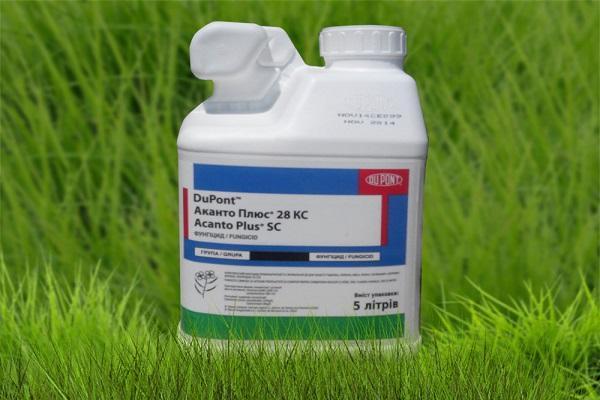
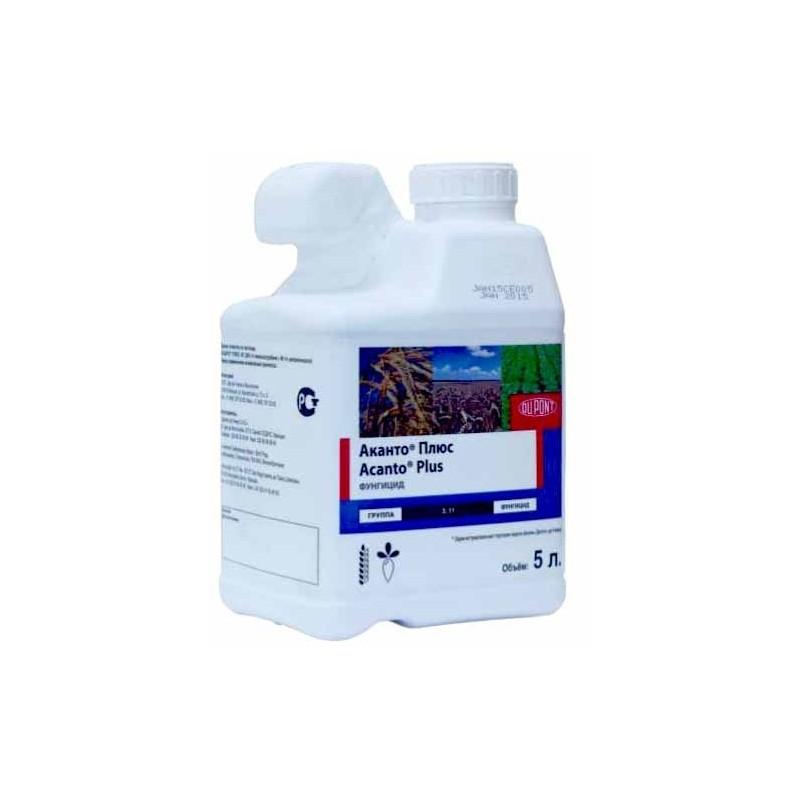
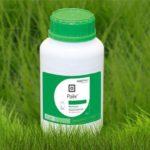
Belongs to the strobilurin + triazole class. This protective pesticide is sold as a concentrated suspension. It is packaged in a 5-liter plastic container. It consists of two main components:
- Cyproconazole – at a dose of 80 grams per liter of product. This component inhibits the development and growth of pathogens and has an eradicating effect.
- Picoxystrobin – 200 grams per liter of product. This substance disrupts metabolic processes at the cellular level, inhibits growth, and leads to the death of fungal mycelium.
The chemical effectively protects against most pathogens, preserves crops, and improves their quality. It promotes prolonged green color retention, synthesizes increased amounts of carbohydrates, and slows ethylene formation, preventing rapid plant aging.
Mechanism of action
Double plant protection is provided by the fungicide's unique composition. Picoxystrobin inhibits pathogens at the early stages of development.
Cyproconazole controls a wide range of fungal diseases. It works by inhibiting demethylation processes, disrupting sterol biosynthesis in fungal cell membranes.
Advantages and disadvantages
The fungicide has no significant drawbacks; negative effects may occur if the dosage is incorrect and the instructions for use are not followed.
Calculation of consumption
The table shows the regulations for the use of the chemical:
| Consumption rate l/ha | Cultivated crop |
| 0.5-1.0 | sunflower |
| 0.75-1.0 | soybeans |
| 0.75-1.0 | corn |
| 0.5-0.75 | beet |
| 0.5-1.0 | rape |
| 0.5-0.75 | spring and winter barley |
| spring and winter wheat |
Crops are treated during the growing season. Sprayings are applied twice per season.
How to prepare a working solution?
The liquid is prepared on the day of crop spraying. First, add the solid forms of the SP and WDG substances to the container, then the fungicide. Then add the emulsion concentrates. The mixture is stirred with a stirrer.
Instructions for use
The product's maximum effectiveness is achieved through preventative treatments. It can be used at any stage of crop growth. Its maximum impact is achieved during the tillering period.
Wheat is sprayed in the 37-39 phase (flag leaf) and barley in the 35-37 phase (subflag leaf).
Plants are treated 1-2 times per season, depending on the stage of the disease and the number of affected plants. Allow 14 days between treatments. The protective period lasts 14-28 days. Treatments are carried out in the morning or evening, in clear, dry weather. It is advisable to avoid contact of the solution with other crops.
Safety precautions at work
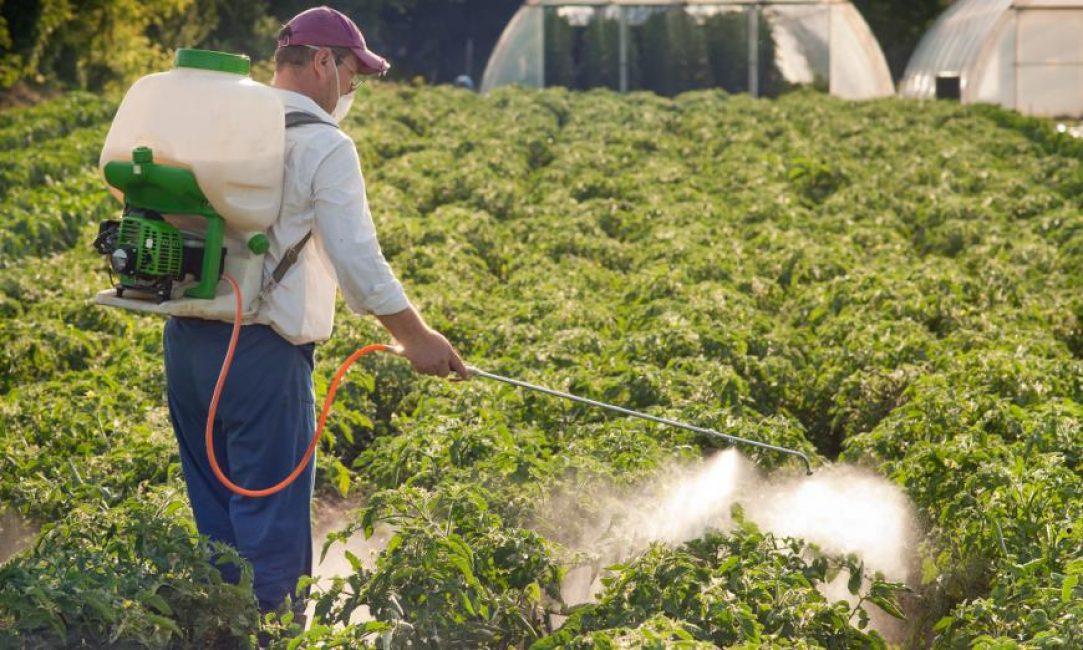
When working, wear a protective suit, respirator, goggles, and gloves. Rubber boots are recommended. This procedure is prohibited for minors, pregnant women, and nursing mothers. After spraying, wash your face and hands thoroughly with soap and running water.
Degree of phytotoxicity
When safety precautions and proper use are followed, this product poses no harm to human health or the environment. It is classified as hazard class 3.
Possible compatibility
Acanto Plus is compatible with many types of pesticides and fertilizers. Before applying chemicals to large areas, first test for compatibility by mixing a small amount of the product, then test the effect on a small area.
Storage conditions and shelf life
Store the chemical in a dry, well-ventilated area, away from children and animals. The shelf life is 24 months from the date of manufacture.
Analogues
Similar means for crop protection include:
- Previkur Energy;
- "Bravo";
- "Quadris" and others.
The fungicide "Akanto Plus" guarantees a high-quality and healthy harvest when used according to the instructions. This innovative product is widely used by both large and small farms.
Related posts:
 Instructions for use and composition of the fungicide Fitosporin-M, application rates
 Instructions for using Falcon fungicide for treating grapes
 Composition and instructions for use of the fungicide Kumulus, application rates and analogues
 Instructions for use and composition of the fungicide Teldor, application rates
 Instructions for use and composition of the fungicide Optimo, application rates and analogues
 Instructions for use and composition of the fungicide Zato, application rates and analogues
 Instructions for use and composition of the fungicide Ferazim, application rates
 Instructions for use and composition of the fungicide Raek, application rates and analogues