
- Composition, existing forms of release and what it is intended for
- Mode of action
- Pros and cons
- How quickly does it work and how long does the effect last?
- Is there resistance?
- Rules for preparing a working solution
- How to use?
- Security measures
- Possible compatibility
- Storage conditions and shelf life
- Analogues
Proper care of crops is not enough to achieve a high-quality harvest. Planting material requires constant protection from harmful microorganisms. High weed resistance forces producers to develop and introduce new products to combat unwanted weeds. Large agricultural companies use the systemic fungicide "Benorad" – a seed and planting material treatment.
Composition, existing forms of release and what it is intended for
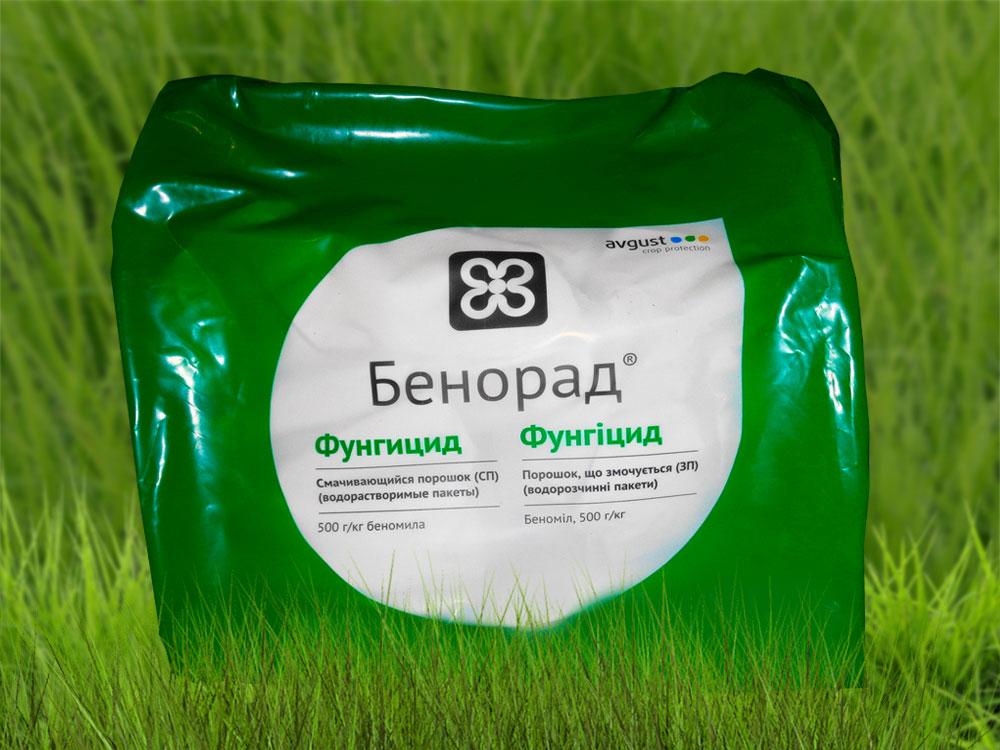
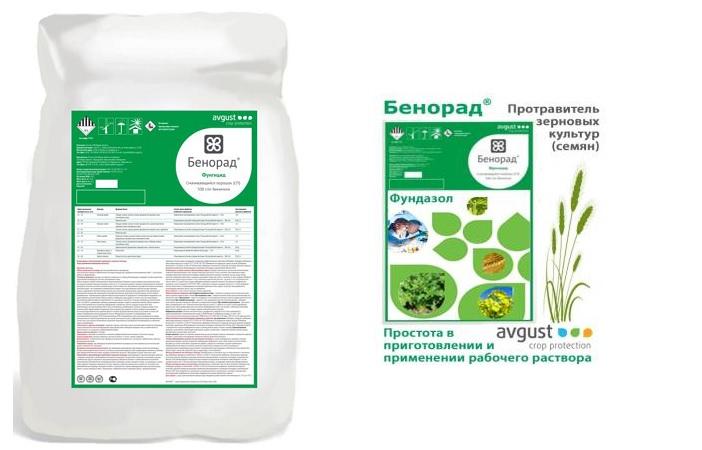
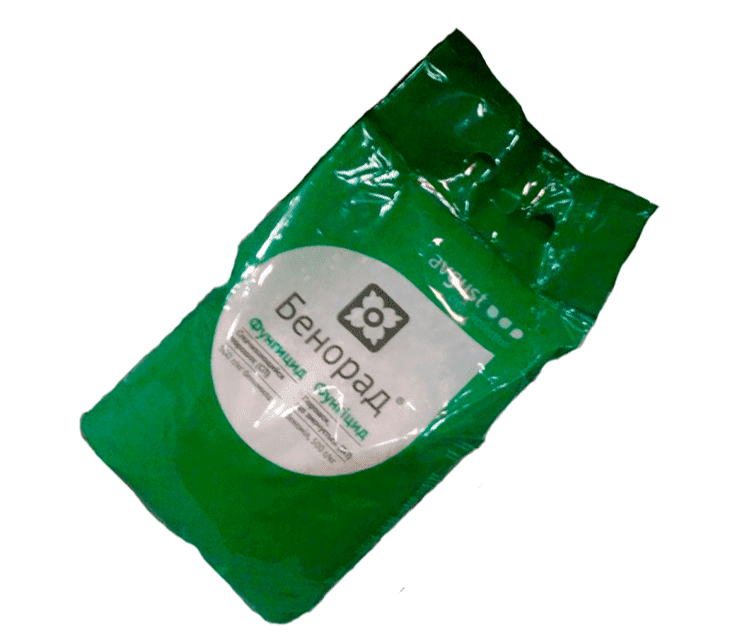
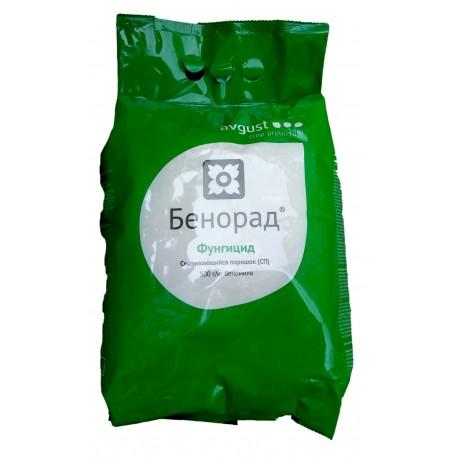
The fungicide "Benorad" is produced as a dry white powder, packaged in 3- and 12-kilogram containers. This single-component formulation contains benomyl at a concentration of 500 grams per kilogram. It belongs to the chemical class of benzimidazoles. The universal pesticide "Benorad" is used to treat seed material for preventive and therapeutic purposes against fungal infections.
"Benorad" is actively used to treat crops to combat diseases:
- powdery mildew;
- mold;
- phomosis;
- cercospora;
- anthracnose;
- rust and other infections.
During pre-sowing preparation, the product effectively protects potato tubers from mold, rot, and ascochyta blight. The fungicide is used to treat lawns affected by fungal diseases. Farmers use the pesticide to protect fruit and vegetable crops, as well as coniferous trees.
Mode of action
After treatment, the main component quickly penetrates the foliage and begins to destroy pathogens. The pesticide interacts with the fungal microtubules, disrupting their structure and inhibiting cell proliferation.
The fungicide's maximum effectiveness is achieved when applied to planting material. This is because the product moves acropetally through the vegetation. As the grass grows, the pesticide penetrates from the roots to all areas.
Pros and cons
Large agro-industrial enterprises prefer Benorad due to its positive qualities:
- guarantee of long-term protection;
- increases seed germination;
- high systemic activity;
- versatility – used for prevention and treatment;
- high speed of action – stops the development of the disease within 24 hours;
- low degree of phytotoxicity;
- operates over a wide range of temperatures;
- does not wash off with moisture 3 hours after application;
- refers to low-hazard substances.
One drawback noted is that the chemical only affects the treated area. If new shoots appear, re-treatment with the chemical is required. It is advisable to spray the leaves on both sides.
How quickly does it work and how long does the effect last?
This systemic fungicide begins working immediately upon contact with vegetation. It remains on the leaves for three hours after spraying and is not washed off with water. Within 24 hours, the product inhibits weed growth and reproduction.
Is there resistance?
With repeated treatment with the pesticide "Benorad," harmful microorganisms develop resistance to the product. When replacing Benorad with another product, the resistance disappears.
Rules for preparing a working solution
The working mixture is prepared before treatment. Pour water into a prepared container and add the required amount of powder. Mix the components thoroughly, gradually adding water until the desired volume is reached. Add the prepared mixture to a half-filled tank. Rinse the container where the solution was prepared thoroughly. Preparation work is carried out in a separate area. Stir the mixture constantly in the container until a uniform consistency is achieved. The shelf life of the prepared mixture is 24 hours.

The consumption rate of water-soluble powder varies for different crops:
| Consumption of the product, kg/t | Culture | Harmful object | Method, frequency of treatments |
| 0.3-3 | Wheat | Smut, mold, powdery mildew, fusarium, rot, ophiobolosis | Pre-sowing spraying during the growing season |
| 2-3 | Barley | Mold, rot, smut | Pre-sowing treatment |
| 0.3-3 | Rye | Spraying during the growing season | |
| 0.6-0.8 | Sugar beet | Phoma, powdery mildew, cercospora | |
| 0.5-1 | Potato | Rhizoctonia | Pre-planting treatment of tubers |
The solution consumption for fruit trees is 10 liters, for young seedlings 5 liters of liquid is enough.
How to use?
Benorad is used for irrigation. Fruit trees are sprayed before flowering. The final treatment is carried out three weeks before harvest. Cabbage is treated once. The soil is watered with the solution before planting. Vegetable crops are sprayed after the first symptoms of the disease are detected. Up to four treatments are allowed. The final treatment is carried out 10 days before harvest.
For grapes and berry bushes, preventative treatment is carried out before flowering and after harvest. Before planting, potato tubers are soaked in a solution at a rate of one liter of pesticide per 20 tubers.
Security measures
When working with Benorad, it is essential to wear protective clothing, gloves, a respirator, and a hat. Before working, ensure there are no children or animals nearby. Benorad should be handled at least 200 meters away from residential buildings, apiaries, and open bodies of water. Do not spray the product by aerial means.
It is strictly forbidden to store the agrochemical together with food products and animal feed. The use of the fungicide in the sanitary zone of fisheries is prohibited.
Possible compatibility
To prevent resistance to the product, it is recommended to use it with other chemicals. Benorad combines well with mineral fertilizers.
Storage conditions and shelf life
In unopened factory packaging, the Benorad fungicide has a shelf life of 2 years from the date of manufacture. Storage is provided in a separate chemical storage area. The storage area should be maintained at a temperature between -25 and +35 degrees Celsius and well-ventilated.

Analogues
Similar means include:
- "Benzole";
- "Benomyl";
- "Nor-B";
- "Fundazol".
When applied at the correct rate and timing, the fungicide "Benorad" significantly increases crop yields and prevents the spread of pathogenic microflora. Large agricultural enterprises and farms actively use the product for therapeutic and preventative purposes.
Related posts:
 Instructions for use and composition of the fungicide Raek, application rates and analogues
 The best eggplant varieties for growing in a polycarbonate greenhouse: planting and care
 Instructions for use and composition of the fungicide Teldor, application rates
 List of the top 16 fungicides for grapes and instructions for their use
 Instructions for use and composition of the fungicide Consento, application rates
 Instructions for using Falcon fungicide for treating grapes
 Instructions for use and composition of the fungicide Switch, application rates, and analogues
 Instructions for use and composition of the fungicide Metaxil, application rates