
- Composition, existing forms of release and what it is intended for
- Mechanism of action
- Pros and cons
- Preparation of working solution and instructions for use
- Grape
- Fruit trees
- Tomatoes
- Potato
- Safety precautions at work
- How toxic is the drug?
- Possible compatibility
- Storage rules and periods
- Best before date
- Similar means
Pathogenic fungi cause most agricultural crop diseases, leading to significant yield losses. Timely treatment of vegetable crops, fruit trees, and vineyards with the Poliram fungicide, according to the instructions, provides reliable protection against various types of fungal infections throughout the season.
Composition, existing forms of release and what it is intended for
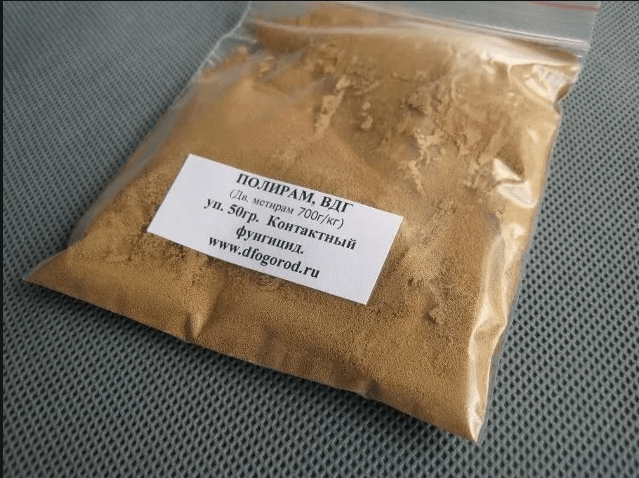
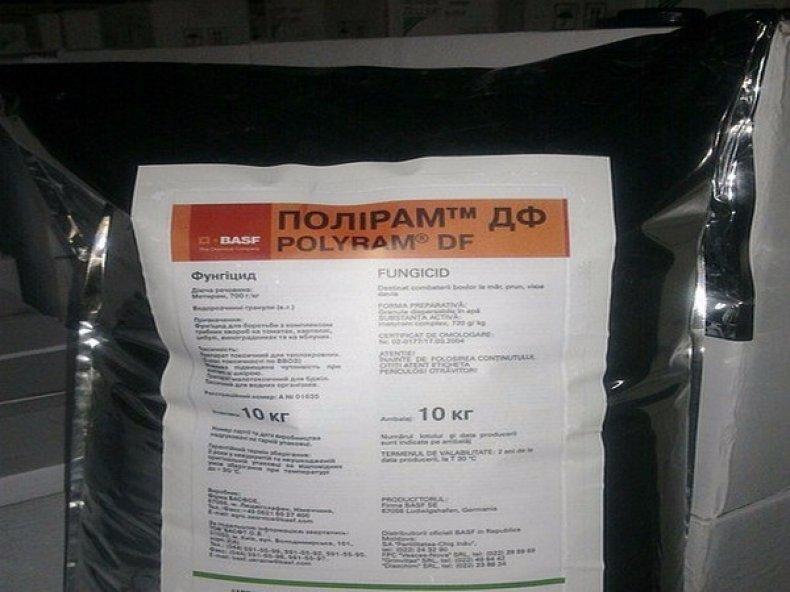
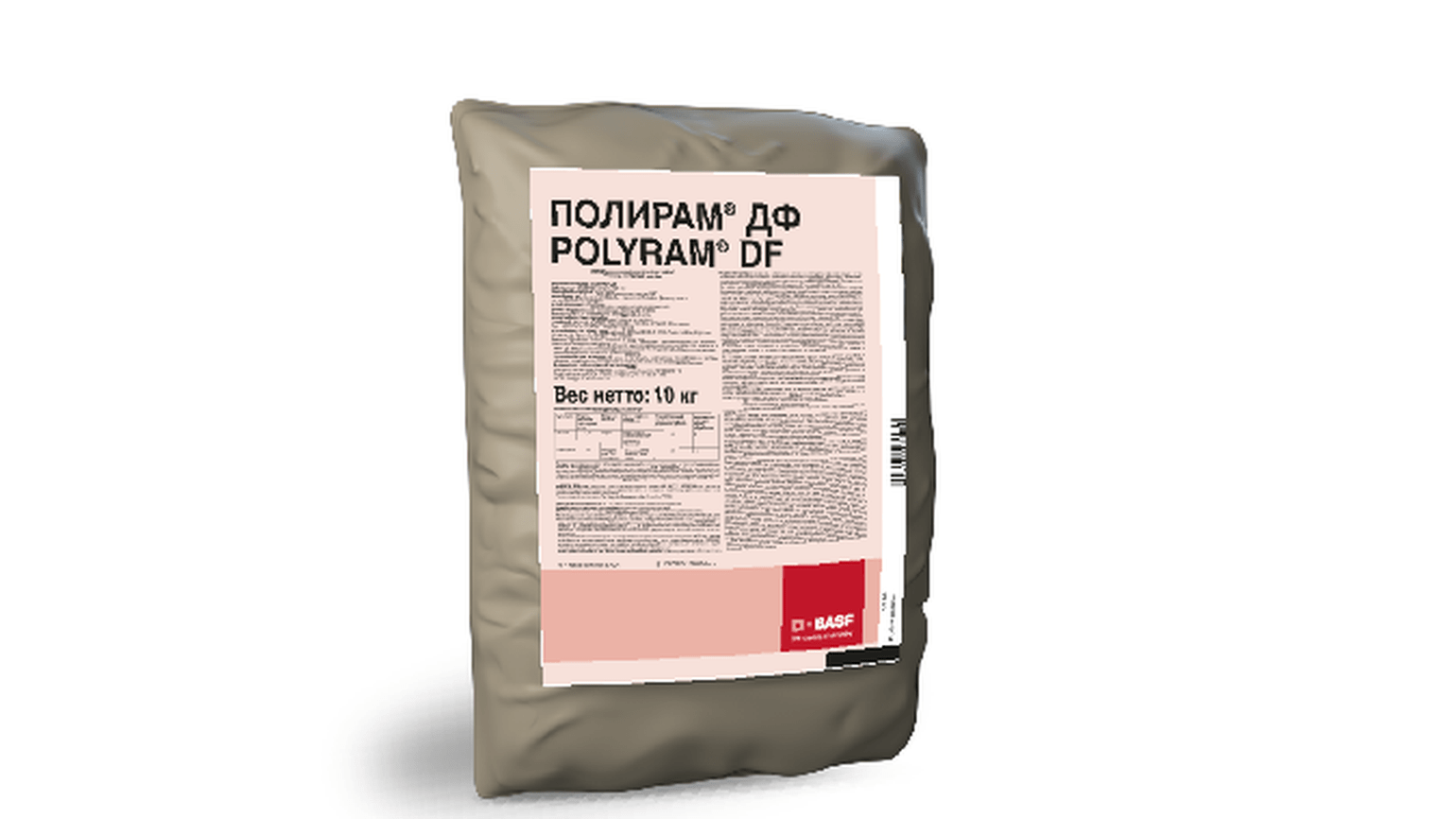
The active ingredient metiram is the main component of the product. Each kilogram contains 700 grams of fungicide. "Poliram" is produced in the form of water-soluble granules in the following packaging:
- foil or polyethylene bags of 1 kilogram and 200 grams;
- 20 gram sachets, packed in a cardboard box of 5 pieces;
- 10 kilogram plastic bags.
This fungicide is designed for treating potatoes, tomatoes, apples, pears, and grapes to prevent various fungal infections. "Poliram" is used to protect plants from the following types of mycoses:
- late blight;
- downy mildew;
- Alternaria;
- spotting;
- anthracnose;
- scab;
- rust.
Thanks to its broad spectrum of action and the ability to be used on various crops, Poliram is rightfully considered a universal preventative fungicide.
Mechanism of action
The drug has a contact protective effect due to the active ingredient in its composition. Metiram belongs to the class of dithiocarbamates. The substance inhibits enzymatic complexes in fungal cells, disrupting the pathogen's key physiological processes. As a result, fungal spores lose their ability to germinate.
Pros and cons
"Poliram" has clear advantages when used rationally and a number of limitations.
The lack of a systemic effect deprives Poliram of resistance to adverse weather conditions, which must be taken into account when planning work.

Preparation of working solution and instructions for use
Poliram is designed for surface spraying of above-ground plant parts. To prepare a working solution, dissolve the required amount of fungicide granules in water, depending on the crop type.
Grape
Purpose: Prevention of mildew and anthracnose. Dose: 25 grams per 10 liters of water. Solution consumption: 800-100 liters per 1 hectare.
Fruit trees
Treatment objective: protection against scab, spotting, and rust. Dosage: 20 grams per 10 liters of water. Dilution rate: up to 1,500 liters per hectare.

Scheme: the first spraying is carried out in the spring, before the buds open, the second - during the period of bud formation, the third - after flowering, the fourth - as the fruits set, at the initial stages of fruit mass accumulation.
Tomatoes
Purpose: Protection against late blight and alternaria. Dose: 40 grams per 10 liters of water. Liquid consumption: 300-600 liters per 1 hectare.
Scheme: Start treatment during the growing season. Then repeat twice, 20 days apart.
Potato
Purpose: Prevention of late blight and alternaria. Dosage: 40 grams per 10 liters of water. Dilution rate: 300-600 liters per 1 hectare.
Scheme: The first treatment is carried out on individual seedlings. This is followed by two subsequent treatment stages, spaced 20 days apart.
The waiting period for crops treated with the drug "Poliram" is 60 days.
Safety precautions at work
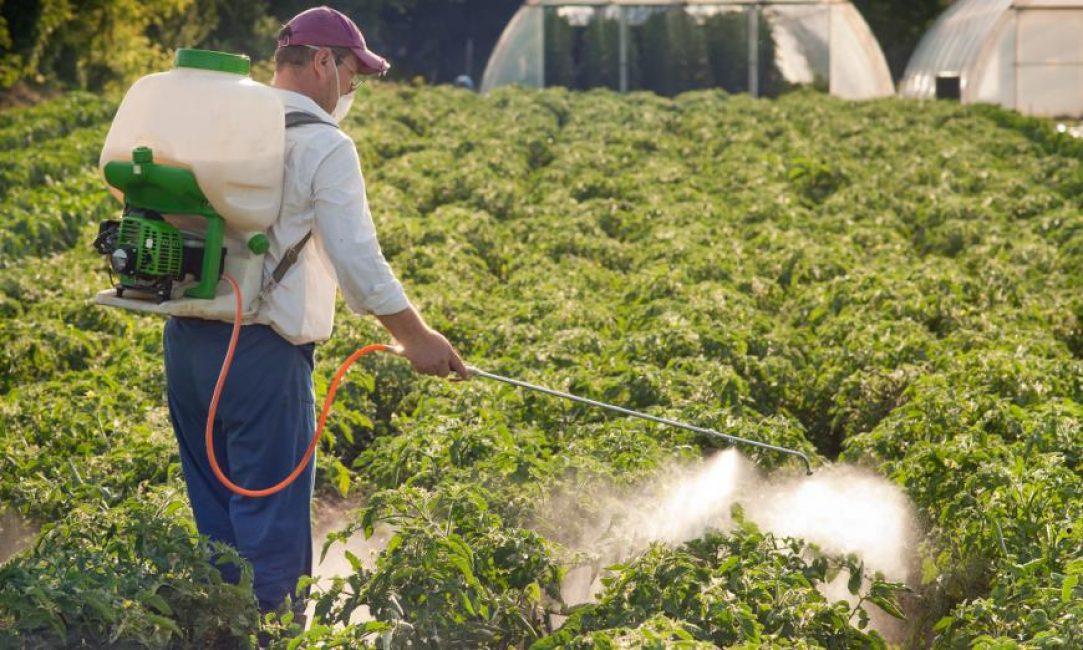
Working with fungicides requires personal protective equipment. Wear a thick protective suit, gloves, a respirator mask, and protective goggles. When spraying, adhere to the following rules:
- avoid contact of the composition with unprotected areas of skin and mucous membranes;
- restrict animal access to the treatment area;
- ensure targeted distribution of the fungicide.
It is recommended to carry out work in the evening hours in dry, windless weather.
How toxic is the drug?
"Poliram" is non-toxic to plants and moderately toxic to bees. It poses a risk to human health (classified as a Class 2 chemical toxicity agent).
Possible compatibility
It is possible to use the fungicide together with other pesticides after checking the chemical compatibility, with the exception of preparations with an acidic reaction of the environment.
Storage rules and periods
The polisher should be stored closed, isolated from household items and food, at a temperature not exceeding +30 °C.
Best before date
2 years.
Similar means
An analogue of the drug is the fungicide "Polycarbacin".
Related posts:
 Instructions for use and composition of the fungicide Fitosporin-M, application rates
 Instructions for using Falcon fungicide for treating grapes
 Instructions for use of the fungicide Topaz for plants, composition and analogues
 Instructions for use and composition of the fungicide Raek, application rates and analogues
 Composition and instructions for use of the fungicide Kumulus, application rates and analogues
 Instructions for use and composition of the fungicide Oxyhom, application rates
 Instructions for use and composition of the fungicide Teldor, application rates
 Instructions for use and composition of the fungicide Optimo, application rates and analogues