
- Composition, existing forms of release and purpose
- How does the product work?
- How quickly does it work and how long does the effect last?
- Pros and cons
- Calculation of consumption for different plants
- Preparation of the working mixture
- Instructions for use
- Safety precautions during processing
- How toxic is it?
- Is compatibility possible?
- How to store properly and expiration date
- Similar means
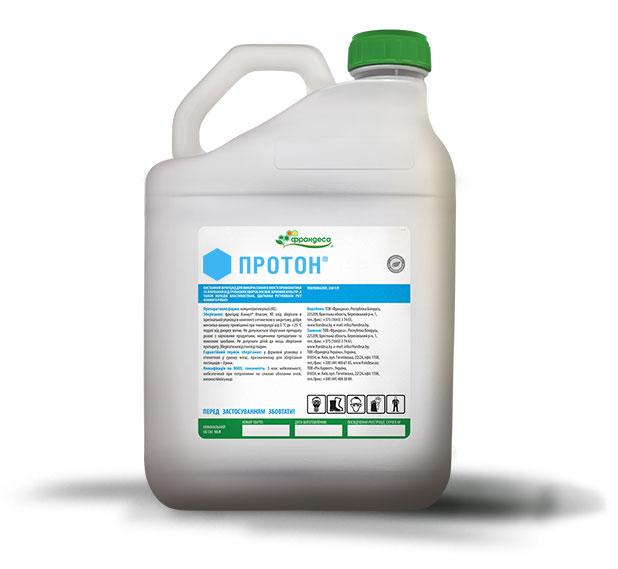
Infectious plant diseases caused by fungi often appear in gardens and fields. Let's look at the composition and purpose of the fungicide "Proton," how it works, the speed of action and duration of the protective effect, the dosage for preparing the solution, and its consumption. We'll also discuss the instructions for use, the toxicity of the product, compatibility, and possible alternatives.
Composition, existing forms of release and purpose
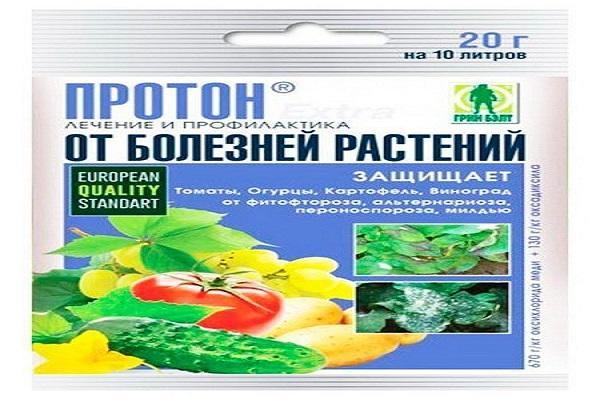
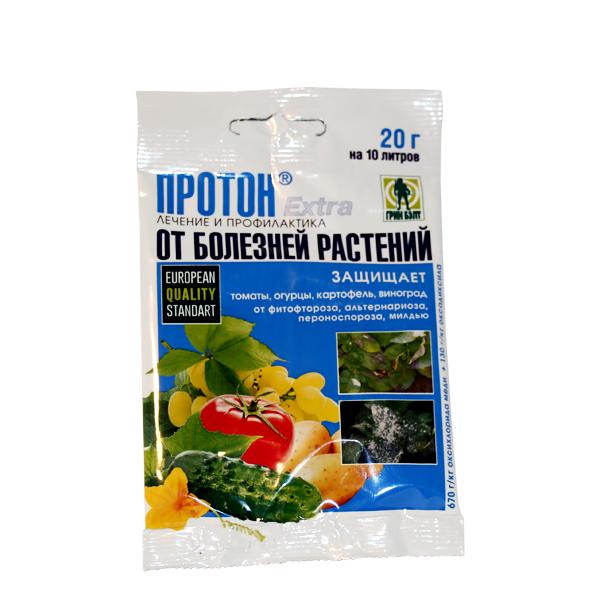
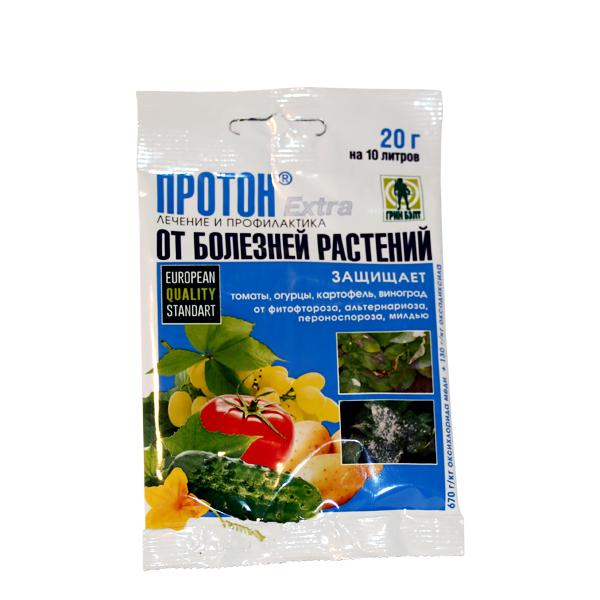
The product is manufactured by Technoexport, a company that produces it as a wettable powder. This systemic fungicide acts by contact and is used as a protective pesticide. The formula contains two active ingredients: copper oxychloride at a concentration of 670 g per liter and oxadixyl at a concentration of 130 g per liter. The product is intended for agricultural use and is packaged in 5, 10, 20, and 25 kg bags.
"Proton" is designed to combat fungal infections of various agricultural and garden crops: potatoes, tomatoes, grapes and cucumbers.
How does the product work?
Copper oxychloride inhibits enzyme synthesis and the function of important cellular components of pathogenic fungi. Oxadixil penetrates leaves, is redistributed with plant sap to untreated parts, and stops RNA synthesis in fungal cells.
How quickly does it work and how long does the effect last?
Oxadixil is absorbed and penetrates leaves and shoots within 2 hours, while copper oxychloride remains on their surface. The protective and preventative effect of Proton lasts 1-2 weeks, depending on the severity of the pest infestation. The therapeutic effect lasts 2-4 days.

Pros and cons
Proton has the following advantages:
- systemic and contact activity;
- destroys fungi at all stages of development;
- long-lasting therapeutic and protective effects;
- does not cause resistance in pathogens;
- effective in combating downy mildew pathogens.
Disadvantages of the fungicide: to completely destroy the fungi, 3 treatments of vegetable crops and 4 of grapes will be required.
Calculation of consumption for different plants
Spray the fungicide "Proton" once as a preventative measure or when signs of infection are detected, then spray the plants at the recommended intervals. The application rate for all crops is 1.5-2 kg per hectare.
Potato crops are treated against late blight and early blight: the first time before the leaves of the plants in a row close or when the bushes reach 15-20 cm, the second time during budding, and the third time depending on weather conditions and the disease progression. The application rate is 300-500 liters per hectare, with a waiting period of 10 days.
Grapes are sprayed against mildew once when spots are detected during the inflorescence formation or loosening stage (approximately 1.5 weeks before flowering), a second time during flowering, a third time during the ovary stage, and a fourth time when the berries reach the size of a pea. The application rate is 800-1000 liters per hectare, 20 days before harvest.
Tomatoes grown in open beds are sprayed against late blight and early blight once as a preventative measure or when initial symptoms of infection are detected, and a second and third application at intervals of 10-12 days. The application rate is 300-500 liters per hectare, with a waiting period of two weeks.

Cucumbers are sprayed against downy mildew when the first symptoms of the disease are detected, then twice more, separated by a 1-1.5 week interval. The application rate is 800 liters per hectare, with a five-day waiting period.
Preparation of the working mixture
When mixing in a sprayer, follow this sequence: first apply the Proton fungicide, then the other pesticides and surfactants. Apply the components after the first product has completely dissolved.
Instructions for use
It is necessary to avoid drift of fungicide solution onto nearby agricultural crops and useful plants.
Safety precautions during processing
When handling and preparing the fungicide solution, wear protective clothing with long sleeves. Wear rubber gloves, a respirator, and plastic goggles to protect against splashes. Do not remove these gloves, and do not drink, eat, or smoke until you're finished.
How toxic is it?
Proton is classified as a Class 3 agricultural product, meaning it is considered low-toxic to humans and bees. It is permitted to be applied to fields from aircraft, but not near water bodies or fish farms. Proton is not phytotoxic when used at the recommended dosage.
Is compatibility possible?
Proton can be combined with pesticides that exhibit acidic and neutral reactions. It is compatible with systemic fungicides, except for concentrated emulsions and thiuram-based products. It is recommended to test mixtures of different products for compatibility and stability before use.
How to store properly and expiration date
The fungicide is stored for 3 years in its original, sealed container at a temperature of 0-25°C, in dry, dark warehouses designed for agricultural pesticides and fertilizers. The prepared solution should be stored for 24 hours.
Similar means
Proton can be replaced with Oxychom, Proton Extra, Chloroshans, and Homoxyl. These also contain copper oxychloride and oxadixyl. Of these, Proton Extra and Homoxyl are suitable for private farms.
Proton fungicide is used on tomatoes, grapes, cucumbers, and potatoes to treat dangerous, rapidly spreading infections. Despite the need for multiple applications, the product is cost-effective due to its low application rate and low cost. Its relatively short waiting period allows it to be used on fruiting tomatoes and cucumbers grown outdoors throughout the growing season.
Related posts:
 The best eggplant varieties for growing in a polycarbonate greenhouse: planting and care
 Instructions for use of the drug Hom, the action and dosage of the fungicide
 Instructions for use of Ordan, how to dilute the fungicide and its analogues
 Methods for planting and propagating cherries at home
 The benefits and contraindications of lentils for the human body
 Description of varieties of sowing peas and cultivation, to which family they belong
 How to properly plant peas in a greenhouse and open ground
 The best grape varieties for growing in the Urals, planting and care rules in summer