
- Composition and dosage form
- Operating principle and purpose
- Speed of action and how long the effect lasts
- How to make a working mixture
- Calculation of consumption and rules of use
- Grape processing
- Roses and other ornamental plants
- On potatoes, onions
- "Ordan" for indoor flowers
- On tomatoes and cucumbers
- Strawberry
- Safety precautions when working
- What to do in case of poisoning
- Is compatibility possible?
- How and how long can it be stored?
- Analogues
Fungal diseases such as late blight, early blight, and downy mildew affect many crop species, and fungicides are used to combat them. Let's look at the composition, purpose, and operating principle of "Ordan," including the product's consumption and dosage, and how to prepare a working mixture. We'll also discuss how to use it on different crops, what it can be combined with, and what it can be substituted with.
Composition and dosage form
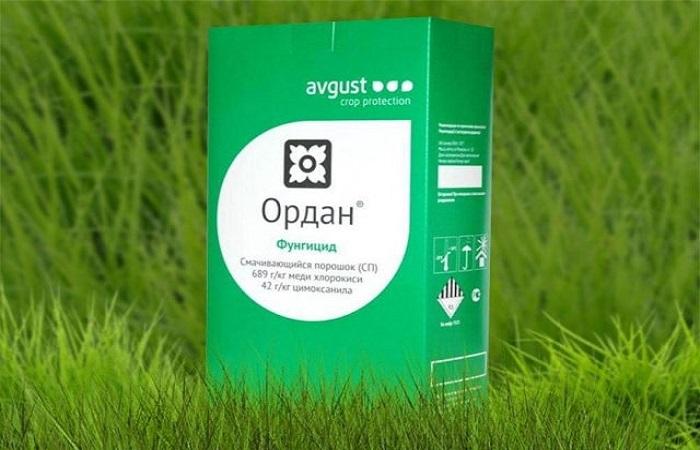
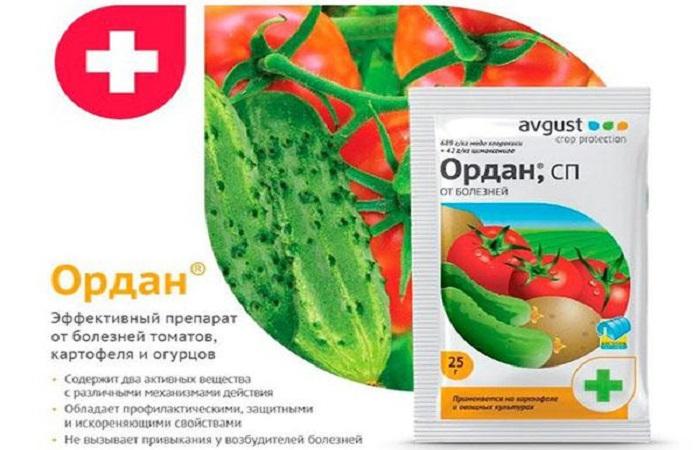
Ordan contains two active ingredients: copper oxychloride at a concentration of 689 g/kg and cymoxanil at a concentration of 42 g/kg. It is available as a wettable powder. Like Topaz, it is a systemic and contact pesticide, and its mode of action is a curative and protective fungicide. Ordan is available in 1 kg boxes and 15 kg bags. The fungicide is manufactured by Avgust, CJSC.
Operating principle and purpose
It is used to treat diseases caused by downy mildew fungi on potatoes, tomatoes, and cucumbers grown in garden beds and greenhouses, as well as late blight, early blight, downy mildew, and mildew on grapes and onions. The product is also used on conifers to treat early blight.
Copper oxychloride has a long-lasting contact effect, disrupting the synthesis of enzymes and vital components in fungal cells. Cymoxanil penetrates plant leaves and inhibits RNA synthesis in fungal cells within one hour. Due to its two-component composition, Ordan fungicide can be used both for the treatment of vegetation against fungal infections and for their prevention.
Speed of action and how long the effect lasts
Cymoxanil is rapidly absorbed and penetrates tissues. Copper oxychloride is not absorbed, remaining on the leaf surface but providing long-term protection. The protective period of the product is 7-14 days, the duration of which depends on the severity of the infestation. The therapeutic effect is shorter than the preventative effect, lasting 2-4 days.

How to make a working mixture
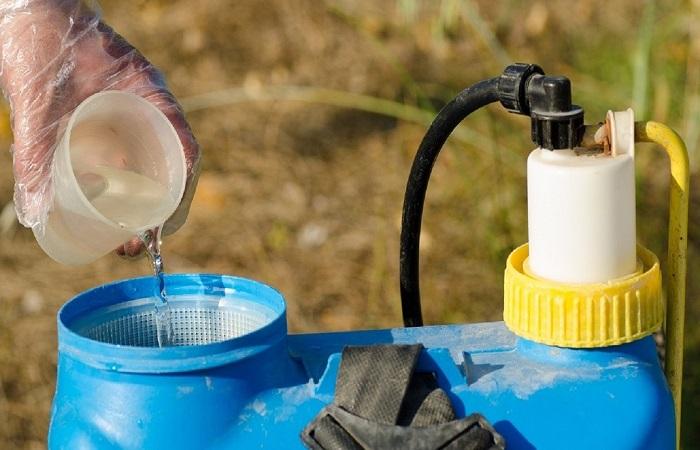
The Ordan solution should be prepared only before use, not before. Prepare the solution in the amount you plan to use per day; do not store any leftovers, as they quickly lose their effectiveness.
Calculation of consumption and rules of use
The dosage and application rate will vary for different crops. In private farms, "Ordan" is used to spray potato, cucumber, and tomato plants. The dosage is 25 g per 5 liters, while for greenhouse vegetables, the rate is 25 g per 8 liters. The application schedule is the same as in agriculture: the application rate is 5 liters per 100 square meters for garden beds and 8 liters per 100 square meters for greenhouses. The application frequency is three times, with a waiting period of 20 days for potatoes, five days for garden vegetables, and three days for greenhouses.
Grape processing
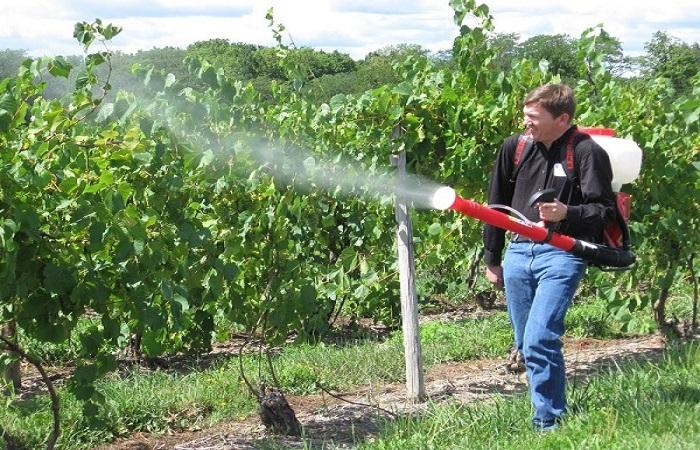
The bushes are treated against mildew three times: once as a preventative measure, then with a 7-14 day interval. The recommended concentration is 2.5-3 kg per hectare. 1,000 liters of solution are used per hectare. The period of time before harvesting the berries is 20 days.
Roses and other ornamental plants
Roses are sprayed with the fungicide "Ordan" against rust when symptoms are detected and again after 1-2 weeks. Prepare a solution by adding 5 g of the product to 1 liter of water.
On potatoes, onions
To prevent late blight and early blight, potato plants are sprayed three times: preventatively (before the tops close or no later than two days after infection is detected). The second and third sprays are administered 7-14 days later. The application rate is 2-2.5 kg per hectare, with a solution consumption rate of 400 liters per hectare. The time before harvest is 20 days.
Onions are sprayed prophylactically against downy mildew and then twice more, 1-2 weeks apart. The application rate is 2 kg per hectare, with a consumption rate of 400-600 l/ha. The harvest period is 20 days.
"Ordan" for indoor flowers
To spray flowers against fungal infections, prepare a solution of 1-2 grams per 1 liter of water. Spray twice, spaced at intervals, as with vegetables.
On tomatoes and cucumbers
The recommended application rate of "Ordan" for cucumbers against downy mildew and for tomatoes against late blight and early blight is 2.5-3 kg per hectare. The first spraying of vegetables is done preventatively when the plants have produced 4-6 true leaves or no later than 2 days after infection. Then, two more treatments are applied 7-14 days later. For open-field vegetables, the application rate is 600 liters per hectare, and for greenhouse vegetables, 10 liters per 100 square meters. The waiting period for greenhouses is 3 days, and for open beds, 5 days.
Strawberry
To prevent brown spot, spray plants and the surrounding soil with a solution of 25 g of the product per 10 liters of water. 5 liters of solution per 100 square meters.

Safety precautions when working
The fungicide "Ordan" is classified as a Class 3 fungicide for humans and a Class 2 fungicide for bees. It should not be used near bodies of water.
When handling the solution, wear protective clothing, a respirator, goggles, and rubber gloves. After handling, rinse off any solution that comes into contact with your skin. Wash your face and hands with warm water and soap.
What to do in case of poisoning
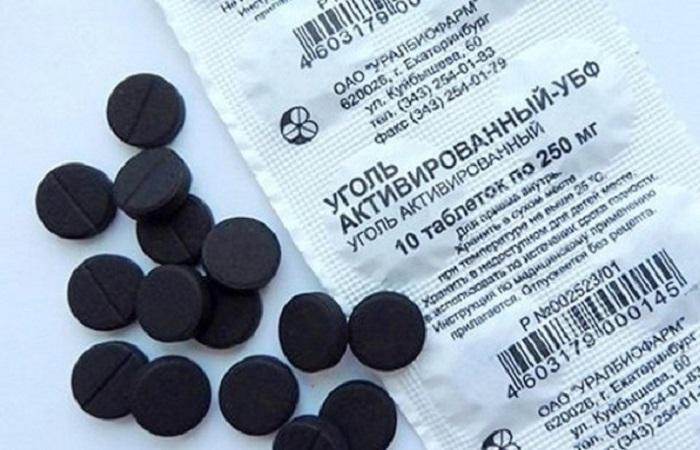
If symptoms of poisoning occur, take 6-7 tablets of activated charcoal and drink at least 1 liter of water. Wait 15 minutes and induce vomiting. In case of severe poisoning, consult a doctor.

Is compatibility possible?
Ordan is compatible with pesticides, except for those whose solutions are highly acidic or alkaline. When mixing new products, it's important to conduct a preliminary test for possible incompatibility: mix a small amount of the solutions in a common container. If they don't react, the products can be mixed.
How and how long can it be stored?
Ordan can be stored in its original packaging for 3 years. During its entire shelf life, it should be stored in a dry, ventilated, dark place. Other pesticides and fertilizers can be stored near the product. Do not store food or feed near it. The solution should be stored for no longer than 24 hours.
Analogues
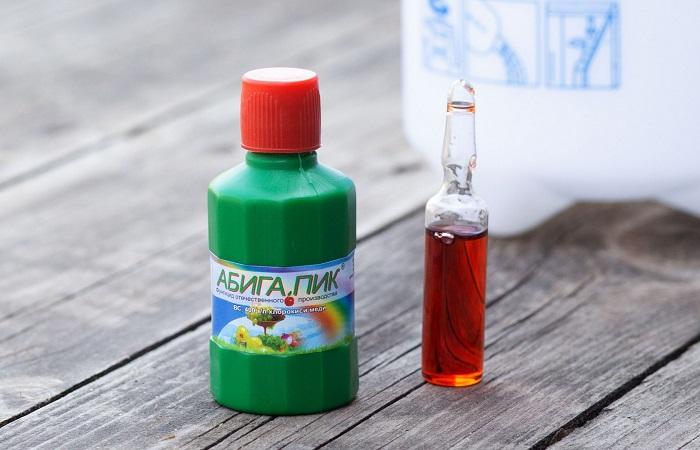
In agricultural applications, Ordan can be replaced with Rapid Gold Plus, Tsikhom, Abiga-Peak, Proton, Chloroshans, Kurzat, HOM, Pergado, and Oxyhom. Alternatives for private farms include Kurzat, Homoksil, Abiga-Peak, Proton Extra, Kuprolyuks, HOM, and Bronex.
Ordan is a fungicide effective against downy mildew. It suppresses pathogens resistant to phenylamide-based products. It does not cause tolerance in fungi and is used in resistance control programs. It allows longer intervals between treatments than standard fungicides used against late blight, downy mildew, and early blight. It has a low dosage for both agricultural and home use. It is non-toxic to plants when used at the recommended dosage.
Related posts:
 How to propagate and grow peas, cultivation technology, and care in open ground
 How to properly plant peas in a greenhouse and open ground
 Description of varieties of sowing peas and cultivation, to which family they belong
 The best eggplant varieties for growing in a polycarbonate greenhouse: planting and care
 Description and characteristics of the best seeds of pea varieties and types
 How to combat late blight on tomatoes: description and treatment of the disease
 How to control onion flies using natural and chemical methods
 Is it possible to plant carrots in July or at the end of June? What are the best days and care instructions?