
Farmers who plant large areas of crops rely on fertilizers, pesticides, and herbicides to control weeds to ensure a bountiful harvest. These chemicals help control even the most persistent weeds without harming crops. Racer herbicide, produced by a domestic company, is designed to control grasses and broadleaf grasses.
Composition, dosage form and purpose
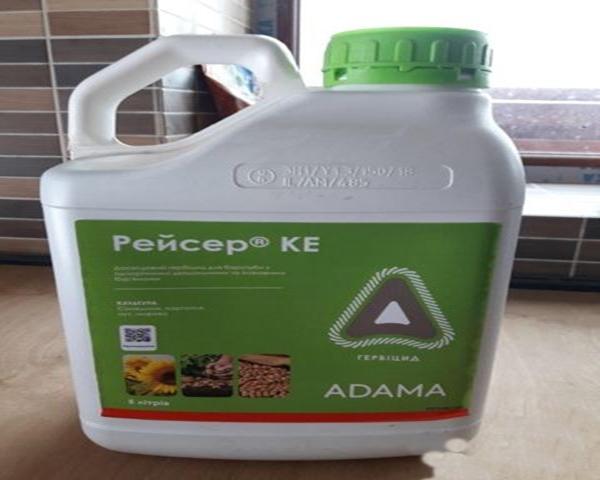
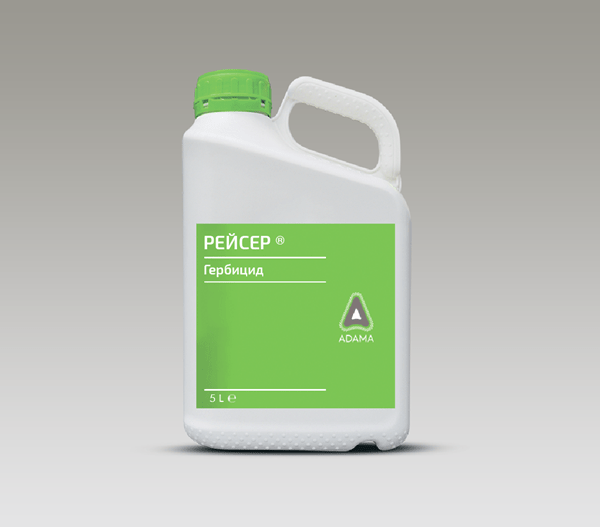
The selective soil herbicide "Racer" contains one active component, which is responsible for its effectiveness: flurochloridone. One liter of the chemical contains 250 ml of active substance.
The herbicide is sold as an emulsifiable concentrate packaged in 5-liter plastic canisters. It is manufactured by the Russian company Makteshim. The instructions state that the chemical is designed to kill annual grasses and broadleaf weeds that choke carrot, sunflower, and potato crops.
Pros and cons
Farmers battling weeds in their fields have tested the effectiveness of the herbicide and identified several of its advantages:
- a wide range of cereals and dicotyledonous annuals that the preparation can destroy;
- the ability to deal with weeds in one treatment;
- long period of protective action provided the instructions are followed;
- the possibility of using a herbicide both before and after the emergence of weeds;
- low toxicity to humans;
- relatively low cost of the chemical agent and economical consumption of the herbicide.
Among the disadvantages of the drug is its toxicity to beneficial insects and aquatic life, so before applying the treatment to a field, apiary owners should be notified in advance.
Another disadvantage of the herbicide is that it does not affect perennial weeds.

How it works and how quickly the effect appears
The active ingredient in the herbicide disrupts carotenoid biosynthesis and inhibits chlorophyll photooxidation. If weeds are treated before they emerge from the soil surface, the active ingredient penetrates the roots, from where it spreads throughout all tissues and parts of the weed. If weeds are already growing, the active ingredient is absorbed by the stems and leaves, and then reaches the root system.
The first signs of weed infestation are observed a few days after treatment, and the protective period lasts for two months. Typically, one spraying per season is sufficient.
Consumption rates for plants
The manufacturer's instructions specify the herbicide dosage for each plant. Exceeding the recommended dosage is not recommended to avoid damaging the crops.
The standards for the chemical agent are presented in the table:
| Cultivated plant | Consumption of herbicide | Required amount of working fluid |
| Potato | 2 to 3 liters per hectare | From 200 to 300 liters per hectare of field |
| Carrot | 2 to 3 liters per hectare | From 200 to 300 liters per hectare of field |
| Sunflower | 3 to 4 liters per hectare | From 200 to 300 liters per hectare of field, depending on the degree of weed infestation |
Preparation of the working mixture
Prepare the weed treatment immediately before use to ensure the active ingredient retains its potency. Fill the sprayer tank halfway with purified water and add the herbicide at the recommended rate, then turn on the agitator. Wait until the emulsion is completely dissolved and then add the remaining water, keeping the agitator running.

Instructions for use
The instructions for use indicate the best time to begin weed control with the herbicide "Racer." The product is most effective when applied before crops emerge from the soil. The day should be dry and clear, and spraying should be done early in the morning or in the evening, after the sun has set.
Since the herbicide is moderately hazardous to animals and insects, it is recommended to carry out the work on a windless day to prevent drops of the working fluid from spilling onto neighboring areas or into bodies of water.
Precautionary measures
When treating a field with a chemical, it's important to have protective clothing ready. The farmer will also need rubber gloves and a respirator to prevent inhalation of solution droplets.

After completing all work, wash clothes and dispose of any remaining liquid according to safety regulations (do not pour the chemical into water bodies or onto the ground). The farmer showers with soap to remove any accidental liquid droplets. If the chemical comes into contact with the eyes or mouth, seek immediate medical attention to avoid complications.
How toxic is it?
The herbicide is classified as toxicity class 3 for humans and beneficial insects and class 2 for mammals. Therefore, caution should be exercised when handling it to avoid harming your health and the environment.
Possible compatibility
The instructions indicate that the herbicide can be used in conjunction with other soil chemicals after a preliminary test. Approved drugs include Pendigan, Acenit and Triflurex.
Expiration date and how to store it
The herbicide remains effective for two years from the date of production, provided it is stored properly and the original packaging is unopened. If the canister has already been opened, the product has a shelf life of no more than six months. Store the chemical in a separate utility room, out of reach of children and animals, at a temperature no higher than 27 degrees Celsius.
Substitute drugs
If necessary, the herbicide "Racer" can be replaced with a preparation such as "Stealth".

Related posts:
 Types of garden fungicides and descriptions of the top 24 best, instructions for use
 Types of fungicides for cucumbers in a greenhouse and instructions for use
 Instructions for use of Fitosporin for grape diseases and dosage
 Causes and treatment of eggplant pests and diseases, how to combat them at home
 How to control carrot flies with medications and folk remedies
 Instructions for using Fitosporin for cucumbers and processing rules
 Description of varieties of sowing peas and cultivation, to which family they belong
 How to propagate and grow peas, cultivation technology, and care in open ground
