
- What is included in the composition and existing forms of release
- How does the drug work?
- What is it intended for?
- Advantages of the product
- Response speed
- Consumption rate and how to prepare a working solution
- Instructions for use
- Security measures
- Degree of toxicity
- Possible compatibility
- Storage rules
- Analogues
Weeds are becoming a major problem for gardeners. Herbicides can help solve the problem. Glyphos is a popular weed control product. This general-purpose chemical is dangerous for all plant species. To learn how to use Glyphos against weeds, read the instructions.
What is included in the composition and existing forms of release
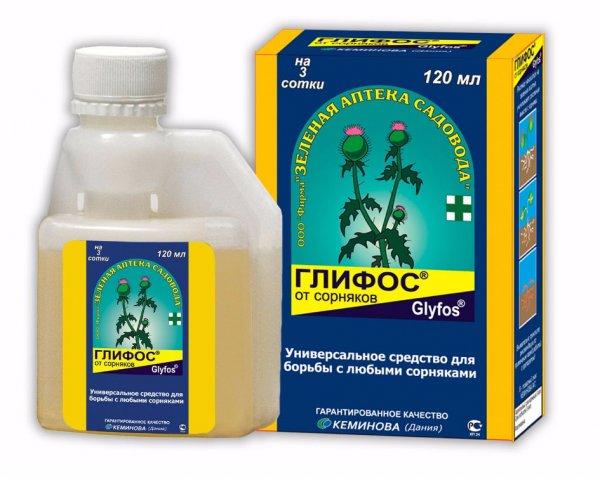
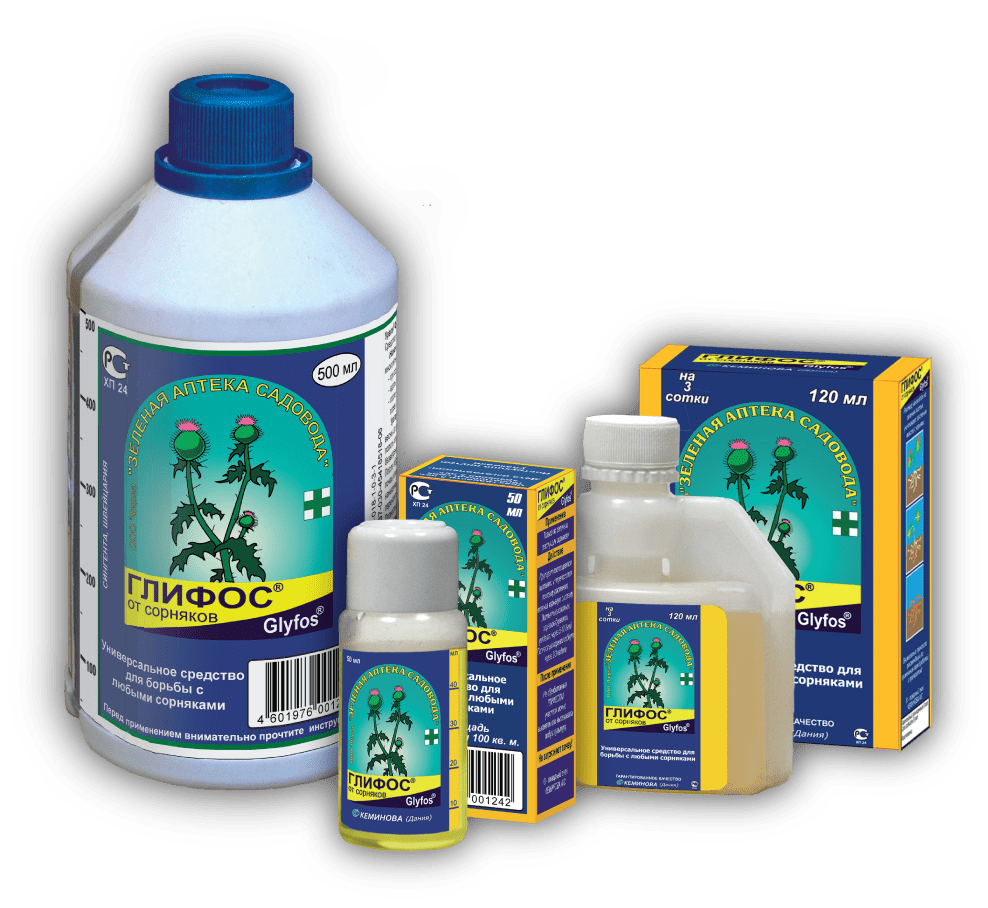
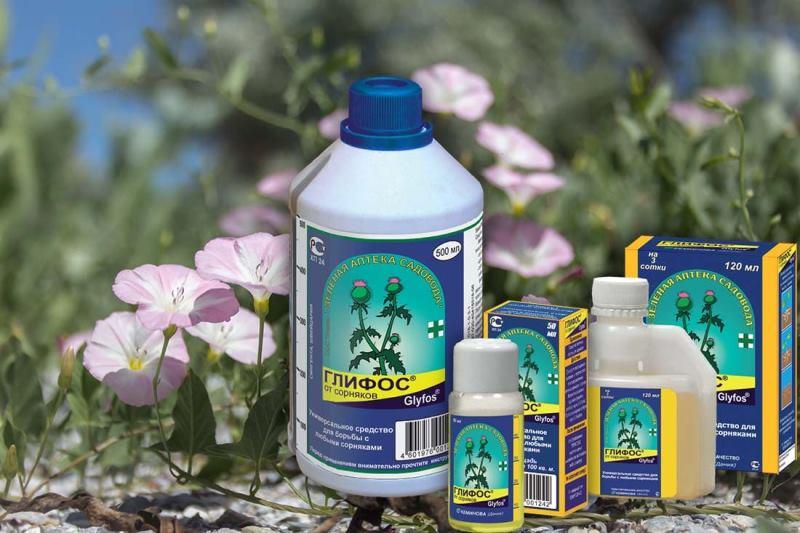
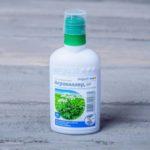
The main component is the isopropylamine salt of glyphosate. The product is formulated with surfactants, which improves the viscosity of the structure and its application. The drug is available as a liquid solution. Packaging options:
- 50 ml – up to 100 square meters;
- 120 ml – up to 300 square meters;
- 500 ml – up to 1000 square meters;
Small bottles are designed to treat an area of 20 to 50 square meters.
How does the drug work?
The herbicide penetrates the structure of the leaves and the root system, spreads and blocks metabolic processes.
Glyphos interferes with amino acid synthesis, leading to the death of unwanted grass. Internal pressure is lost, and the grass turns yellow and wilts.
What is it intended for?
Since the chemical destroys all vegetation in the area, it is not used in the post-emergence period. The herbicide is necessary:
- To control unwanted grass in gardens and surrounding areas. Treatments are carried out 1-3 times per season.
- To prepare the area for seeding lawn grass, the area is treated 1-1.5 months before the event.
- To destroy weeds in an abandoned area for the purpose of subsequent cultivation of the land.
- For weed control before sowing or after harvesting.
Advantages of the product
The highly effective Glyphos product delivers 100% results after treatment. It can kill plants, shrubs, and trees. Its stable action is ensured by surfactants and water softeners. The solution is resistant to moisture and sunlight.
The chemical is compatible with other products, except alkaline substances. Its activity is observed regardless of weather or temperature. The shelf life is five years, but the chemical can remain effective longer.
Response speed
The death period for unwanted grass varies depending on its species. Annuals die as early as four days after spraying. Perennials die within a week of spraying. Trees and shrubs die within 20-30 days.
Consumption rate and how to prepare a working solution
The amount of product used depends on the weed species and the area being treated. Use plain water or a plastic container. Do not dilute the product in a metal container.
Add "Glyphos" to 10 liters of water in the following quantity:
- 80 ml to control annuals;
- 120 ml to control perennials;
- 40-60 ml for processing potato fields;
- 80-120 ml for pre-sowing spraying;
- 120 ml before sowing lawn grass, for treating abandoned areas, cleaning the area along the fence, paths, and house.
Instructions for use
The solution is prepared immediately before use. The prepared mixture should be stored for no more than a week; after that, the properties of the components are lost. Treatment is carried out in dry weather. If the herbicide comes into contact with crops, they are immediately washed with copious amounts of water. To protect the plants, they are covered with material during weed control.
The area is re-treated no earlier than a month later, when new weed shoots appear.
Security measures
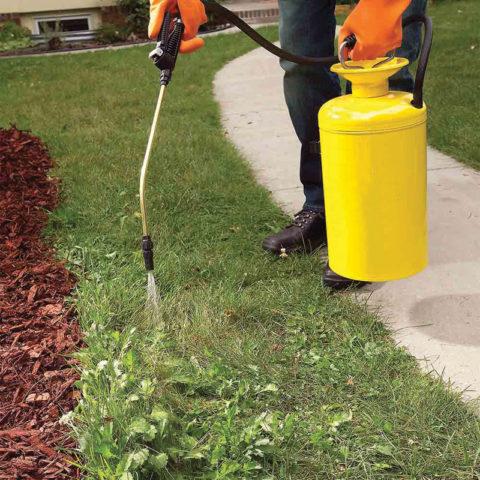
When using the product, wear protective gear: protective clothing, gloves, and a respirator. Before using, ensure that pregnant or breastfeeding women, children, and animals are not nearby. People with allergies should not use the product.
Degree of toxicity
Glyphos decomposes in the soil, so it doesn't affect the plant's root system. It primarily penetrates the structure of weed leaves and stems. Treatment is carried out before sowing. It is recommended to restrict bees' access to flowers in the treated area for 12 hours.

Possible compatibility
The herbicide is used with other agrochemicals and nitrogen fertilizers. Before using them together, a small amount of the chemicals is mixed in a container to test the reaction.
Storage rules
The product has a shelf life of 5 years in its original packaging. Store the agrochemical in a dry place, out of reach of children and animals, and away from direct sunlight. The optimal storage temperature is -1 to +30 degrees Celsius.
Analogues
The closest analogues of Glyphos in terms of mechanism of action include continuous-action herbicides: Agrokiller, Glibest, Glitter, Tornado, Zeus and many other drugs.
Related posts:
 How to make a garden bed from scratch without grass and weeds: ideas and methods with and without weeding
 Instructions for use and composition of Glyphora for weed control, dosage, and analogues
 Types of herbicides for weeds and which ones are best to use, examples
 Instructions for use of the weed killer Glider, dosage, and analogues
 Instructions for use of the weed killer Propol and application rates
 Agrostar instructions for use, herbicide composition, dosage, and analogues
 Instructions for use and composition of the herbicide Zenkor, dosage and analogues
 Instructions for use of Agrokiller and dosage of the herbicide against weeds