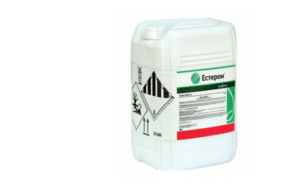
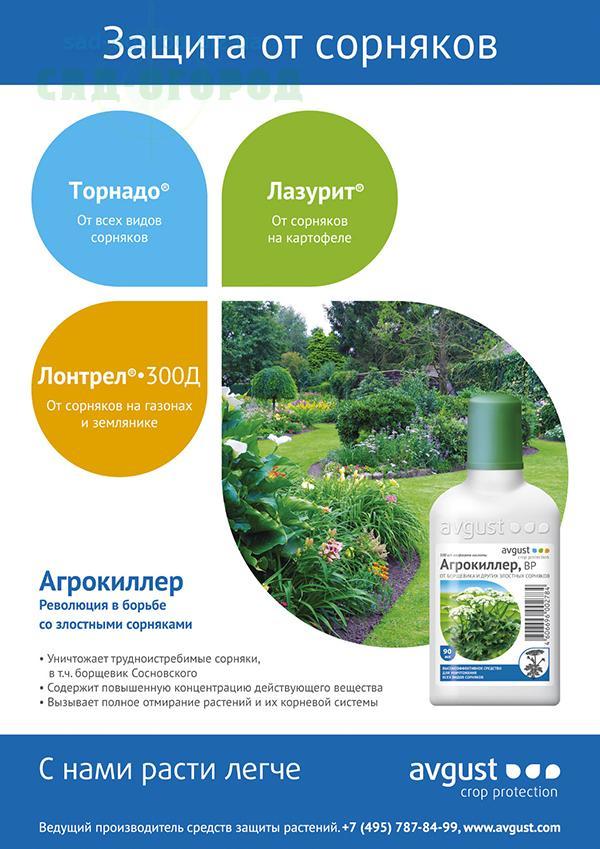
Gardeners with small plots control weeds by hand, which choke out crops. This method is unsuitable for farmers sowing large fields, so they resort to chemical weed control. Agrokiller, a non-selective herbicide that resolves the problem quickly, is recommended for weed control.
Composition, existing forms of release and purpose
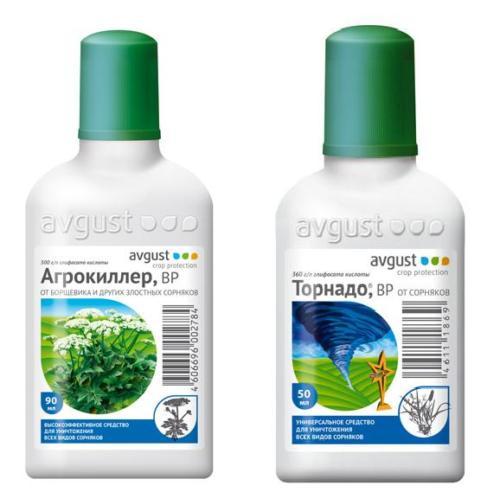
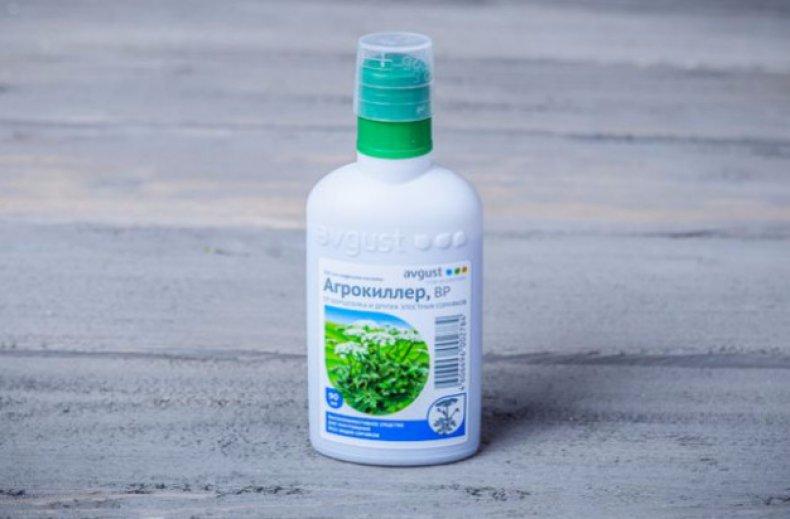
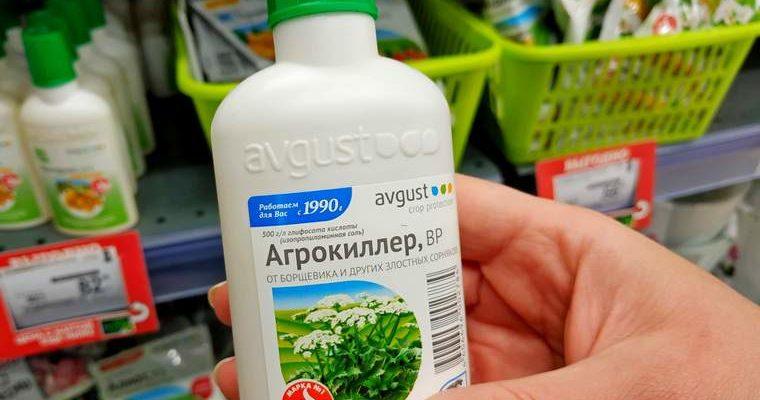
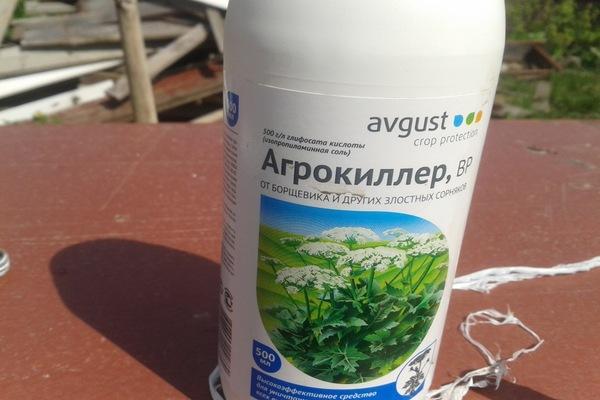
Agrokiller contains a single active ingredient, but in a higher concentration. One liter of this non-selective herbicide contains 500 grams of glyphosate acid. It is available as an emulsifiable concentrate in a bottle with a measuring cup.
The herbicide "Agrokiller" was developed by scientists to kill annual and perennial weeds, both grasses and dicotyledons. It is also effective against shrubs.
How it works
The herbicide "Agrokiller" is used before planting crops. After treating the soil, the product penetrates all parts of the weed, including the root system. After some time, all vital processes of the plant are disrupted, the leaves turn yellow, and within two weeks, the weed completely dies. After this, the soil is dug over and the crops are planted. Since the herbicide is inactive in the soil, there is no need to worry about the condition of the seeds or seedlings.
Advantages of the drug
Gardeners using the herbicide on their plots and fields highlight its strengths. Based on their reviews, it appears the herbicide's advantages outweigh its disadvantages:
- It is highly effective against a wide range of weeds, including shrubs and young trees.
- Due to the high concentration of the active ingredient, it is characterized by rapid action.
- Leads to the complete death of the above-ground part of the weeds and the destruction of their root system.
- It does not have a negative impact on the seeds of cultivated plants planted after the area has been treated.
- Not sensitive to low and high air temperatures.
Take a look Also
Calculation of consumption for different plants
The instructions for use indicate acceptable dosages that should not be exceeded. Trying to save money by using a lower dose of herbicide will not achieve the desired results.
The consumption rates of the chemical agent are shown in the table:
| Weeds | Norm of the drug | Consumption rate | Number of treatments per season |
| Annual and perennial cereal weeds | For a 3-liter bucket of water – 30 ml of herbicide | To process a hectare of field, use 3 liters of working solution. | One time |
| Annual and perennial dicotyledonous weeds | For a 3-liter bucket of water, take 40 ml of the chemical | To process 1 hectare of field, 3 liters of working fluid are used. | One time |
How to make a working mixture
Weed treatment solution cannot be stored for long periods of time, as it loses its potency. Therefore, it should be prepared immediately before spraying. Pour the specified amount of water (it should not be cold) into a plastic container and add the manufacturer's recommended dosage. Using a wooden or plastic stick, stir the solution until smooth. Then pour it into a sprayer and use as directed.
If any liquid remains after the work is completed, it should be disposed of away from the site, but should never be poured into a body of water.
Terms of Use
Before starting work, make sure adjacent beds containing cultivated plants are a safe distance away from the chemical. If they are too close, cover them with plastic sheeting.
Weeds are sprayed 2 weeks before the expected planting of crops.
The instructions recommend applying the herbicide either early in the morning or after 6 p.m. Choose a clear, windless day. Rain on the same day will reduce the herbicide's effectiveness, so check the weather forecast beforehand.
Safety rules
A non-selective herbicide is dangerous to humans, so all work with it, from preparing the solution to spraying weeds, must be carried out in accordance with safety requirements.
Wear protective coveralls and gloves, and cover your head with a scarf or cap. A respirator or mask will help prevent the solution from entering your respiratory tract. If the solution accidentally gets into your eyes, rinse them with water and seek medical attention immediately.
After treatment, remove your work clothes and shower with soap. Wash and dry your overalls on the balcony or outside where there's fresh air.
Phytotoxicity
Cultivated plants must be protected from exposure to the working fluid, as it will kill them. After two weeks, the seeds can be sown; the herbicide does not affect the planting material while in the soil.
Possible compatibility
It is not recommended to mix the drug "Agrokiller" with other chemicals.
How and how long can it be stored?
The product's shelf life, as stated in the instructions, is 5 years. However, during this period, proper storage instructions must be followed. Store the chemical in a locked utility room. The room should be protected from sunlight, and the temperature should not exceed 35 degrees Celsius. Children and animals should be kept away from the utility room to prevent poisoning.
Similar means
In some cases, the herbicide "Agrokiller" is not available in stores; in this case, it is recommended to pay attention to products such as "Roundup" or "Tornado".
Related posts:
 Hermes herbicide instructions for use, dosage, and analogues
 Instructions for use and composition of the herbicide Aksifor, dosage and analogues
 Instructions for use and composition of the herbicide Basis, application rates and analogues
 Luger herbicide instructions for use, dosage, and analogues
 Instructions for use and composition of the herbicide Pivot, dosage and analogues
 Instructions for use and composition of the herbicide Fabian, application rates and analogues
 Composition and instructions for use of the herbicide Pilaraund, application rates
 Instructions for use of the continuous herbicide Rap, its composition and dosage