
Herbicides are designed to protect various crops from weeds. Modern agrochemicals offer single- and multi-component products that can permanently rid cultivated areas of harmful plants. High efficiency combined with cost-effectiveness significantly simplifies crop maintenance. Today, we'll discuss the herbicide "Lancelot 450," its capabilities, and application features.
Composition, dosage form and purpose
This two-component product is designed to control annual and perennial broadleaf weeds in areas grown as grain crops (wheat and barley). It destroys various types of sow thistle and chamomile, and is effective against thistle, bedstraw, and creeping bitterling. These are particularly tenacious weeds.
Lancelot 450 is a selective herbicide. By penetrating the weed, it provides a systemic effect on the plant, causing growth arrest and rapid death of the pest.
The active ingredients of the drug are:
- aminopyralid - 300 grams/kg;
- florasulam - 150 grams/kg.
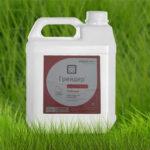
It is produced as water-dispersible granules packaged in 0.5-liter canisters. Each package of herbicide must have a label containing information about the product name, manufacturer, intended use, and instructions for use.
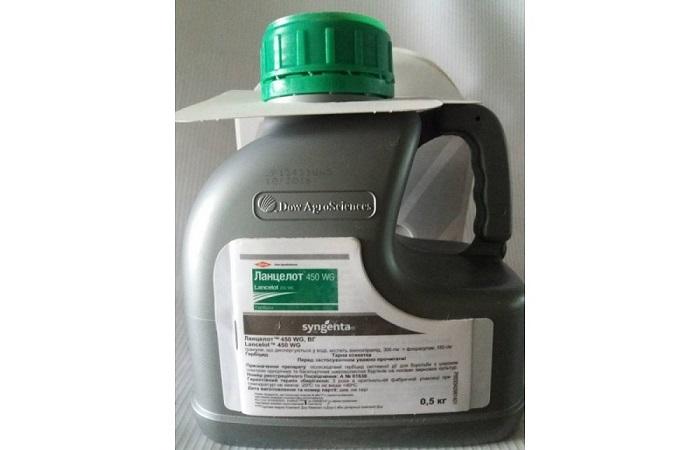
Mechanism of action
The herbicide's active ingredients easily penetrate the stems and leaves of the treated weed. Inhibition of plant hormone synthesis leads to the cessation of cell division. Growth ceases within the first 24 hours after exposure, and the weeds die within two weeks.
The systemic action of aminopyralid and florasulam ensures effectiveness when treatment with compounds containing dichlorophenylacetic acid and sulfonylurea is ineffective.
Important: do not treat weakened plantings or crops damaged by temperature fluctuations.
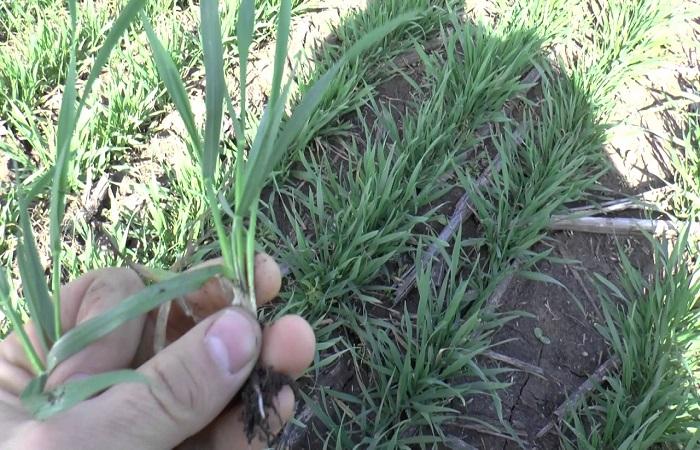
Crop rotation rules must be followed. If reseeding is necessary, the area can be replanted with corn, grasses, spring grains, or sorghum a month after cultivation. Deep plowing of the field is mandatory beforehand.
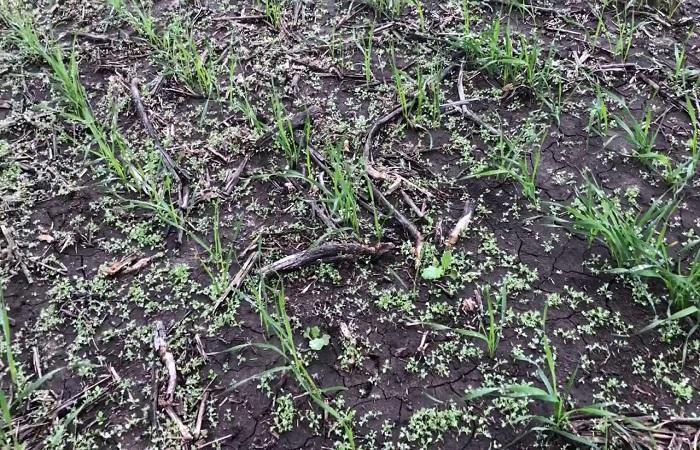
In the fall, the fields are suitable for sowing grains and rapeseed. The following spring, the fields are suitable for spring cereals, corn, and forage grasses. A year later, root crops (potatoes and beets) can be planted. The fields are suitable for growing sunflowers, onions, and cabbage. After 1.5 years, various legumes can be planted.
Pros and cons
The agrochemical compound has many advantages:
- the ability to completely eradicate thistles and sow thistles, affecting the above-ground parts of plants and the root system;
- does not allow chamomile, sorrel, cornflower, and cocklebur to develop;
- destroys sunflower volunteers, which cannot be controlled by herbicides based on imidazolidinones and sulfonylureas;
- applied from the tillering period to the development phase of the 2nd internode;
- optimizes plant growing costs.
Disadvantages include decreased efficiency when used on waterlogged soils.
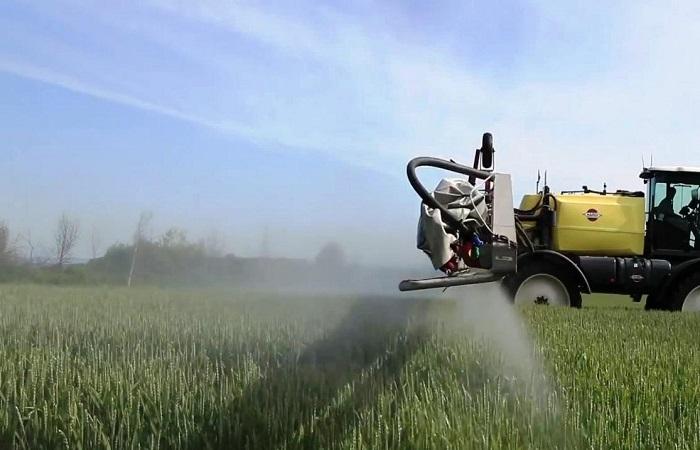
Calculation of consumption
The drug is used sparingly, a single application is sufficient.
| Culture | Amount of concentrate, in grams/hectare | Consumption of the prepared solution, spraying period | Number of sprays |
| Spring and winter wheat | 30-33 | From the tillering period to the second internode formation phase, 200-300 liters/hectare | 1 |
| Spring, winter barley | 30-33 | During the same period, 200-300 liters/hectare | 1 |
When treating areas by air, the consumption rate is 30-50 liters of the prepared mixture per hectare.
Preparation and use of working solution
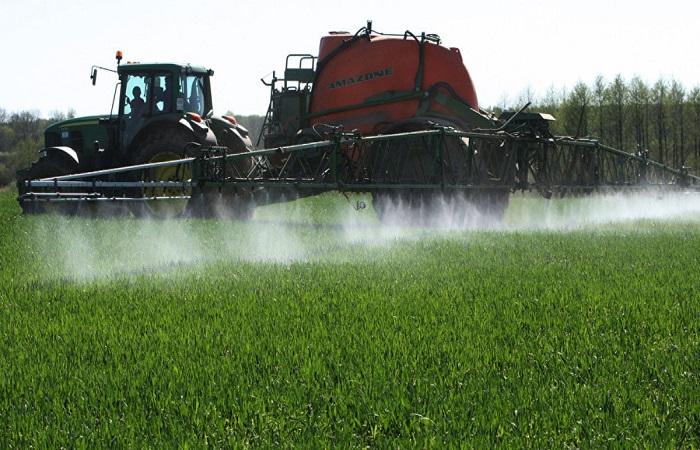
It is diluted before treatment and stored for no more than 24 hours. The application should be carried out in cloudy, dry weather, at temperatures ranging from 10 to 25°C.
Fill the empty tank 1/3 full with water, add the required amount of herbicide granules, and stir continuously. Continue mixing until the required volume is reached. Use the prepared working solution for spraying.

Precautionary measures
All work with the herbicide must be carried out by personnel trained in safety procedures and holding the appropriate authorization. Personnel are provided with protective suits, gloves, and respirators. Smoking and eating are prohibited during work. After contact with the herbicide, change clothes and take a shower. In case of accidental ingestion, the victim must be taken to a medical facility immediately.

Degree of toxicity and compatibility
This product is classified as hazard class 3 (moderate toxicity) for humans and bees. It is not intended for use in protected water bodies. It is suitable for tank mixing with fertilizers, herbicides, and insecticides. Compatibility testing of the substances is required before use.
How to store it correctly and for how long
"Lancelot 450" is stored in a warehouse for agrochemicals, in tightly sealed containers from the manufacturer. The storage area must be dry and well-ventilated. The shelf life is 3 years from the date of manufacture.
Analogues
There are no compounds with the same active ingredients on the market.
Related posts:
 The best eggplant varieties for growing in a polycarbonate greenhouse: planting and care
 Hermes herbicide instructions for use, dosage, and analogues
 Instructions for use and composition of the herbicide Basis, application rates and analogues
 Composition and instructions for use of the herbicide Ballet, application rates and analogues
 Composition and instructions for use of the herbicide Pilaraund, application rates
 Instructions for use and composition of the herbicide Aksifor, dosage and analogues
 Instructions for use and composition of the herbicide Fabian, application rates and analogues
 Composition and instructions for use of the herbicide Grader, application rates and analogues