
- Composition and existing forms of release
- What plants does it affect?
- Advantages of the herbicide
- Trigger mechanism
- How quickly is the effect noticeable?
- Prolonged action
- Calculating consumption and how to prepare a working solution
- Instructions for use
- Security measures
- Degree of toxicity
- What to do in case of poisoning
- Possible compatibility
- How much and how to store correctly
- Similar means
Weeds in crop fields interfere with the proper development of grains, vegetables, and fruits, so farmers use chemicals to control them. The herbicide "Hacker" successfully controls some annual and perennial weeds in a single application. Before using the product, please read the instructions and calculate the application rate.
Composition and existing forms of release
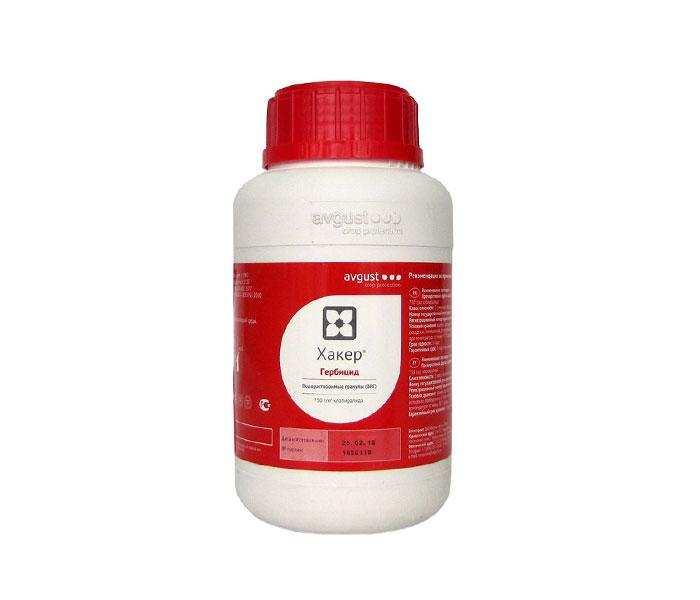
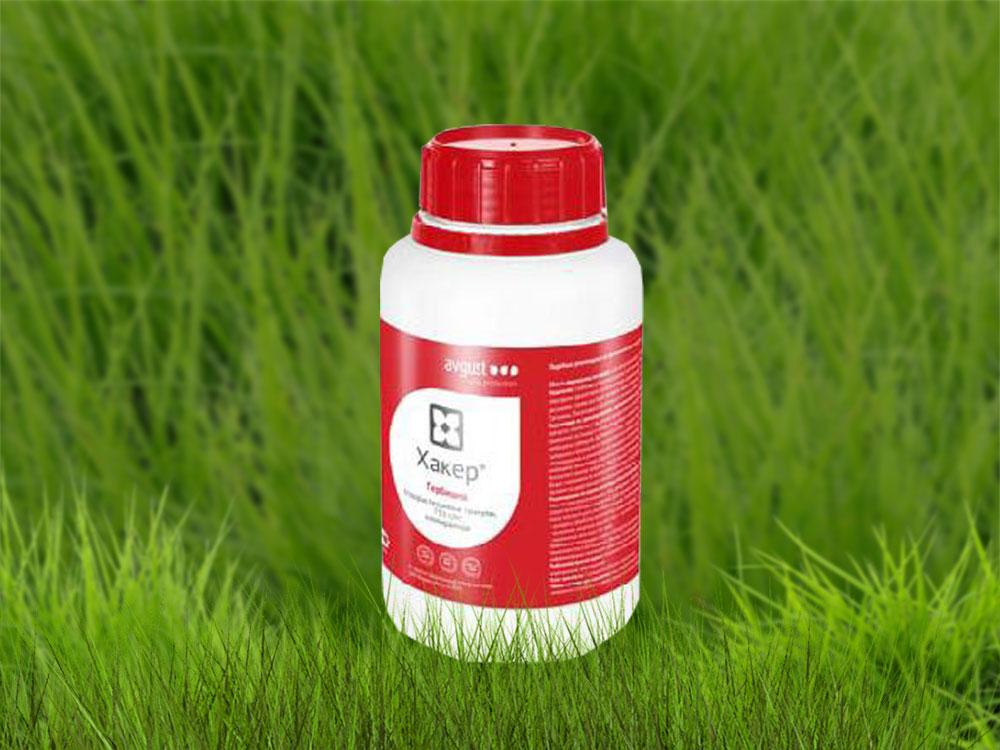
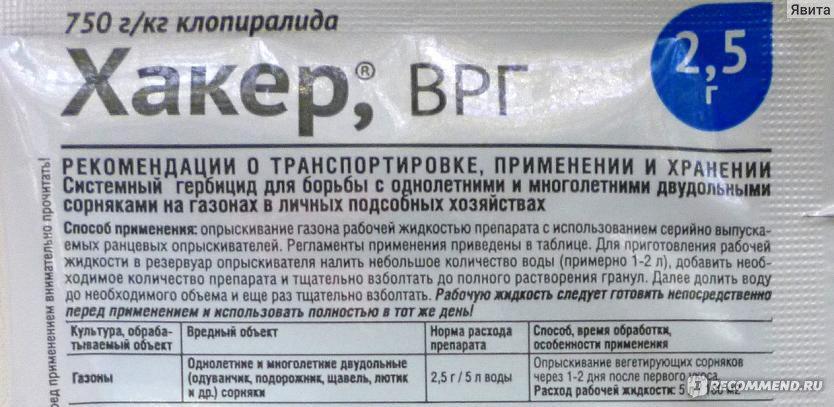
The herbicide "Hacker" contains one active ingredient, clopyralid, which belongs to the class of chlorinated pyridines. One kilogram of the chemical contains 750 grams of it. The herbicide is produced in the form of water-soluble granules, and they are sold packaged in 1-kilogram bottles, which is convenient not only for owners of large fields, but also for summer residents growing crops for their own consumption.
What plants does it affect?
The herbicide "Hacker" effectively controls a range of annual and perennial weeds. These weeds include chamomile, sow thistle, field thistle, knotweed, tartary buckwheat, dandelion, and common ragwort, which can choke sugar beet, rapeseed, and oilseed flax crops.
Advantages of the herbicide
Farmers and homesteaders who use Hacker to protect their crops from weeds have highlighted several advantages of the product.
To prevent resistance, the herbicide "Hacker" must be alternated with other chemicals for weed control.
Take a look Also

Trigger mechanism
The chemical "Hacker" is a systemic herbicide. After application, it quickly penetrates the weeds' leaves, from where it spreads to their growth points and root systems. This inhibits cell division, and after a short time, the weeds die.
How quickly is the effect noticeable?
Weed growth stops within a few hours of spraying. The first signs of weed suppression can be seen within 5-6 hours. After a week, leaf chlorosis becomes noticeable, and after another 7 days, the weeds die.
Prolonged action
Fields of flax and oilseed crops do not require re-treatment throughout the growing season. However, sugar beet crops will typically require two sprays to control a second wave of weeds.
Calculating consumption and how to prepare a working solution
To ensure the Hacker herbicide exhibits its full effectiveness, it is necessary to correctly calculate the chemical application rate and apply the treatment in accordance with the instructions for use.
Standards for different crops are shown in the table.
| Cultivated crop | Herbicide consumption | Weeds | When to spray |
| Fiber flax and oil flax | From 80 to 120 grams per hectare of field | Annuals and perennials | Treatment is carried out when the weeds form a rosette. |
| Fodder and sugar beets | From 120 to 200 grams per hectare of plantings, depending on the degree of weed infestation | Bird's knotweed, sow thistle and chamomile | Work begins at the stage of 3-5 leaves of the cultivated plant. |

The spray solution is prepared immediately before starting work. Add half the recommended amount of water, pre-filtered to remove any mechanical impurities, to the sprayer tank. Next, add the recommended amount of granules and turn on the mixer until the solution is completely dissolved. Then, add the remaining water and mix again. This work is carried out in a designated area, which must be subsequently decontaminated.

Instructions for use
The instructions for use recommend starting work either early in the morning or in the evening, when it's not too hot. To prevent the herbicide from spilling onto neighboring fields, spray when wind speeds do not exceed 4 m/s. If crop fields are heavily infested, use the maximum permitted amount of the chemical. Any remaining solution should be disposed of according to safety regulations.
Security measures
When working with chemicals, always wear protective clothing and cover your head with a scarf or cap. A respirator is also used to prevent inhalation of herbicide vapors. After finishing work, take a shower and wash your face with soap. All clothes are washed and hung outdoors.
Degree of toxicity
The herbicide "Hacker" belongs to the 3rd toxicity class and is low-risk for humans, animals and honey bees.
What to do in case of poisoning
If the herbicide is accidentally swallowed, take activated charcoal and seek medical attention for symptomatic treatment. If the herbicide gets into your eyes, rinse them with plenty of water and seek medical attention.
Possible compatibility
The herbicide "Hacker" is successfully used in tank mixtures with other chemicals, such as "Biceps Garant", "Pilot", "Triceps", "Magnum", "Ballerina" and "Gerbitox".

How much and how to store correctly
If the original packaging is intact, the chemical product is usable for 3 years from the date of manufacture. The temperature in the room where the herbicide is to be stored should not exceed 35 degrees Celsius. Direct sunlight should also be avoided.
Similar means
Hacker can be replaced with drugs such as Lontrel Grand or Cardinal.
Related posts:
 Composition and instructions for use of the herbicide Ballet, application rates and analogues
 Instructions for use and composition of the herbicide Axial, dosage and analogues
 Instructions for use and composition of the herbicide Galigan, dosage and analogues
 Instructions for use and composition of the herbicide Puma Super 100, application rates
 Instructions for use and composition of the herbicide Lornet, application rates and analogues
 Instructions for use and composition of the herbicide Miura, application rates and analogues
 Top 10 Systemic Herbicides and How to Choose the Right One
 Composition and instructions for use of the herbicide Panther, application rates
Take a look Also
