
- Selection of varieties and cultivation regions
- The main advantages and disadvantages of the Klappa Favorite pear
- Description and characteristics of pear
- Tree size and annual growth
- Branching of the root system
- Fruiting
- Flowering and pollinators
- Fruit ripening time
- Productivity and taste
- Application of pears
- Drought and cold resistance
- Immunity to diseases and pests
- How to plant Clapp's Favorite
- Deadlines
- Site selection and soil preparation
- Tree planting patterns and rules
- Organization of competent care
- Irrigation scheme and norms
- Fertilizer
- Pruning and crown shaping
- Whitewash
- Diseases and pests: preventive treatments
- Scab
- Moniliosis
- Rust
- Pear sawfly
- Pear sucker
- Preparing for the winter period
- Methods of reproduction
- How to Increase Your Yield: Tips and Advice
- Gardeners' reviews
One of the best pear varieties, suitable for growing in regions with a variety of climates and soil types, is Lyubimitsa Klappa. Due to its low maintenance requirements, this variety has become popular in commercial and private gardening. It is also actively used in breeding. New pear varieties with improved technical characteristics have been developed using this variety.
Selection of varieties and cultivation regions
Clapp's Favorite was developed in 1860 in Massachusetts by the American T. Clapp. The pear "Forest Beauty" served as the basis.
Today, this variety can be found in many regions of Russia:
- Kaliningrad region;
- Crimea;
- Krasnodar region;
- in the republics of the North Caucasus;
- in the Volgograd region;
- Astrakhan.
In neighboring countries, Klappa's Favorite is no less popular among amateur gardeners and agricultural enterprises.
The main advantages and disadvantages of the Klappa Favorite pear
The main advantages of this variety include:
- undemanding to soil;
- abundant fruiting;
- maintaining the ability to bear fruit for many years;
- drought resistance;
- frost resistance;
- large fruit sizes with excellent technical and taste characteristics.
However, as the fruit ripens and harvesting is delayed, they begin to shed en masse. Ripe fruit has a short shelf life and spoils quickly. When grown in a temperate climate with a cold spring and heavy rainfall, the variety is susceptible to scab.
Description and characteristics of pear
The average lifespan of Clapp's Favorite is 50 to 70 years, but the lifespan and period of intensive fruiting depend on the local conditions and care.
Tree size and annual growth
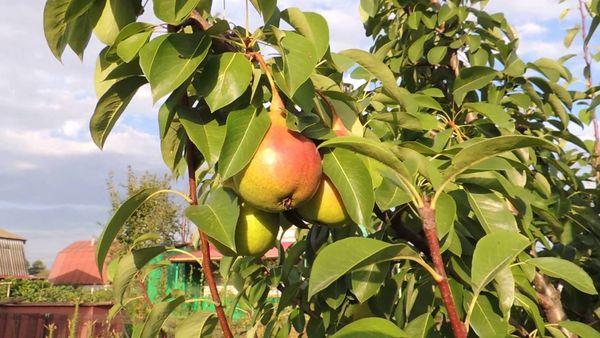
This variety is medium-sized, reaching no more than four meters in height. Young seedlings are noted for their rapid growth rate. After just three seasons, the shoots become woody and droop downwards.
The variety's crown is pyramidal, sparse at the base and wide at the top. Over the years, shoot dieback occurs, making crown thickening extremely rare. The tree's woody branches point downward.
The skeletal branches are quite thick, but it is difficult to call them branched.
Branching of the root system
A mature pear tree has deep, vertical roots that branch quite weakly. These roots can reach depths of up to five meters. The horizontal roots branch extensively and are located almost on the surface. The majority of the pear's roots are located at a depth of up to 80 cm. This root system structure facilitates the tree's supply with moisture and essential micronutrients, which are located in various soil layers.
Fruiting
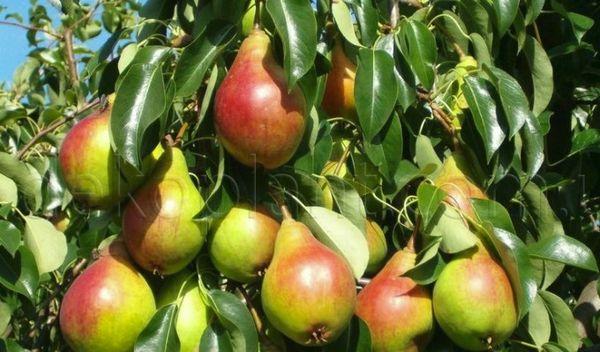
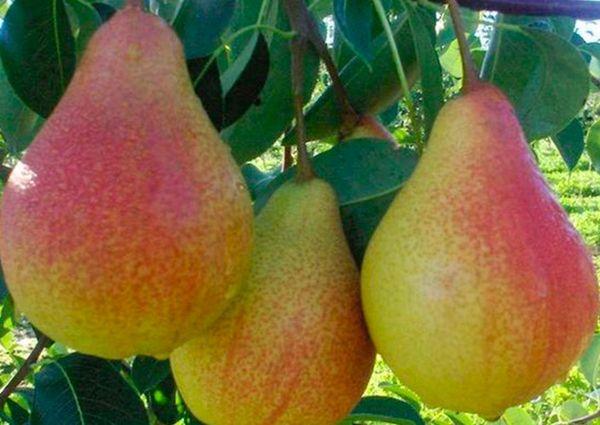
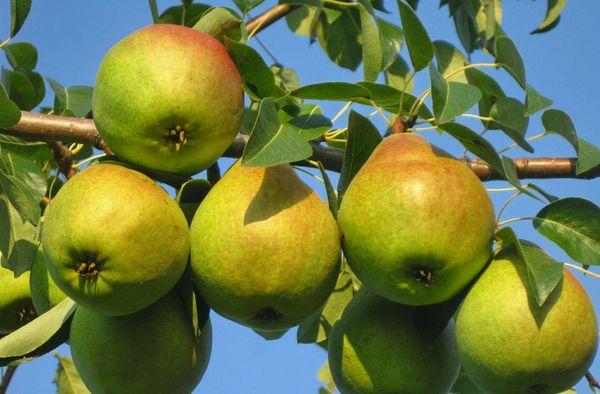
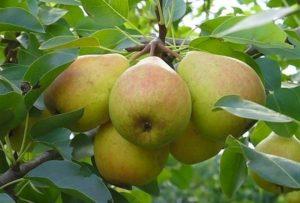
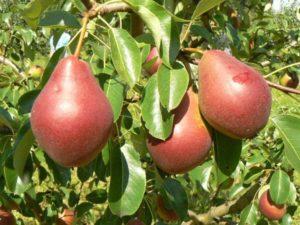
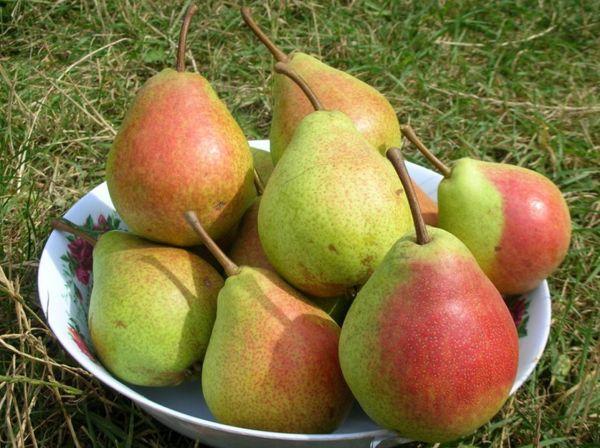
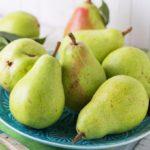
The variety begins bearing fruit seven years after planting. The fruit is elongated. The skin is soft and smooth, with few bumps. Numerous small dots are barely visible beneath the skin. A ripe pear is easily recognized by its characteristic yellow color. Fruit ripening on the sunny side develops a slight blush. The fruit is attached to the branch by a short, curved peduncle.
Flowering and pollinators
Clapp's Favorite blooms profusely with large white flowers. The blooming period lasts a long time. Because of this, the variety is often used in garden landscapes.

The pear tree is self-sterile and requires pollinators. Suitable pollinators include:
- Panna;
- Forest beauty;
- Bere Bosk;
- Williams;
- Winter decan.
Clapp's Favorite itself is an excellent pollinator for many varieties.
Fruit ripening time
The ripening time of the Klappa's Favorite fruit can vary greatly depending on the growing region. In regions with hot climates, the harvest begins in late July. In cooler climates, the ripening period extends until the end of August.
Productivity and taste
The pears have snow-white flesh, very juicy and tender. The pears have a flavor rating of 4.8. Mature trees can produce up to 300 kg of fruit, with an average weight of 180 to 230 grams. Young trees typically produce larger fruits, which become smaller with age.
Application of pears
The tree produces delicious pears with a pleasant aroma. They are delicious fresh, but their shelf life is very short. The fruit can be stored for no more than two weeks. After that, processing is required. The pears make excellent preserves and are also suitable for drying.
Drought and cold resistance
Clapp's Favorite is a winter-hardy variety. It blooms quite late, so it's rarely damaged by late frosts. It tolerates drought well. However, during the growing season, it requires irrigation to produce large crops.
Immunity to diseases and pests
Preventative measures are crucial when growing this variety, as it lacks a strong immune system and is often susceptible to various diseases. It is particularly susceptible to scab and various pests.
How to plant Clapp's Favorite
Planting operations are not particularly difficult and are carried out in accordance with generally accepted technology.
Deadlines
Pear trees can be planted in both fall and spring. In southern regions with mild winters, fall is best. Planting in the fall allows the young tree to adapt to the surrounding conditions before severe cold sets in and will survive the winter well.
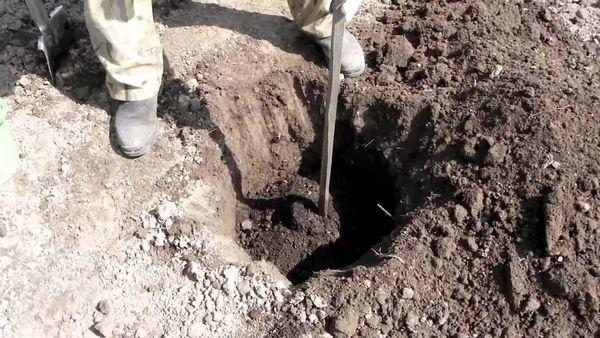
In regions with short summers and long winters, it's best to plant pear trees in the spring, before the leaves emerge. Temperatures should not drop below 5°C. Planting a weak seedling prematurely increases the risk of its death during subsequent frosts.
Depending on your region and weather conditions, the planting season is between late April and mid-May. During the warmer months, the seedling will establish itself, grow, develop roots, and be fully prepared for the harsh winter.
Site selection and soil preparation
Pear trees prefer sunny locations, sheltered from strong winds on all sides. For fruiting, pear trees require consistent light, so avoid planting them in the shade of garden structures or tall, spreading trees. Lowlands are also unsuitable.
Groundwater levels shouldn't be ignored either. If the water level rises above three meters, the tree is highly likely to die within a few years due to root erosion.
Clapp's Favorite grows well in any type of soil, but when grown in fertile and loose soil, full and annual fruiting is observed. Loams are the most suitable option for it.
Prepare the soil in advance, preferably six months before planting. To do this, dig a planting hole at least 60 x 70 cm, removing all roots. When preparing the hole, add rotted manure, peat, potassium sulfate, and superphosphate to the soil.
Tree planting patterns and rules
The distance between trees in an orchard has a significant impact on their development and fruiting. Close planting of trees and bushes negatively impacts pear yield. The distance between trees in a row should be at least 4 meters, and the distance between rows should be at least 5 meters.
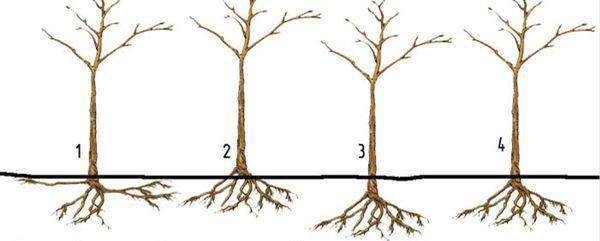
Fill the hole 2/3 full with the prepared soil mixture, then water thoroughly. Place the seedling in the hole so that the root collar is 4 cm above ground level and backfill. Water the hole again. Tie the seedling to the support and prune.
Organization of competent care
Fruitful cultivation of healthy pears and obtaining large harvests is impossible without proper care.
Care is important both for a young seedling in the first years of growth and for an adult tree.
Irrigation scheme and norms
Although the variety tolerates drought quite well, watering is essential during the growing season. This is especially important during prolonged periods of dry weather and hot weather. In regions with little snow, the first watering is done before flowering. The pear tree also needs moisture during fruit set. To help the tree survive the winter, the trunk area is generously moistened in the fall.
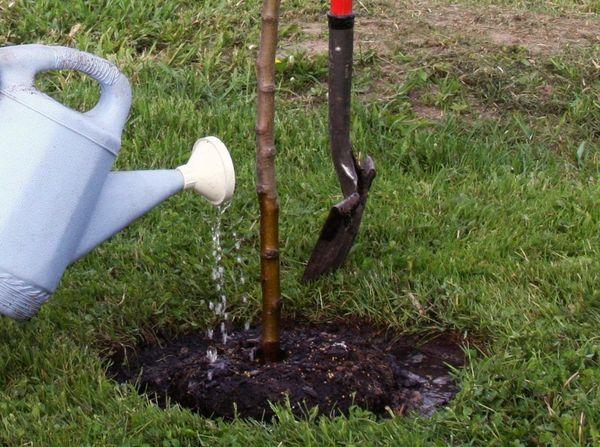
Pear trees are most often watered on clay soils, and least often on sandy loam soils. Three buckets of water are sufficient for a young tree. As the tree ages, its water consumption increases. A five-year-old pear tree requires eight buckets. A ten-year-old Clapp's favorite requires at least 120 liters.
Fertilizer
Fruitful pear cultivation is impossible without fertilizing. During bud swelling, nitrogen-containing fertilizers are essential. During active flowering, the tree can be treated with a urea solution. In midsummer, pears require phosphorus and potassium fertilizers. Proper watering after each fertilization ensures adequate micronutrient absorption.
Pruning and crown shaping
Formative pruning is crucial when growing the Klappa's Favorite. Creating the correct crown shape stimulates growth and fruiting. In the second year, the pear is pruned to a height of approximately 50 cm. This stimulates the development of lower branches, creates a proper crown, and facilitates harvesting from a mature tree.
For a pear tree, a sparse, tiered crown is preferable, when the branches are located at a distance of about half a meter from each other.
Whitewash
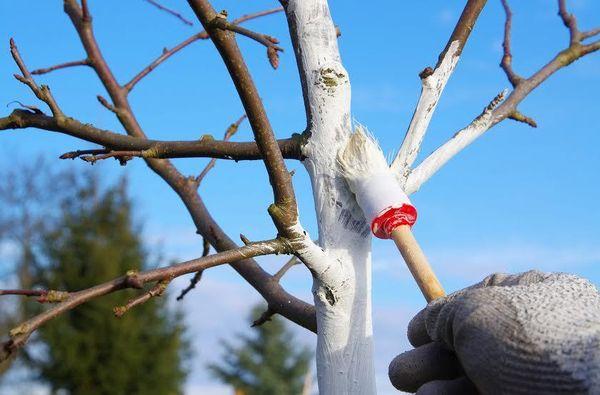
Pear trees are whitewashed twice a year. Spring whitewashing protects the tree from overheating and sunburn. Fall whitewashing prevents insect infestations and proliferation.
Diseases and pests: preventive treatments
The most common diseases of the Clapp's Favorite are:
- scab;
- moniliosis;
- rust.
These are primarily fungal diseases. To prevent them, preventative treatments with fungicides are used.
Pests are no less dangerous for pears. They affect the yield and often carry diseases.
Scab
Scab is a common disease of pears grown in temperate climates. It is caused by the fungus Venturia pirina. During rainy springs, it colonizes the blossoms and prevents fruit set. The disease then spreads to the leaves, shoots, and ripening fruit.
Moniliosis
Warm weather and high humidity promote the spread of moniliosis. The infection is transmitted by insects and wind. The first signs of the disease appear on the fruit only mid-growing season. The flesh becomes tasteless and crumbly. An ash-gray rot is visible on the surface.
Rust
Did yellow spots appear on the leaves immediately after flowering? This is rust. Over time, black spots form on the damaged areas. The affected tree's immunity and winter hardiness decrease.
Pear sawfly
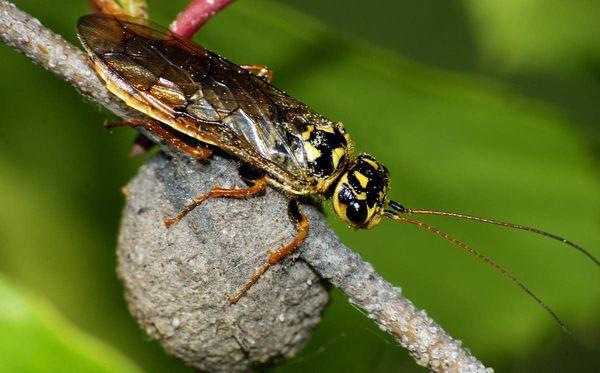
The pear sawfly grows no more than 1.5 cm in length. Its larvae eat leaves and build nests in their place. They then descend into the ground and overwinter safely until the following spring.
If a pear tree is affected by this pest, the tree is sprayed with “Phosphamide”, “Karbofos” or “Aktellik”.
Pear sucker
Pear leafhopper larvae are no larger than 3 mm, yet they cause irreparable damage to the tree. They damage buds, shoots, fruit ovaries, and leaves. To get rid of these insects, spray with Decis, Fitoverm, or Agravertin.
Preparing for the winter period
To ensure that the pear tree survives the winter with minimal losses, a number of operations are carried out in the autumn:
- All remaining fruits and fallen leaves are collected after harvesting.
- The crumbling bark is removed, and the exposed areas are treated with copper sulfate.
- Damaged and dried branches are pruned.
- The trunk is whitewashed.
- Phosphorus and potassium fertilizers are added.
- They saturate the tree with moisture well.
- Treated with urea solution.
- Mulch with humus.
If necessary, the pear is insulated with covering material or spruce branches.
Methods of reproduction
The easiest way to propagate pears is by cuttings. Cuttings are taken in July. The tops should be green and the bottoms woody. The cuttings are placed in water with a small amount of Kornevin. They are then planted in small boxes about 30 cm high, filled with a nutritious substrate. The substrate is kept constantly moist. Under these conditions, rooting occurs within a month. In the fall, the seedlings, along with the soil, are carefully transplanted to their permanent location.
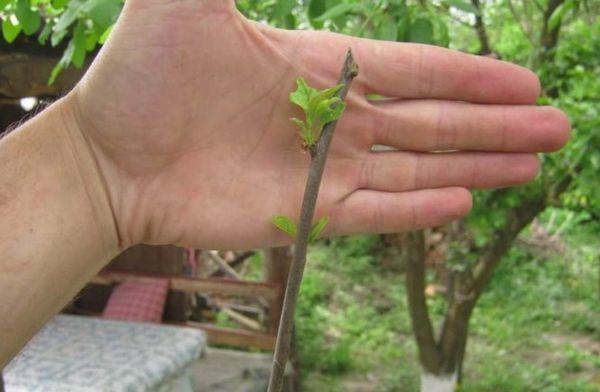
Clapp's Favorite can also be propagated by budding. Pear or quince seedlings are used as rootstock. Grafting is carried out when the buds have matured and the shoots have stopped growing. In most regions, this occurs in late July. The grafting is performed at a height no higher than 25 cm above ground level. The success of the grafting depends on an even cut on both the scion and rootstock.
To graft, cut a bud with a scutellum and place it on a similar cut on the rootstock. The graft site is carefully treated with wax and securely secured with tape.
How to Increase Your Yield: Tips and Advice
To successfully grow Klappa's Favorite, it's important to plant nearby varieties with similar flowering and ripening times. Without this, the pear will bear little fruit or will not produce any fruit at all. It's advisable to plant several different varieties.
Another way to increase yield is to attract honey-producing insects. Planting borage, caraway, or dill near the pear tree is an excellent way to attract them.
During the first few years, avoid fertilizing. If the soil was sufficiently fertilized when preparing the planting hole, an excess of nutrients can trigger intensive growth of vegetative mass, and the pear tree may bloom again.
Horizontally positioned branches produce much higher yields than vertical ones. When growing pears, straight and unbranched shoots are ruthlessly pruned.
If you regularly pinch the ends of branches, you can increase the number of shoots and their branching.
Gardeners' reviews
According to reviews, the Klappa's Favorite is widespread in many regions for good reason. It produces delicious fruits that are enjoyed fresh and processed into compotes, preserves, and jellies.
The Lyubimitsa Klappa variety's undemanding growing conditions and soil make it popular among gardeners in many regions. Its regular and abundant production of exquisitely flavored pears also attracts them.
Related posts:
 Description and full characteristics of the Yakovlev Memory pear variety, planting and care
 Description of the cherry variety Lyubimitsa Astakhova, planting and care
 Description of the 23 best pear varieties for the middle zone, planting and care rules
 Description and full characteristics of the August Dew pear variety, planting and care
 Description and subtleties of growing the Efimova Elegant pear variety
 Description of the Rogneda pear variety, planting and care instructions
 Description and characteristics of the Marble pear variety, pollinators and cultivation subtleties
 Description and characteristics of the 45 best pear varieties, how to choose