
For those choosing the Kharkiv Winter cabbage variety for the first time, a description of its growing requirements will help avoid disappointment. There are guidelines for cultivating and harvesting late-season varieties of vegetables, following which allows for the best results with minimal effort and time.
General description of the variety
Kharkiv Winter Cabbage stands out among similar varieties for its compact rosette of leaves. Its leaves are medium-sized and have virtually no petioles. They rise above the ground, allowing the plant to occupy a relatively small area. Compared to the well-known Moskovskaya Pozdnyaya variety, Kharkiv Winter Cabbage can be planted more densely, with 4-5 plants per square meter.

Kharkiv winter cabbage is a late-ripening variety, reaching technical maturity 150-170 days after sowing the seeds for seedlings. It shouldn't form heads until midsummer, but the plants can remain in the garden until frost, without suffering too much from cold snaps and rain. During this time, the heads will accumulate valuable nutrients needed for overwintering, and by harvest time, the vegetable will have acquired both the firmness and flavor for which all winter varieties are prized.
The plant is resistant to many common cabbage diseases. The description of the Kharkiv Winter variety notes its resistance to Fusarium wilt at a young age. Cabbage is rarely affected by rot. The waxy rosette leaves do not attract aphids or flea beetles. Kharkiv Winter can be susceptible to clubroot when grown in acidic and heavy soils. Prevention requires careful site selection and soil preparation.

Gardeners' reviews note the variety's ability to withstand cold snaps and spring frosts. Seedlings can even tolerate subzero temperatures (down to -3°C) without harm, but when planting early in open ground, it's best to avoid such risks and, if the forecast is unfavorable, try to provide the plants with shelter. The first autumn frosts won't harm the harvest. It's believed that frost only makes cabbage sweeter, so there's no need to rush harvesting.
Consumer qualities of vegetables
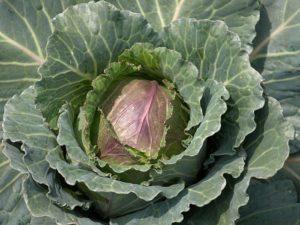
Kharkiv winter cabbage produces dense, not very large, but heavy heads of cabbage, approximately 30-40 cm in diameter. They are round, sometimes slightly flattened. The average weight of a fully ripened cabbage reaches 4 kg.
The bracts are tightly attached to the head of cabbage. They completely protect the head from frost or hot weather. The edges of the bracts may be slightly raised. This bract is a rich green color with a bluish waxy coating.

The edible portion of the vegetable is contained beneath the outer leaves. When cut, Kharkiv winter cabbage is white, fading to a slightly creamy hue in the center of the head. The portion adjacent to the outer leaves may be greenish. The stalk is quite large, reaching 15-20 cm, but not too thick. Inside the head, there are virtually no tough veins or leaf bases. About 93% of the vegetable is edible, with little waste.
The vegetable's characteristics are particularly notable for its sweet taste and high sugar content. The cabbage leaves are tender and crisp, rich in juice and possess a strong, distinctive aroma. Cabbage is rich in vitamin C, dietary fiber, and a rich micronutrient profile (potassium, sulfur, and zinc).

The main purpose of Kharkiv winter cabbage is fresh storage and pickling. However, it can also be used to make delicious salads. For fresh consumption, it's best to choose the top part of the head: this is where the most tender parts of the leaves are concentrated. They can be finely chopped or cut into slices, depending on the salad or appetizer recipe. The coarser bottom part is suitable for hot dishes.
Cabbage makes excellent ladi (lodges) and casseroles, can be used to make cabbage soup or borscht, stewed, and used as a pie filling. Whole leaves make excellent cabbage rolls, as the leaf has virtually no tough stalk.
This variety is ideal for pickling. Its high sugar content promotes rapid fermentation, and the large amount of juice prevents spoilage during storage. Sauerkraut can be stored until the next harvest, meeting all a family's vegetable needs.
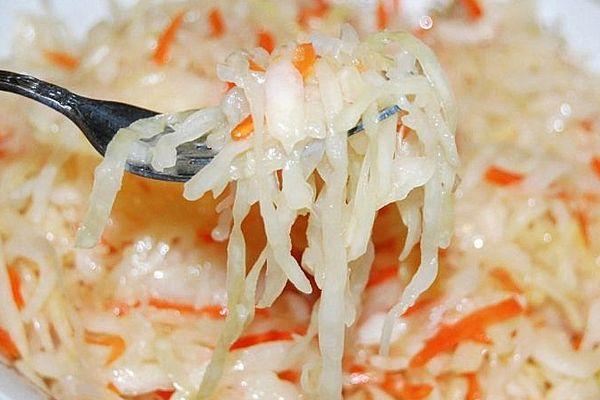
Besides the classic cold method, cabbage can be preserved using other recipes, such as pickling and marinating sliced or shredded heads. Cabbage is used to make a variety of winter salads with other vegetables and is also included in canned snacks. Fresh cabbage heads can be stored in a cold cellar for 6-7 months and can be consumed throughout the winter.
Agricultural technology for late cabbage
Seedlings are sown in March. If purchased seeds are not coated, they should be soaked in a pink solution of potassium permanganate or in Fitosporin, diluted according to the instructions, before sowing. The treatment lasts for 30-40 minutes, after which the seeds should be dried until they are free-flowing.
Prepare the soil with equal parts humus, sand, and fertile soil. To reduce acidity, add 2 tablespoons of ground chalk, gypsum, or eggshells per 10 kg of the mixture. You can disinfect the soil directly in the seeding container by thoroughly soaking it in a dark, hot solution of potassium permanganate. Cabbage seedlings prepared in this way will be less susceptible to blackleg. Sow after the soil has cooled.

Scatter the seeds over the surface and cover with 0.5 cm of dry soil or sand. Cover the trays with plastic wrap and place them in a warm place (+25°C) to germinate. Cabbage germinates quickly, and seedlings can appear as early as 2-3 days after sowing. Remove the plastic wrap and move the tray to a well-lit area.
Don't water the cabbage for the first few days: the soil retains sufficient moisture. You can determine when it's time to water when the top 1 cm of soil has dried out. Water with warm water with potassium permanganate (a light pink solution) added.
When the plants reach 2-3 true leaves, transplant them into individual pots or into a large planter using a 10x10 cm pattern. Care consists of regular watering and providing sufficient light. By the time they're ready to be transplanted into the garden, the seedlings should have 5-6 true leaves.
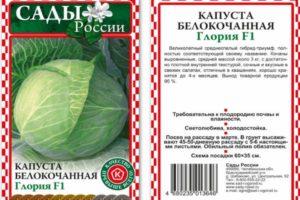

Add 1 bucket of compost, 2-3 buckets of sand, and 1-1.5 kg of chalk or dolomite flour per square meter to the beds. Additionally, according to the instructions, add mineral mixtures such as Agricola Vegeta, Kemira Lux, or other micronutrient-enriched mixes. Dig the area, mixing all ingredients.
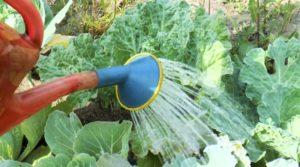
Plant cabbage according to the 40x70 cm pattern. For the first 1-2 weeks, seedlings will need to be watered daily if there is no precipitation and the weather is dry and hot. The recommended watering rate is 1-2 liters per plant. Once the plants have established themselves, they should be earthed up to prevent the growing rosette from toppling the stem. Earthing up is repeated as needed. Later, watering can be done at 5-7 day intervals, applying 15-20 liters of water per plant.
Related posts:
 Description of the best cabbage varieties for 2025 for different regions
 Top 40 Best Cabbage Varieties with Descriptions and Characteristics
 Description and characteristics of the best varieties of late cabbage, planting and care technology
 22 delicious pickled cabbage recipes for the winter
 Description of Japanese cabbage varieties, cultivation and care features
 Recipes for pickled Chinese cabbage in quick-cooking jars and how to preserve it for the winter
 Planting, growing, and caring for Chinese cabbage in open ground
 Descriptions and characteristics of the best varieties of cabbage, all types with names
I like that this cabbage has fairly large leaves, so I've been growing only this variety for the past few years. The seedlings don't react to minor temperature fluctuations and don't require any special fertilizers.