
- What is a hiller for a walk-behind tractor?
- Types of hillers
- Lister hiller
- Variable width products
- Disc models
- Propeller-type hillers
- How to make a hiller for a walk-behind tractor with your own hands
- Making a Lister Ridger
- Making a disc hiller
- Manufacturing of propeller hillers
- Installing a hiller on a walk-behind tractor
- Reviews
Modern gardeners use advanced technologies for hilling potatoes and other plants, such as cultivators, winches, and walk-behind tractors. When using a walk-behind tractor, you need to purchase or make a hiller, which is the most important attachment.
What is a hiller for a walk-behind tractor?
A hiller for a walk-behind tractor is a basic attachment used not only for hilling plants but also for loosening, digging, and weed control. A hiller consists of a metal wedge with blades or two rotating discs on a frame. A plow-mounted hiller is attached to a walk-behind tractor using special fasteners. A cultivator-mounted hiller makes a gardener's job much easier.
Types of hillers
Hilling machines are divided into several types.
Lister hiller
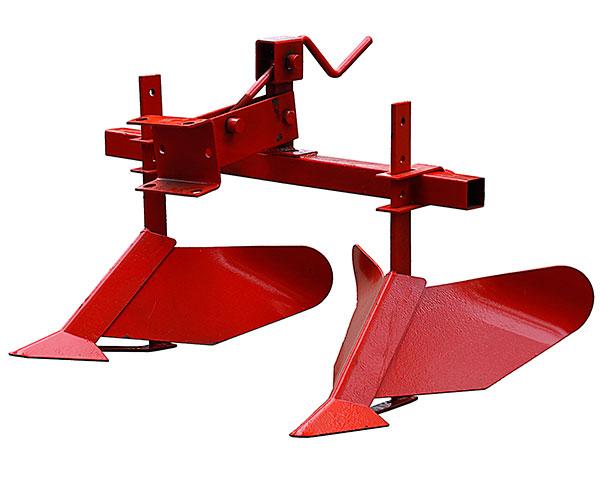
This is the simplest unit, with a fixed working width. The lister hilling machine consists of two fixed wings, spaced apart relative to each other.
The working width of these units is 20-30 cm, so they will not be very effective for row spacings of 45-50 cm. Lister units are used for walk-behind tractors weighing up to 30 kg and with an engine power of up to 3.5 hp.
Variable width products
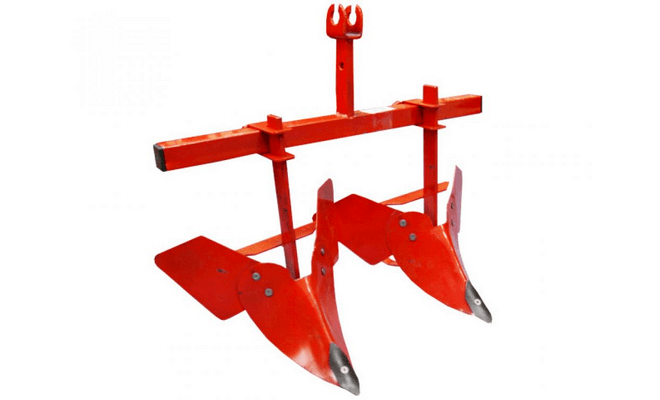
The ability to vary the working width is an important feature when hilling plants, particularly potatoes. This type of hiller is ideal for cultivating beds with any row spacing.
This type of hiller is recommended for use with walk-behind tractors with a power output greater than 4 hp. Lower power outputs can cause damage to the cultivator.
Disc models
These options are simple in design and easy to use. They are also quite effective, making them popular among gardeners.

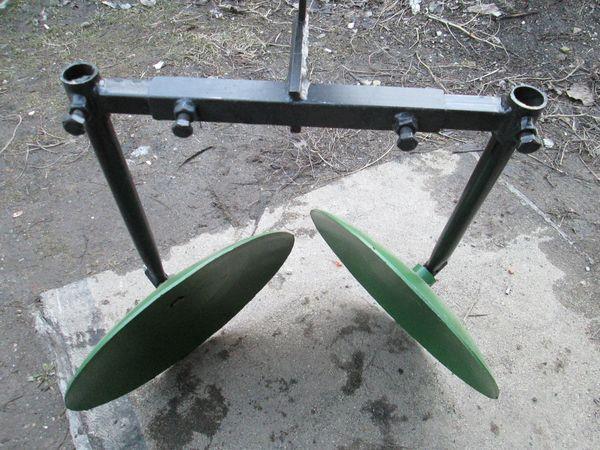
There are two types of disc hillers:
- Fixed-width cultivators. On average, this width is 25 cm, and is set by the manufacturer. These units are used with low-power, low-weight walk-behind tractors.
- With an adjustable cutting width, this model is convenient for cultivating a wide variety of crops. The maximum cutting width is 70 cm.
Propeller-type hillers
These hillers are used only for walk-behind tractors with two forward gears. These models have propellers that are designed to pre-crush the soil and then remove weeds from the soil.
How to make a hiller for a walk-behind tractor with your own hands
Sometimes gardeners can't afford expensive equipment for their gardens, and buying cheaper options isn't always as cost-effective as it might seem. Budget models have thinner metal, which means they wear out much faster. And after a short period of time, you'll have to think about how to fix these defects.
For this reason, gardeners often make their own hillers for their walk-behind tractors. First, you need to select a sheet metal of the optimal thickness. A material approximately 2.5 mm thick is best.
Using thicker metal will result in the product being too heavy and difficult to handle. Using too thin a sheet of metal will risk deforming the hiller.

Making a Lister Ridger
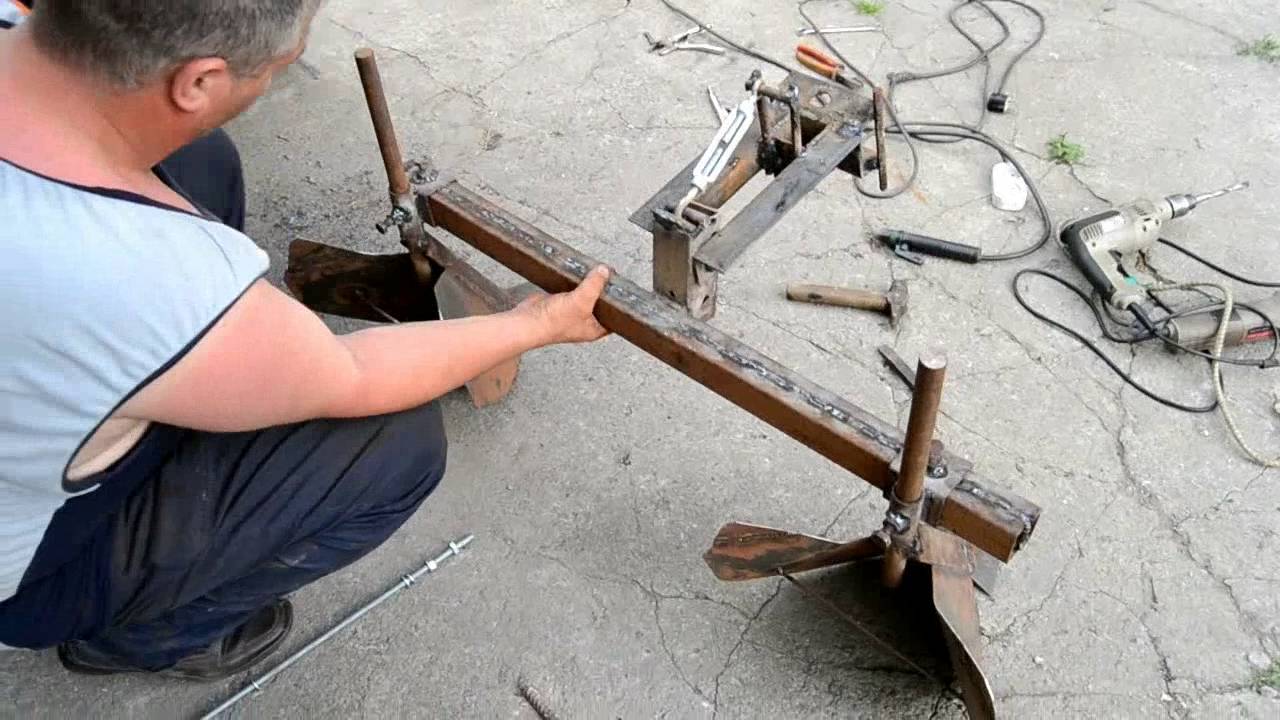
To create a non-adjustable hiller yourself, you need to cut the halves out of the prepared material. It's best to use templates for this. The resulting pieces are bent and welded in three passes, thus securing them. The seams are then finished with a grinder. The result should be a smooth surface.
To make a stand for such a unit, it will be enough to prepare a 12 mm pipe of the required length.
Making a disc hiller
The disks used to make this type of hiller must be perfectly symmetrical, with a diameter of approximately 45 cm. To prevent the disks from sinking into the soil during operation, they must be prepared. This is done quite simply. One option is to slightly bend the edges of the disks around the entire circumference. The second option is to weld wire along the edges of the disks. The disks are installed at an angle to each other, joining them together by welding or bolting.

Manufacturing of propeller hillers
To make a homemade propeller unit, the disks will need to be cut into blades and turned in different directions. To maximize the efficiency of this device, notches are made along the edges of the blades. The prepared blades are installed on the pipe and secured with bolts.
Installing a hiller on a walk-behind tractor
To install a two-row hiller on a walk-behind tractor, you first need to select and install the lugs. They should be larger than those used for plow plowing, since when hilling bushes with a two-row hiller, one row of plants will be under the walk-behind tractor.
The hiller is secured with brackets and adjusted to the desired width so that each disc falls in the center of the row spacing. They are then driven into the ground to the desired depth and adjusted. The hiller's handle has holes that allow the distance between the discs or wedges to be adjusted.
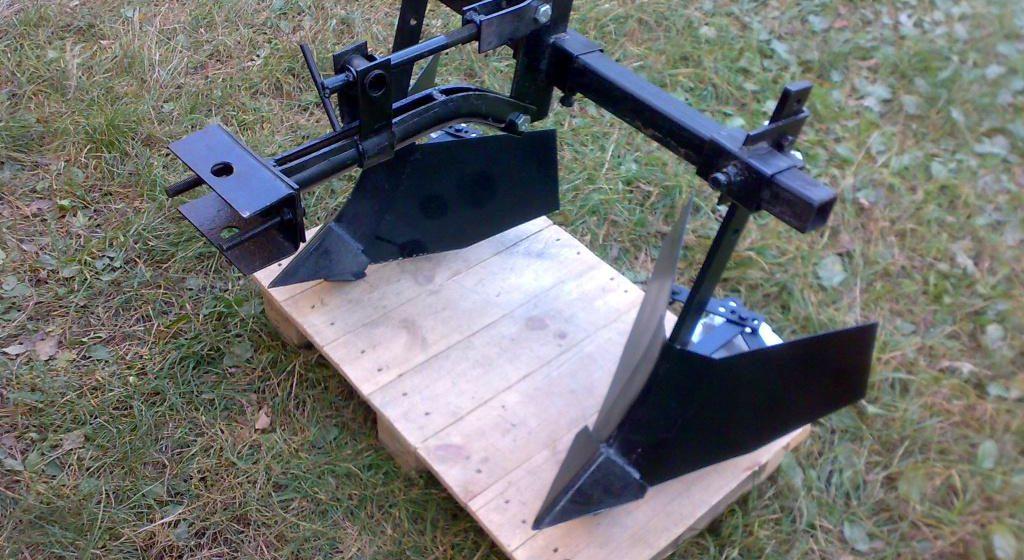
A single-row homemade hiller is also mounted on brackets. The tiller should be vertical during installation, allowing for the correct angle of attack. As with the two-row version, the hillers are lowered into the potato rows and adjusted. Rotary, or propeller-type, hilling devices, which are homemade, are also mounted on brackets.
Reviews
Valentina: "Last year I bought a walk-behind tractor with a hiller. I'm glad I did, because it makes hilling potatoes much easier and faster."
Sergey: "I welded a hiller for my walk-behind tractor myself. It was significantly cheaper and more reliable than store-bought alternatives. I recommend this to anyone who knows how to use a welding machine."
Vitaly: "Potato hiller and other crops will definitely help make your work easier and increase your yields. I have a homemade hiller, and I use it a lot. It's a cost-effective and useful tool."

Related posts:
 Advantages of planting and cultivating potatoes with a walk-behind tractor, execution technique
 How to make a manual potato hiller with your own hands, accessories
 A review of the best cultivators for inter-row tillage, and how to make them yourself
 How to properly hill potatoes with a walk-behind tractor: step-by-step instructions
 The best manual garlic planters, how to make one yourself, and planting with a walk-behind tractor
 Why and when to hill up potatoes, the rules and timing
 How to quickly weed potatoes with your own hands: tools and equipment
 Description of potato digger varieties and how to make one yourself