
- Garlic planters
- Operating principle
- Advantages of using the equipment
- Garlic digger and garlic planter – what’s the difference?
- Types of devices and characteristic features
- Manual
- On a walk-behind tractor
- On the tractor
- Four-row
- Landing markers
- Serrated
- Plank
- Needle-shaped
- How to choose the right one?
- Popular models
- In which stores can I buy it?
- Is it possible to make a planter yourself?
- Advantages of homemade over store-bought
- What tools and materials will be needed?
- Schemes and step-by-step assembly technology
- How to plant cloves using a seeder
- Main errors and problems
Proper garlic planting is a gardener's goal when growing this vegetable crop. A simple tool—a hand-held garlic planter—can simplify the task. The furrows will be evenly spaced, and the spacing between cloves can be adjusted. You can make your own garlic planter or purchase the appropriate model from a specialty store.
Garlic planters
The future harvest depends on the quality of garlic planting. Manual labor can be automated by using manual or automatic onion planters. These machines are easy to use and significantly save gardeners time and effort.
Operating principle
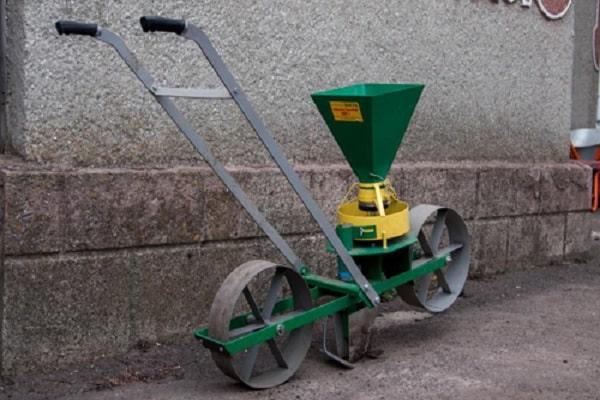
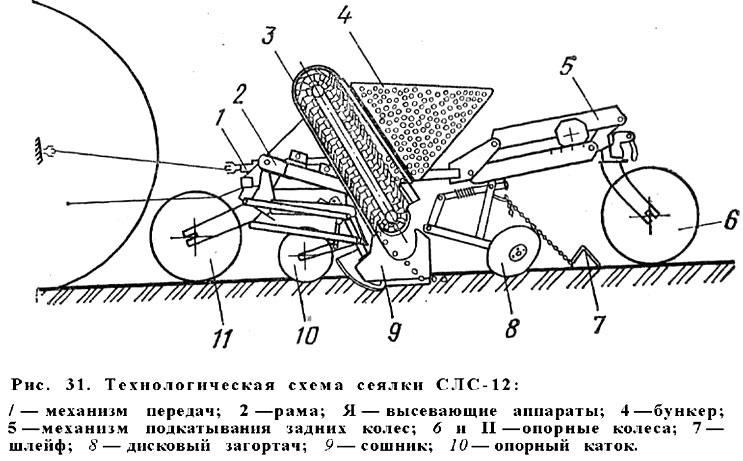
Components of a garlic planter:
- steel frame;
- chain;
- seed container;
- gearbox;
- star.
Sowing with this tool begins with furrowing. Different types of units can make from two to ten furrows simultaneously. The depth of placement of the cloves into the soil ranges from 15 to 20 centimeters and is controlled by the degree of impact on the unit.
The seed is gently inserted into the soil, maintaining uniform spacing between the cloves throughout the entire furrow. Advanced garlic planters are equipped with water reservoirs for immediate irrigation after planting.
Advantages of using the equipment
The main advantages of using planters:
- This ensures accurate planting and uniform placement of the teeth.
- The correct depth is maintained.
- The farmer's time and effort are significantly saved.
The gardener's workload is optimized, and yields increase. Garlic is planted evenly, preventing empty spaces or excessive crowding.
Garlic digger and garlic planter – what’s the difference?
These two types of machinery differ primarily in their intended use. One unit is used for quick and efficient harvesting, while the other is used for even and accurate planting. Both attachments can be mounted on a walk-behind tractor. A garlic planter is not used for harvesting.
Types of devices and characteristic features
Modern planters vary in functionality, operating principle, and configuration. The choice of model and type depends on the intended planting volume and the farmer's goals.

Manual
The simplest version of a garlic planter. The unit is easy to use, but requires physical effort to operate. The farmer acts as the tractor.
The equipment is adjusted, delivered to the site, and configured manually. The manual planter can dig furrows using markers.
The main advantage of a manual planter is its low price, durability, and the ability to repair the tool yourself if it breaks.
On a walk-behind tractor
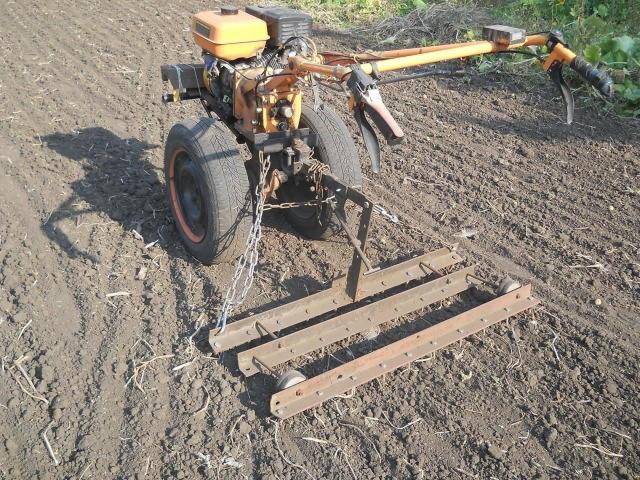
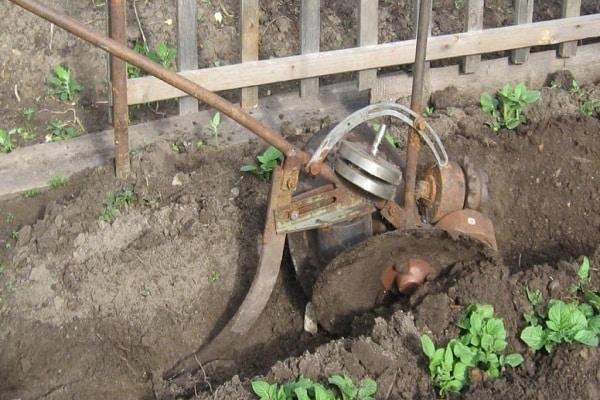
In this setup, a walk-behind tractor serves as the tractor, significantly saving manpower. These garlic planters have virtually no drawbacks; simply keep the walk-behind tractor fueled. Weeding is also performed while using the tool. Digging holes is accomplished with a coulter.
On the tractor
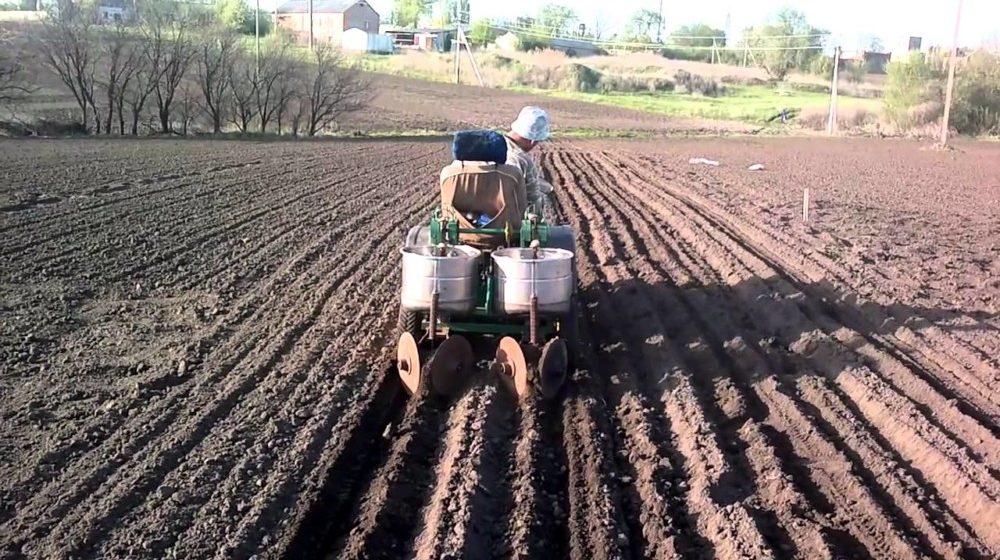
When sowing garlic on an industrial scale, planters are attached to a tractor. Typically, cloves are planted in 5-10 furrows at a time. The resulting harvest is similarly harvested using garlic diggers attached to the tractor.
Four-row
Four-row garlic planters are most often attached to walk-behind tractors. The soil is prepared in advance, and the seed is calibrated. All sections of the mechanism are removable, allowing them to be removed and repositioned.
Landing markers
Planting markers are used to mark out future furrows and rows of garlic. They can be made of various materials: wood, steel, or plastic. The main difference between the devices is the way the landing site is marked with a marker.
Serrated
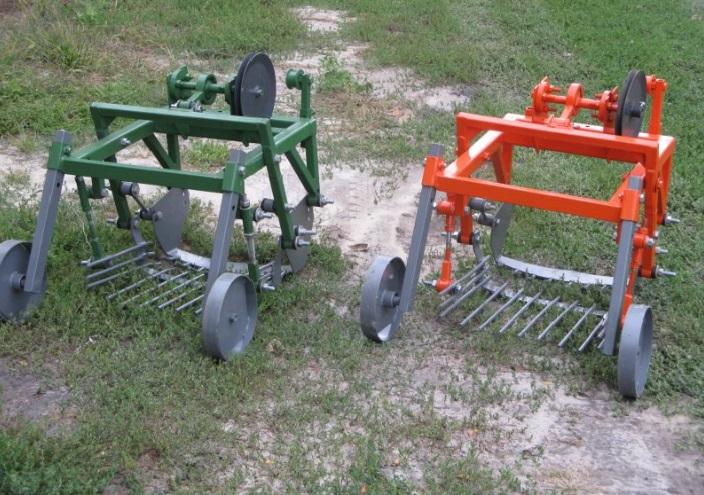
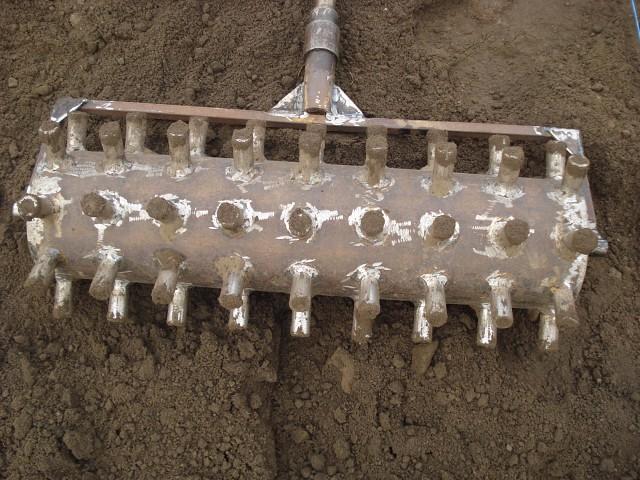
A popular type of marker used for planting garlic in private gardens. This marker is easy to make yourself. Vertical prongs are screwed or welded to a wooden or steel base at regular intervals. A handle is then attached. This tool is easy to use, marking rows quickly and accurately.
Plank
The plank marker visually resembles a rake. Holes are marked by pressing down on the base with your foot. To ensure even furrows, auxiliary guide strings are pulled.
Needle-shaped
This type of marker is typically single-row and made of wood. It consists of a small strip with teeth. The tool is easy to make yourself. Wine corks are often used to create the teeth, securely fastened to the main strip.
How to choose the right one?
There's a wide selection of planters available in stores. To avoid making a mistake, purchase a tool based on your goals and needs. If your plot is small, you can plant garlic using a manual planter; a machine capable of making 3 to 4 furrows at a time is sufficient.
Important! When purchasing automated equipment, pay attention to the tool's quality certificates, warranty periods, and the store's reputation.
Popular models
The best and most popular models of planters include:
- The "Protek" attachments for motor vehicles have the main advantage of being disassemblable. The sections can be detached, the frequency of planting cloves can be changed, and the seed material calibrates itself.
- The SMK-3 manual seeder marks and plants three rows simultaneously and can be used for sowing various vegetable crops.
- The ChS-4 is a four-row garlic planter. It is a heavy-duty unit with a 10-liter seed capacity and adjustable row spacing.
- The ChS-1 is a simple single-row seeder, mounted on small walk-behind tractors (up to 6 horsepower).
- The ChS-2 sows in two rows and features large seed containers, weighing 45 kilograms.
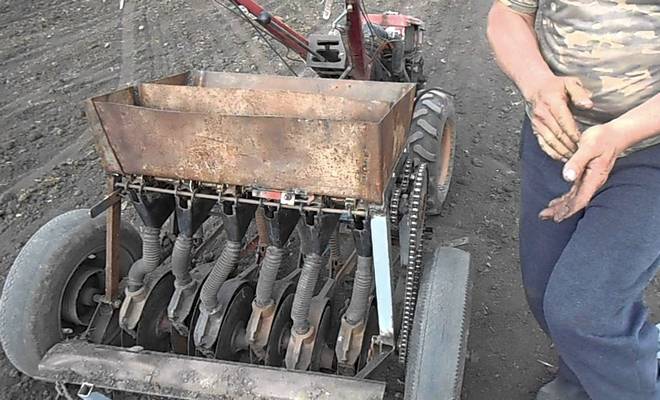
Garlic planters are a type of agricultural equipment. When purchasing a product in a store, it's important to read the instructions and quality certificates. The size and weight of the tool are also important. When choosing a tool, consider the compatibility of the garlic planter with the make and model of your existing tiller.
In which stores can I buy it?
Planters can be purchased at specialized gardening supply stores, as well as at agricultural machinery retailers. Avoid buying tools at markets or from random vendors, as such equipment can quickly break down.
Is it possible to make a planter yourself?
If you're familiar with how bulb planters work, making one at home isn't difficult. You can use scraps of construction material or pipe trimmings. Wheels can be made from the rolling parts of a child's bicycle.
Before starting work, draw a plan and determine the correct row spacing and clove planting depth. Plastic containers can be used as containers.
Advantages of homemade over store-bought
A tool created with your own hands will always have an advantage over purchased equipment:
- Individual parameters and convenience: equipment is created according to the necessary requirements.
- It's easy to fix, you can use improvised means.
- Low cost price.
During the process, you may need to purchase some additional parts; think through the design in advance and determine the purposes for which the tool is being created.
What tools and materials will be needed?
The main structural elements required to create a garlic planter:
- control handle;
- containers for seeding material;
- rotating shaft;
- wheels;
- chains;
- ploughshare.
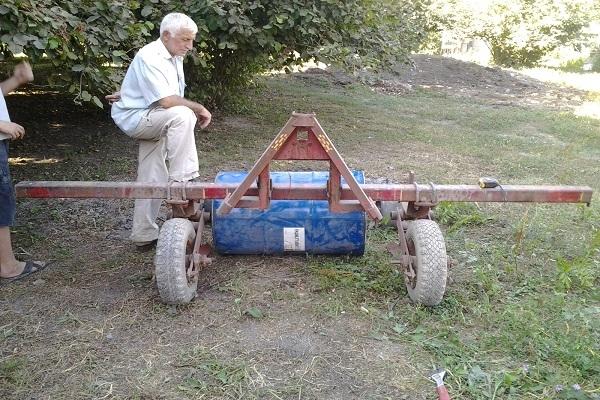
The instrument can be made from wood, metal, or plastic. An old children's bicycle can be used as a base. The design is created according to a drawing.
Take a look Also
Schemes and step-by-step assembly technology
DIY garlic planter plan:
- Draw a drawing.
- Create a container for the seed material: make a hole in the center of a plastic canister or other container, and cut a gap on the side for the seeds.
- The container must have a lid; tin cans and wire are often used to create one.
- The frame is assembled from metal elements.
- The container is screwed to the frame.
- The wheel axle is being manufactured.
- The planter wheel is connected to the walk-behind tractor wheel using a chain.
- The coulter is installed.
- A seat and legroom are created.
Important! When creating your own tool, be sure to follow safety precautions. Particular care should be taken when welding: wear protective goggles, gloves, and boots.
Two people work with a walk-behind tractor and planter: one person controls the tool, the other supervises the planting.
How to plant cloves using a seeder
The seed is poured into special containers in the planter mechanism. Many models calibrate the bulblets automatically. If the container has holes that are too large, there's a risk of planting two cloves in the same hole at once; if the holes are too small, empty spaces and gaps may form.
It is recommended to use models where seed sowing is carried out by opening the blade through the main axle of the gearbox.
Main errors and problems
When planting garlic using a special planter, pay attention to the following recommendations to avoid possible problems:
- Correctly match the model of the walk-behind tractor with the type of planter.
- For small areas, manual models are used.
- Control seed sowing and calibration.
- Safety precautions are observed when making the tool.
- Sowing is carried out at the recommended time.
Using planters significantly reduces manual labor and streamlines the planting process. When used correctly, garlic plants look neat and are easier to maintain.
Related posts:
 How to properly plant garlic outdoors and prepare the soil
 Garlic diseases and pests and their control, treatment methods and prevention
 The best varieties and types of early and winter garlic with descriptions and names
 When to harvest garlic bulbs, ripening times, and storage
 Winter garlic cultivation technology, large varieties and cultivation rules
 Description and cultivation of single-clove garlic, planting and care rules
 Description and yield of the Lyubasha garlic variety, planting and care
 How to properly dry winter garlic after digging and where to store it at home