
- Growing garlic from bulb seeds: advantages and disadvantages of the method
- What are garlic bulbs and what do they look like?
- How to collect seeds correctly?
- Deadlines
- How to determine maturity
- Inventory
- Air cutting technology
- Preparation and storage of planting material
- In flour
- In the ashes
- Pre-landing preparation
- Selecting a site
- Planting with bulblets
- For the winter
- In the spring
- The process of planting air seeds with a seeder
- Features of garlic cultivation
- Harvesting
It's hard to imagine Russian gardeners' plots without garlic beds. A bountiful harvest of these bulbous plants is possible with proper growing conditions and high-quality seeds. Young cloves are hand-selected from the strongest specimens. Growing garlic from aerial bulblets (bulbs) is the key to producing healthy, stress-resistant, and hardened plant material.
Growing garlic from bulb seeds: advantages and disadvantages of the method
Growing garlic from bulbs — a time-consuming process. It's much easier to purchase seed at a market or specialty store and harvest a full crop the following year or at the end of the season.
The main advantages of growing garlic from bulbs include:
- Obtaining viable planting material.
- Quantitative savings of seeds.
- Garlic resistance to diseases.
- Long-term storage of harvested crops.
- A convenient way to propagate garlic.
Plants grown from bulblets develop extensive root systems and lush foliage, and the bulbs grow larger. Disadvantages of this technology include:
- The full harvest ripens only in the second year.
- A complex system for storing seed material and its additional processing.
All garlic bushes grown from bulblets retain distinct varietal characteristics. It is important to adhere to the timing and technology of planting and harvesting seed material.
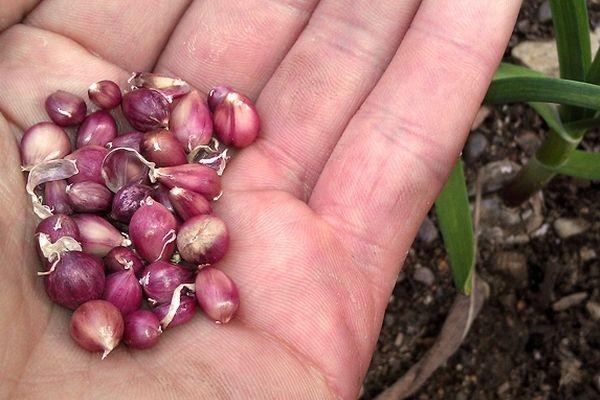
What are garlic bulbs and what do they look like?
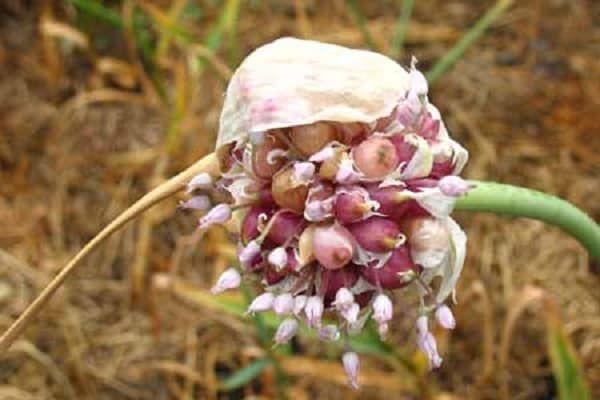
Garlic bulblets are miniature garlic cloves that form after flowering and the formation of a capsule-shaped fruit on the plant stalk. These bulblets are also known as aerial bulblets. Garlic bulblets are the vegetative organs of the plant. The seed capsule matures when the garlic tops turn yellow and the capsule splits open.
Garlic bulbs are always protected from fungal infections, since pathogens usually live in the soil, and aerial bulbs form at the top of the flowering stem.
How to collect seeds correctly?
The quality of the resulting seed depends on proper harvesting technology. It's essential to adhere to the proper harvesting schedule and accurately determine its maturity.
Deadlines
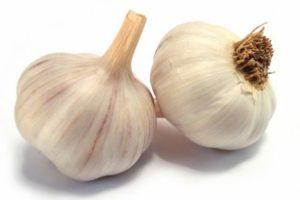
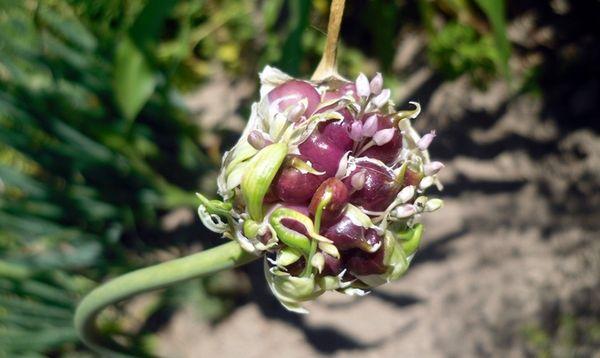
August is the month harvesting of aerial bulbs of winter garlicThe tops are starting to dry out and turn yellow. It's time to collect the seeds. Dig up the garlic and cut off the stems with the seeds. They can be dried along with the capsules, forming the cut material into a kind of broom. Cover the seed heads with gauze to prevent the seeds from spilling out after the fruit splits.
How to determine maturity
Garlic scapes are ready for harvesting when the tops turn yellow. The capsule containing the bulblets should then open, breaking the membrane—the main sign that the seeds have ripened. The distinctive cracking of the seed capsule indicates that the bulblets are ready for harvesting.
Inventory
To collect seed material, prepare the following equipment in advance:
- gloves;
- pruning shears;
- paper napkins.
You can remove the flower stalks with a sharp knife. When drying seeds by hanging flower stalks in bunches, a paper base is not needed; the seeds are dried under natural ventilation.
Air cutting technology
When pruning the stalk with pruning shears, leave a 15-centimeter gap from the seed head along the stem. The stems must be cut carefully to prevent the bulbs from falling off.
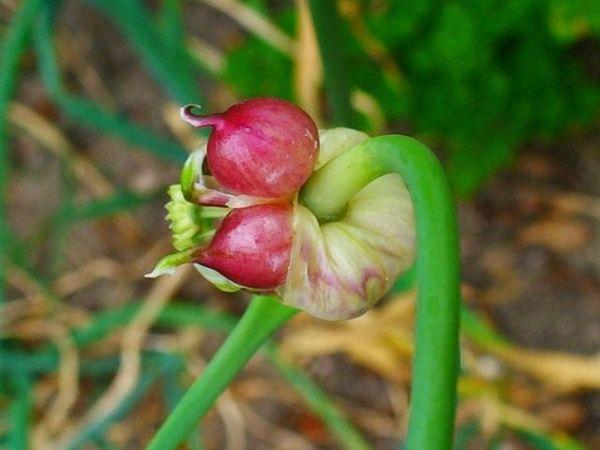
To prevent ripe seeds from spilling out of the ripe capsule, gardeners resort to a trick: they put a nylon stocking on the seed head or tie it with gauze.
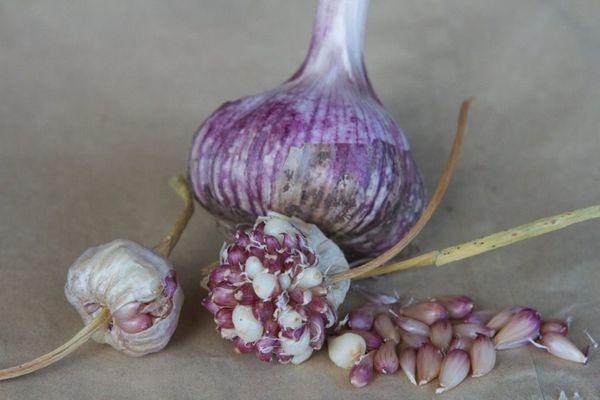
If the seeds are ripe, the bulblets easily separate from the head and end up in a protective cover, which must be removed. The seeds are then calibrated and prepared for storage.
Preparation and storage of planting material
To ensure that your efforts to collect aerial bulbs are not in vain, it is important to properly prepare and store the collected seed material.
In flour
The main enemy of aerial bulbs is excess moisture. Undried seedlings can rot.
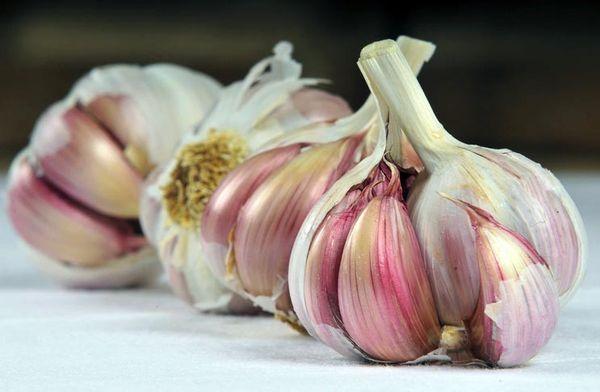
Many gardeners store garlic bulbs in flour, which can absorb any remaining moisture. To use this technique, you'll need a container with flour in the bottom. Then, arrange the garlic bulbs in an even layer on top of the flour, then sprinkle more flour on top. This preservation process can be done in layers.
In the ashes
Storing in ash is done using the same technology as storing in flour. A significant advantage of using wood ash is the additional treatment of the seed with a natural preservative. This method is suitable for long-term storage.
Pre-landing preparation
After collecting and drying the seeds, you need to select and prepare the site for growing future garlic. Choosing the right time and method for planting the aerial bulbs is crucial.
Selecting a site
When choosing a plot, it's important to follow crop rotation rules to ensure a good harvest. Garlic should never be planted after tomatoes, potatoes, or other onion crops.
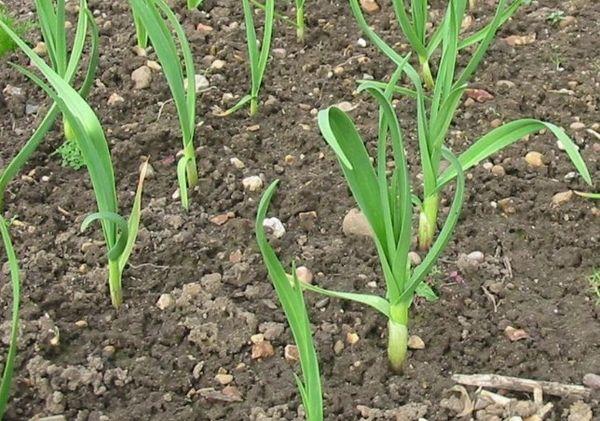
The best predecessors are legumes or cabbage. Garlic prefers soil with neutral pH. The location for garlic beds should be sunny and not marshy or located in a low-lying area.
Planting with bulblets
Garlic bulbs can be planted in the fall or spring. The choice of method depends on the gardener's personal preference and harvest time.
The bulbs are planted before winter, after the winter garlic harvest. The timing varies by region. In southern regions, the best time is late October, while in northern regions, it's late September.
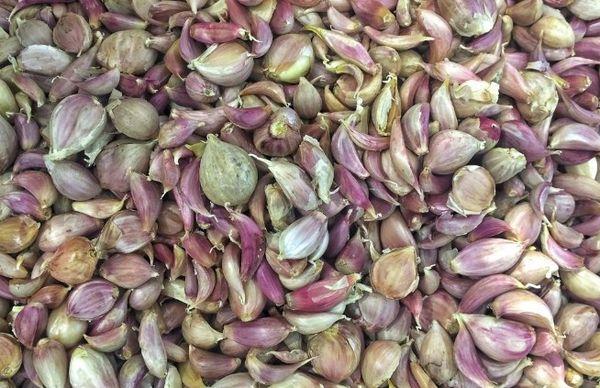 Note: When choosing the time to plant air bulbs, follow this rule: there should be approximately one month left before the first frost.
This period allows the bulblets to develop a root system, but young bulblets should not be allowed to grow. It is recommended to cover the beds with a layer of mulch: fallen leaves or peat.
For the winter
The beds are dug to a depth of 30 centimeters. The soil should be fertilized with wood ash, peat, or humus mixed with sand. The soil can be disinfected with boiling water or a potassium permanganate solution. It is recommended to treat the bulbs themselves with an antiseptic.
The optimal width of a bed is 80 centimeters, with furrows marked out 20 centimeters apart. The rows are watered with warm, settled water, and the bulbs are planted at intervals of 5 centimeters between the cloves. The furrows are then covered with soil and mulched with compost.

In the spring
Preparation for spring planting begins in the fall. The soil must be tilled and all necessary fertilizers applied. Fresh manure should not be used as organic fertilizer. With the arrival of spring, the prepared bed is loosened and the bulblets are planted in furrows spaced 5 centimeters apart.
Take a look Also

The process of planting air seeds with a seeder
When growing garlic seeds on an industrial scale, specialized agricultural seeders are used. However, you can make the job easier in a small garden plot with a simple tool—a marker, which is available in the following varieties:
- Plank marker.
- Serrated marker.
- Needle marker.
These tools can be made by hand. It's important to consider the spacing between rows and bulbs when creating your tool.
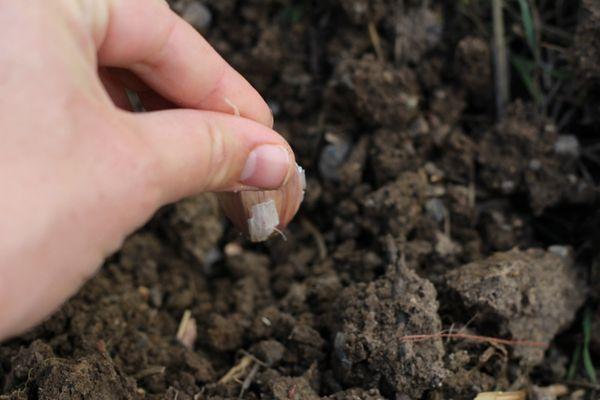
Planters can be purchased at gardening stores. There are mini-models that are often used in smaller areas. These tools are only effective on loose beds.
Features of garlic cultivation
After the first shoots appear, it is necessary:
- loosen the space between rows;
- thin out the furrows;
- remove weeds.
This series of measures is carried out once every 2-3 weeks. Water the garlic plants as needed with clean, warm, settled water. Fertilize the garlic approximately one month after the first shoots appear. It's important to apply mineral fertilizers, typically superphosphate.
To protect crops from pests, onion beds are periodically sprinkled with ash or mustard powder after rain. Mulching with humus is carried out immediately after planting.
Harvesting
Harvesting of bulbs begins in August. The collected seeds must be dried in a well-ventilated, warm place. Flowering stalks are often hung like brooms from the ceiling of a gazebo or veranda. When the capsules split, the bulblets may spill onto the floor. Be sure to cover the heads with gauze.
Growing garlic from bulblets is a lengthy process that allows the plant's varietal characteristics to be fully preserved. Garlic does not degenerate, and the plants grow stress-resistant and develop a strong immune system.
Related posts:
 The best varieties and types of early and winter garlic with descriptions and names
 Description and cultivation of single-clove garlic, planting and care rules
 Garlic diseases and pests and their control, treatment methods and prevention
 How to properly dry winter garlic after digging and where to store it at home
 Description and yield of the Lyubasha garlic variety, planting and care
 11 Best Recipes for Pickled Garlic Sprouts for Winter
 Winter garlic cultivation technology, large varieties and cultivation rules
 Garlic cultivation technology in open ground, planting times, and care guidelines for a good harvest