
Winter and spring garlic are grown in the Leningrad region. The question is, When to plant winter garlic is key. After all, it produces the earliest harvest and valuable seed material for later production of good bulbs.
The quality of both types of garlic directly depends on the timely planting and harvesting of the bulbs. This requires careful consideration of the agroclimatic conditions of the area where the garden plot is located.
Climatic features of the territory
When growing only spring varieties, it's difficult to miss the planting timing. Winter planting, however, should be timed to coincide with periods of sustained cold snaps in a given area.
The following nuances are taken into account:
- In some years, soil freezing in the region can begin as early as October. Plant overwintering conditions also depend on the depth of snow cover and possible thaws or sudden cold snaps during the transitional periods of late autumn and early spring. Severe cold snaps during the winter months also impact plant survival.
- Across the vast Leningrad Region, average climatic conditions vary. For example, in the southwest of the region, the duration of stable snow cover is 127 days, reaching a depth of only 30 cm by the end of winter due to frequent thaws. In the northeast, snow remains for 150–160 days, reaching a depth of 50–60 cm.
- The onset of spring warming, and hence the onset of intensive bulb germination, will also vary. Snow cover in the western part of the region melts in late March, while in the east it doesn't last until mid-April. Spring develops slowly. Average daily temperatures exceed 5°C (41°F) in late April, approaching 10°C (50°F) only in the second ten days of May.
- The intrusion of Arctic air masses into the Leningrad Region in spring brings cold snaps. Cold spells return in May and even June. Ground frosts can damage the sprouts of early-germinating winter garlic.
As soon as the soil warms above freezing, the bulbs begin to sprout. Spring varieties are just beginning to be planted in the ground. This early development allows winter varieties to be harvested an average of a month earlier.
Important! Garlic is adaptable to different growing conditions. To reduce the plant's adaptation period, seeds should be purchased from local producers.
Planting time for spring and winter garlic
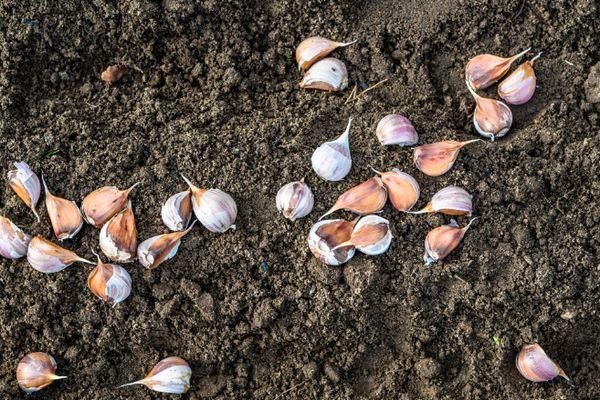
Given the winter's thaw-and-drop characteristics, winter garlic should be planted 40-45 days before the onset of sustained cold weather. Since the autumn transition to subzero temperatures in this region lasts up to a month and a half, with cold spells followed by warm spells, and temporary snow cover possible as early as November, winter garlic is planted from the last ten days of September to mid-October.
![When in [year] can spring garlic be harvested, collection from the garden and storage](https://harvesthub.decorexpro.com/wp-content/uploads/2019/04/kogda-ubirat-yarovoj-chesnok_12-300x200.jpg)
Before the onset of sustained cold weather, garlic develops a full root system but does not have time to germinate. This is the key to overwintering the plants and allows them to grow large bulbs.
Spring varieties are planted as soon as the soil warms up to positive temperatures.
The transition of air temperatures to positive values occurs:
- from April 1–4 through 0 degrees;
- from April 21–24, temperatures will rise by 5 degrees Celsius;
- from May 13–19, temperatures will rise to 10 degrees Celsius.
The soil warms up to 10°C at a depth of 5 cm from May 18–25, and at a depth of 10 cm from May 18–27. It's important to note that these are statistically average data. These dates depend on local climate conditions and can vary even within the same area from year to year.
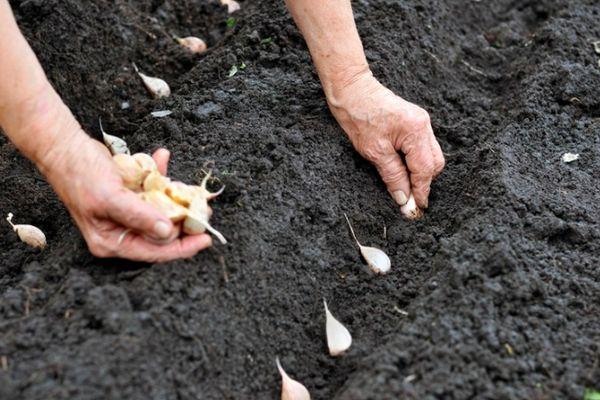
Based on this data, spring varieties are planted in the second ten days of May. By recording the planting date, one can predict the garlic harvest time in advance. However, this is only possible if the variety's growing season is known.
When to harvest winter garlic?
Winter plantings germinate quickly with the arrival of spring, maximizing the soil's moisture reserves and favorable temperature conditions. Regardless of the summer's weather, the bulbs have time to ripen. Harvesting winter garlic It occurs between the end of July and the beginning of August. It's difficult to give exact dates; they vary greatly from person to person and depend not only on climate conditions but also on care.
You need to rely on external signs. They will unmistakably tell you when to dig up winter garlic bulbs in the Leningrad Region. External signs:
- The main sign is cracking of the bulbils on the flower stalks. This indicates the completion of all vital processes and requires immediate removal of the bulbs.
- If the flower stalks have been removed, winter garlic harvesting begins after the stems turn yellow. The leaves dry out, hanging on the upright stem.
- To determine if the bulbs are ready, dig up a few for inspection. Well-formed scales and darkened roots indicate they're ready to harvest.
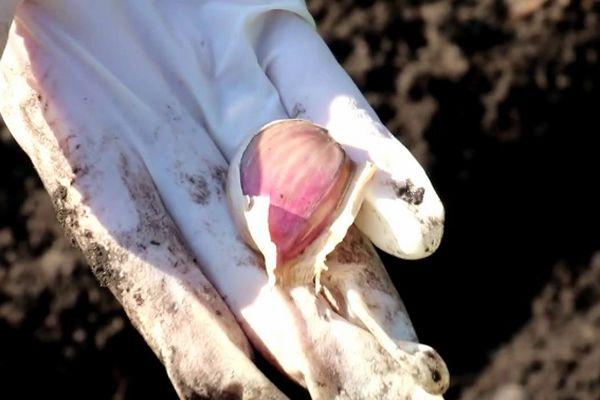
To obtain large heads, the arrows of winter varieties are broken off in advance.
Important! To control bulb ripening and obtain planting material, it's sufficient to leave the flower stalks on 1–2 plants in each row.
When to harvest spring garlic?
Spring varieties have varying growing seasons, ranging from 90 to 135 days. However, gardeners often lack precise data, as they purchase bulbs from third parties or use their own planting material. Furthermore, the northwest region is ill-suited for commercial cultivation. The choice of planting material is limited. Therefore, only approximate harvest times can be given. Spring garlic is harvested from late August to mid-September.
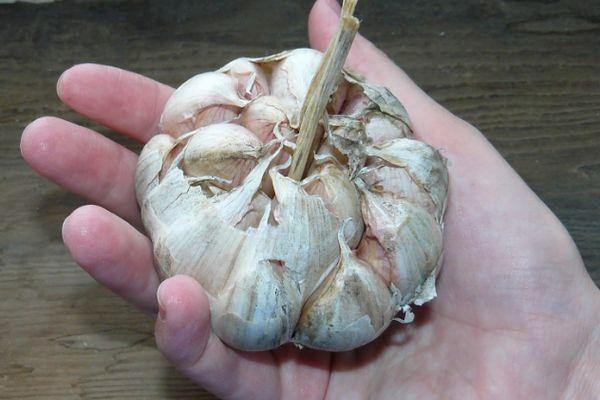
As with winter varieties, a more reliable way to determine the readiness of the bulbs is by external signs:
- Spring varieties rarely produce flower stalks. Garlic tops form a false stem of leaves. Each subsequent leaf grows within the previous one. Once growth ceases, the hollow stem collapses.
- The leaves turn yellow, starting with the outermost ones, the first to sprout. If the tops have turned yellow, the bulb has fully formed and it's time to dig up the garlic.
- Another characteristic sign of bulb readiness is when about 75% of the bulbs have lodged. At this point, the garlic is fully harvested.
- Given the high soil moisture in September and August, the bulbs are harvested before the stems are completely dry. Increased microbial activity in a humid environment threatens to destroy the outer scales.
In this case, harvesting should not be delayed. Overripe garlic will have a damaged outer shell, the bulb will disintegrate, and will not store well, possibly even before December.
Selective harvesting of garlic
To obtain a larger yield, selective harvesting is used. This method allows plants with a longer growing season to fully mature and gain mass.

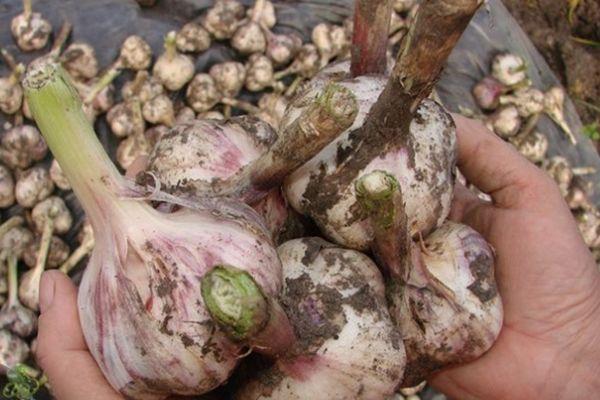
Benefits of selective cleaning:
- Staged harvesting is also necessary when growing several varieties with different growing seasons.
- Garlic harvested at the right time is always larger and stores better. This method increases yield by 25–30%.
- Sampling allows for the collection of early- and late-ripening plants and a sort of selection process. This method will help identify the bulbs best suited to growing in local conditions.
Of course, this method is only suitable for small plantings. However, the quality of garlic harvested at full maturity is always higher. Larger heads not only have excellent consumer qualities but also make excellent seed material.
To ensure a stable harvest, experienced gardeners grow both winter and spring crops. This ensures a guaranteed harvest even in challenging conditions. To produce high-quality bulbs in small garden plots, it's necessary to prepare planting material from bulblets. These plants are less susceptible to disease and are well adapted to local conditions.
Related posts:
 The best varieties and types of early and winter garlic with descriptions and names
 When to dig up garlic in the Moscow region in 2025
 When can spring garlic be harvested in 2025? Harvesting from the garden and storage
 When to harvest winter garlic in Siberia, planting and storage times, varieties
 How to properly grow and care for spring garlic in open ground and when to tie it into knots
 Why do you need to rake the soil away from garlic heads before harvesting?
 How to properly dry winter garlic after digging and where to store it at home
 Garlic harvesting dates in the Urals in 2025, cultivation and care
It depends on a number of factors. I visually check the condition of the leaves, and it also depends on the garlic variety. Weather conditions play a big role, and you also need to visually assess the bulbs for maturity. It's not difficult; this understanding comes with experience.