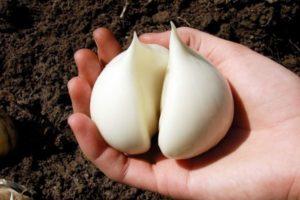
Winter garlic Podmoskovny, whose variety description indicates it can be grown in temperate climates, is planted in the fall. This characteristic of the crop is taken into account by vegetable growers. It allows all planting work to be completed during the current season, and a system of agricultural practices can be used to preserve the future harvest.
Benefits of garlic varieties
The Podmoskovny variety is included in the State Register of Breeding Achievements. The bulbous plant's characteristics indicate high productivity, excellent taste, and marketability. The variety's description refers to the plant's tendency to form stems.
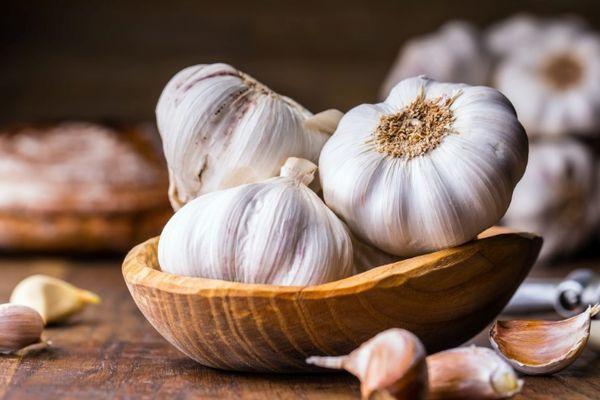
Therefore, planting is carried out in the ground before the expected onset of frost on the soil surface. By mid-growing season, a stalk up to 80 cm tall will form. This simple, spherical umbel will eventually produce seeds. A single head contains up to 100-150 seeds.
Garlic of this variety can be cultivated in the following ways:
- teeth;
- seeds;
- by planting single-clove bulbs from aerial bulbs.
The plant's lanceolate, elongated leaves reach 35-40 cm in length and 2 cm in width. The above-ground portion of the plant is a deep green color. A characteristic waxy coating is visible on the surface.
This variety is distinguished by its high yield. Up to 1.9 kg of yield can be harvested from 1 m² of planting. The compound bulb, which forms in the axils of the scales, matures 95-112 days from the emergence of spring shoots until the lower leaves turn yellow.
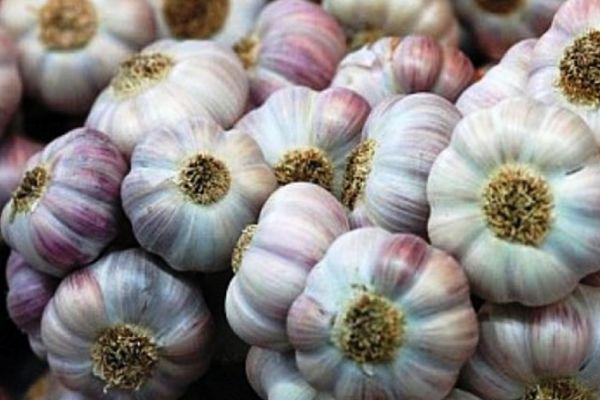
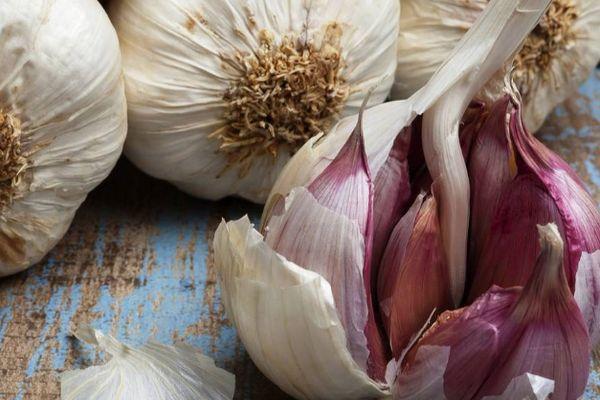
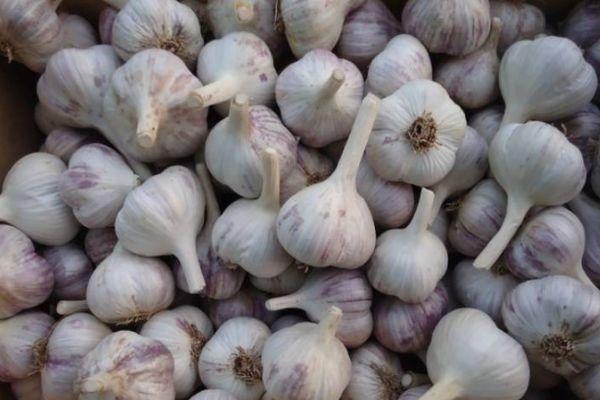
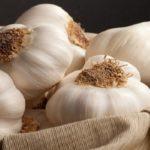
The heads are small, flat, and rounded. The outer scales are arranged in five layers and are white with purple veins. Each head contains up to seven cloves, each weighing up to 12 g.
The average bulb weight is 60 g. The flesh is creamy. This variety is characterized by a sharp flavor and a strong aroma.
Podmoskovny garlic is resistant to low temperatures and major onion diseases. The harvested crop retains its flavor for a long time and can be stored for up to 6 months.
The plant requires little care. In cooking, this vegetable is used as an ingredient in various dishes. It is eaten fresh, used as a seasoning, and canned. This preserves its flavor and nutritional properties. A vitamin paste is made from the shoots.
Agricultural technology for garlic cultivation
When growing garlic, pay special attention to the timing of planting. If garlic cloves are planted too early, leaves may emerge before frost sets in. This reduces the chances of successfully preserving the crop over the winter.
Delayed planting prevents garlic from developing a root system, which will negatively impact survival at temperatures of -10°C. Winter survival is affected by the amount of snow, the timing of the first frost, and soil moisture during and after planting.
After planting, the bed is mulched with a 2-3 cm layer of peat and humus. To retain heat during the first frost, you can cover it with grass, which is harvested in the spring.
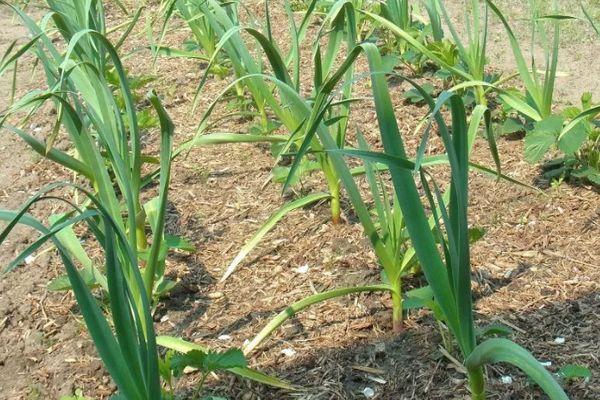
Planting requires consideration of climate and weather conditions. Winter garlic, Podmoskovny, requires periodic nitrogen fertilization, which is applied in the spring after emergence.
For this purpose, use an aqueous solution of urea and ammonium nitrate. Repeat application after two weeks. Alternating mineral and organic fertilizers is recommended. Fermented nettle infusion and a solution of fresh manure are used as fertilizer.
Garlic requires moisture, so during dry periods, water every 5-6 days. Excessive watering can delay harvesting. Care for the crop involves loosening the soil to ensure aerated roots.
Regular weed removal has a positive effect on the development of bulbs and above-ground parts of the plant. During the period of bulb formation, potassium-containing fertilizers (wood ash, potassium nitrate, and carbon black) should be applied.
Harvesting and storage
Garlic is harvested in early July. Harvesting takes place in dry weather; otherwise, the bulbs won't store for long. If conditions are unfavorable, it's best to postpone harvesting.
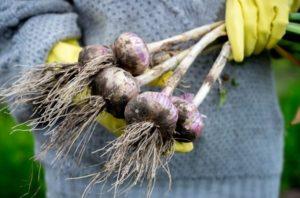
The bulbs are dug up carefully so as not to damage them. The remaining soil is gently shaken off, and the garlic is spread out in a thin layer vertically. The harvest is transferred to a dry, cool place.
After being dug from the garden, the bulbs continue to absorb nutrients. The central root and stem are trimmed off after the above-ground portion of the plant has dried and is completely dry.
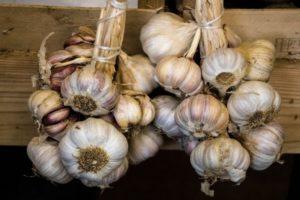
Garlic can be stored in the refrigerator's vegetable drawer, in a pantry at a temperature not below 0°C, or on an insulated balcony. Place the bulbs in a basket, tie them together, and hang them up. This will prevent them from drying out and sprouting prematurely.
Garlic that has sprouted during storage can be used for planting. In this case, the yield will be significantly lower, but the bulbs and greens are excellent for culinary use.
Related posts:
 The best varieties and types of early and winter garlic with descriptions and names
 How to properly grow and care for spring garlic in open ground and when to tie it into knots
 When can spring garlic be harvested in 2025? Harvesting from the garden and storage
 Planting and growing garlic from bulblets in open ground, care and harvesting
 Description and yield of the Lyubasha garlic variety, planting and care
 Garlic cultivation technology in open ground, planting times, and care guidelines for a good harvest
 Why is the garlic in my garden growing small and not separating into cloves? What should I do?
 Description and cultivation of Chinese garlic, cultivation and care
Take a look Also