
When it comes to when garlic is typically harvested in the Central Russian region, there's a simple answer: summer. However, this isn't the best answer, as there are nuances depending on the garlic variety, the use of various garden beds, small garden shelters, and greenhouses. Even the type of garden bed used affects the ripening time. But weather has a particularly significant impact, as most gardeners in this region rely on it.
How garlic harvesting depends on the weather
If you live in Smolensk, Bryansk, the Kaluga region, or other areas of the Central Russian region, then the question of harvesting winter garlic plantations, based on the region's climate, is more relevant to you than anyone else – knowing when to harvest garlic directly depends on the weather.
When deciding when to dig up garlic in the Tula region and other regions of the central part of the country, people check the weather forecast. They wait for dry, warm days, which will ensure the vegetable dries quickly. That's why in central Russia, people tend to dig it up during the warmer months, before autumn.
Harvesting winter garlic
Harvesting winter garlic It's produced earlier than spring vegetables, but follows roughly the same rules: the most important thing is accurately determining the time of ripeness. The taste, appearance, and long-term storage properties largely depend on whether the gardener can accurately determine the ripeness of the vegetable.
Planting garlic in the winter requires preparing for harvesting in the first half of summer. In the Central Russian region, the heads of this plant reach maturity around the beginning of the third ten days of July. In cold years, this period is expected to last until the middle of the first ten days of August.
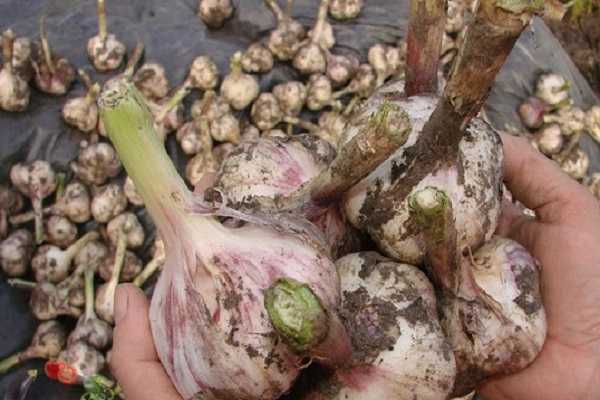
Delays in harvesting crops on time lead to problems such as:
- disintegration of the head into cloves;
- peeling of scales;
- rot;
- loss of taste.
To avoid all this, watch for the main sign of ripeness: yellowing and lodging of the lower leaves. To ensure the vegetable is truly ripe, dig up a few sample heads and check how dry they are, and how easily the cloves and scales separate. Bolting is also a clear sign of ripeness.
Take a look Also

When digging up garlic, you need to remove the stems, leaves and soil in order to prepare it for long-term storage.
When to dig up spring garlic
Since gardeners plant summer garlic slightly less frequently than winter garlic, the timing of harvesting is a question. Obviously, they harvest it later than winter garlic, but when exactly?
The answer to this question will vary depending on the specific variety planted and the specific time. Although this vegetable is planted in the spring, it has a short growth and maturation period, typically no more than 125 days. Therefore, when planting early, gardeners are faced with harvesting both varieties simultaneously.
Often, in the Middle Belt, sowing spring garlic Garlic is harvested in May and is intended for winter storage, which dictates the ripening time. Harvested garlic is harvested from late August or mid-September. September garlic is considered the best suited to surviving the winter in the cellar.

Thinking about that, When to harvest spring garlic, it's also worth paying attention to the signs of maturity it shares with winter vegetables. These include yellowing and dying of the lower leaves. The head of a ripe summer vegetable has the same signs as a plant planted before winter:
- easily separated cloves;
- head density;
- dry, easily removable scales.
Careful observation of these signs will save the gardener from many problems.
Cleaning according to the lunar calendar
Over many centuries of observation, our ancestors accumulated a wealth of useful knowledge in the field of agriculture, including the relationship between major celestial bodies and a favorable harvest.
When considering the right time to harvest, consider that the heads should be sufficiently firm and have dry scales. The condition of the plant's leaves and stems is also considered. However, the wisdom of our ancestors indicates that all living things around us depend on various biorhythms, which are primarily influenced by the moon. Therefore, in addition to such external signs of ripening, it's worth paying attention to how favorable certain dates in the lunar calendar are for gardening.
Take a look Also
![When should you dig up garlic in the Moscow region in [year]?](https://harvesthub.decorexpro.com/wp-content/uploads/2018/07/kogda-vykapyvat-chesnok-v-moskovskoj-oblasti-9-300x200.jpg)
Favorable dates for harvesting garlic in 2025:
- in July - from 5th to 7th, 15th and 16th, 19th and 20th, 23rd and 24th;
- in August: 1st to 3rd, 11th and 12th, 15th and 16th, 29th and 30th.
Experts in traditional agriculture claim that by harvesting vegetables on these days, gardeners increase the chances that all the heads will be healthy and will be stored until the very end of the cold season.

How to properly harvest garlic and prepare it for storage
Proper garlic harvesting is essential for long-term storage. There are rules that successful gardeners follow.
First, a few weeks before the planned harvest, watering is reduced to a minimum or stopped altogether. This depends on the frequency of rainfall. Any shoots that have formed by this time are broken off—all but the control shoot. The leaves are tied in a knot to encourage the plant to direct more nutrients to the heads.
Dig the vegetables on a dry, warm day, otherwise they will take longer to dry. Use a shovel for this; don't pull the plants out of the ground by hand. Take care not to damage the heads, as they are unsuitable for storage in this condition.
After digging, the harvest is separated from the stems and leaves and placed in a well-ventilated area where it will be stored until the next harvest. A cellar, basement, or glassed-in balcony serves as a storage area.
Before storing, the bulbs are sorted, removing any diseased, damaged, or undersized ones. In addition to ensuring adequate ventilation, the storage area must meet temperature and humidity requirements. While spring garlic can be easily stored in virtually any temperature, winter garlic requires a cool environment—a maximum of 4 degrees Celsius. However, temperatures should not be kept below freezing. Humidity should not fall below 60%, but should also not exceed 80%.
Garlic is stored:
- in the form of wreaths;
- in nets;
- in wooden boxes;
- in jars, mixed with salt;
- peel the cloves and pour vegetable oil over them.
The ability to properly harvest and store garlic completely determines the long-term preservation of the harvest.

Advice from a seasoned gardener
To properly grow and harvest this beloved Russian vegetable, we draw on the experience accumulated by generations of gardeners. It's worth heeding these basic tips:
- select varieties and cultivars of winter garlic for Central Russia;
- prepare to dig up the plant starting from St. Peter's Day (July 12);
- in wet summers or in areas with high rainfall, it is collected earlier;


- in arid regions, such as the Nizhny Novgorod region, harvesting is later;
- To determine whether the heads are ripe, test how well the scales separate from them;
- Instead of storing whole heads, whole cloves of the vegetable are used to make pickled vegetables;
- to speed up the ripening of the crop, the soil is raked away from the heads, exposing them by a third;
- Small heads are not stored for too long, as they spoil quickly.
Thanks to these simple tips, you will not only get an especially rich harvest, but also successfully store it until the next one appears.
Conclusion
Harvesting and storing garlic is both simple and challenging. To ensure a healthy harvest, a series of agricultural practices are employed.
While winter and spring varieties are generally similar, their harvest times are considered: winter garlic is harvested earlier than spring garlic. At the same time, spring garlic is preferred for storage during the cold season.

Related posts:
 The best varieties and types of early and winter garlic with descriptions and names
 When can spring garlic be harvested in 2025? Harvesting from the garden and storage
 When to harvest winter garlic in Siberia, planting and storage times, varieties
 When to dig up garlic in the Moscow region in 2025
 Garlic harvesting dates in the Urals in 2025, cultivation and care
 How to properly grow and care for spring garlic in open ground and when to tie it into knots
 How to properly dry winter garlic after digging and where to store it at home
 Features of planting and caring for family garlic, description of varieties, pest control