
- Description and characteristics of the Kiwi potato
- The main pros and cons of the variety
- The nuances of growing potatoes
- Selecting and preparing a planting site
- Preparation of planting material
- Landing rules
- Tips for caring for potatoes
- Watering and fertilizing
- Loosening and weeding
- Hilling
- Diseases and pests of crops
- Harvesting, storage
- Reviews from experienced gardeners
Every year, plant breeders around the world develop new vegetable varieties, incorporating the best qualities into their characteristics. This is why vegetables bred through experimental methods are more resistant to climate conditions, various diseases, and pests.
The new potato variety, called Kiwi, was developed by amateur breeders and has not been tested or officially registered. For this reason, planting material for this variety is unavailable in garden centers and nurseries. However, gardeners and vegetable growers have shown great interest in this new variety, leading to a real hunt for the Kiwi potato.
Description and characteristics of the Kiwi potato
The origin of the Kiwi potato remains a mystery to this day. By all indications and characteristics, the new potato variety can be classified as a product obtained through genetic engineering. However, the breeders who developed it claim to have used crossbreeding technology and that the vegetable is pure. Therefore, whether the Kiwi potato is a GMO product or not is unclear.
Main characteristics of the variety:
- Tall bushes grow up to 80 cm.
- The leaves are an emerald shade, unusual for this vegetable crop, with serrated edges.
- The tops and leaves are covered with fine hairs.
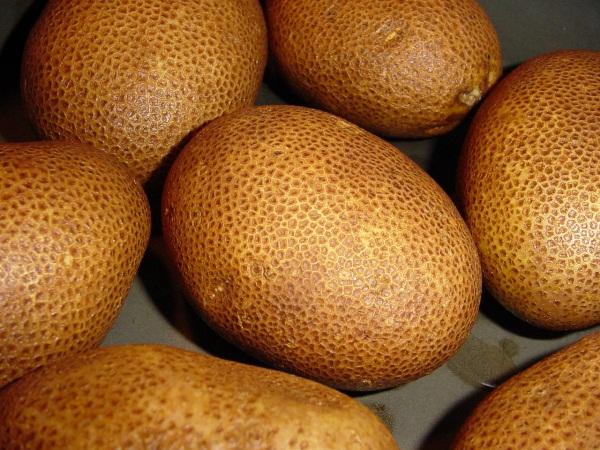
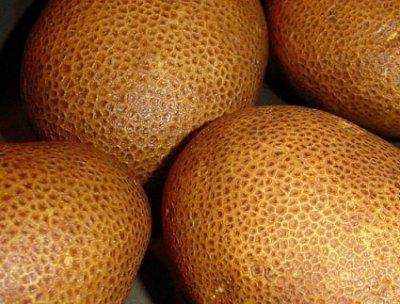
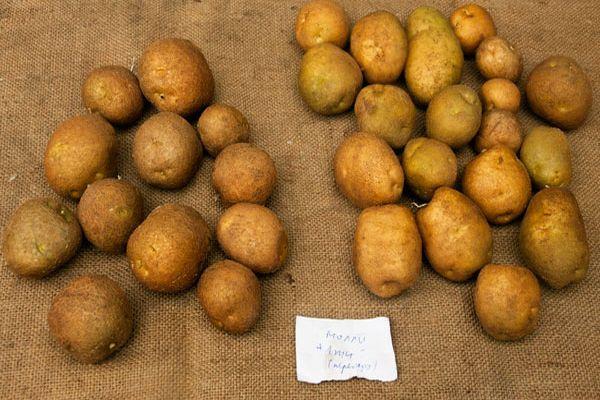
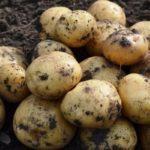
- Ripe tubers are smooth, round, and the same size with rough skin similar to kiwi.
- Large lilac inflorescences.
- Kiwi prefers sunny areas. It won't bloom in shaded areas.
- Resistance to diseases and pests.
- High yield.
- Easily tolerates temperature changes and is frost-resistant.
Important! Kiwi potatoes don't require any special care, so they can be grown in any climate.
The main pros and cons of the variety
The Kiwi vegetable crop was developed as an improved potato variety, so it has many advantages:
- Does not require special skills in growing and care.
- High rates of disease resistance.
- The variety is immune to various pests.
- Long-term storage of ripe tubers.
- Good yield. One bush can yield up to 5 kg of potatoes.
Flaws:
- Late, prolonged ripening. It takes 130 days after planting in open ground.
- The process of preparing ripe tubers is lengthy. Boiling potatoes takes 40-50 minutes.
- Lack of distinct taste and aroma in tubers.
- Planting materials are rare, so their price is high.
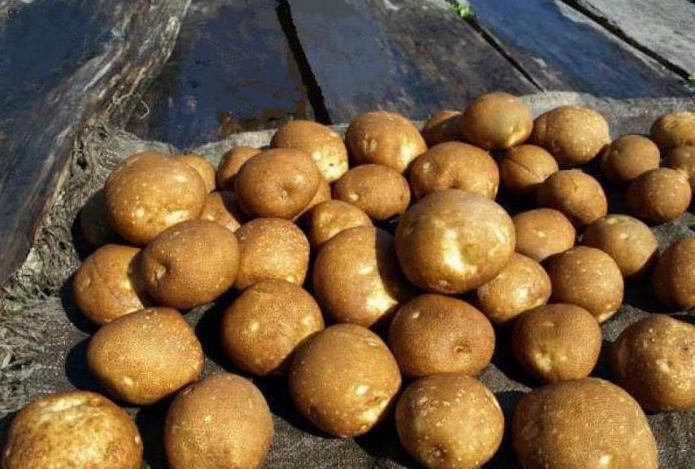
Kiwi potatoes are considered a versatile variety, but due to the dense structure of the roots, they take a long time to cook, so frying them is not recommended.
The nuances of growing potatoes
Kiwis don't require any special knowledge to grow, but some skills are still necessary to ensure a good harvest. The best precursors for this potato are zucchini, beets, greens, legumes, and cucumbers.
Kiwi should not be planted in beds where tomatoes, eggplants, and various varieties of peppers were grown.
Selecting and preparing a planting site
Any soil is suitable for planting vegetables, but sandy loam is preferable. Choose a level, well-lit area for preparation and planting. Shaded areas are not suitable for growing kiwis.
Preparing the soil for planting potatoes should begin in the fall. The designated area is carefully dug and fertilized with organic matter. In the spring, before planting, humus and mineral fertilizers are added to the soil.
Preparation of planting material
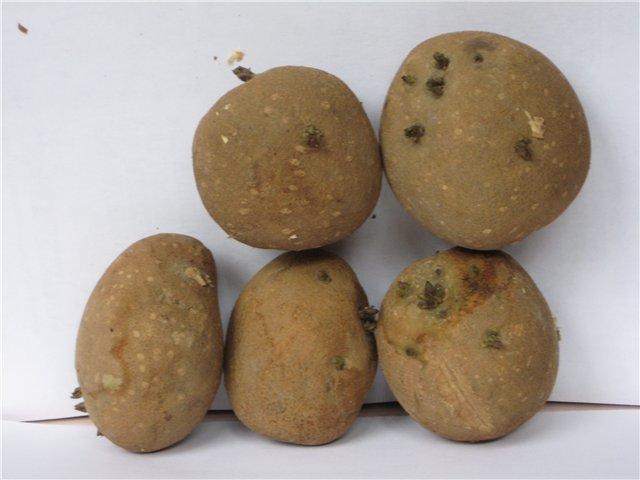
The Kiwi potato was bred by breeders, making it a hybrid variety. To preserve all the distinctive varietal qualities, only sprouted tubers are planted. The variety is not registered in the State Register of Vegetable Crops, so it is officially unavailable for purchase. However, gardeners and vegetable growers sell planting material at markets. Due to its unusual skin, it is difficult to confuse this variety with other varieties of this vegetable crop. Purchased potatoes are germinated a month before planting.
Landing rules
Important! Before planting, it's important to calculate the harvest time, which depends on climate conditions. In temperate climates, the vegetable crop ripens within 120 days. In northern regions, it takes longer to ripen.
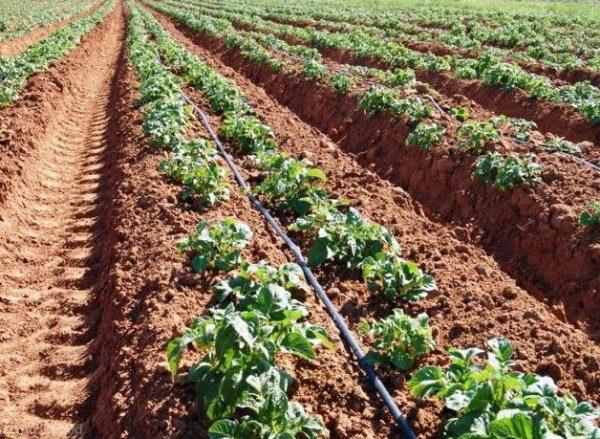
In the prepared area, dig holes or harrow them to a depth of 10-12 cm. In heavy soil, this distance is reduced slightly to 7-8 cm. Sprouted tubers are planted in open ground at a distance of 30-40 cm from each other. Leave at least 70-80 cm between beds. This potato variety grows tall and spreading plants, so the distance between plantings can be increased. After planting, compact the soil and thoroughly moisten.
Tips for caring for potatoes
Due to its unique origins, the Kiwi potato variety requires no additional chemical treatment. Therefore, it is especially suitable for those who prefer organic produce.
Watering and fertilizing
The plant doesn't require much irrigation. During the entire growing and ripening season, potatoes are watered no more than 3-4 times.
When watering, the soil is thoroughly moistened to a depth of half a meter.
To ensure a bountiful harvest, potatoes are fed with mineral fertilizers. Three applications are required per season. The first is done at the end of spring. The remaining applications are scheduled once every 10 days.

Loosening and weeding
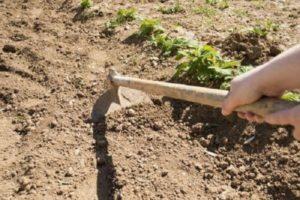
Weed control begins before planting vegetables. Weeds are then removed as needed. Before planting tubers, the soil is thoroughly loosened. If the soil is heavy, loosening is done after watering. The key is to prevent a dense crust from forming on the soil surface, which would impede oxygen flow to the rhizomes.
Hilling
Hilling is carried out after heavy watering or rain. Soil is removed from between the rows and added to the soil beneath the plant. This variety requires hilling twice during the growing season. The first time is in June, and the second before flowering.
Diseases and pests of crops
The Kiwi potato variety has unique characteristics that allow it to resist various diseases and pests. The main problem gardeners face when growing potatoes is the Colorado potato beetle. This insect can destroy a crop in a short period of time. However, thanks to the vegetable's skin and the woolly surface of its leaves and tops, the beetle does not attack the Kiwi.
And due to the content of biological fiber, which is not digested by insects, potatoes are not subject to attacks by unwanted guests.
Kiwi is naturally immune to diseases, so pesticide treatment is unnecessary. As a result, gardeners receive absolutely clean, chemical-free roots.
Harvesting, storage
Harvesting ripe potatoes depends on the climate of the region where the crop was grown. In the temperate zone, harvesting begins in mid-September, and in northern regions in October. Ten to 14 days before harvest, the tops are cut off, leaving small shoots.
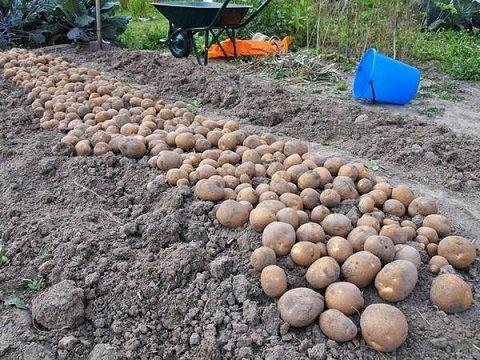
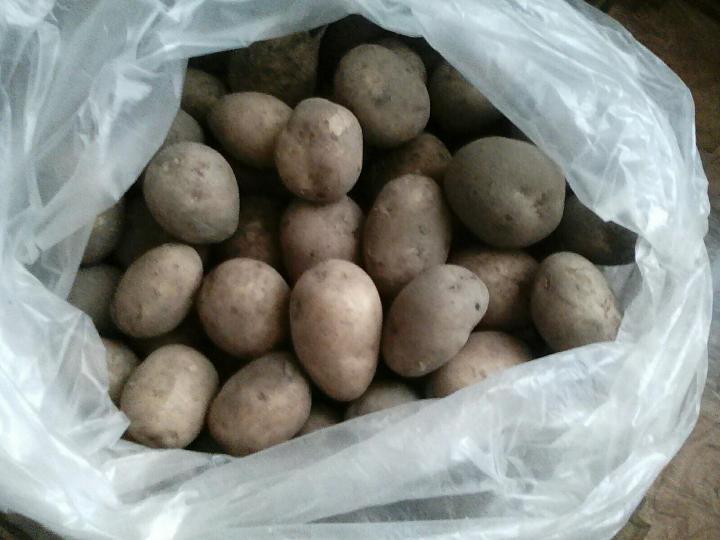
With good weather and proper care, 1 kg of planting material can yield up to 20 kg of ripened harvest. Harvesting is best done in sunny weather. After being dug up, the roots are thoroughly cleaned of soil and dried in the sun for 2-4 hours. The harvest is then placed in bags or special containers and stored in a cool, dark place.
Reviews from experienced gardeners
Elena Petrovna. Moscow region.
We've been planting the Kiwi variety for five years now. The worst harvest ever was 10 times greater than the amount of potatoes we planted. We start eating new potatoes as early as August, but the main harvest is in September. It's an excellent variety; the whole family loves it.
Viktor Sergeevich. Perm.
This year I decided to try planting Kiwi potatoes. The bushes didn't bloom for some reason, but we got a big harvest. The tubers are large, with no small ones at all. We tried boiling them in their skins; although it took a long time, the potatoes were delicious and crispy. I'll plant them again next year.
Related posts:
 The benefits and harms of kiwi for the body, how to eat the fruit, and contraindications
 Step-by-step recipes for delicious and incredibly beautiful kiwi jam for the winter
 12 Best Gooseberry and Kiwi Jam Recipes for the Winter
 Description of the Cordyline fruticosa Kiwi, propagation and care at home
 Description and treatment of potato pests, control measures
 Why potatoes aren't growing well in the garden, and what to do to ensure a bountiful harvest
 Description and characteristics of the Gulliver potato variety, planting and care
 Description and treatment of potato diseases, methods of control using folk and chemical means