
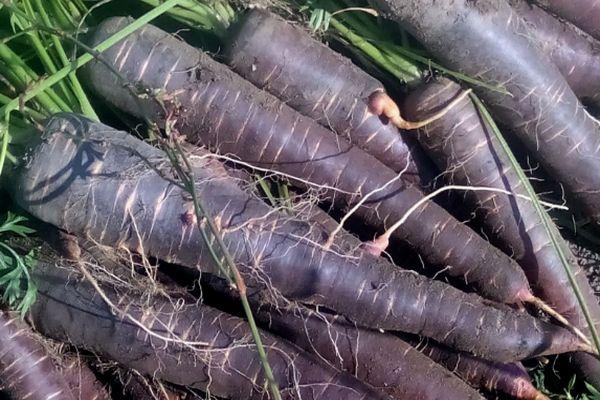
Purple carrots are biennial plants with feathery leaves and a robust underground root system. They differ from the familiar orange carrots used in cooking by their purple coloring. It is believed that purple carrots were once used medicinally.
History of the vegetable
An Egyptian temple depicts carrots dating back to 2000 BC. History shows that vegetables of various colors were imported to Europe as early as the 13th and 14th centuries.
In ancient times, the plant was used for medicinal purposes to treat dog bites, tonsillitis, and intestinal parasites.
Natural hybrids were created in nature through insect pollination. It is believed that purple carrots were created by crossing yellow mutants with a wild variety characterized by purple roots.
In the 14th century (or, according to other sources, in the 16th and 17th centuries), Dutch growers took the orange carrot, which had many colorful ancestors, as their basis. They developed a convenient vegetable crop.
This species still exists today, but it differs from the original. In 2002, British agrobiologists developed a new variety with an exotic coloring.
Varieties of vegetable crops
Purple-fruited vegetables have recently gained popularity. Dutch experts recently studied the properties of the crop and concluded that it is more beneficial for the body due to the presence of a valuable organic component.
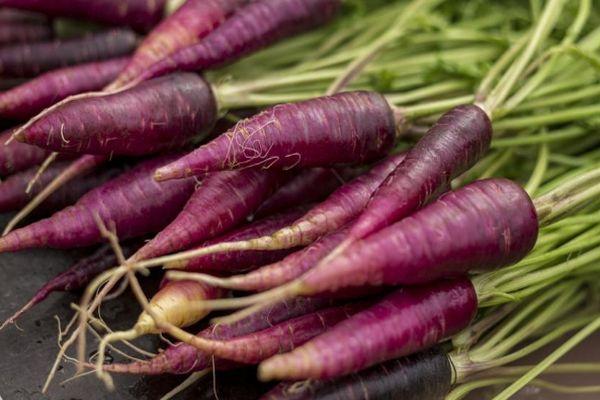
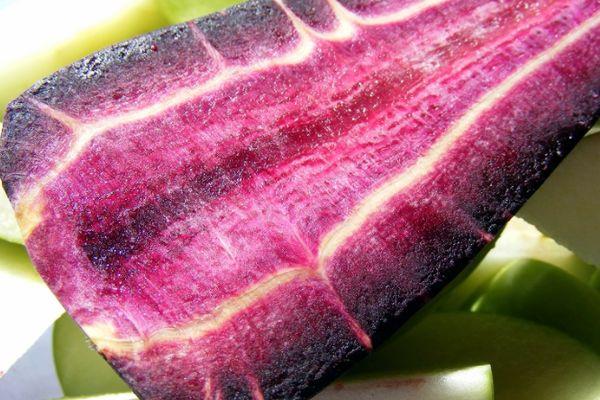
The purple layer is most pronounced in the Purple Elixir variety, which has an orange core and a deep orange surface. The fruit grows up to 20 cm long.
The Purple Haze F1 hybrid has orange flesh. The early-ripening Cosmic Purple hybrid distinguishes itself with its vibrant purple underground portion. The intense color of the fruit's surface conceals a vibrant, crisp interior.
The smooth roots reach 18-20 cm in length, with tops reaching 40 cm. This variety, developed in America, prefers cool growing conditions. When cooked, the vegetable loses its intense purple color.
The Purple Dragon carrot variety was developed through selective breeding in Wisconsin in the late 20th century. It was based on a Chinese vegetable. Its unique characteristics include the purple skin of the root and the orange core.
Take a look Also

Mature, cone-shaped fruits reach 25 cm in length. The root vegetable's flavor is vaguely reminiscent of a common carrot, combined with juniper and a hint of rosemary. In cooked dishes, this exotic vegetable has a sweet and spicy taste.
Component composition
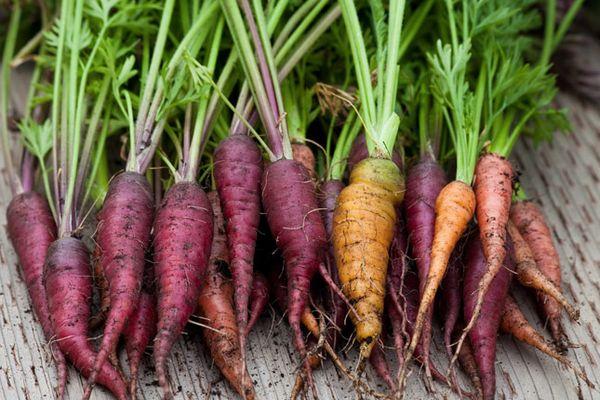
The color of the underground part of the plant is determined by the presence of the plant pigment carotene, a beneficial form of which is an antioxidant. Beta-carotene slows the aging process and reduces the risk of cataracts.
This micronutrient is essential for retinal function. Along with anthocyanin, it contains lutein, which helps strengthen vision. It's best to combine the consumption of purple root vegetables with the use of carrot juice for cosmetic purposes. It is important to remember that the pigments are highly chromatic.
Purple carrots differ from traditionally colored varieties in their chemical composition and nutritional value. They contain 35 kcal per 100 g of product. Most of the carrot's composition is water (86.6-88 g), 6.9 g is carbohydrates, 1.3 g is protein, and 1 g is fat.
Purple carrots contain 6.1 g of mono- and disaccharides, a complex of B vitamins, vitamins A and K, folate, and carotene. Their mineral composition is dominated by elements that have a beneficial effect on the body.
The tops of the plant can be eaten as a salad ingredient. Their chemical composition contains beneficial components. After cooking, purple carrots change their effects on the body, increasing their antioxidant properties.
Cooked carrots cleanse the body of waste and toxins. Consuming purple carrots for medicinal purposes has contraindications. These vegetables should not be included in the diet of those with pancreatitis, gastritis, colitis, or individual intolerance.
Taste and culinary uses
Unlike the familiar variety, this exotic root vegetable has a sweeter flavor. It's used as a garnish and as a decoration for dishes. It can be cooked, stewed, steamed, and used in marinades and desserts.
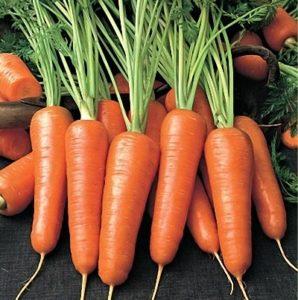
This vegetable is more suitable for dessert due to its rich flavor. It also looks great sliced or used as a decorative garnish.
A rainbow salad is made from the purple root vegetable, which includes daikon, bell pepper, parsley, onion, garlic, and lemon juice. For those with obesity, a carrot smoothie made from carrots, celery, spinach, and parsley is recommended.
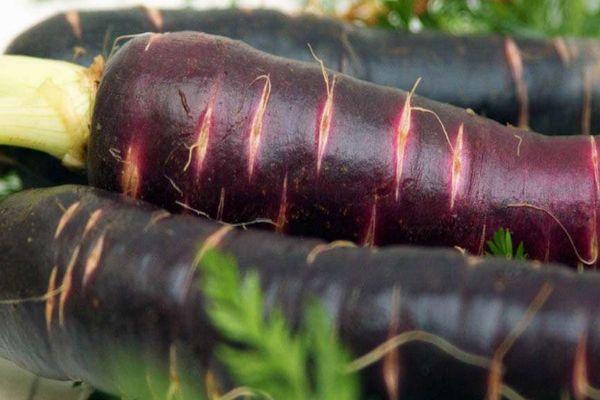
For beauty and vitality, drink parsnip, purple carrot, and beetroot juice prepared according to this recipe. Strengthen your bones with a cocktail of dandelion juice, lettuce, and carrot juice.
In addition to carrots, this nutritious smoothie includes apple or peach pulp, sugar or honey, and cream. Lemon juice and zest, sugar, and the main ingredient are used to make the jam.
A colorful stir-fry of this exotic orange and purple root vegetable. It's added to cooked rice and barley porridge. Purple carrots are cooked like regular carrots, but they can be used more effectively in presentations to enhance the appeal of dishes.
Related posts:
 How to control carrot flies with medications and folk remedies
 Is it possible to plant carrots in July or at the end of June? What are the best days and care instructions?
 Carrot care guidelines for outdoor cultivation to ensure a good harvest
 50 Best Carrot Varieties with Descriptions and Characteristics
 What is the best way to feed carrots? Fertilizers and preparations, using folk remedies.
 Timing and rules for planting carrots in winter, which variety is best to choose
 Description of carrot pests and diseases and methods of control
 25 Best Early-Maturing Carrot Varieties with Descriptions and Characteristics
Purple carrots look original in salads, and to make them grow faster, I use BioGrowIt grows large and juicy, with a regular shape.