
- Diseases
- Fomoz
- White rot
- Gray rot
- Rhizoctonia
- Alternaria
- Bacteriosis
- Cercospora leaf spot
- Brown spot
- Powdery mildew
- Fusarium
- Pests and methods of control
- Carrot fly
- Leafhopper
- Umbrella moth
- Winter moth
- Naked slugs
- Wireworm
- Carrot aphid
- Exclamation owl
- Root nematode
- Mole cricket
- Rodents
- Preventive measures
- Agrotechnical techniques
- Preparing the soil in the fall
- Correct predecessors
- Fertilizers
- Thinning, weeding and mulching
- Plant waste
- Good neighbors
- Protection of seed material
- Chemical remedies for diseases
- Bordeaux mixture solution
- The drug Home
- Rovral
- Topaz
- Horus
- Tomato tops decoction
- Special insecticides
- Answers to questions
Carrot pests and various diseases can significantly reduce yields and, in some cases, even lead to the death of the crop. Prevention of many diseases begins during seed preparation. Taking timely measures against diseases and insect pests will ensure that gardeners' efforts are not wasted and will help them grow a splendid carrot harvest.
Diseases
Carrots can become diseased due to improper care of the carrot bed or unfavorable weather conditions. Fungi, viruses, and bacteria living in the soil or plant debris can colonize or penetrate some part of the plant, causing the carrots to die.
Prevention is better than cure for any disease. As a preventative measure, plants are sprayed with fungicides or chemicals, along with various home remedies. To boost immunity, the soil in which the crop grows is enriched with minerals.
Fomoz
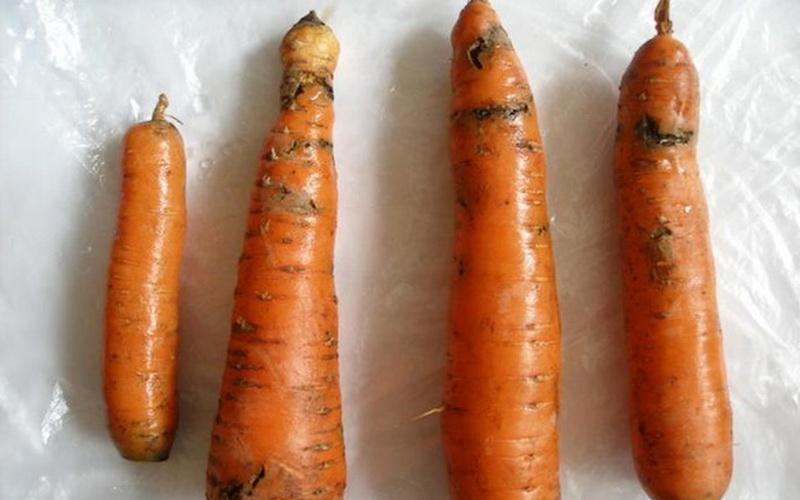
This disease is caused by a fungus. It can be found on seeds or plant debris. Seeds infected with the fungus lose their viability. The infection is more active in damp weather. The fungus most often attacks root crops, causing soft, grayish-brown spots to appear.
The disease rarely occurs in the field, but more often during storage.
To combat fungus, maintain crop rotation and apply sufficient potassium and phosphorus fertilizers to the soil. As a preventative measure, root vegetables are treated with Fitosporin-M before storage.
White rot
This fungal disease is rare in carrot beds. The pathogen attacks carrots during storage. A white, airy coating and dense, dark sclerotia appear on the carrots. The root tissue does not change color, but softens at the affected area.
Carrots can become infected with fungus while still in the field, but the disease becomes active later, during storage in a warm, damp room. As a preventative measure, plants should be sprayed with Hom at the four-leaf stage. Fertilize the crop with potassium during growth and ensure optimal storage conditions (1-2 degrees Celsius).
Gray rot
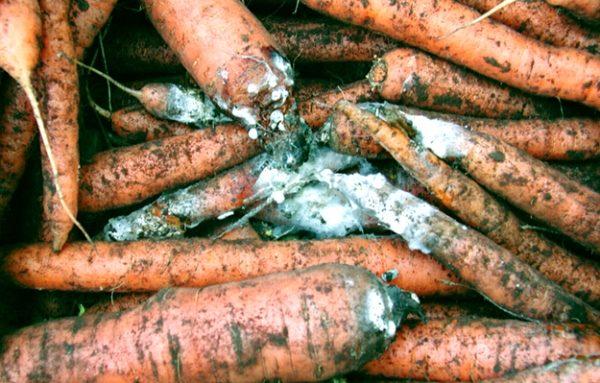
This fungal disease most often develops on root vegetables during storage. Whitish-gray spots appear on carrots, revealing brown, diseased tissue underneath. To prevent rot, vegetables should be stored properly. Plants are sprayed with Hom as a preventative measure, and the soil is disinfected with copper sulfate.
Rhizoctonia
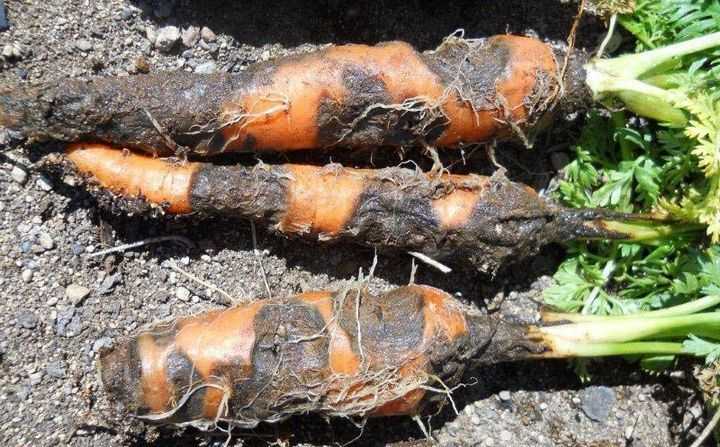
The disease can be identified by yellowing and drying carrot leaves. The causative agent is a soil-dwelling fungus that attacks the carrot root. Grayish spots appear on the carrot. The root surface turns brown and becomes covered with a purple mycelial coating. Black sclerotia subsequently appear. The root dries out or rots. Infected areas of the garden are limed, and increased potassium and phosphorus are added to the soil.
Alternaria
On young plants, the infection manifests as blackleg. Later, the disease causes yellowing, drying, and wilting of the leaves. During storage, black rot develops on the roots. To prevent this, spray the plants with Rovral.
Bacteriosis
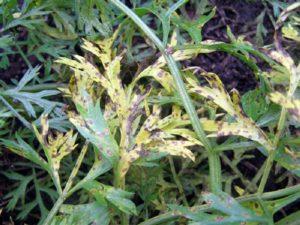
When infected, leaves turn yellow, curl, and dry out. Root vegetables are affected by bacterial rot during storage. Soft, waterlogged spots appear on carrots. The roots become slimy, soft, and waterlogged. The infection develops if wet carrots are stored or if the roots are stored in a damp, warm area.
To combat bacterial blight, seeds are treated with TMTD. Resistance to the infection develops with the addition of potassium and phosphorus to the soil and reduced nitrogen use.
Cercospora leaf spot
This fungal disease develops in damp weather. Light brown spots appear on the leaves, which later darken. The leaves wilt, and the roots develop poorly and become small. Treatment includes Bordeaux mixture, Fitosporin, Trichodermin, Bravo, and Quadris.

Brown spot
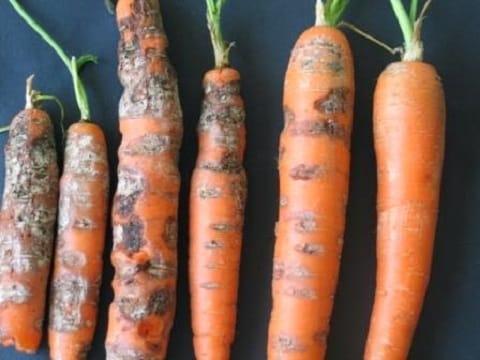
The pathogen (fungus) attacks leaves and roots. Numerous brown spots appear on the leaves, which then turn yellow, curl, and wilt. Brown, rotten spots appear on the roots. In wet weather, the spots become covered with a gray coating of conidia. The fungicides Quadris and Bravo are used for treatment. Bordeaux mixture and copper oxychloride are used for prevention.
Powdery mildew
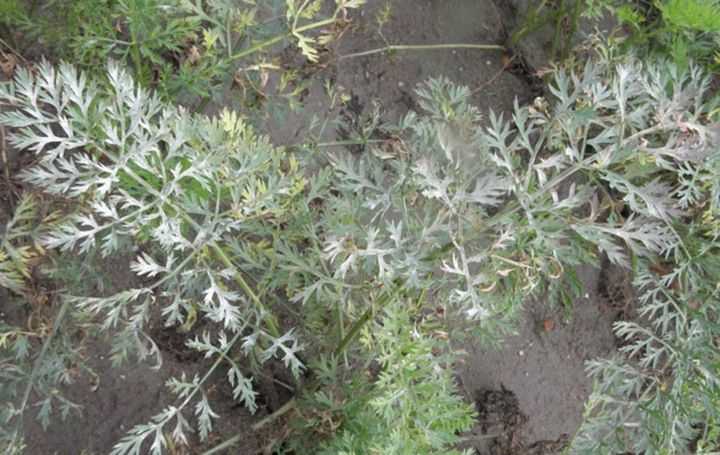
Signs of infection: leaves become covered with a white, flour-like coating. They subsequently turn brown and dry out. Infected roots grow poorly and become stringy. To strengthen the plant's immune system, spray with Baikal-M and Immunocytophyte. For treatment, use Fitosporin-M, Gamair, Trichodermin, and Gliokladin. A solution of rapeseed oil suppresses the fungus.
Fusarium
Fusarium rot is caused by a fungus. Affected roots develop dry rot, which subsequently causes the carrots to dry out. The rot may also be wet. Infected tissue becomes brown and soft. To prevent the disease, plants are sprayed with Bordeaux mixture and treated with fungicides before storage.
Pests and methods of control
Insect pests eat leaves and roots. If left untreated, the entire crop can be lost. Insects enter carrot beds from the ground or fly in, crawling from afar in search of food.
Before you begin fighting a pest, you need to identify it. Insecticides, chemicals, and folk remedies are used against insects.
Carrot fly
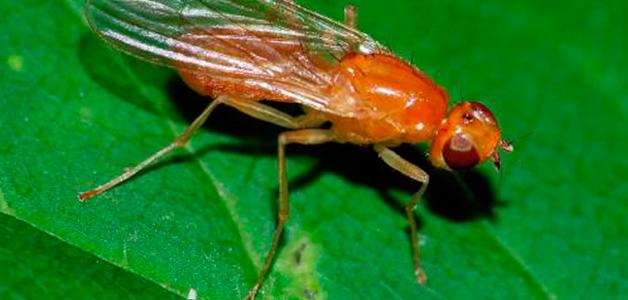
This insect resembles a common fly—it has two transparent wings, a reddish-yellow head, and a small black body. In the spring, the female lays eggs in the soil near carrots. The worm-like, yellowish larvae burrow into the roots. The affected plant's leaves turn yellow, and the roots rot. This insect prefers moist, shaded areas. Fresh manure applied before sowing stimulates the development of the flies.
Prestige is used for prevention; it's applied to seeds before sowing. Karate and Arrivo are used to repel flies. Mukhoed and Bazudin are effective against larvae. Marigolds, onions, and garlic planted nearby will repel flies. Garden beds can be sprinkled with a mixture of sand and tobacco dust.
Leafhopper
This tiny, pale green insect with transparent wings lays eggs on carrot leaves. It feeds on plant sap along with its larvae. The insects overwinter on conifers, emerging in May. Affected leaves become curled, but their color remains almost unchanged. These insects can reduce crop yields. Insecticides (Alatar, Borey, Vantex) are used against them.
Umbrella moth
This is a small butterfly from the subfamily of flat moths. The insect has two pairs of wings—forewings (brown) and hindwings (gray). The moth lays eggs on leaves, from which small brown caterpillars hatch. They feed on carrot sap and leaves. To control the moth, spray crops with Chlorophos, Entobacterin, Lepidocide, and Bitoxibacillin. A decoction of tomato tops is also effective.

Winter moth
A butterfly with large brown forewings and slightly smaller gray hindwings. It is nocturnal. Along with its large greenish caterpillars, it feeds on young carrot leaves.
To kill cutworms, the soil is plowed, loosened, and weeded. The insects are eaten by birds and killed by the black banchus larvae that infest their bodies. The following products protect against cutworms: Fitoverm and Agrovertin.
Naked slugs
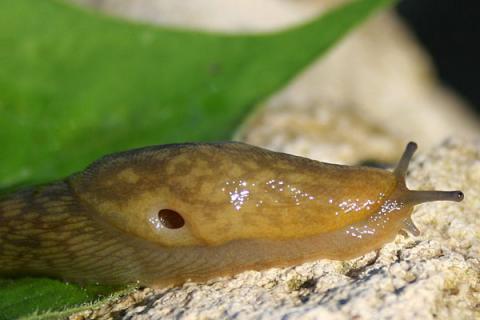
This elongated, soft, light-brown insect with a snail-like head has no shell. It feeds on young seedlings and growing root vegetables, leaving behind a wet, sticky trail. It is a carrier of fungal and bacterial infections. It hides in the ground or under leaves, preferring moist soil. Disinfecting the soil with lime or a saline solution helps control slugs.
Wireworm
The light-brown, elongated larvae of click beetles have a hard body. This insect feeds on root vegetables, burrowing into them. Wireworms also feed on potato tubers. They live in the soil and dislike drought and rain. Ammonia-containing fertilizers (ammonium chloride, ammonium nitrate) and lime are effective against this insect.
Carrot aphid
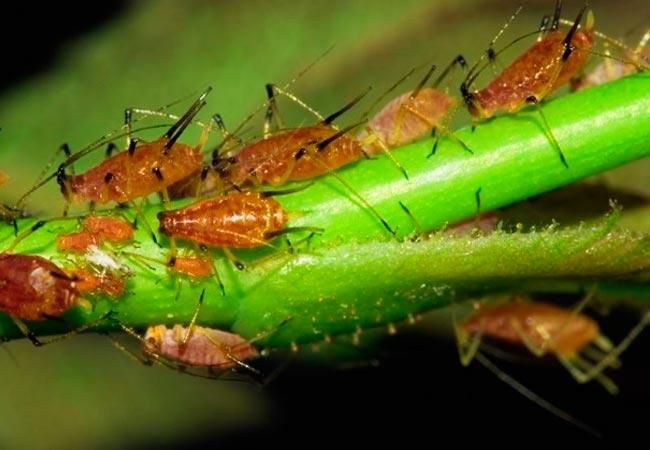
These are tiny, light-green, soft-bodied insects. They settle in colonies on leaves and feed on plant sap. Damaged leaves turn yellow and curl due to lack of nutrition, and root crops grow poorly. A tobacco infusion or an ash-soap decoction helps against aphids. Products such as Fitoverm, Akarin, Komandor, and Biotlin are used for control.
Exclamation owl
Brown moths lay eggs, which hatch into brown caterpillars. These insects damage carrots. Insecticides (Samurai, Klonrin) protect against cutworms.
Root nematode
These are small, light-brown worms that infest root vegetables. If bumps appear on carrots, the insects have laid eggs there. Roots infected with nematodes are beyond repair. The insects live in the soil and actively reproduce in hot and humid weather. Treating the soil with formalin and avermectins can prevent nematodes.
Mole cricket
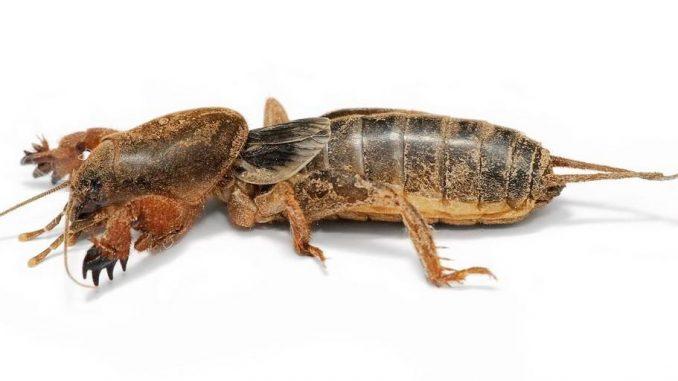
A large brown insect with a strong shell and powerful jaws. It lives in the soil and feeds on root vegetables along with its larvae. A solution of kerosene and washing powder can be used to control mole crickets. Plants and the soil around them can be sprinkled with pepper or dry mustard.
Rodents
Carrots are damaged by the common vole and field mouse. These are small (up to 12 centimeters) brown rodents. They dig burrows in the soil and build nests there. They feed on root vegetables. Deep tillage before planting, poisoned baits, and chemical mouse killers can help control rodents.
Preventive measures
Carrots can be protected from diseases and insects not only by chemical or biological means, but also by preventative measures. By following crop rotation rules and regularly caring for your garden and plants, you can avoid many problems and enjoy a great carrot harvest.
Agrotechnical techniques
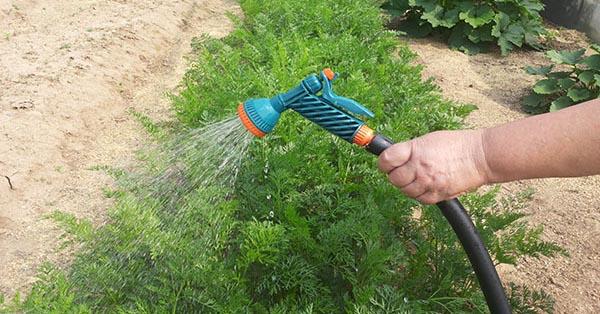
Adhering to proper agricultural practices helps create optimal conditions for crop development. Carrots are less susceptible to diseases and insect pests if they are regularly cared for and undergo a series of preventative measures.
Preparing the soil in the fall
It's best to add organic amendments to the garden bed in the fall. Apply 3-4 kilograms of manure per square meter of soil. Deep soil cultivation is recommended before winter, and the soil is limed in the fall (300 grams of lime per square meter).
Correct predecessors
Growing carrots in a bed after the following crops is possible: pumpkin, tomatoes, onions, and potatoes. It is not recommended to sow seeds after cucumbers, zucchini, celery, and parsley. Carrots can only return to their original bed after 3-4 years.
Fertilizers
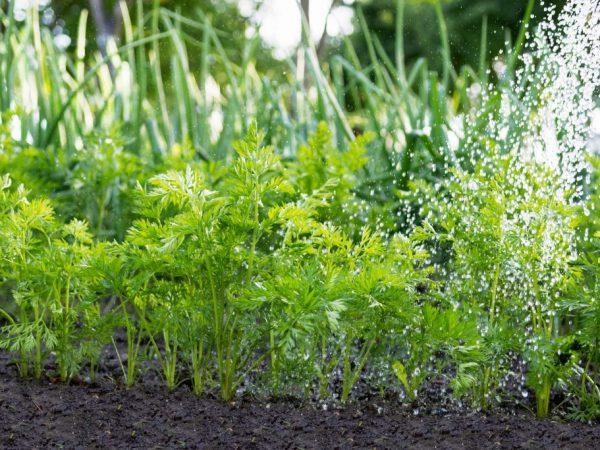
Carrots will be less susceptible to disease if the bed is fertilized with potassium and phosphorus fertilizers. Superphosphate and potassium nitrate are applied in the spring, before sowing the seeds. Apply 50 grams of each fertilizer per square meter of plot. Nitrogen should be applied sparingly.
Excess nitrogen will cause roots to rot and tops to grow excessively. During development, carrots are fertilized several times with potassium and phosphorus. A solution of wood ash, boric acid, and complex fertilizers is added to the soil.
Thinning, weeding and mulching
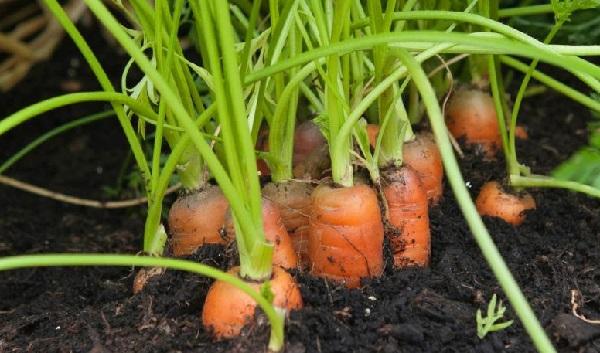
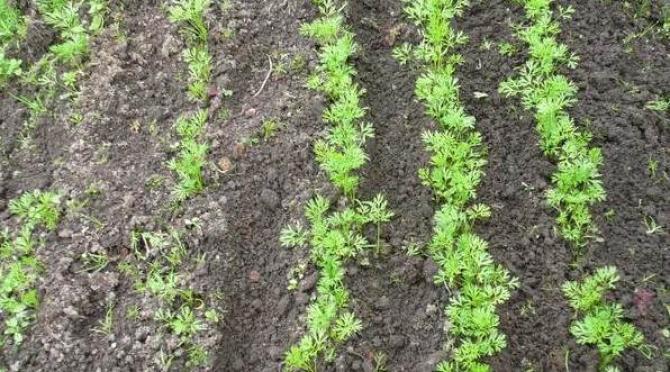
Large root crops can be achieved by thinning young seedlings, loosening the soil around them, and controlling weeds by removing them from the bed. As the crop grows, it requires hilling. This technique protects the root crops from overheating. Mulching the soil with well-rotted sawdust will prevent moisture loss and weeds from growing beneath the mulch.
Plant waste
It's a good idea to remove plant debris and weeds from the garden bed. These are popular habitats for insects, fungi, and bacteria. Removing debris prevents the emergence of larvae that can cause damage to the crop.

Good neighbors
Onions, garlic, and tomatoes can be planted near carrots in the adjacent bed—they make good neighbors. Further away, it's advisable to plant dill, celery, anise, horseradish, and beets. Marigolds and calendula planted nearby will deter pests from carrot beds.
Protection of seed material
Before planting, it's advisable to disinfect carrot seeds in a solution of potassium permanganate. To protect against soil pests, treat the seeds with a solution of Prestige, Matador, Nuprid, or Komandor Extra.
Chemical remedies for diseases
Many fungal and bacterial diseases can be treated with chemicals and fungicides. These products destroy the pathogens and require careful use.
Bordeaux mixture solution
A solution based on copper sulfate and lime. This solution can protect carrots from many fungal diseases. The powder is purchased at the store and diluted with water. The weak solution is sprayed on the plants in early summer.
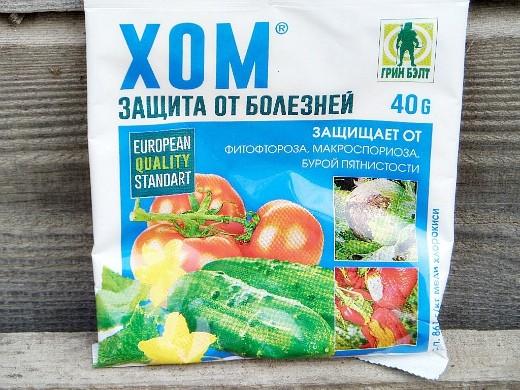
The drug Home
This is a copper-containing fungicide for combating fungal diseases. Foliar sprays with a solution containing this compound are applied during the growing season. Treatment is carried out in dry, windless weather in the evening.
Rovral
This fungicide is used for spraying plants and treating seeds. It prevents the germination of fungal spores. The solution can be applied to root vegetables before storage.
Topaz
A fungicide for combating fungal diseases. Plants sprayed as a preventative measure will remain disease-free for several weeks. A dilute solution is prepared for treating carrots.
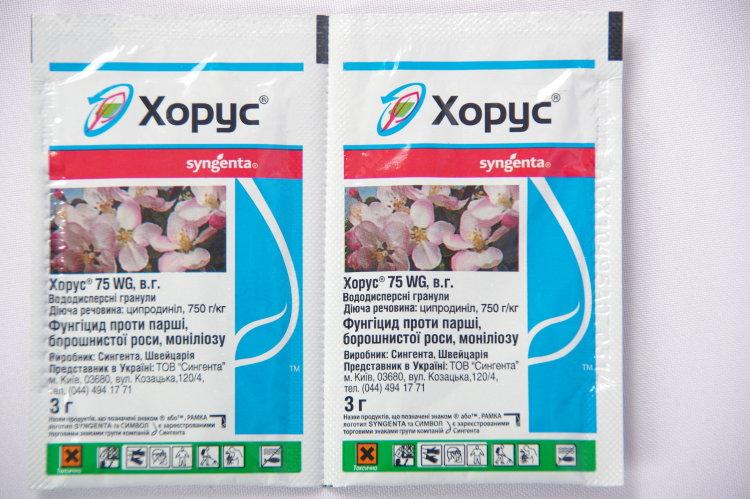
Horus
A fungicide with protective and therapeutic properties. It is not washed off with water, as it quickly penetrates the crop. A dilute solution is prepared in early summer and sprayed onto the carrot bed.
Tomato tops decoction
To combat crop pests, especially carrot fly, you can use a decoction of tomato tops. This folk remedy repels insects. For every kilogram of tomato tops, add two liters of water and steep the decoction for 30 minutes. Let it steep for three hours. Dilute with warm water, add soap shavings, and spray the carrot beds.
Special insecticides
Insecticides help control insects. They are used to treat the soil and plants themselves. Insecticides can be chemical or biological.
Chemical pesticides are poisons that act instantly and can accumulate in plant tissue (Commander, Biotlin, Aktara). Biological pesticides are non-toxic. These products (Fitoverm, Actofit) can be applied multiple times until all insects are eliminated.
Answers to questions
Question #1: Why are carrot tops light-colored?
Answer: Leaves turn lighter and yellow due to a nutrient deficiency or a fungal infection. It's recommended to fertilize the soil with a complete fertilizer and treat the plant with a fungicide.
Question #2: Why is the root vegetable light-colored?
Answer: There are varieties with light-colored roots. Carrots turn white if the soil contains a lot of nitrogen fertilizer.
Question #3: Why do green tops turn yellow and dry out?
Answer: Carrot leaves turning yellow are caused by various fungal infections. It's best to water the affected plants generously and apply potassium and phosphorus fertilizers. Treat with fungicides, and if insects are detected, with insecticides.
Related posts:
 Carrot care guidelines for outdoor cultivation to ensure a good harvest
 Is it possible to plant carrots in July or at the end of June? What are the best days and care instructions?
 How to control carrot flies with medications and folk remedies
 What is the best way to feed carrots? Fertilizers and preparations, using folk remedies.
 50 Best Carrot Varieties with Descriptions and Characteristics
 Timing and rules for planting carrots in winter, which variety is best to choose
 Description of black carrot varieties and what kind of crop it is, cultivation features
 How and when to thin carrots in open ground