
The Barabulka cucumber was developed by Russian breeders at Gavrish over 10 years ago. The description of the variety, which was included in the State Register of the Russian Federation in 2007, indicates that the hybrid grows equally well in plastic greenhouses and tunnels in all regions of the country, even in the northern ones. The variety received its name due to the resemblance of ripe cucumbers to red mullet fish.
Plant characteristics
Barabulka cucumbers are parthenocarpic, meaning the flowers pollinate themselves without the help of insects. This variety is early maturing, with a 45-50-day period between the first shoots and the harvest of the bulk of the fruit, which typically occurs in July.
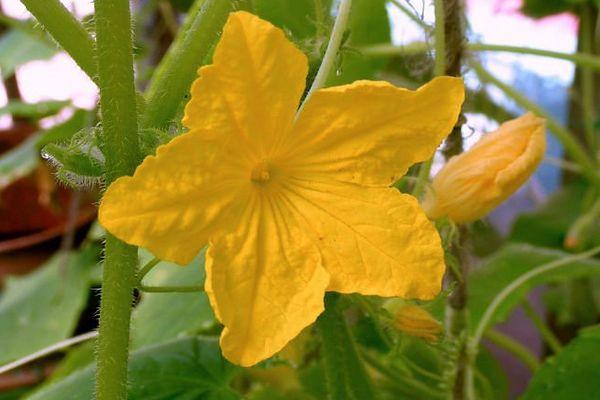
This variety of cucumber is medium-sized, with predominantly female flowering.
The plant bush has the following characteristics:
- good branching is observed;
- the leaves are medium sized and bright green;
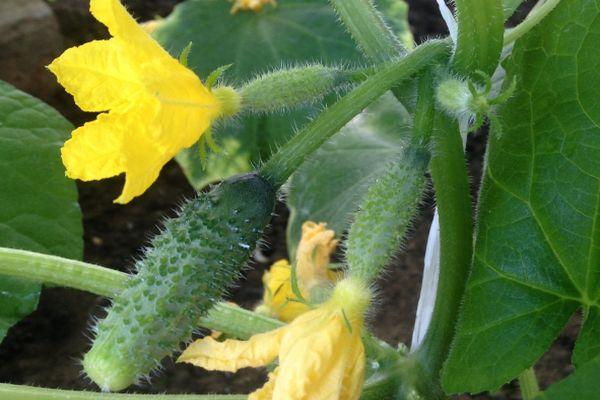
- the number of ovaries on branches can range from 3 to 12 pieces;
- a greater number of ovaries are formed near the main stem, forming according to the principle of a bunch;
- From 1 bush you can collect from 6 to 7 kg (from 1 m² - up to 15 kg).
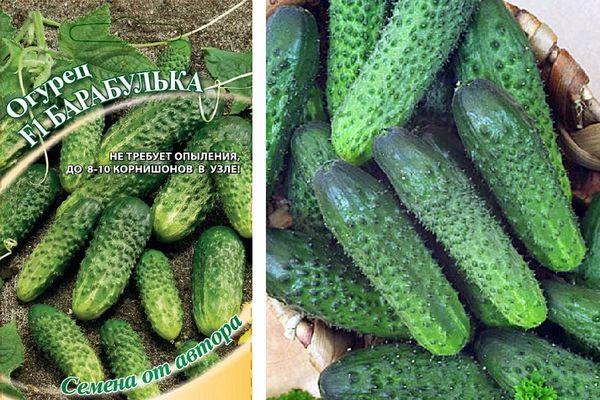
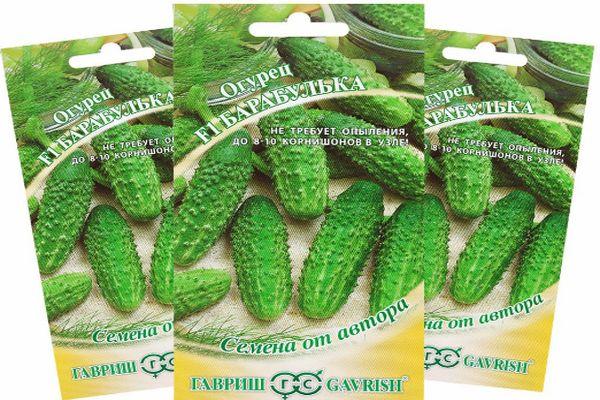
The Barabulka F1 cucumber is 10-12 cm long. Each fruit can weigh up to 100-150 g. The cucumbers vary in color: the green on the top of the cucumber is significantly lighter than the rest of the fruit. They have longitudinal white stripes on the surface. The cucumbers are cylindrical, with a bumpy surface and small white spines. The flesh is crisp, with a pleasant, non-bitter flavor and a distinctive aroma.

The Barabulka cucumber variety has high resistance to diseases such as powdery mildew, cladosporiosis and downy mildew.
Other undoubted advantages of this variety are high germination rates, simultaneous formation of fruits, as well as their good marketable appearance.
Red Mullet cucumbers can be used in any form: they are good in fresh salads, pickles and marinades.

Growing recommendations
This hybrid variety is easy to care for. It can be planted using either seedlings or direct-seeded methods. If sowing seeds directly into beds in a greenhouse or tunnel, follow these guidelines:
- Select the seeds after soaking them briefly in a weak salt solution.
- Before planting, soak the seeds in a weak solution of potassium permanganate for 30 minutes.
- After disinfection, rinse the seeds thoroughly under running water.
- Spread the seeds on a piece of cloth and place on the bottom shelf of the refrigerator for 2 days.
- Sprinkle the seedbeds with hot water and then cover with plastic wrap. The seeds are ready to plant on the third day.
Before the first sprouts appear, the soil should be covered with any suitable material. This will promote accelerated seed growth and protect them from the cold.
When planting from seedlings, sow Barabulka cucumber seeds in mid-April. The seeds should already be slightly sprouted.
It is important to maintain the temperature and humidity conditions:
- The first watering with an abundant amount of water occurs when the first shoots appear.
- Growing should be accompanied by irrigation as needed using settled water at room temperature.
- Avoid temperature fluctuations when growing seedlings. After the greenery appears, move the plant trays to a well-lit area, lowering the daytime temperature to 19°C and the nighttime temperature to 15°C for 5 days.
- 14-15 days after germination, the seedlings need to be fed with cow manure or another universal fertilizer for vegetable crops.
- Before planting the plants in their main location, it is necessary to carry out a hardening procedure, that is, reduce the temperature for a certain time and then increase it again.
Mature plants should be watered in the evening, directly at the roots. Three times a month, cucumber bushes should be fed with mullein and saltpeter. During the active flowering period, fertilizers should include potassium salt and superphosphates.
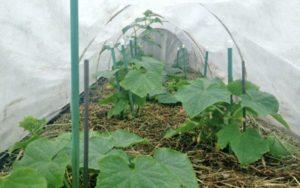
To ensure abundant fruiting, organic fertilizers should be applied regularly.
Gardeners' reviews confirm the early maturity and high yield of this cucumber variety. It is recommended for growing in garden plots not only for experienced gardeners but also for beginners.
Related posts:
 Is it possible to soak treated cucumber seeds before planting and how to do it correctly?
 Description of unusual methods for planting and growing cucumbers
 How to care for cucumbers in open ground from planting to harvesting
 Description of the best varieties of Chinese cucumbers, planting, growing and care
 How to properly plant cucumbers in open ground with seeds, and at what depth
 How to properly plant cucumber seedlings in a greenhouse and care instructions
 How to properly prepare cucumber seeds for sowing in open ground
 How to make a cucumber trellis with your own hands from scrap materials