
White flies on cucumbers are not uncommon. Many people with their own dachas, gardens, or simply plots of land encounter various types of pests and parasites every year. Everyone wants a healthy harvest, so they have to do something about it.
The appearance of white midges on cucumbers has become a very common occurrence these days. To understand why they appear, it's important to understand what they are and how to prevent them from attacking. And even if they do occur, how to combat the pests and what to do in such situations.
What do they represent?
Whiteflies are various types of small insects that live near plants. Another name for these whiteflies is whitefly. These pests feed on cucumbers (sucking their juice), causing their death.
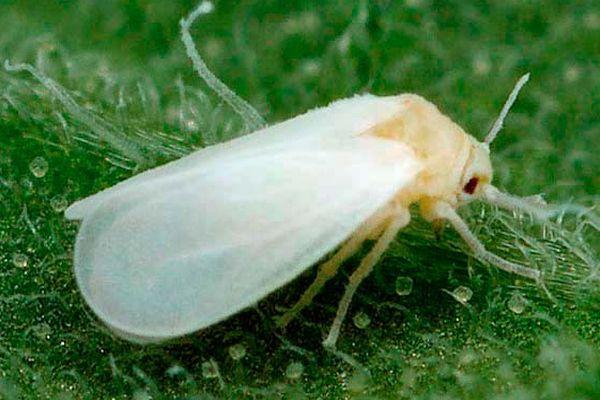
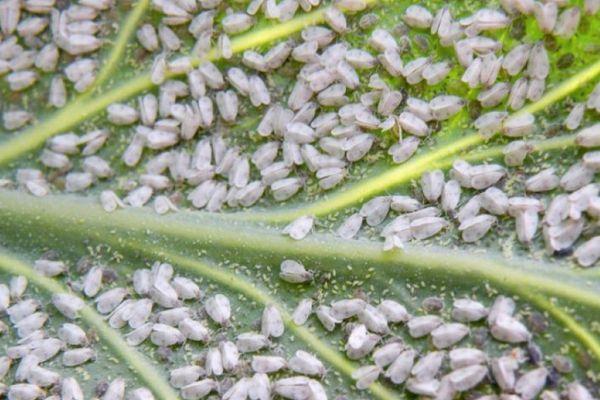
The insect is very small, only about 1-3 mm. They resemble small moths with four wings. It's worth noting that the larvae of this butterfly can penetrate the soil and damage the root system. It's easy to spot; just look at the underside of the leaves.
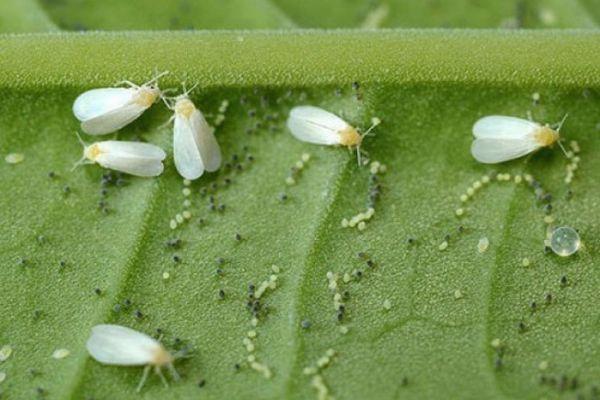
A characteristic feature of whiteflies is that they gather in small groups under leaves. They feed on plant sap, thereby causing significant damage.

It's most commonly found on the leaves of cucumbers grown in greenhouses. This insect thrives in high temperatures and humidity, just like those found in greenhouses and hothouses (especially those with poor ventilation and plants planted close together).
Whiteflies are very easy to spot. Just look at the leaves and touch them. If there's a sticky, shiny coating on the leaves, it's definitely the whitefly. The plant's condition also deteriorates significantly (the pests are eating it). Growth slows, and the leaves gradually curl, eventually even turning yellow.

How to deal with the pest?
If small moths have begun to gather under the leaves of your crops, don't wait for them to be destroyed; take action. First, determine the extent of the infestation. If it's minor, you can try folk remedies:
| Option | How to fight |
| Soap solution | Grate laundry soap and dilute it in cool water at a ratio of 1:6. Apply this solution to the entire plant and the top layer of soil. Repeat this process several times. You'll see immediate results. |
| Garlic | If the laundry soap method doesn't seem effective, consider another option: garlic tincture. Whiteflies, like other butterflies, dislike the smell of garlic, so you should:
|
| Tobacco products | For this solution you only need 2 ingredients - cigarettes and water:
The solution should be sprayed at intervals of 3 days, directly onto the leaves. |
Unfortunately, sometimes folk remedies prove ineffective, requiring drastic measures, such as chemical treatments. These can be found at any specialty store.
To combat and destroy cucumber midges, the following are distinguished from the wide variety of chemical preparations:
- "Karbofos";
- "Aktara";
- "Citcor";
- "Spark";
- "Bud";
- Fufanon;
- "Detis";
- Verticillin;
- "Actellic";
- "Pegasus".
Some of them are used only in cases of large-scale infestations. Therefore, to avoid ruining your harvest, you should carefully read the instructions and follow them only.

Useful traps
Such traps are essential for more mature specimens. Moreover, for some gardeners, they are much more convenient than folk remedies or chemicals.
To catch the pest, use a sticky bait. This could be brightly painted plywood, plain paper, or cardboard. Apply some sticky substance to any surface. This is usually castor oil or a special glue available at a hardware store. Fly tape can also be used, but experience shows that it won't be very effective.
Another useful trap is a medium-sized box with a light bulb. It's best to paint the bulb a bright color, such as yellow or orange. Attach the bulb to the center of the box, drilling holes in it at the same level. Place a container of water or another liquid on the bottom of the box.
The scheme is very simple: butterflies fly towards the light bulb, get burned and eventually drown.
Prevention
No matter how you fight pests, in any case, you need to take a number of measures to keep pests out of your garden.
There are several proven methods:
- Maintain the temperature in the greenhouse, ensuring there are no sudden changes. Nighttime temperatures should be around 17–20°C, and daytime temperatures should not exceed 28°C. Ventilation is also very important in greenhouses.
- Disinfect the greenhouse with a special solution designed for this purpose. The solution must be diluted in the correct proportions, as indicated in the instructions for use. These products include: Karbofos, Decis, Citkor, Fufanon, etc.
- Observe sowing dates. Sow only high-quality seeds.
- Feed the soil with various fertilizers. These can be found at any specialty store. You can also ask a sales associate there if you have any questions.
- Develop a watering plan to ensure sufficient moisture, but not too much.
- Avoid planting cucumbers near other plants, such as zucchini, pumpkin, watermelon, carrots, potatoes, dill, and Jerusalem artichoke.
- Try to remove weeds immediately.
- Do not plant seedlings too close to each other.
- After harvesting, clear the greenhouse of plant debris.
- Before planting seeds, treat the soil with copper or iron sulfate.
Today, there are numerous insect pests capable of destroying the crops that gardeners tend and spend countless hours tending. Among all these pest control tips, anyone who has a garden and grows cucumbers (or perhaps some other plant) can find a more convenient and effective method that works for them and use it regularly. Then, gardeners can boast that they are eating high-quality vegetables.
Related posts:
 Is it possible to grow an apricot tree from a seed in your garden? How to plant and care for it?
 How to properly grow a peach tree from a seed at home, planting and care
 Planting and caring for cherries, feeding and growing rules
 80 Best Eggplant Varieties for Different Regions with Descriptions and Characteristics
 How to control carrot flies with medications and folk remedies
 The best eggplant varieties for growing in a polycarbonate greenhouse: planting and care
 How and whether it is possible to graft an apricot, the choice of rootstock, timing and methods of budding
 How to grow grapes in the Moscow region in open ground without a greenhouse
Be careful when using various chemicals. Even small amounts can harm seedlings. I only deal with such problems with a soap solution. After treatment, I always addBioGrow» into the soil.