
The Harmonist f1 cucumber is well suited for beginning gardeners. This variety is resistant to most diseases that can affect cucumbers.
The fruit is grown in open fields in southern Russia. In central Russia, Harmonist f1 cucumbers are propagated using unheated plastic greenhouses. In the Far North and Siberia, the plant is grown in fully heated, full-cycle greenhouse complexes.
Technical data of the crop
The characteristics and description of the plant are as follows:
- The period from first germination to full harvest of the Harmonist cucumber variety lasts 40 to 42 days. This variety is parthenocarpic.
- The bushes of the described plant rise to 100-200 cm.
- Harmonist cucumbers have a low level of branching. They belong to the female-flowering cultivars. The leaves on the bushes are medium-sized and dark green.
- From 2 to 4 ovaries develop on each leaf axil.
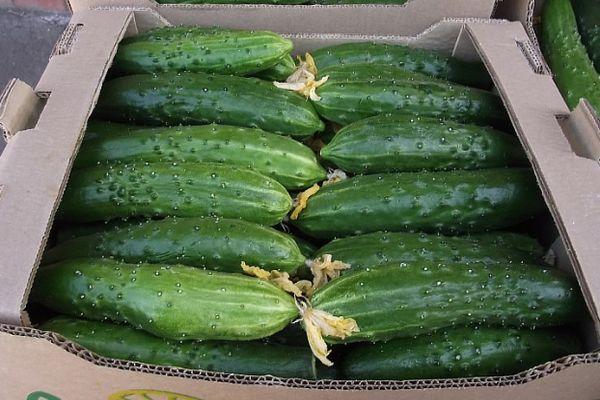
- The fruits are cylindrical in shape and have small bumps covering the entire surface of the skin.
- The fruit weight ranges from 0.11 to 0.13 kg with a length of up to 13 cm and a diameter of 30-35 mm.
- The top of this cylinder has a lighter skin than the rest of the fruit. Small spots can be seen spread across the entire green surface of the fruit. White stripes extending halfway down the fruit are clearly visible.
- The cucumber does not taste bitter; it has crisp flesh.
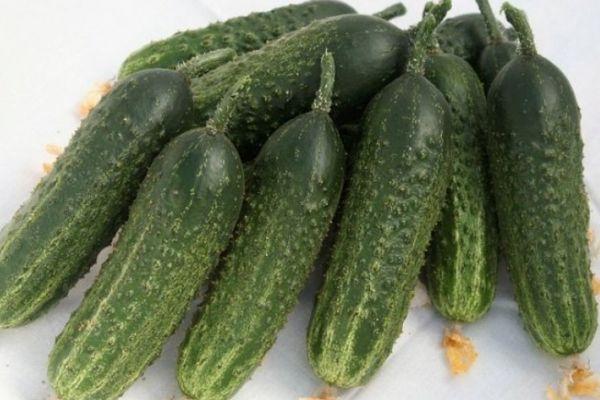
Reviews from farmers cultivating this variety indicate that, when following all breeder recommendations and agricultural practices, the Harmonist yield is 10-12 kg of fruit per 1 m² of garden bed.
Experienced gardeners warn novice gardeners that, despite the variety's resistance to various diseases, preventative planting practices are recommended. To do this, treat the bushes with special preparations, which can be purchased at stores selling agricultural equipment. If these preparations are unavailable, you can treat the leaves and stems with a soapy solution.
When garden pests appear that can destroy the future harvest, cucumbers are treated with chemical poisons.
How to grow a crop in your own backyard
Cucumber seedlings should be planted in mid-March to early April, when the sun has begun to warm slightly and frosts have completely subsided. Seeds for seedlings are available from specialty stores.
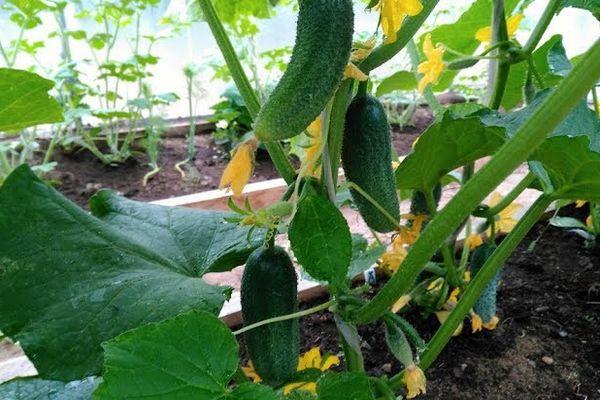
Plant in peat pots. Otherwise, the cucumbers will not tolerate transplanting into permanent soil well. Before planting the seeds 10-15 mm deep, it is recommended to treat them with a weak solution of potassium permanganate. This will protect the seedlings from various diseases.
After the sprouts emerge (five days after sowing the seeds), wait until they have 2-3 leaves. At this point, the plants are pricked out. Before planting the cucumber seedlings in their permanent soil, loosen the soil in the beds. Add mineral and organic fertilizers. If these are not available, amend the soil with ash and compost. Plant the seedlings in holes spaced 0.5-0.6 meters apart. Then water the plants.
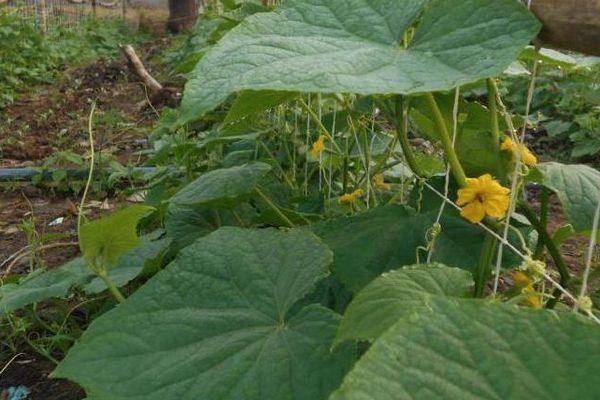
To protect seedlings from climatic surprises, it is recommended to cover young bushes with plastic film. If the weather is sunny, the cucumbers should be protected from direct sunlight for 8-10 days. Accordion grows well in rich soil but does not thrive when planted in sandy soil.
Cucumbers should be fed with nitrogen fertilizers or a mullein solution (1:10 with water). These mixtures are recommended after new leaves emerge and then during flowering.
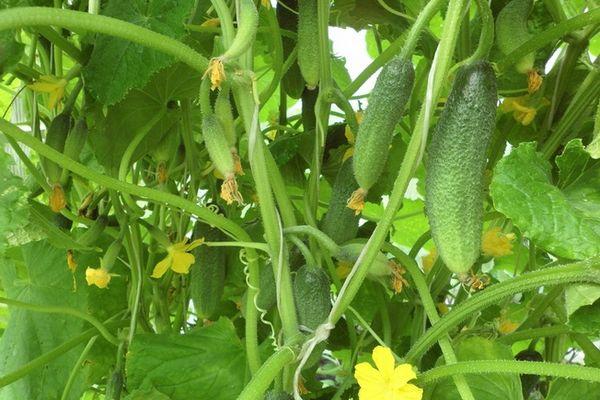
When growing cucumbers outdoors, the bushes should be tied to a trellis. To prune, remove 3-4 leaf axils, along with shoots and ovaries. Then, remove all side shoots down to a height of 0.6-0.7 m, leaving only the ovaries.
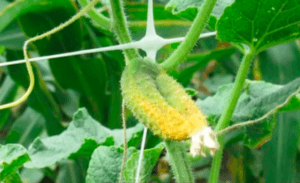
Side shoots should not be touched; they are simply pinched every 2 or 3 leaves. If the bush is over 150 cm tall, then above this height, side shoots are pinched every 3 or 5 leaves.
Plants should be watered regularly with warm water. This should be done 2-3 times a week early in the morning. In hot weather, it is recommended to increase the frequency of watering.
Loosen the soil under the bushes every 6-8 days. This eliminates root parasites and ensures oxygen supply to the root system.
Weed the beds 1-2 times every 10 days. This will prevent fungal infections.
Related posts:
 Why potatoes aren't growing well in the garden, and what to do to ensure a bountiful harvest
 The best eggplant varieties for growing in a polycarbonate greenhouse: planting and care
 Rules for growing tomatoes in open ground, choosing a variety, planting and care
 The benefits and contraindications of lentils for the human body
 Planting and caring for arugula in open ground, description of the best varieties and their cultivation
 What fertilizers and when to use for feeding tomatoes in a greenhouse
 How to properly plant cucumber seedlings at home and what to feed them with
 What is the best way to feed tomato seedlings to make them plump?