
- Reasons why cucumber leaves turn yellow at the edges
- Lack or excess of water
- Aging of cucumber leaves
- Fungal infection
- Unfavorable external factors
- Weather conditions
- Landing site
- Soil type
- Greenhouse microclimate
- Improper care
- Lack of fertilizers
- Possible diseases
- Impact of pests
- What to do if the leaves on your cucumbers have already started to turn yellow
- In the greenhouse
- In open ground
- On the windowsill
- Preventive measures
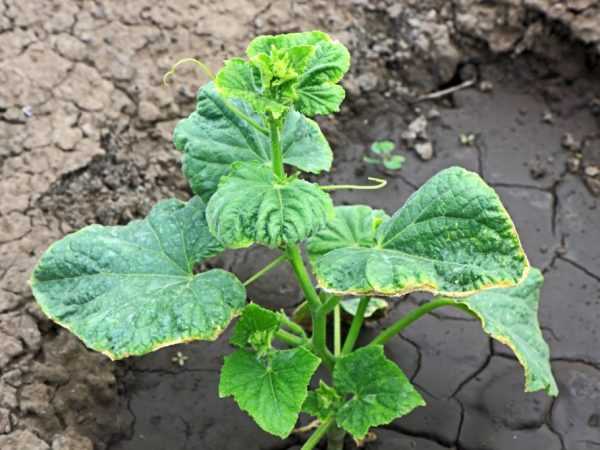
Growing a crop is a labor-intensive process and often requires special attention. The most common complaint among those growing cucumbers in their gardens is yellowing leaves at the edges. This most often occurs when the crop isn't being properly cared for or when optimal growing conditions aren't met. Learn more about the causes and what to do below.
Reasons why cucumber leaves turn yellow at the edges
There are several reasons why a yellow border appears on cucumber leaves, which we will discuss in more detail below.
Lack or excess of water
Failure to follow a proper watering schedule is one of the reasons why leaves may turn yellow. Infrequent or insufficient watering leads to dehydration of the plant, and the first sign is yellow leaves.
Aging of cucumber leaves
Over time, the cucumber leaf ages, photosynthesis ceases, it turns yellow, and dies. This is a natural process.
Fungal infection
If we talk about fungal diseases, cucumbers are often affected by fusarium or ptosis, as evidenced by yellowing and subsequent drying of the leaves.
Unfavorable external factors
The plant responds to various external factors, such as weather conditions, soil type, greenhouse microclimate, lighting levels, and the location of the beds in the garden.
Weather conditions
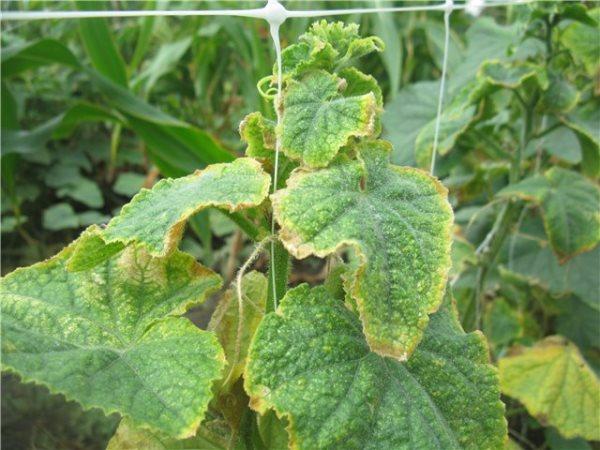
When the edges of a plant's leaves turn yellow, it may be due to temperature fluctuations. Specifically, the plant reacts this way to a drop in temperature, especially if the plant is planted outdoors.
Landing site
An incorrectly chosen plant location can also cause yellowing of the leaves. Cucumbers thrive in nutritious, moist soil, but they also need ample sunlight.
Direct sunlight will cause the plant to burn, and the soil will suffer from lack of moisture. As a result, you shouldn't expect a bountiful harvest. If cucumbers are planted in such a location, it's best to shade the plant with covering materials.
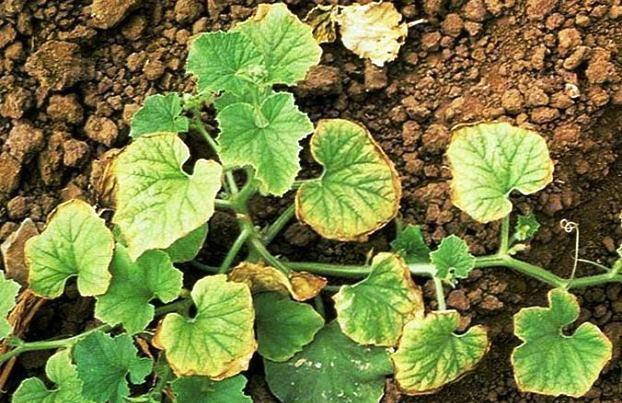
Planting cucumbers in the shade isn't an option either, as the soil will remain moist and the tops will be deprived of UV light. The ideal location for cucumbers is partial shade.
Soil type
Roots develop improperly due to heavy soil, which ultimately affects the leaves. Before planting, add sand and humus to such soil.
Greenhouse microclimate
Some believe that a greenhouse is the ideal place to grow cucumbers, as it lacks direct sunlight, retains sufficient moisture in the soil, and doesn't disturb the plants with temperature fluctuations. However, even here, cucumber leaves can turn yellow and dry out due to an unfavorable microclimate.
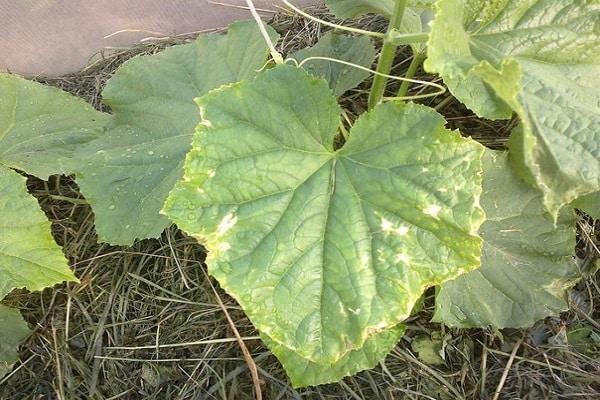
During droughts, temperatures can exceed 45 degrees Celsius, with humidity in the greenhouse sometimes reaching 90%. Such conditions are unsuitable for cucumbers to thrive. Greenhouses also often experience a lack of sunlight.
Improper care
Incorrect care generally concerns the watering regime or fertilization.
In both cases, spots and yellow edges may appear on the leaves, and the plants will stop setting fruit, begin to wilt, and may even die.
Watering should be based on the soil type the crop is growing in. It's also worth considering the appearance of the root zone. Watering should be done when you notice it's drying out.
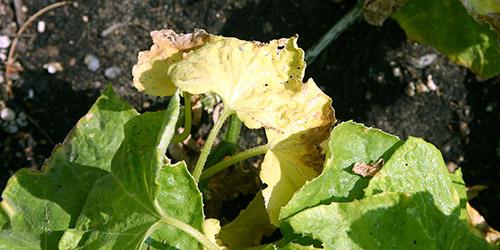
Lack of fertilizers
Yellowing edges of cucumbers can also be caused by a lack of the following nutrients:
- Manganese – Plants grown in light soils suffer from a deficiency of this micronutrient. First, the leaves begin to lighten at the edges, and then the entire surface becomes pale. To treat this deficiency, water the plants with a weak solution of potassium permanganate.
- Calcium deficiency manifests itself as leaf margins turning yellow and then brown. The leaf blades become limp and curl. Adding chalk, calcium carbonate, or dolomite flour to the soil will solve this problem.
- Boron - the appearance of yellowing at the edges of the leaves indicates that this fertilizer should be applied during flowering.
- Iron – a deficiency of this element is rare. It manifests itself as yellowing of the leaves. Ferrous sulfate can be helpful.
- Potassium is essential for cucumbers because it affects their flavor and increases resistance to various diseases, pests, and adverse climatic conditions. A deficiency can cause the leaves to turn yellow around the edges, the blades to turn bright green, the stems to fail to produce new ovaries, and the fruits to taste bitter. Fertilizing with wood ash can remedy this.
- Nitrogen causes leaf edges to lighten, and vegetative matter to turn pale and fall off. Ammonium nitrate will come to the rescue.
Possible diseases
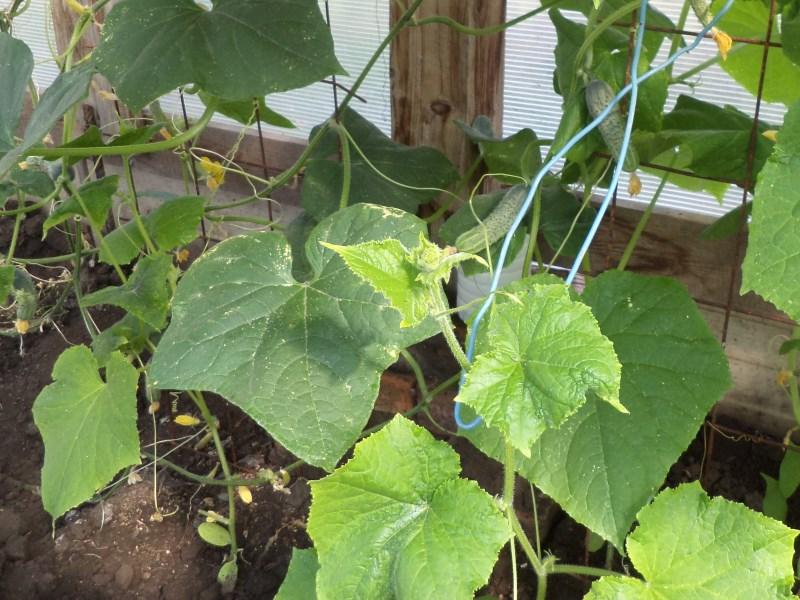
Cucumber leaves also turn yellow due to certain diseases.
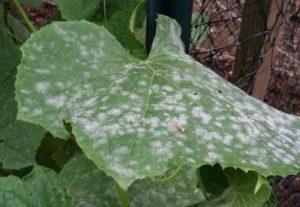
- Powdery mildew. It begins with a white coating that affects the entire leaf blade, and the edges also turn yellow. Over time, the plant loses all its foliage. Causes: temperature fluctuations, as well as watering with cold water. Treatment: Topaz; spraying with mullein infusion.
- Fusarium wilt. This fungal disease causes spores to block the plant's access to nutrients, causing the foliage to turn yellow and fall off. In most cases, this problem has no solution. If spores are found, the plant must be completely removed and burned. The soil will need to be replaced next season.
- Root rot. It first affects the lower part of cucumbers, then the vegetative part. Infected plants are harvested.
Impact of pests
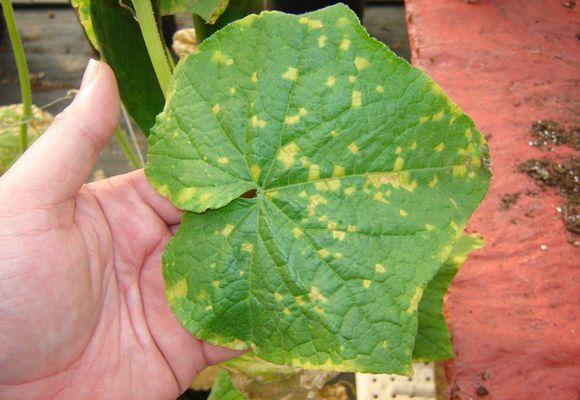
If you notice the edges of your cucumber leaves turning yellow, you should inspect the plant carefully. It's likely that the crop is being attacked by pests.
Often these can be: cotton aphids, spider mites, greenhouse whiteflies.
During peak season, pest control is difficult, and identifying them without specialized knowledge is difficult for everyone. Therefore, the most common method is to kill the pests with general-purpose insecticides.
What to do if the leaves on your cucumbers have already started to turn yellow
Next, we suggest considering what to do if the leaves on the cucumbers have already begun to turn yellow.
In the greenhouse
If the problem is with your watering schedule, reconsider it. Watering should be done as the soil dries out, and the water should be warm. Mineral deficiencies can be addressed by adding them to the soil.
If pollination is poor, spray with a weak solution of boric acid. If the problem is due to a plant disease, use soapy water, tobacco, manganese, or iodine for spraying and soil application.
In open ground
In open ground this problem occurs due to:
- a lack of minerals, particularly potassium or copper. In the first case, a complex fertilizer or growth stimulant will help; in the second, Bordeaux mixture;
- Incorrect watering. Most often, the plant is not receiving enough water, so to solve the problem, increase watering;
- Due to waterlogged soil caused by heavy rainfall, this type of soil is fertile ground for fungus. Treatment is necessary with professional antifungal products;
- Pest infestations. In this case, everything depends on the type of pest. Control is achieved using various insecticides.
On the windowsill
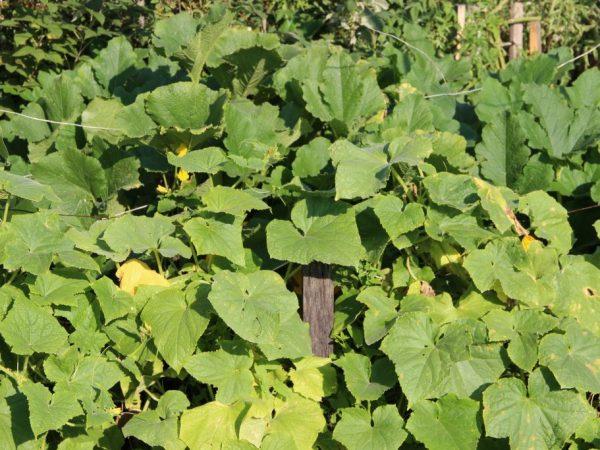
Cucumbers grown on a windowsill require special attention. If the leaves start to turn yellow, your watering schedule may be off. Avoid adding water to the soil for a few days, but instead mist the plant with water.
Preventive measures
There are several preventative measures aimed at preventing the appearance of yellowing and drying out of cucumber leaves.
- Avoid disrupting crop rotation by planting the same crop in the same spot several seasons in a row. Cucumbers should not be planted after squash, pattypan squash, melons, pumpkins, or watermelons.
- Organize proper watering.
- Spray the plant regularly against diseases and pests for preventive purposes.
- Follow the feeding rules.
- Remove weeds from cucumbers in a timely manner.
Related posts:
 Why do cucumber leaves curl inward and what to do about it?
 Description of unusual methods for planting and growing cucumbers
 Description of the best varieties of Chinese cucumbers, planting, growing and care
 Why are cucumber leaves turning yellow on the windowsill? What to do and how to treat them?
 Why cucumber leaves are drying out and what to do, how to treat them in a greenhouse and in the ground
 How to care for cucumbers in open ground from planting to harvesting
 Why does white rot appear on cucumbers in a greenhouse and what can be done to treat it?
 How to plant cucumbers in open ground under film: timing and cultivation technology