
- Climatic characteristics of the North and Northwest
- Requirements for varieties
- The best varieties of cucumber for open ground
- Novgorodets F1
- Svyatoslav F1
- Eliseevsky F1
- Twixy F1
- What to choose for planting in greenhouses and hotbeds
- Emerald Stream F1
- Spring Whim F1
- Rogue F1
- Wizard F1
- Eskimo F1
- Description of new generation hybrids
- Miranda F1
- Siberian Bouquet F1
- Restina F1
- Bee-pollinated cucumber varieties
- Cascade
- Early Altai
- Altai
- Conclusion
Due to the climate of northern Russia, plants growing there have short development and fruiting periods. Most vegetable varieties popular in southern regions are unsuitable for the North. Therefore, hybrid cucumbers, specifically bred for cold climates, are primarily grown here. Cucumber varieties for the North must adapt to variable weather conditions and withstand temperature fluctuations.
Climatic characteristics of the North and Northwest
The climate in northern Russia is harsh. Summers are short, temperatures rarely reach 20 degrees Celsius, and autumn arrives early. Winters are cold. But the weather isn't always predictable: dry summers are common, and early frosts are absent. This inconsistency is one of the main challenges for growing cucumbers.
Requirements for varieties
Hybrid cucumbers must meet certain criteria to tolerate northern conditions.
- First of all, to withstand short-term cold spells.
- It's highly desirable for cucumbers to be parthenocarpic, meaning they can self-pollinate without the help of insects. Very few bee-pollinated cucumber varieties are suitable for cultivation in the North and Northwest.
- The varieties should have a high ripening rate and produce the first harvest within a couple of months.
- If you plan to grow cucumbers outdoors, choose varieties that are immune to pumpkin diseases.
The best varieties of cucumber for open ground
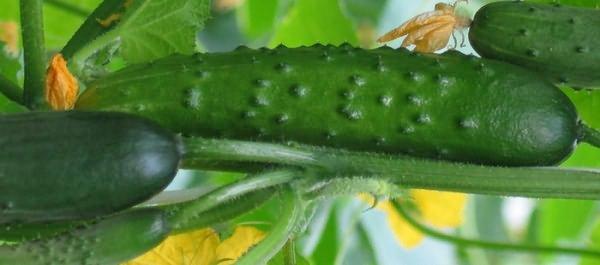
For When growing cucumbers in open ground, you need to select the right seeds Varieties that will withstand the northern climate. Here are some popular varieties of suitable fruit crops.
Novgorodets F1
This low-maintenance plant produces fruit even in cool temperatures. It matures quickly and has trailing stems. It begins producing fruit after six weeks. The cucumbers are small, up to 9 centimeters in size. They have a pleasant flavor and aroma, and are ideal for pickling.

Svyatoslav F1
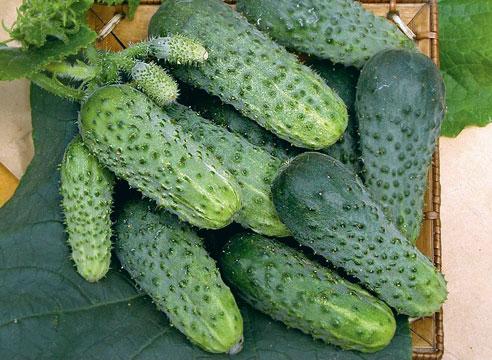
This variety is a hybrid, early-ripening cucumber. It is equally well suited for growing both indoors and outdoors. Outdoors, it produces a large and tasty harvest. The taste is reminiscent of traditional barrel-pickled cucumbers. The cucumbers grow up to 9 centimeters in length.
Eliseevsky F1
Eliseev cucumbers are rightfully considered one of the best cucumber varieties for growing. This variety produces fruit without runners and can produce a harvest for a long time, right up until the first frost. The first fruits appear by the end of the second month after germination. The cucumbers are green, with white longitudinal stripes, and reach up to a decimeter in length. They are characterized by a juicy, crisp flavor.

Twixy F1
The earliest ripening variety, with fruit appearing after just 35 days. Twixy is very easy to care for, with extensively branched bushes and small fruit characterized by a good, delicate flavor.
What to choose for planting in greenhouses and hotbeds
For growing indoors, fully self-pollinating cucumber varieties with a female flowering type are suitable.
It is better to choose varieties with shortened lateral shoots, which do not require pinching of lateral shoots.
Emerald Stream F1
This cucumber plant grows quite large and requires ample watering and fertilizing. It produces fruit consistently in 40-48 days, right up until frost, which is a key advantage. The largest harvest can be obtained indoors.

The bushes are very hardy, adapting to cold and drought. They are immune to powdery mildew and pests. The cucumbers are long and slender, reaching up to 25 centimeters in length, and have a sweet, non-bitter flavor.
Spring Whim F1
Another fast-maturing hybrid, developed primarily for indoor growing. The bushes grow large and vining. The fruits are long, cylindrical, and have thin, tuberculate skin. Like Emerald Stream, they are cold-hardy, immune to powdery mildew, and have a long fruiting period.

Rogue F1
An early-ripening variety, the bushes grow to medium size and are sparsely branched. The cucumbers are short, weighing on average 50-60 grams. In addition to being immune to powdery mildew, they are resistant to cucumber mosaic virus.
Wizard F1
A variety that produces a high-quality harvest in any conditions, even the most unfavorable. Fruits mature in 35 days. Small cucumbers are resistant to temperature fluctuations.
Eskimo F1
The main characteristics of the Eskimo variety are rightfully considered to be its small size and ability to withstand cold, making this hybrid ideal for the North. The cucumbers reach only 8 centimeters in length and are used primarily for pickling.

Description of new generation hybrids
New-generation triple hybrids have gained widespread popularity among gardeners due to their high yields, delicious fruit, and high adaptability to various temperatures. Their only drawback compared to other varieties is the high cost of seeds.
Miranda F1
The Miranda hybrid was developed in the Moscow region at the end of the 20th century. It is suitable for cultivation in all regions of Russia, including the northern regions. This cucumber variety is known for its high yield and good adaptability to greenhouse cultivation. Fruits mature in six weeks. They are excellent for both pickling and fresh eating.
Siberian Bouquet F1
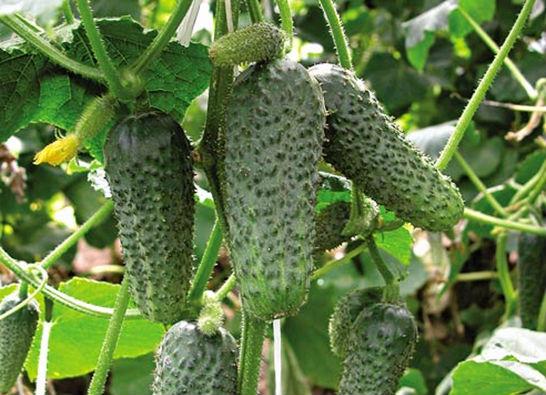
Well adapted to harsh climates, this variety thrives and produces a productive harvest even in the northern and northwestern regions. It can be grown both in greenhouses and outdoors. It's a high-yielding variety, capable of yielding up to 30 kilograms of cucumbers per square meter. The cucumbers grow up to 10 centimeters in length and have excellent flavor due to their complete lack of bitterness.
Restina F1
Characterized by rapid ripening, fruiting occurs within 40 days. The cucumbers are small, up to 6 centimeters. In cooler regions, this variety is grown from seedlings. The fruits are well suited for canning.

Bee-pollinated cucumber varieties
Despite the popularity of parthenocarpic varieties, many gardeners still prefer to grow bee-pollinated cucumbers. These types are better suited for open ground. Bee-pollinated varieties require much more effort to grow.
However, this is compensated by their advantages, such as better taste, higher content of beneficial vitamins in the fruit and adaptability to shade.
Here are some varieties of bee-pollinated hybrids that are suitable for growing in northern climates.

Cascade
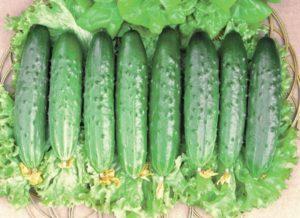
The Cascade variety was developed in the 1980s and immediately gained popularity among gardeners. These cucumbers are characterized by early ripening and small fruit size (only 8-10 centimeters long). The fruits ripen at the same time and are of equal size. The flesh is medium-firm, and the fruits have a sweet taste.
Another advantage of this variety is its relatively high yield density—up to 14 kilograms per square meter. It's well suited for both open ground and greenhouse cultivation.
Early Altai
A very hardy variety, able to withstand temperature fluctuations, making it suitable for northern climates. The plants are large, while the cucumbers are small, up to 9 centimeters. Suitable for fresh eating.

Altai
Although this cucumber variety originated in India, it adapts well to northern climates. It has a creeping stem with moderate branching. Cucumbers grow oval, reaching 9-13 centimeters in length and up to 4 centimeters in diameter.The variety is resistant to cold and diseases such as powdery mildew and bacterial spot.
Conclusion
We've reviewed cucumber varieties suitable for the cool temperatures of Russia's northern regions. Choose the right variety for your garden and enjoy a bountiful, high-quality harvest of fresh cucumbers this season.
Related posts:
 TOP 30 best determinate cucumber varieties with descriptions
 TOP 30 best varieties of cold-resistant cucumbers with descriptions and characteristics
 Description of the best varieties of bee-pollinated cucumbers, rules for their formation and care
 Description of the best varieties of Chinese cucumbers, planting, growing and care
 Description of unusual methods for planting and growing cucumbers
 30 Best Dutch Cucumber Varieties with Descriptions and Characteristics
 The best cucumber varieties for open ground in the Moscow region and their cultivation
 When to plant cucumbers in open ground in Siberia, how to grow them, and the best varieties