
- The history of the development of the Dutch hybrid Meringue F1
- Description of the agrotechnical characteristics of the variety
- Advantages and disadvantages of cucumber
- Features of planting and growing
- Soil requirements
- Seed preparation
- Direct seeding
- Planting seedlings
- We organize proper care for the plant
- Watering
- Top dressing
- Bush formation
- Loosening and weeding the beds
- Preventive treatment against diseases and pests
- Harvesting and storage
- Gardeners' reviews of the Meringue variety
Vegetables are planted in every dacha, but cucumbers don't thrive in all regions. Breeders annually create hybrids that grow in greenhouses, don't require pollination, are less susceptible to disease, and boast high yields, but the abundance of varieties can be overwhelming. Meringue cucumber seeds arrived in Russia, and they proved to produce well in the country's climate.
The history of the development of the Dutch hybrid Meringue F1
For a long time, the Dutch company Seminis produced vegetable and flower seeds and earned a small profit from their sales. However, in 2005, it was acquired by a giant company that was a leader in the production of fungicides, pesticides, and mineral fertilizers. Seminis specialists also joined the large Monsanto company, where they began developing new vegetable hybrids resistant to adverse conditions.
Description of the agrotechnical characteristics of the variety
Meringue is a parthenocarpic hybrid. In southern regions, it produces a bountiful harvest of cucumbers outdoors, while in temperate climates, it produces excellent fruit in greenhouses. The hybrid inherited the best characteristics from its closest relatives. A small number of vines form on sparsely foliated bushes. Nodes form where the female flowers once were, each containing 3 or 4 cucumbers.
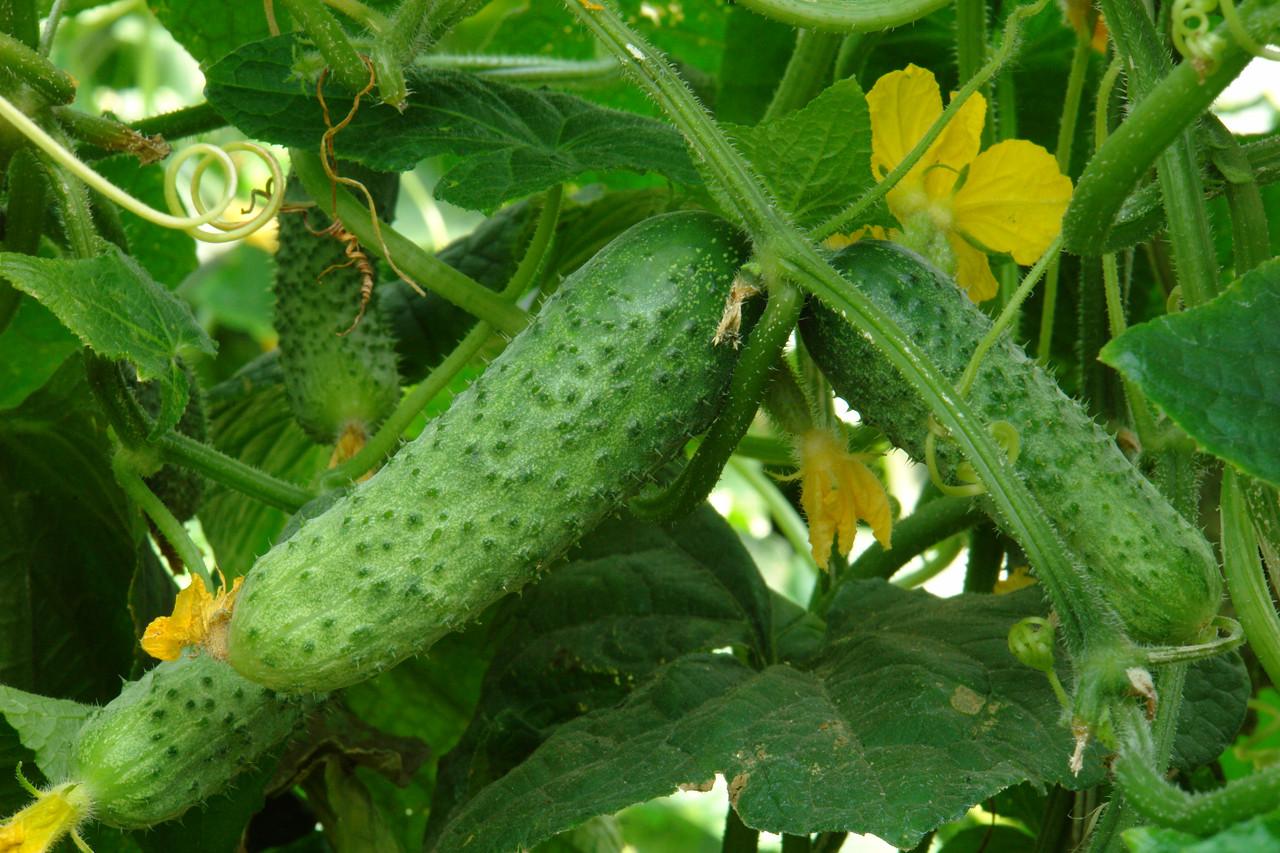
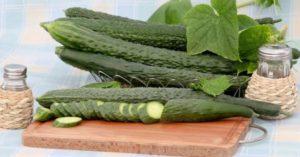
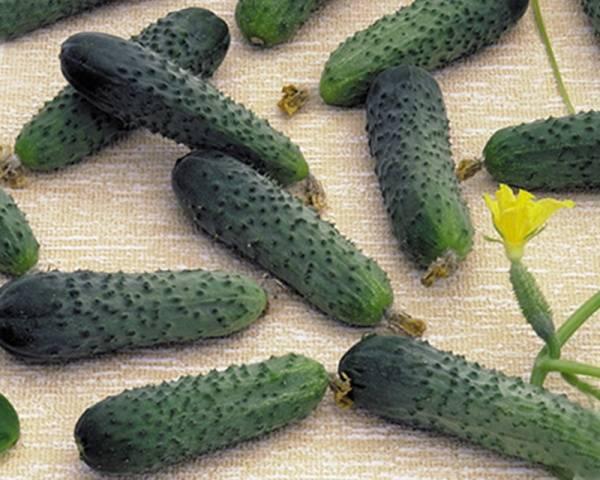
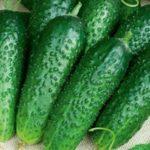
The length of the gherkins does not exceed 10 cm, and the diameter is 4. The surface of the cylindrical fruits is covered with tubercles and small light-colored spines.
Dark green cucumbers have crispy flesh, are not bitter, do not change their rich color after ripening, do not overgrow, and retain a pleasant taste.
Self-pollinating hybrid is not affected by:
- powdery mildew;
- stem rot;
- viral mosaic.
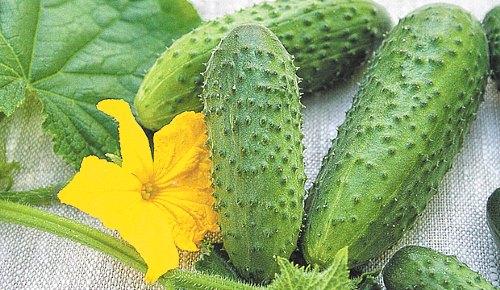
The Meringue variety tolerates mild frosts and moisture stress. The smooth, nearly uniform-sized gherkins begin to ripen 36 days after germination. The cucumbers retain their attractiveness during transportation and produce a high yield. These characteristics have attracted the attention of farmers who grow vegetables for commercial use.
Advantages and disadvantages of cucumber
The Meringue hybrid boasts high productivity, even in climates not ideal for cucumbers. It inherited many positive qualities from its relatives, including:
- immunity to diseases;
- excellent yield;
- early ripening;
- pleasant taste of cucumbers;
- absence of bitterness.

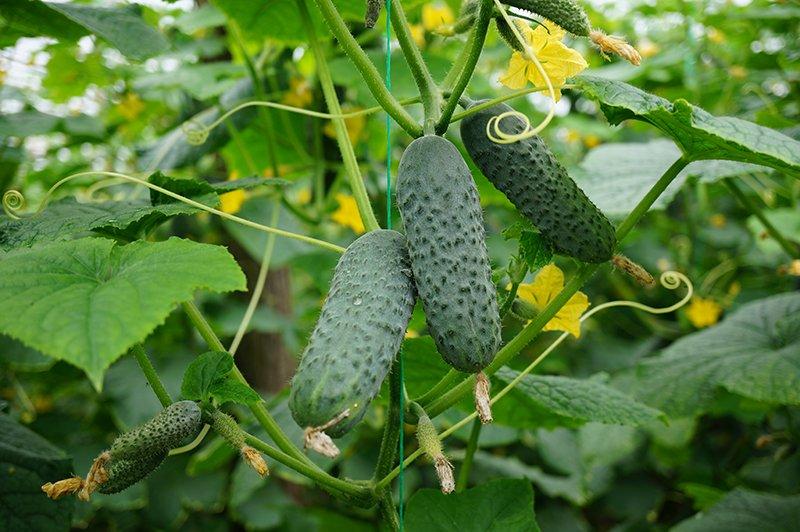
For gardeners who grow cucumbers in a greenhouse, it's especially important that the plant doesn't need bees or pollination. A one-square-meter plot yields 12–15 kg of gherkins, which are suitable for pickling and look great in a jar.
Like all cucumbers, the Meringue hybrid is very demanding of heat, but judging by the description and reviews of gardeners, this is its only drawback.
Features of planting and growing
It is entirely possible to harvest a large number of even and beautiful cucumbers if you provide them with optimal conditions for development.
Soil requirements
The Meringue hybrid thrives in light, loamy soil. In open areas, plants should be protected from drafts and planted in full sun. Acidic soils can be amended with lime and dolomite flour. Heavy soils can be amended with sand.
Seed preparation
It's impossible to harvest seeds from hybrid cucumbers. Seeds must be purchased annually, preferably from reputable sellers. Meringue cucumber seeds have a germination rate of 85–90%. Before planting, however, it's a good idea to remove any empty seeds by soaking them in a salt solution for 10 minutes. Store-bought cucumber seeds typically don't require hardening or disinfection, but if they aren't green or orange, they should be disinfected with potassium permanganate and soaked in a growth stimulant. Colored seeds don't even need to be soaked.
Direct seeding
In southern regions, the soil warms up to 15-16 degrees Celsius by late April, and cucumbers can be planted in the ground at this time. This work should be completed by mid-May, before the hot weather sets in. To prevent the seedlings from freezing, the bed is covered with plastic film, which is removed after two weeks. The hole in which the cucumber seeds are placed is no deeper than 40 mm, with a spacing of 70 cm between rows.
Planting seedlings
A little earlier, you can sow the seeds in cups or peat pellets. Since cucumbers have very delicate roots, and to avoid damaging them during transplanting, it's recommended to grow one plant per pot. To ensure strong seedlings:
- The seeds are placed in a loose substrate.
- Water carefully.
- They are fed with ash.
- Provide good lighting.
It's best to plant mature cucumbers in the evening, but harden them off for a few days beforehand. It's best to plant the Meringue hybrid plants in the same places they previously grew:
- legumes or green manure;
- cabbage or root vegetables;
- onion and garlic.
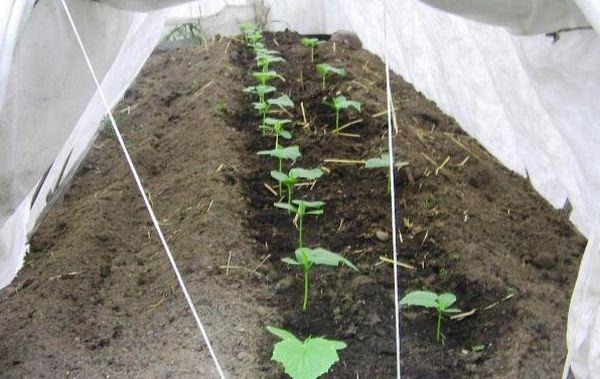
Cucumbers are watered generously, and long vines are tied to supports. Trellis and horizontal planting techniques are used for planting.
We organize proper care for the plant
In an open area, the Meringue variety receives sufficient sunlight. In a greenhouse, cucumbers require additional lighting during the morning hours. With proper care, the plant produces a large number of fruits.
Watering
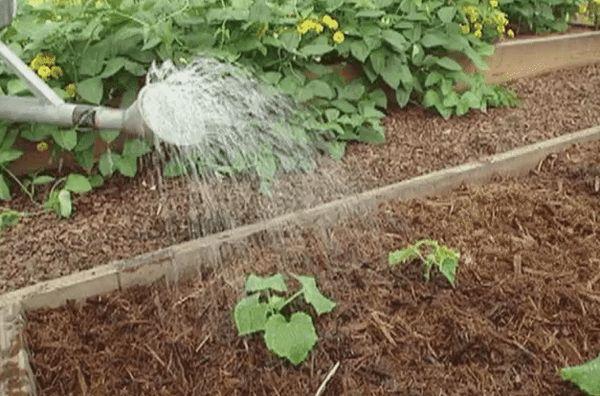
Cucumbers love moisture, but if it's too much, the leaves will change color and branches will stop growing because oxygen supply is reduced. Water the plants 2 or 3 times a week with soft, sun-warmed water. In hot weather, water them every morning or evening. In cool, damp weather, watering is not necessary.
Top dressing
When the first three leaves appear, cucumbers are fertilized with nitroammophoska or urea, which contain nitrogen. During flowering, dissolve 15 grams of potassium sulfate in a bucket of water and water the bushes. Once the cucumbers begin to ripen, feed the plants with mineral complexes once a week. Meringue cucumbers respond well to organic matter, such as bird droppings and mullein.
Bush formation
In a parthenocarpic hybrid, the ovary is formed on the main stem, in the axil of each leaf, but not all of it will develop into fruit, and the plant must be shaped:
- Cucumber bushes are attached to a horizontal trellis 14 days after planting.
- The main stem is tied up and the top is pinched.
- Remove tendrils and lateral shoots.
- The remaining branches are pruned up to the third leaf.
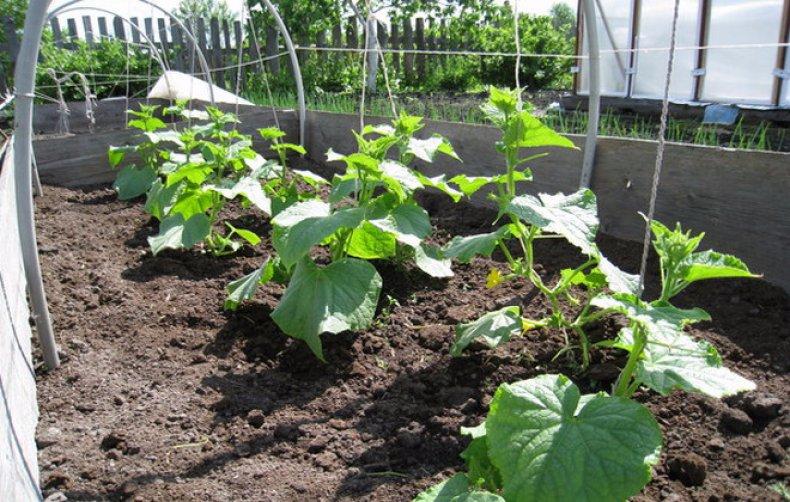 With proper plant training, ovary drop is reduced, and cucumbers don't suffer from nutrient deficiencies. A large number of cucumbers form and ripen.
Loosening and weeding the beds
Two weeks after sowing, thin out the cucumber seedlings, and simultaneously remove weeds. Watering and rain can clog the soil, preventing air from reaching the cucumbers. Loosen the soil both near the plants and between rows, but do so carefully to avoid damaging the roots located close to the surface.
Preventive treatment against diseases and pests
Meringue cucumbers are resistant to powdery mildew, but are not immune to anthracnose, which causes yellow spots on the leaves and the plant to die. Treatment with fungicides helps prevent the disease.
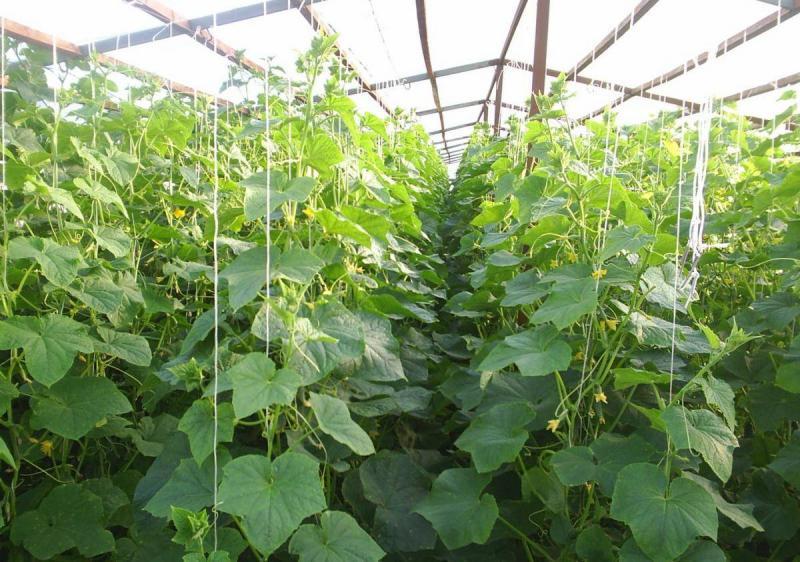
In high humidity, as seen in greenhouses, cucumbers develop slime. Plants affected by white rot are pulled out, and healthy ones are sprayed with Bordeaux mixture. Temperature imbalances or damp weather activate the fungi that cause anthracnose. Curing cucumbers of this disease is very difficult; fungicides are used to prevent bitter rot.
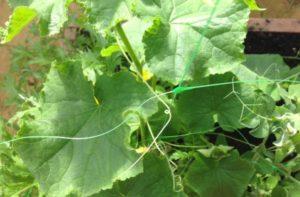
The Meringue variety, grown in an open bed, attracts spider mites. The whitefly lays eggs inside cucumber leaves, from which the larvae emerge and suck the juice. These pests are controlled with insecticides.
To deal with the mole cricket that gnaws at the roots of cucumbers, I spread treated seeds between the rows.
Harvesting and storage
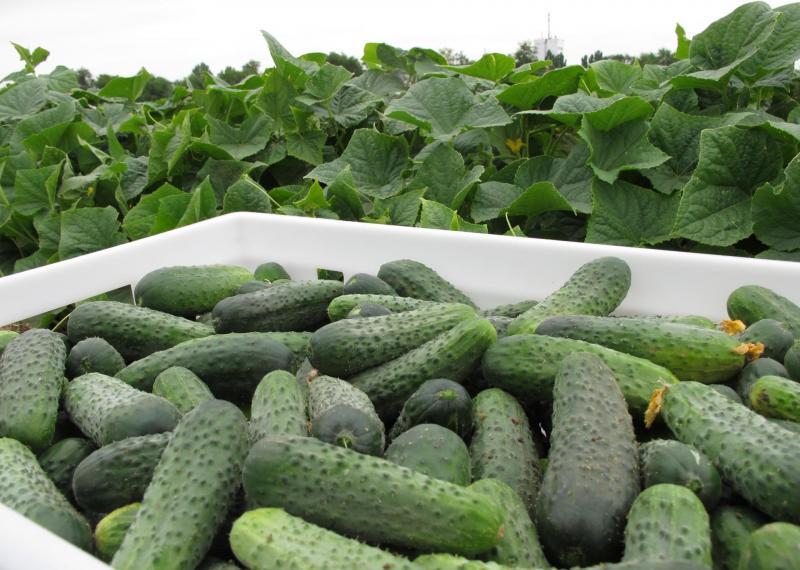
The cucumbers are picked every 3 or 4 days. Although the fruits don't overgrow or turn yellow, they still take away nutrients from the plant, which are essential for the formation of new cucumbers. Gherkins are salted or pickled, stored fresh for 2-3 weeks in a cool place.
Gardeners' reviews of the Meringue variety
Dutch cucumbers are popular with gardeners, farmers grow them for sale, and summer residents are attracted by their excellent taste and small size.
Petr Timofeevich, 56, Tula: "I'd like to share my impressions of the Merengue cucumber variety. I'm not a big fan of hybrids, but I planted some in the greenhouse this spring and haven't regretted it. I didn't take much care of the plants, but I did water them and fertilize them a few times. I harvested them until fall. There were no gaps in the cucumbers, the cucumbers were uniform in size, and they didn't overgrow, even if I didn't pick them in time. My wife pickled some of the gherkins, and we tried them—we really liked them."
Ekaterina Evgenievna, 42, Volgodonsk: "I've been growing vegetables in my garden for a long time, and I sell some of them. I've been planting Meringue cucumbers for four seasons now. They consistently produce a good harvest and are suitable for pickling and preserving. The cucumbers retain their attractive appearance for a long time, don't spoil, and store well. These cucumbers sell out quickly at the market."
Related posts:
 Description of unusual methods for planting and growing cucumbers
 Description of the best varieties of Chinese cucumbers, planting, growing and care
 TOP 30 best determinate cucumber varieties with descriptions
 How to care for cucumbers in open ground from planting to harvesting
 Description of the best varieties of bee-pollinated cucumbers, rules for their formation and care
 How to properly plant cucumbers in open ground with seeds, and at what depth
 How to plant cucumbers in open ground under film: timing and cultivation technology
 How to properly plant cucumber seedlings in a greenhouse and care instructions