
Treatment of cucumbers with whey and iodine This is the choice of staunch opponents of chemicals and savvy gardeners who combine industrial preparations with the beneficial properties of natural products. Both approaches achieve good results. When applied correctly, iodine and whey will provide cucumbers with essential nutrients and reduce the risk of infection.
Advantages and disadvantages of iodine and whey supplementation
Whey is obtained during the production of cottage cheese from whole milk or during home (industrial) cheesemaking. It is a pale yellow liquid consisting of 93% water and 7% dry matter.
They are presented:
- lactose;
- peptides;
- immune globulin;
- minerals.
Minerals—potassium, phosphorus, zinc, and iron—are essential for cucumbers and tomatoes. Therefore, whey can be classified as a natural fertilizer.
The advantage of this processed product is its low cost and absolute safety for human health and the beneficial microorganisms living in the upper soil layer. Gardeners have praised the whey as a mild natural fungicide. Its acidic environment inhibits the activity of pathogens and harmful insects.
Serum-based solutions are used to prevent various fungal diseases. Iodine has insecticidal properties and inhibits viruses, fungi, and bacteria. This natural element helps cucumbers recover and improves their immunity.
It's important to use this dairy product wisely. Its high acidity should be taken into account. Without a systematic approach, applying liquid lactic acid to the roots can increase soil acidity.
Foliar application of lactic acid compounds can easily harm cucumbers if the fertilizer (medicinal) solution is too concentrated. An overdose of iodine can kill the plant, becoming a poison instead of a protector and healer.
Action of the solution
In summer, the weather often deteriorates. Cold temperatures and increased soil and air humidity caused by prolonged rains weaken cucumbers' immune systems, creating favorable conditions for pathogen proliferation.
The whey's starter microflora and the product's acidic environment inhibit fungal growth. The microelements in the product replenish nutrient deficiencies in the soil. A whey solution with added iodine and other ingredients is used for prevention and treatment of powdery mildew on cucumbers and tomatoes.
In what cases is it used?
Cucumbers can be fertilized only after 10-14 days of root transplantation. Until then, the roots do not absorb nutrients. In poor weather, seedlings can be fed with whey diluted with water and iodine.
A sudden cold snap can trigger a powdery mildew outbreak in your garden. To prevent this, spray your plants with the following solution:
- copper sulfate - 1 tsp;
- water - 7 l;
- whey - 3 l.
This composition protects cucumbers from powdery mildew. It is recommended to include it in August treatments to prolong fruiting. It is recommended to reduce watering to a minimum and treat the plants with a warm (25°C) solution of azophos if a white coating appears on the leaves.
Solution recipes
The solutions for treating and supplementing cucumbers are simple, but require strict adherence to proportions. An overly concentrated solution can form an excessively thick film on the leaves. It will not only slow down the reproduction of pathogens, but also stop the development of the cucumber itself. The proportions of whey for spraying cucumbers and seedlings may be different.
For feeding cucumbers
With sharp fluctuations in daily temperatures, heat-loving cucumbers begin to turn yellow. A folk remedy can help with yellow leaves:
- kefir - 2 l (can be replaced with yogurt);
- water - 10 l;
- everything is thoroughly mixed and poured into a sprayer.
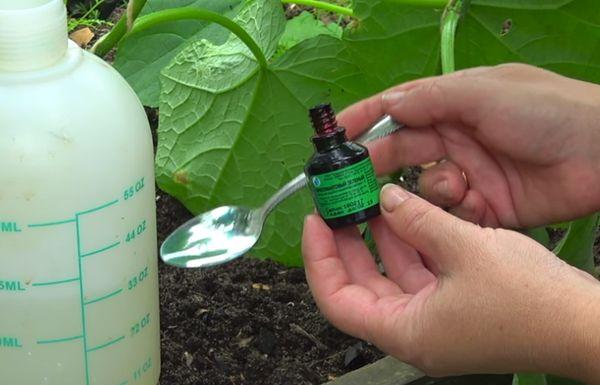
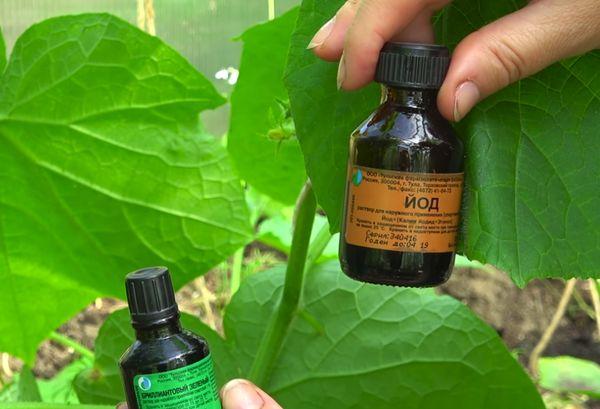
A healing and nourishing lactic acid mixture for yellowed cucumbers can be prepared in a different way. Take 1 liter of whey and dilute it in 10 liters of settled water. Stir in 20 grams of laundry soap (shavings), and add 20 drops of iodine.
To stimulate the development of vegetative mass, healthy cucumbers can be fed at the roots once every 2 weeks with the following composition:
- water - 5 l;
- iodine - 12 drops;
- whey - 500 ml.
Before fertilizing the bushes with whey, water them generously with warm water (10 l/m²). The same mixture can be added to plant compost. The whey accelerates the decomposition of biomass and enriches the compost with beneficial microelements. Any root feeding can harm cucumber seedlings before they establish rooting after planting, burning the young, weak root system.
When preparing a fertilizer mixture, pay attention to its concentration. For root application, a 10:1 ratio of water to whey is recommended. For foliar application, a 3:1 ratio is more suitable.
Soap is added to water as an adhesive. It creates a thin film on the leaves and stems. This helps the solution adhere to the surface, increasing its effectiveness. The health and productivity of cucumbers directly depend on soil fertility. This is enhanced with an infusion based on natural ingredients.
First, prepare the yeast infusion. Dissolve one packet of fresh yeast (or less) in 3 liters of warm water and let it steep for 3 days. Fill a large 200-liter barrel with water, pour in the mash, and add the remaining ingredients:
- ash - 1 shovel (bayonet);
- manure - 5-6 kg;
- vegetable compost - 1 bucket;
- earth - 1 shovel (bayonet);
- whey - 1 l.
Mix all ingredients thoroughly (2-3 times). Leave the barrel alone for a week. Dilute the fermented solution with water exactly halfway before applying it to the cucumber beds.
To protect cucumbers from diseases and pests
Cucumbers can be attacked by pests at any time. Traps are set in cucumber beds to prevent caterpillars and other crawling and flying insects. Small containers are filled two-thirds full with whey and placed between the plants in the evening. The pests will crawl into the traps overnight. They can be quickly destroyed in the morning.
In case of powdery mildew symptoms, cucumbers are given emergency aid with the following composition:
- water - 1 l;
- brilliant green - 1 ml;
- urea - 25 g;
- whey - 500 ml.
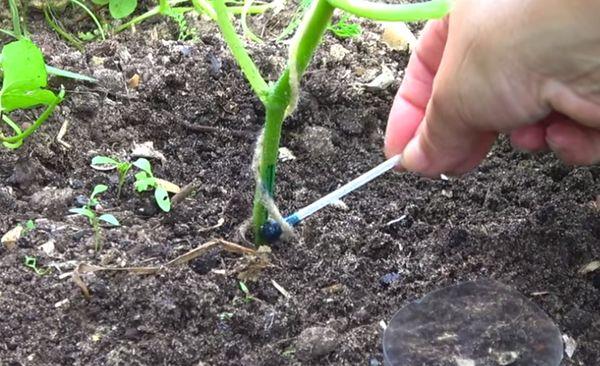
Diseased leaves and stems are cut out, and the cuts are sprinkled with crushed activated charcoal. Healthy parts of the plant are thoroughly sprayed. This composition inhibits fungal growth, stimulates the formation of new leaves and shoots, and supports the immune system.
Rules for processing cucumbers with whey and iodine
For preventative purposes, it's recommended to apply cucumber serum to greenhouses and open ground cucumbers no more than three times per summer. Allow 7-10 days between applications. When preparing the solution, remember to dilute the serum with warm (23°C) water. It's recommended to water 30-50 cm from the stem, rather than directly at the roots.
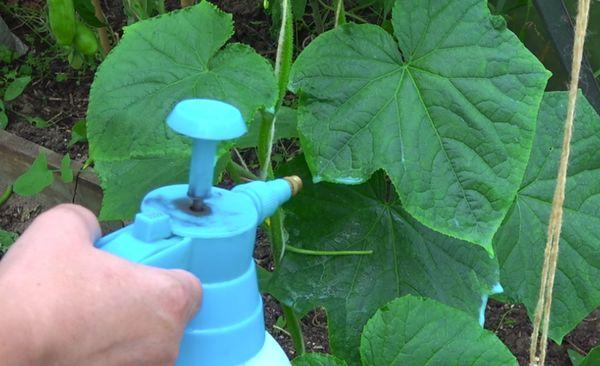
The solution can be applied to the foliage in cloudy weather or in the morning (evening) when the sun is not at its zenith. Spraying the leaves in the middle of the day can cause leaf burn.
In a greenhouse, it's best to spray foliage in the morning. Evening treatments in enclosed spaces are not recommended. Nighttime temperatures are lower than daytime temperatures. Humidity in the greenhouse increases, leading to condensation. This creates favorable conditions for the development of rot, downy mildew, and powdery mildew.
Precautionary measures
Even the simplest method has its own peculiarities. Here are some tips to consider when using fermented milk products to nourish and treat cucumbers:
- let the water for the working solution stand for 24 hours, if necessary, heat it up to 23-24 °C;
- take only fresh fermented milk products that have not been heat treated;
- do not exceed the recommended proportions;
- Use the working solution on the day of preparation; pathogens may develop in it during storage.
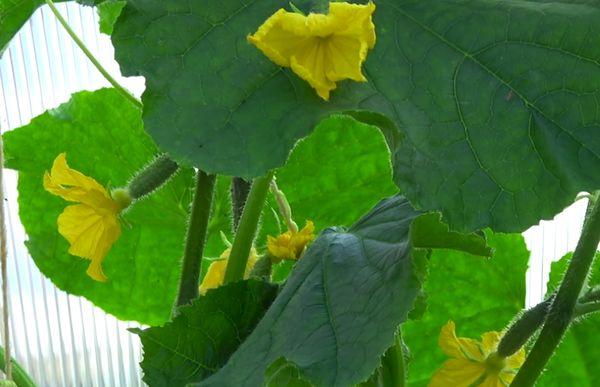
The beauty of any fermented milk product is that it can be used at any stage of cucumber development, even during flowering. Its natural composition is completely safe for bees and other insects that pollinate cucumber flowers.
The key for any gardener is to properly prepare the solution and alternate different types of fertilizers throughout the summer: lactic acid, organic, and mineral. This smart approach will certainly impact cucumber yield, the quality and flavor of the fruit, and the health of the soil.
Related posts:
 Description of unusual methods for planting and growing cucumbers
 Description of the best varieties of Chinese cucumbers, planting, growing and care
 How to make a cucumber trellis with your own hands from scrap materials
 How to properly plant cucumbers in open ground with seeds, and at what depth
 How to care for cucumbers in open ground from planting to harvesting
 Is it possible to soak treated cucumber seeds before planting and how to do it correctly?
 Instructions for using whey in the garden and how to spray it
 How to properly plant cucumber seedlings in a greenhouse and care instructions