
The use of pesticides in crop production helps combat diseases, but at the expense of the quality of the produce. Producing an environmentally friendly harvest is the essence of modern farming. Brilliant green, commonly known as zelenka, is a decades-tested treatment for cucumber diseases, while iodine combats late blight and protects against fungal diseases. These antiseptics do not "poison" the crop and effectively protect vegetables from diseases.
Why do you need to treat cucumbers with iodine and brilliant green?
The bactericidal effects of brilliant green and iodine are well-known to everyone since childhood. They have the same effect on plants. Treating cucumbers with brilliant green and iodine is essential for harmonious plant growth and increased resistance to microbes and bacteria. Mixing the two compounds enhances the antimicrobial effect.
Benefits of iodine
Proper nutrition and disease protection are essential for a good vegetable yield. Feeding cucumbers and other vegetable crops with iodine is a proven method used by experienced farmers. Iodine solution is used at different stages of cucumber growth:
- Pre-sowing seed treatment. During the germination period, it's important to protect the seeds from pathogenic bacteria. It's recommended to soak cucumber seeds in a weak iodine solution before planting. Iodine promotes rapid seed germination by accelerating metabolic processes within the seed.
- Spraying seedlings with an iodine solution restores leaf tone, enriches the plant with microelements, and revitalizes wilted foliage.
- During the flowering period. Stimulate fruit set and activate flowering by spraying cucumbers with iodine concentrate. Enhance root growth by watering the bushes daily with a weak aqueous iodine solution. During this period, root feeding of cucumbers is most effective, providing the plants with essential minerals.
- During the fruiting period. Cucumbers' fruiting period is extended, and the fruits are less susceptible to rot and have a longer shelf life.
- At all stages of growth. Bactericidal and antiseptic action when watering and spraying the tops. Pests are also discouraged from eating fruits and leaves soaked in iodine.
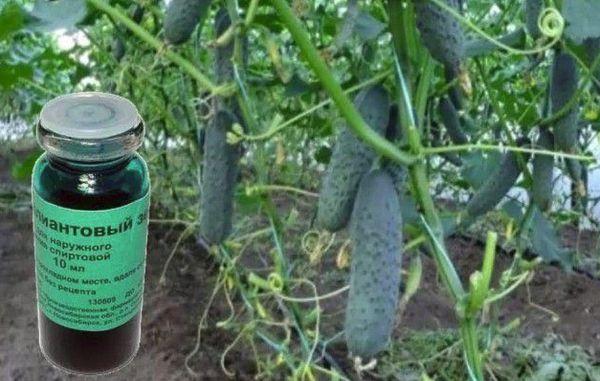
Iodine can save cucumbers from diseases such as:
- downy mildew;
- root rot;
- powdery mildew;
- late blight;
- May beetle larvae.
Using iodine in cucumber care is justified. Farmers simultaneously treat the plants for diseases such as late blight, powdery mildew, gray mold, and other infectious diseases, while also fertilizing the plants with minerals essential for growth, abundant flowering, and fruiting.
What are the benefits of brilliant green?
Brilliant green has the same beneficial effects on vegetable crops as iodine. Mixing these ingredients increases the antimicrobial effect. Fertilizing the soil with brilliant green is also recommended to improve the soil's nutritional value.
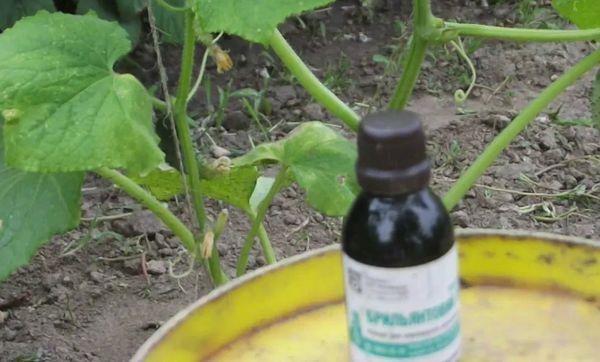
An additional benefit of brilliant green is its copper compounds. Using brilliant green boosts plant immunity, making them more lush and attractive.
Green stuff fights the following cucumber diseases:
- powdery mildew;
- yeast fungus;
- bacterial cancer;
- root rot;
- late blight.
You can improve the commercial quality of cucumbers by watering the plants with a solution of brilliant green. The fruits will become brighter and more saturated in color.
In what cases to apply
Cucumbers are demanding, heat-loving plants susceptible to a wide range of diseases. All parts of this vegetable crop are susceptible to infection. Let's look at the diseases that can harm these plants and can be controlled with natural antiseptics: iodine and brilliant green.
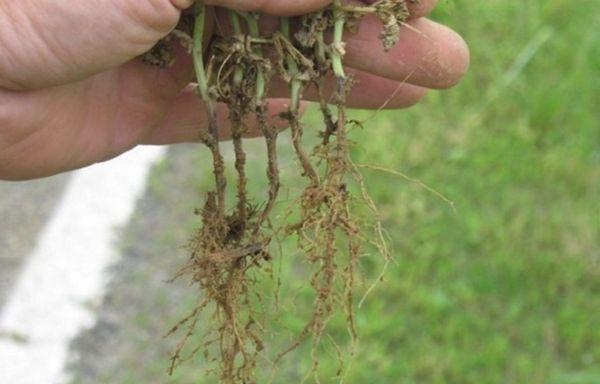
Root rot
This disease is primarily caused by fungi of the genus Fusarium. It is relentless and attacks plants at any stage of development. Causes of root rot include: excessive soil and air moisture, fluctuations in ambient temperature, and poor ventilation in greenhouses, especially those covered with polycarbonate.
Root rot is a persistent disease that can persist in the soil for several years.
A solution of iodine and brilliant green is a proven method for combating this disease. Recipe:
- a bucket of water (10 liters);
- iodine and brilliant green in a 2:1 ratio (20 drops of brilliant green and 10 drops of iodine).
Apply the resulting solution directly to the cucumber stems, from the ground to the leaves, over a 15-centimeter section. This treatment should be used no more than once a week. Results will be visible after three applications.
Powdery mildew
This disease is the most common cucumber ailment and can reduce the expected yield by half. It begins with the appearance of white or slightly reddish spots on the underside of the leaf, then spreads rapidly, and eventually the entire cucumber vine is covered with a white, rough coating. The culprit is a fungus that begins to feed on plant juices.
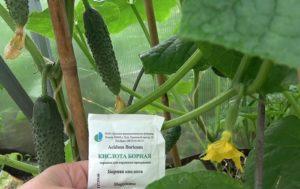
To provide first aid to cucumbers, use this recipe: dissolve 5 milliliters of brilliant green in 8 liters of water and add 2 liters of milk. If using iodine, 1 drop of iodine and 1 liter of milk per 8 liters of water is sufficient. Spray the entire cucumber tops every 5 days until signs of the disease disappear.
White rot
This dangerous disease is caused by sclerotia fungi. Symptoms can appear on any part of the plant and at any stage of growth, from seedlings to fruiting. White, cotton-like growths can completely cover the plant, sapping its vitality.
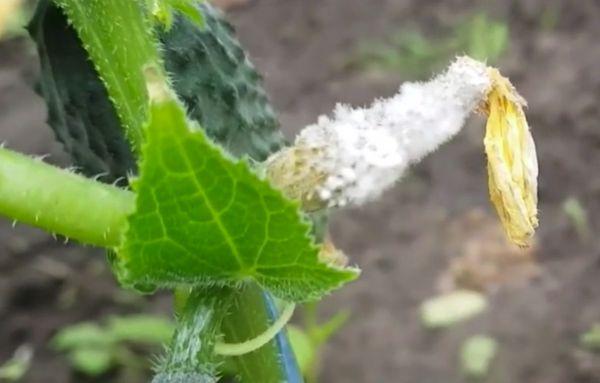
A solution of brilliant green will help combat the disease. Add 40 drops of the natural antiseptic to 10 liters of water. Spray the cucumber vines with this solution every week. For greater effectiveness, it is recommended to water the soil under the cucumbers with the same solution.
Zelenka against late blight
Late blight is the scourge of plants in the nightshade family: potatoes, cucumbers, and peppers. It can spread from cucumbers to other crops. Late blight is a fungal disease, and control must begin immediately.
With this disease, brilliant green and iodine can only help in the early stages. If the disease has spread to the fruit, chemical treatments are necessary. Treatment with natural antiseptics is the same as for white rot.
Gray rot of cucumbers
The fungus Botrytis cinerea is the cause of gray mold on cucumbers. By parasitizing the plants, it drains them of all vitality. Cucumbers wilt, stop growing, and die. The infection begins to spread from the leaf axils. Brown spots of various shapes then appear on the outer surface of the leaf. The next stage is stem rot and fruit infection.
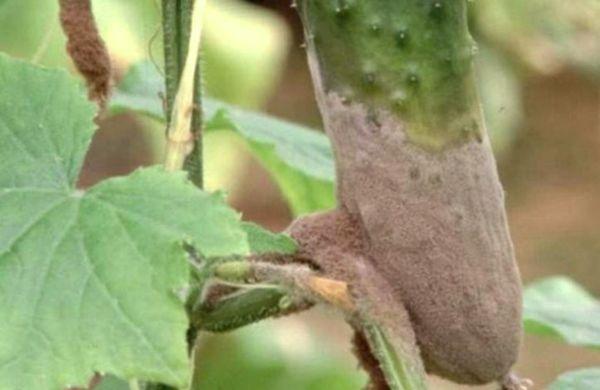
Baking soda is often used to combat this disease. However, iodine and brilliant green are also effective treatments. Add 3 drops of iodine and 10 drops of brilliant green to 10 liters of water. Spray the entire plant, repeating the procedure every five days.
How to treat cucumbers with brilliant green and iodine
Cucumber treatment is tailored to the type and severity of the disease. It's best to start with prevention—treating seeds, seedlings, and soil before planting, watering, and spraying mature plants. The dosage and treatment method are adjusted at each stage.
The main rule is not to make a mistake with the concentration of the preparation and not to burn the cucumber leaves. It's important to remember that greenhouse plants are exposed to toxic fumes. Iodine and brilliant green, added to the soil in the right proportions, act as fertilizers for vegetable crops. Treatment options:
- spraying the wickerwork with an aqueous solution of iodine or brilliant green - foliar feeding;
- coating the stems with an aqueous solution;
- watering the beds – root feeding;
- soaking seeds in an aqueous solution with iodine or brilliant green before planting.
If you follow the dosage, frequency of treatments, and take preventative measures, most diseases can be avoided, and you won't have to spray your vegetable crops with pesticides.
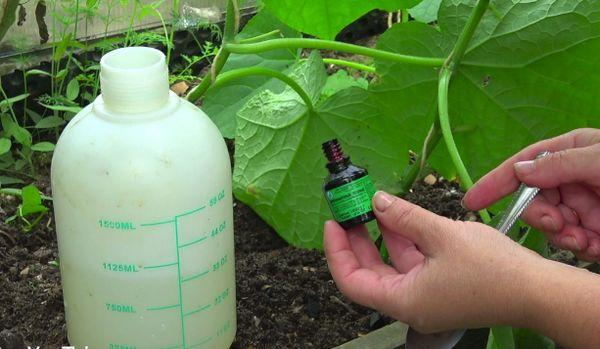
Possible errors
Treating plants against pests and infections is a necessary step in crop care. Folk remedies should be used judiciously. A novice farmer can make a number of mistakes. To avoid them, follow these guidelines:
- adherence to dosage: 1 drop of brilliant green per 1 liter of water, 1 drop of iodine per 3 liters of water;
- You need to spray the plants early in the morning or late in the evening to prevent the sun's rays from burning the cucumber leaves;
- Before watering the soil with a medicinal solution, it must be additionally irrigated;
- Before planting seedlings in the ground, the soil is watered with a natural antiseptic as a preventative measure.
Overdoing antiseptic treatments is also a bad idea. Excessive fumes from aqueous solutions containing iodine or brilliant green, whether indoors or outdoors, will cause harm and make the environment overly sterile: cucumber leaves will begin to dry out and turn yellow.
Related posts:
 How to properly feed cabbage with iodine and processing methods
 Why do you need to spray tomatoes with iodine? Recipes for feeding and treating them.
 How to spray cucumbers with milk and iodine for fertilization
 Can iodine be used as a fertilizer for peppers and what are the rules for processing it?
 How to treat cucumbers to protect them from diseases using folk remedies
 Description of unusual methods for planting and growing cucumbers
 How to care for cucumbers in open ground from planting to harvesting
 The best recipes for fertilizing cucumbers at home and rules for applying fertilizers