
Small (up to 10 centimeters) gherkins have become so popular with home cooks that special gherkin varieties have emerged, producing a dense, crunchy harvest in large quantities. The Parisian Gherkin cucumber is one of the most sought-after, productive, and easy-to-grow members of this family, and I'd like to tell you about it.
Main characteristics and description of the variety
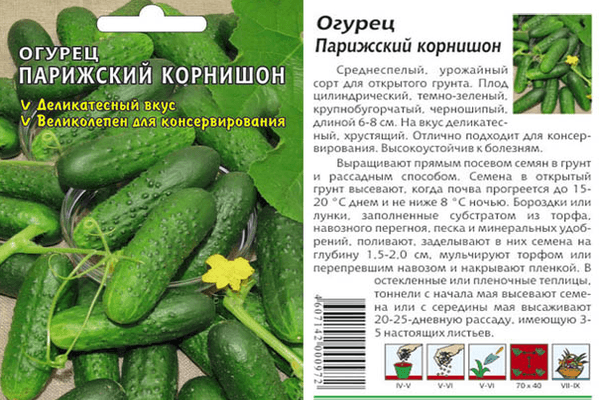
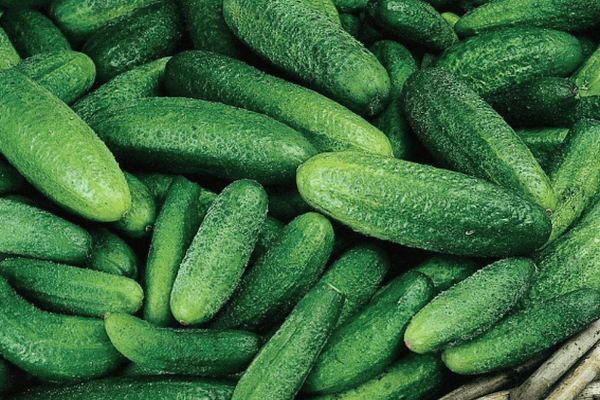
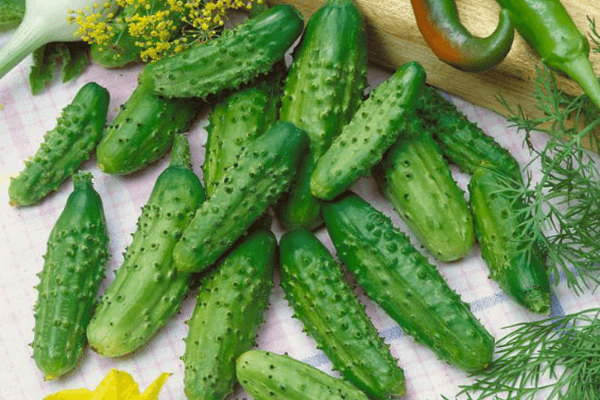
The Parisian Gherkin is an early-ripening cucumber variety intended for cultivation in the central regions of Russia. According to its description, it has a high yield (up to 4 kilograms per square meter of planting area) and is grown in greenhouses, hotbeds, and open ground. The fruits are firm, with a distinct flavor, small (6-10 centimeters), spindle-shaped, and richly green with large pimples.
This variety is bee-pollinated, requiring insects. The large number of female flowers ensures a good harvest. The fruits are bright green, slightly striped, and have large pimples. They are uniform in size. If not harvested in time, they do not grow in length, becoming larger and barrel-shaped.
They can be planted from seeds in open ground or grown from seedlings. They are suitable for canning and fresh consumption.
The advantages and disadvantages of the Parisian gherkin cucumber
The variety is popular among gardeners, grows well north of the central regions, and its undoubted advantages include:
- good yield and transportability of the variety;
- resistance to the main diseases typical for cucumbers (powdery mildew and downy mildew);
- cucumbers are not bitter;
- is a drought-resistant variety;
- simple cultivation techniques.
Disadvantages include:
- rapid overgrowth and "barreling" of fruits;
- need for support;
- the need for additional pollination when growing in a greenhouse or under film.
The advantages clearly outweigh the disadvantages, and the cucumbers have excellent taste and look good in jars.
Basic requirements for sowing
For cucumber beds, choose a sunny, fertile area; the plants do not do well in heavy soils.
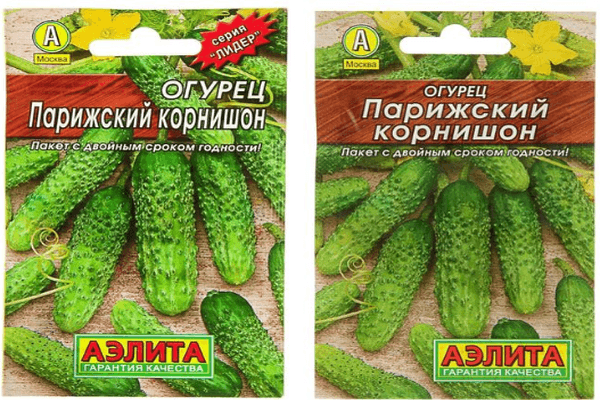
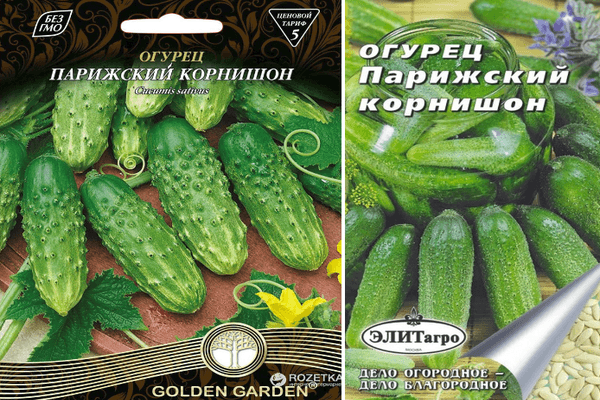
Important: If the seed packet is labeled "coated" or "granulated," it means they have been treated with pest control and a growth stimulant. These seeds germinate better and are more suitable for outdoor cultivation.
Planting dates
When sowing in a greenhouse, cucumbers should be planted in the 1st-2nd ten days of May; when planting in open ground, in the last ten days of May, early June.
The fruit ripening period is 40-45 days from the moment of emergence.
Selecting and preparing a site
For cucumbers, choose open, sunny areas generously fertilized with organic matter. No more than 3-4 plants should be placed per square meter. To make care easier, tie the plants to trellises. For a better harvest, create a raised bed.
Planting cucumber seeds
Granulated seeds do not require additional processing; they are sown directly into warm soil or peat cups to be placed in the garden bed without transplanting the seedlings, as cucumbers do not tolerate transplantation very well.
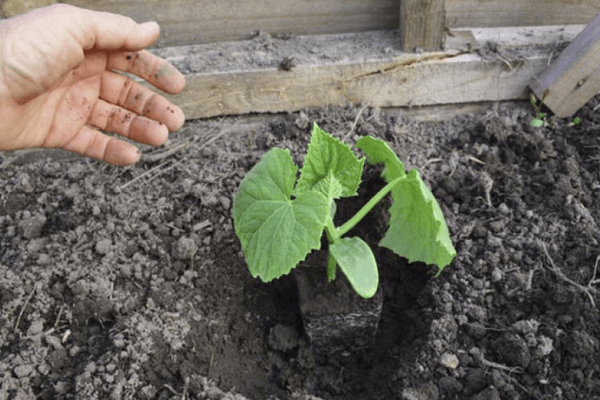
If the seeds were not purchased, but harvested independently (this is possible for this variety), they should be calibrated (pour the seeds into a container with water); large seeds with good characteristics will sink to the bottom of the container, while empty seeds will float.
Next, the selected seeds should be soaked in a solution of potassium permanganate or salt for 12 hours and then dried. To ensure proper germination, cucumbers are sometimes placed in wet cheesecloth until the first sprouts appear. The seeds are then planted in containers with soil, covered with glass or plastic, and placed in a sunny location, usually on a windowsill. After two pairs of leaves appear, the seedlings are moved to a greenhouse or open ground.
The best predecessors of cucumbers are tomatoes and legumes.
Nuances of plant care
Cucumbers require weeding, adequate watering, and regular fertilizing. Staking plants provides better ventilation and reduces disease risk. If gherkins are to be grown in a greenhouse (they thrive in polycarbonate greenhouses, where the plants receive sufficient warmth and light), they should be pollinated by hand, as the variety is not self-pollinating.
Top dressing
Parisian gherkins are first fertilized before flowering. Use chicken manure, urea, and superphosphate. Fertilize every two weeks thereafter. Cucumbers require light, well-drained soil, so they need to be loosened and weeded well.
Watering
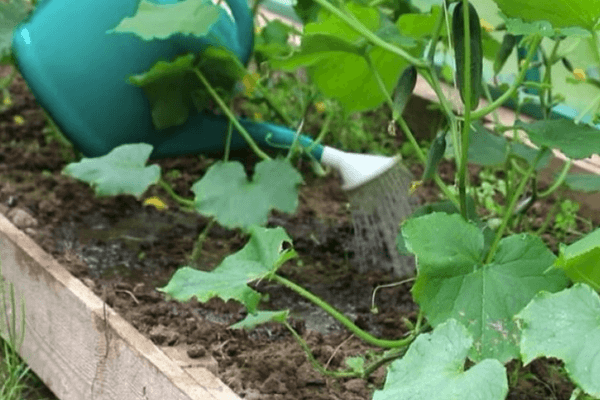
The Parisian gherkin requires regular watering, but it doesn't tolerate excess moisture as well as too little. In spring, water the beds every five days. The plant should be watered in the morning or evening, using room-temperature water. During flowering and fruiting, water every other day, using approximately 7 liters of water per plant. After watering, loosen the soil in the bed.
Diseases
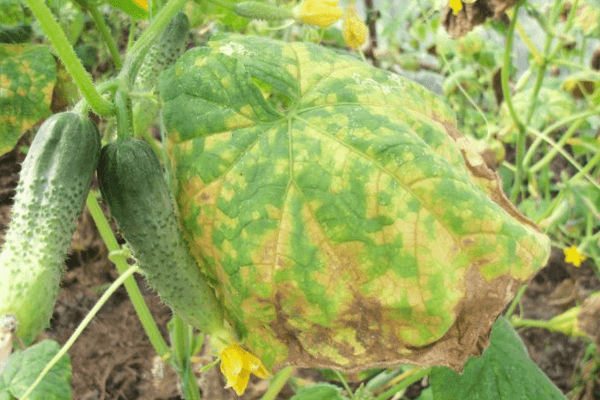
The variety is resistant to powdery and downy mildew, and with proper cultivation practices, it can be grown without the need for chemical sprays. Diseases that can affect the French gherkin include:
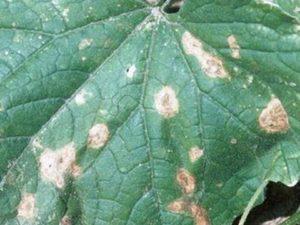
- Cucumber mosaic disease is characterized by the appearance of yellowish or white spots on the leaves. The leaves become thinner, the fruits slow down in growth, become deformed, and lose their marketable appearance. In this case, affected plants are destroyed, and the soil is disinfected with a bleach solution.
- Bacterial spot disease causes brown spots to appear on leaves and fruit. In this case, plants are treated with a solution of Bordeaux mixture.
- If powdery mildew is detected, plants are treated with suitable fungicides (for example, Kemifos), in accordance with the instructions.
Regular weeding and adjusted watering will minimize the risk of planting infection.
Pests
The main pests of cucumbers are:
- Aphids. To get rid of these pests, plants can be sprayed with garlic or red pepper infusion; gardeners often use celandine infusion. In severe cases, Intavir or Fitoverm can be used.
- The sprout fly is another pest that affects cucumbers. If it appears, spray the cucumbers with Kemifos or Fufanon.
To prevent aphids from appearing on your property, you need to monitor ant colonies and destroy the nest immediately after they appear.
Harvesting and storage
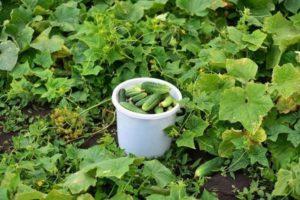
Cucumbers are harvested every other day; if harvested less frequently, they become lumpy and lose their marketable appearance. This variety is excellent for salads, fresh eating, pickling, and marinating.
According to gardeners, this variety is easy to grow in the garden thanks to its low maintenance, drought tolerance, and excellent taste and marketability. The jars of neat, crisp, and delicious cucumbers will delight any homemaker.
Related posts:
 Description of unusual methods for planting and growing cucumbers
 Description of the best varieties of Chinese cucumbers, planting, growing and care
 How to care for cucumbers in open ground from planting to harvesting
 How to make a cucumber trellis with your own hands from scrap materials
 Is it possible to soak treated cucumber seeds before planting and how to do it correctly?
 How to properly plant cucumbers in open ground with seeds, and at what depth
 How to properly plant cucumber seedlings in a greenhouse and care instructions
 Types of fungicides for cucumbers in a greenhouse and instructions for use