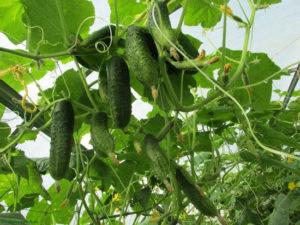
There are several reasons why green cucumber leaves wilt. Plants can dry out and die due to inadequate care, disease, and pests. Polycarbonate, which is used to cover greenhouses, can cause equally significant damage. Greenhouse cucumber wilting and its treatment largely depend on the underlying cause. Therefore, control methods are selected based on the specific cause of leaf death.
Why do cucumber leaves wilt in a greenhouse?
The following factors can cause cucumbers to wilt:
- insufficient watering;
- nutritional deficiency;
- failure to comply with landing rules;
- infectious or fungal diseases;
- pests;
- treatment with chemical reagents;
- unfortunate location in the garden bed.
Cucumbers are recommended to be planted in a well-lit area. However, in some cases, this location can cause the plant to wilt.Excessive sun combined with open, sandy soil will cause the crop to turn yellow early. This is because moisture evaporates quickly under these conditions.
An equally likely reason why healthy cucumbers in a greenhouse wilt is the treatment of the plant with aggressive chemicals.
To avoid such consequences, it's recommended to control pests by covering the crop with plastic. Cucumbers also become wilted due to excessive fertilization. Fertilizing should be done sparingly. Cucumbers can also die if planted next to zucchini or tomatoes. Therefore, it's recommended to plant seedlings in a separate bed.
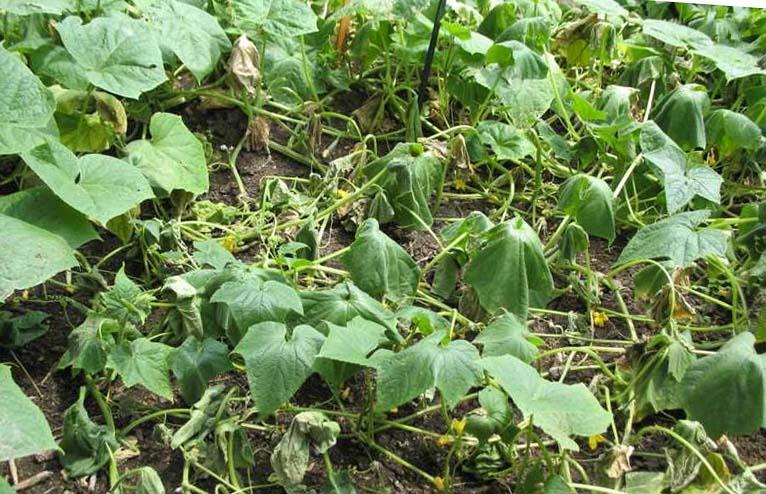
Improper care
Fruit buds and leaves can dry out due to under- or over-watering. Excessive moisture promotes fungal infections, which cause characteristic spots on the plant. Similar consequences occur if cold water is used for irrigation. To avoid these consequences, it is recommended to moisten the soil under cucumbers every other day during hot weather.
Take a look Also
Nutritional deficiencies
During flowering and active growth, the plant requires regular fertilization. A lack of nutrients (especially in densely packed plantings) can lead to premature wilting. To prevent this, it is recommended to thin the seedlings before fruiting begins or increase the frequency of watering and fertilization. It is important to remember that excessive fertilization will prevent cucumbers from producing fruit.
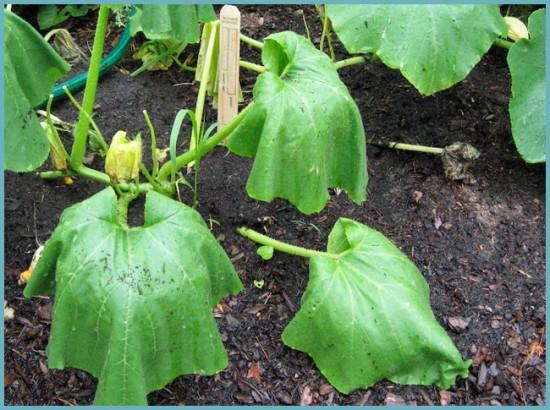
During the flowering period, leaves wilt due to a boron deficiency in the soil. A lack of this element will cause fruit buds to fail, leading to reduced yields. During this period, it is recommended to support the plant by treating the leaves with a boric acid solution (0.2 grams of powder per 10 liters of water).
Diseases
The following factors contribute to leaf wilting:
- Root rot. Affects the lower part of the plant.
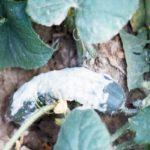
- White rot. Affects leaves and stems, causing early death of the crop.
- Fusarium wilt. This disease, which causes tracheomycotic dieback of plants, is characterized by early wilting of the apical leaves and rotting of the stems near the roots.
- Powdery mildew. The main symptom of the disease is white spots on the surface of the leaves.
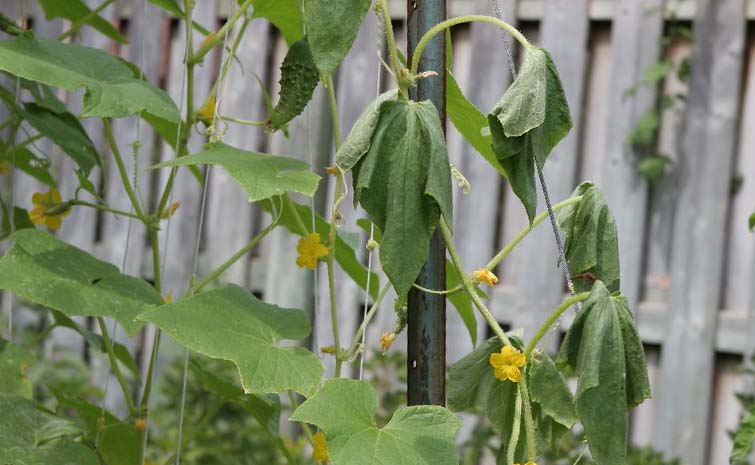
To avoid infection, it is recommended to provide sufficient (but not excessive) watering and regularly treat the crop with fungicides.
Pests
Early leaf wilting can be caused by mites and aphids. The former typically infest the upper parts of the plant, while aphids tend to concentrate on the undersides of leaves.
A folk remedy made from a mixture of soap, baking soda, and water helps protect cucumbers from pests.
Insecticides are also used to control insects, but they are not recommended for use during the fruiting period.
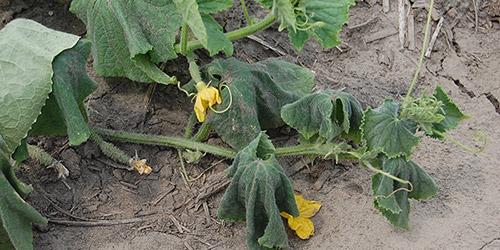
How to find out why cucumber leaves are wilting?
Micronutrient deficiencies (particularly manganese and iron) are indicated by yellow veins forming on the leaf surface. If this problem occurs on young shoots, it indicates a copper deficiency. Yellowing of leaf edges is typical of potassium and magnesium deficiencies.
If cucumbers are underwatered, their roots will appear on the surface. If they are overwatered, the leaves will first turn yellow and then rot. Diseases can cause characteristic white or other colored spots to appear on the shoots. The color of these spots can help identify the type of infectious disease affecting the plant.
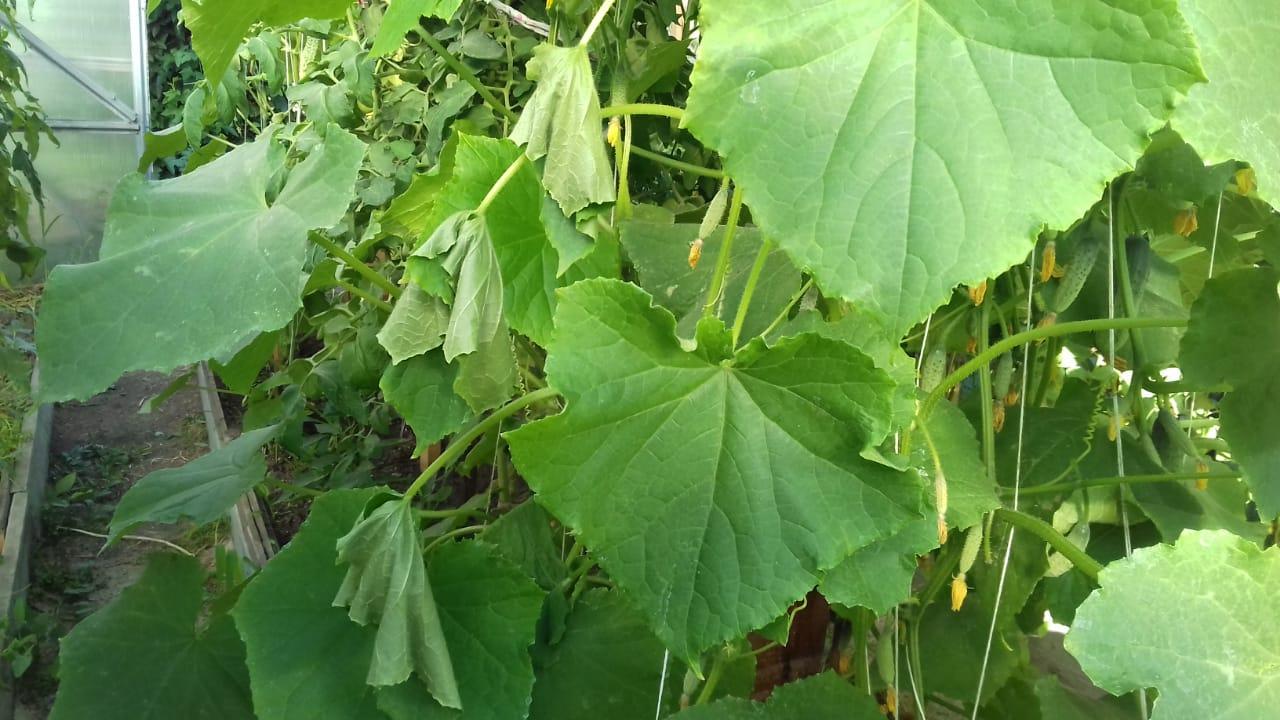
How to help cucumbers?
To determine what to do with cucumbers, it's important to rule out all possible causes of premature leaf wilting. If the problem is due to improper care, it's recommended to adjust the amount and frequency of watering (increase or decrease) and add mineral fertilizer to the soil.
Fungal diseases must be treated with chemical mixtures:
- Planriz;
- Trichodermin;
- Previcur;
- Metronidazole and Streptomycin (used in advanced cases).
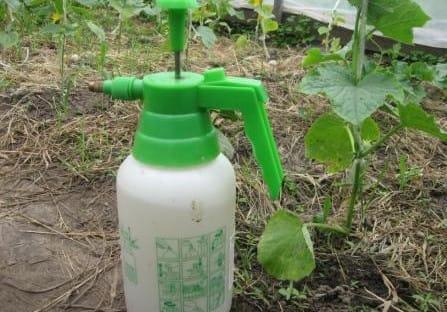
Insecticides help control aphids and other pests:
- Kinmix;
- Arrow;
- Actofit;
- Fitoverm and others.
In severe cases, it is recommended to remove the affected plant from the garden to prevent the disease from spreading to healthy crops. Herbicides should not be used when treating cucumbers, as these substances cause premature leaf wilting.
Preventive measures
As a preventative measure, it's recommended to rotate cucumber planting locations annually. Planting seedlings at a sufficient distance from each other (over 50 centimeters) helps reduce the risk of disease. Gardeners use overripe compost as a fertilizer.
If you had to remove an infected bush earlier, disinfect the soil with a potassium permanganate solution before planting a new seedling. Also, avoid contact of leaves and stems with the polycarbonate or polyethylene covering the greenhouse.
Related posts:
 Why do cucumber leaves curl inward and what to do about it?
 Why cucumber leaves are drying out and what to do, how to treat them in a greenhouse and in the ground
 Why are cucumber leaves turning yellow on the windowsill? What to do and how to treat them?
 Reasons why cucumber leaves turn yellow and what to do, how to treat and feed them
 How to care for cucumbers in open ground from planting to harvesting
 Description of unusual methods for planting and growing cucumbers
 Causes of cucumber diseases in open ground and how to combat them
 Why does white rot appear on cucumbers in a greenhouse and what can be done to treat it?