
- Why is the cucumber sick?
- Main diseases and associated symptoms
- Fusarium wilt of cucumbers
- Downy mildew of cucumbers
- Powdery mildew on cucumbers
- Mosaic on cucumbers
- Root rot of cucumbers
- Cladosporiosis of cucumbers
- Bacterial blight of cucumbers
- Ascochytosis of cucumbers
- Downy mildew
- White rot
- Rhizoctonia
- Wilting, or tracheomycosis
- Cucumber necrosis
- Black mold, or "burn" of cucumber leaves
- Cucumber mosaic virus
- Green speckled cucumber mosaic
- Common cucumber mosaic
- Chlorosis
- Leaf curl
- How and what to treat cucumber bushes in open ground and greenhouse conditions
- Treatment of viral diseases
- Fighting bacterial diseases
- Treatment of fungal infections of cucumbers
- Cucumber pests and how to control them
- Aphid
- Whitefly
- Preventive maintenance work
Even experienced gardeners often encounter cucumber diseases, which can reduce yields. To prevent damage to vegetables, it's important to promptly detect signs of disease and begin treating your fruit crops.
Why is the cucumber sick?
There are many reasons why cucumbers become diseased. The most common causes include the following:
- Unfavorable climate. Many cucumber varieties react negatively to sudden temperature fluctuations and do not tolerate frost well. When temperatures drop significantly, plants begin to wilt because they do not absorb nutrients in sufficient quantities, and in hot climates, the leaves dry out.
- Soil moisture. Excessive moisture leads to the dissolution of nutrients, preventing roots from receiving the necessary components and slowing fruit formation.
- Air humidity. Inappropriate atmospheric humidity slows growth, weakens plant immunity, and promotes the development of numerous diseases.
- Incorrect fertilizer proportions. Too much or too little fertilizer weakens plants and increases their susceptibility to fungal infections.
Main diseases and associated symptoms
Each cucumber disease is characterized by specific signs that can be detected by visual inspection of the plants. Once the vegetables are infected, it's important to determine the underlying disease and the cause of the infection.
Fusarium wilt of cucumbers
Inappropriate ambient temperatures lead to fungal spore infestation and plant death. Spores penetrate through weakened roots or damaged leaves. Fusarium wilt develops more rapidly in colder conditions. Excessive watering or improper soil cultivation can also trigger the disease.
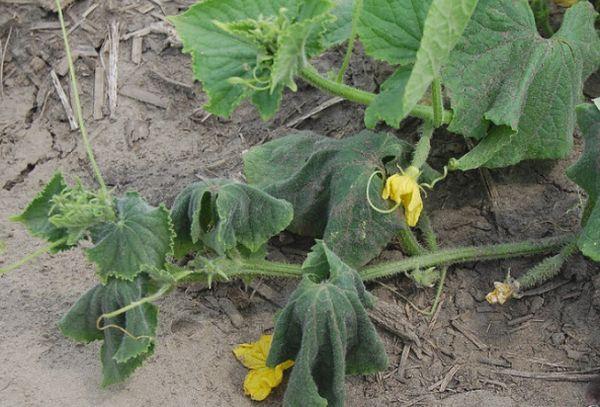
Detecting Fusarium wilt in its early stages is virtually impossible, as its symptoms appear on mature plants during active flowering. Fusarium wilt destroys the vascular system of the bushes. Darkened vessels appear on the stems and leaves. The basal collar and roots gradually begin to rot, the stem becomes thin, and the foliage turns yellow. Over time, infected plants wither and die.
Downy mildew of cucumbers
The spread of downy mildew is facilitated by pests that infest the above-ground parts of plants. The infestation results in light yellow, oily spots appearing on the foliage. Over time, the undersides of the leaves become covered with a blue coating, and the spots enlarge, causing the leaves to curl and dry out.
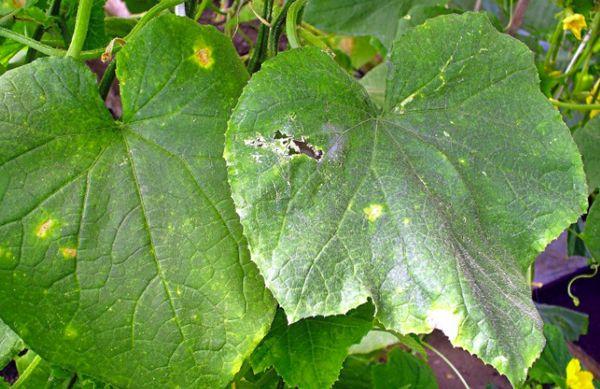
Leaf dieback slows fruit development and formation. If cucumbers aren't protected from disease in a timely manner, they will lose their flavor and juiciness.
Powdery mildew on cucumbers
Powdery mildew is spread by mycelium on leaves. Over time, the fungi grow, forming a white coating. Powdery mildew causes leaves to dry out and disrupts photosynthesis. Powdery mildew most often affects plants with soil containing high levels of nitrogen.
Cucumbers grown in warm climates with constant rainfall are especially vulnerable.
Mosaic on cucumbers
Mosaic is a viral disease that is unaffected by chemicals. The virus resides in living cells but can survive for several years in dried foliage and soil. Cucumbers affected by mosaic suffer tissue destruction, which disrupts fruiting and ultimately leads to plant death.

Root rot of cucumbers
Root rot causes the death of young seedlings grown in greenhouses. The key factor determining the level of yield loss is the timing of infection. The earlier the seedlings are infected, the greater the damage to cucumbers.
Initial symptoms of the disease begin to appear after transplanting the seedlings to their permanent location. The root collar turns brown, then black, the leaves gradually turn yellow and wither, and the ovaries die.
Cladosporiosis of cucumbers
Cladosporiosis actively attacks weakened crops. The disease is characterized by spotting on vegetables. If left untreated, the spotted areas will develop into gray cankers. When most of the fruit becomes covered in cankers, they become unfit for consumption. As a result, a significant portion of the yield is lost.
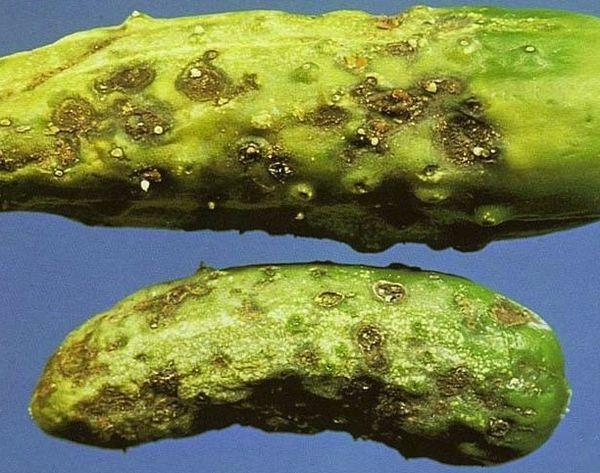
Cladosporiosis pathogens remain on plants due to inadequate disinfection and accumulation of plant debris on the soil. If crops are not sprayed with protective agents, the disease can destroy a large portion of the harvest within a few days.
Bacterial blight of cucumbers
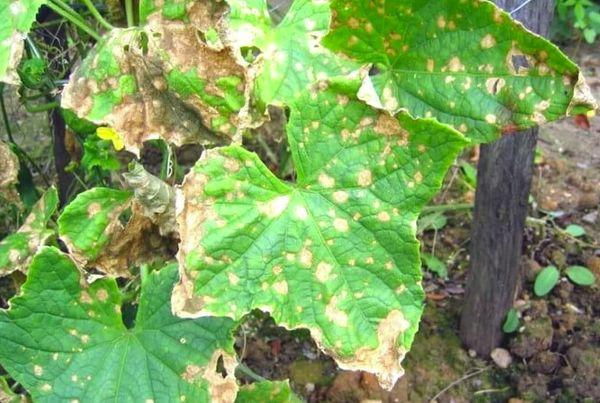
Bacterial blight develops due to high humidity. Affected vegetables lose their flavor, marketable appearance, and shelf life. Bacterial blight causes speckles to appear on the leaves. If left untreated, the oily spots will dry out, causing holes to develop in the center.
Bacteriosis is carried by pathogenic bacteria. The infection spreads through plant debris or seed material. The pathogens infect the cotyledons, which then spreads to the leaves.
Ascochytosis of cucumbers
The first signs of ascochyta blight can be detected on seedlings. As the seeds mature, spots appear on all parts of the seedlings, gradually increasing in size. If severe damage occurs, growth slows and leaves fall off. If ascochyta blight is not treated, a significant portion of the harvest can be lost.
Downy mildew
Downy mildew spreads in humid conditions, so infection often occurs after heavy rainfall. Green leaves affected by the disease gradually begin to wilt and wrinkle. Yellowing develops on the upper surface of the leaves, which eventually darken. The lack of protective treatment leads to drying out of plantings and the spread of the disease to neighboring plants.
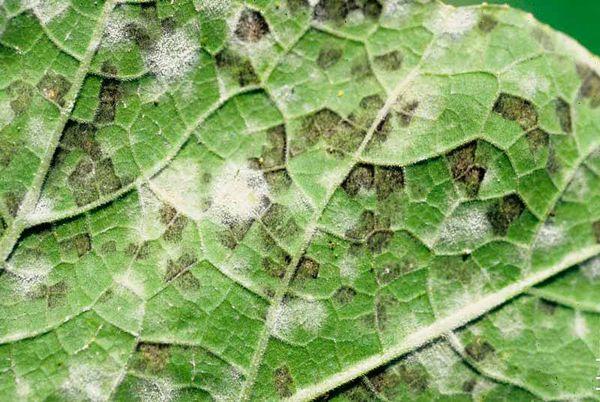
Downy mildew is also spread by harmful insects, including whiteflies and aphids. These pests spread zoospores, significantly increasing the affected area.
White rot
White rot spreads through the soil, where it penetrates the lower stems. The disease is most active during low temperatures and sudden fluctuations in temperature.
White rot causes the top and bottom of the plant to wilt. Affected parts lose color and become covered with a white coating. Dark fungal sclerotia form on the cut stem.
Rhizoctonia
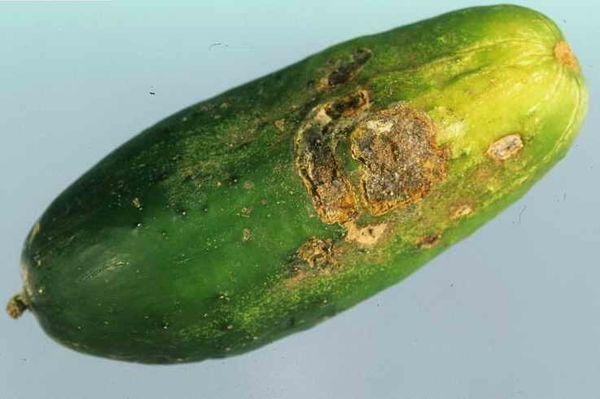
Rhizoctonia infestation of cucumbers can be detected early: some transplanted seedlings will fail to develop, and the seedlings will be twisted along the main vein. Mature infected plants appear stunted, and dark rot appears on the above-ground portions. Rhizoctonia most often affects cucumbers grown in open beds.
Wilting, or tracheomycosis
Cucumbers often wilt when grown in greenhouses. This disease is caused by damage to the vascular system, planting in dense soil, and inadequate fertilization. Tracheomycosis can be identified by the appearance of the leaves: they begin to turn yellow, curl, dry out, and fall off.
Cucumber necrosis
Leaf necrosis is an infection caused by nutrient deficiencies in the soil. Leaf tissue often dies due to a lack of manganese, phosphorus, and potassium. On plants affected by leaf necrosis, the leaves turn dark blue. If the affected leaves are not treated with protective agents, brown spots will appear on them, and the disease will spread to nearby plants.

Black mold, or "burn" of cucumber leaves
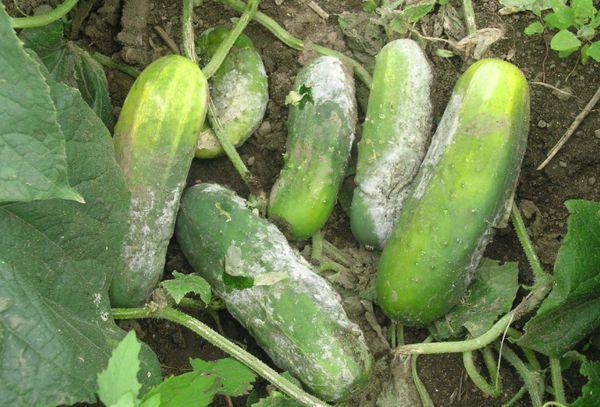
Older leaves of vegetable plants are more susceptible to burns. As black mold develops, spots with a coating appear on the leaf surface. As the disease progresses, the spots enlarge and cause tissue death. A brownish border remains where the dead tissue has fallen. Black mold spreads through infected seed material and plant debris left in the beds during the winter.
Cucumber mosaic virus
The mosaic virus spreads through seed, in the sap of infected plants during transplantation, and when healthy and diseased plants are grown next to each other. The virus penetrates tissue. Because the virus can persist in the soil and plant debris, regular protective treatments can protect cucumbers.
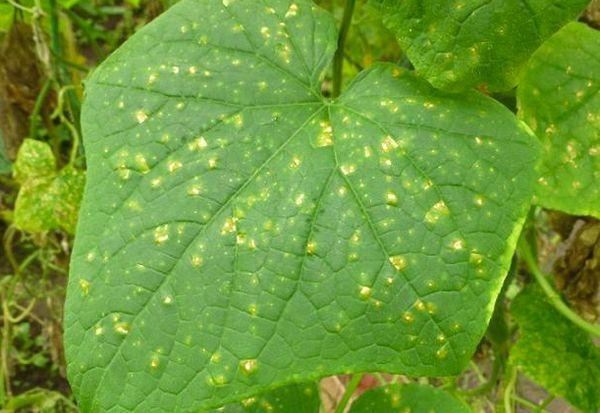
Green speckled cucumber mosaic
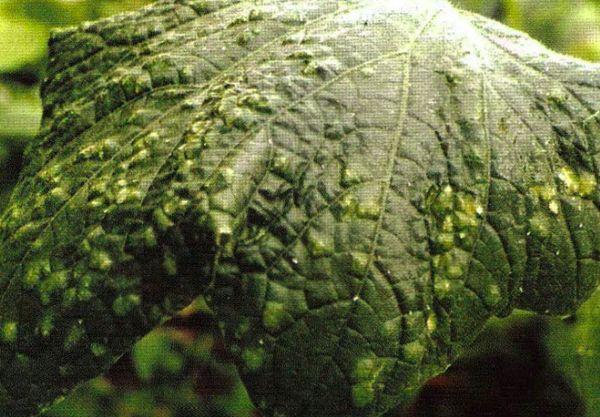
Speckled mosaic is typical for cucumbers grown in greenhouses. Affected plants develop poorly, the leaves become deformed and spotted. The fruits become small and develop a bitter taste. In rare cases, necrotic spots appear on the surface of the vegetables.
If the source of infection is seed material, the disease typically appears 2-3 weeks after planting in a greenhouse. If the source is soil or plant debris, signs of mottled mosaic disease may not be detected until at least a month after transplanting the seedlings into the ground.
Common cucumber mosaic
A form of common mosaic disease is common in greenhouse cucumbers. Signs of the disease include wrinkling of the leaves of young seedlings. As the disease progresses, the edges of the leaf blades curl, and spots appear on their surface. If left untreated, the plants will slow down in growth and the yield will be significantly reduced.
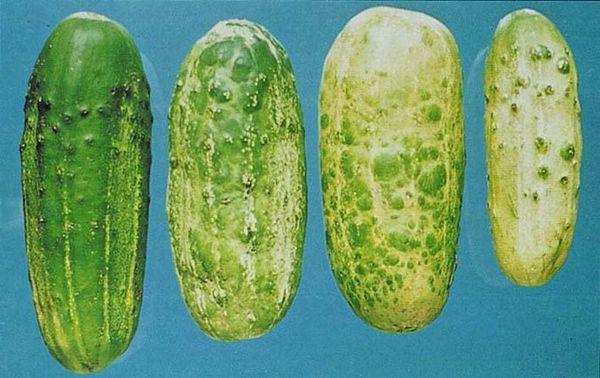
Chlorosis
The development of chlorosis can be detected by the formation of numerous yellow spots on the foliage. Over time, the areas between the veins also turn yellow. This color change is due to a lack of chlorophyll. This substance is not produced due to improper fertilization or pest attacks.
Leaf curl
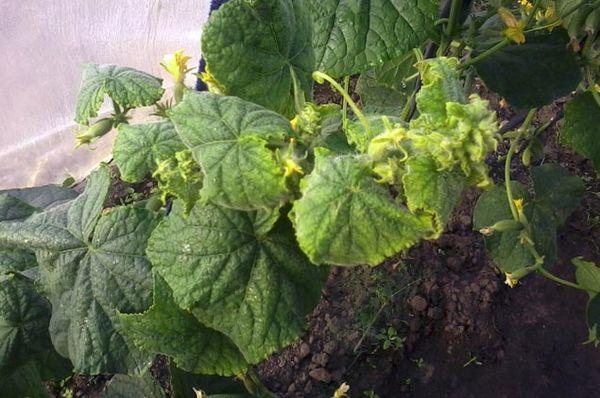
Fungal infection is the main cause of leaf curl. Leaf curl manifests itself as plant deformation, crooked shoots, and changes in the size of internodes. The disease progresses, resulting in the death of buds and the cessation of fruiting. The first symptoms can be seen in early spring, when the first leaves begin to emerge—a waxy coating forms on them, and after a while, they die.
How and what to treat cucumber bushes in open ground and greenhouse conditions
Depending on whether cucumbers are grown in the open ground or in a greenhouse, appropriate disease control methods must be used. Treatment also depends on the nature and progression of the infection.
Treatment of viral diseases
The primary measure for combating viral infections is spraying with protective agents. Effective substances include a low-concentration Bordeaux mixture, copper oxychloride, and the fungicide Abiga-Peak. It is also necessary to follow standard agricultural practices, apply sufficient fertilizer, and regularly inspect green spaces to detect symptoms of infection early.
Fighting bacterial diseases
Chemicals are rarely used to combat bacterial diseases, as they are ineffective. If bacteria spread through the blood vessels of cucumbers, pruning is necessary. Forming the plantings and pruning back to healthy tissue helps stop the disease from progressing. After each pruning, the plants are disinfected with an alcohol solution.


If bacterial infestation is severe, it's advisable to destroy the affected cucumbers to prevent the spread of the disease to neighboring plants. Regular weed removal, maintaining a favorable microclimate, and fertilizing are also necessary as a preventative measure.
Treatment of fungal infections of cucumbers
To combat fungal diseases, including Alternaria blight, an effective method is to treat cucumbers with a 1:2 solution of iodine and cool water. The plant stems are treated 10-15 cm from the soil surface. To eliminate symptoms of the disease, apply iodine every 3-4 days until the fungal spores are completely destroyed.
Cucumber pests and how to control them
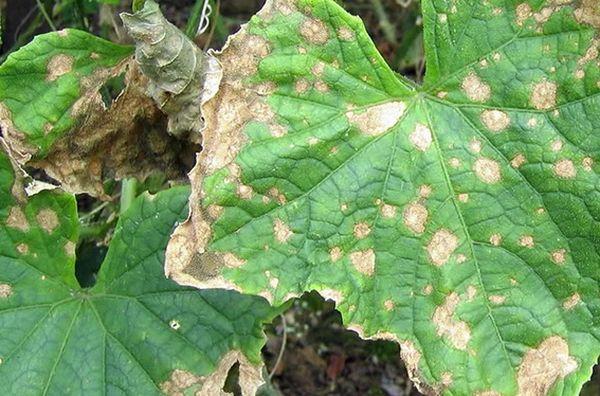
In addition to infections, pests can also reduce cucumber yields. To protect your plants, familiarize yourself with the pests and look at their appearance in pictures. This will help you identify the pests and begin combating them promptly.
Aphid
Detect aphids on cucumbers You can spot the pest visually—it's found in large numbers on plantings. These small, green pests can quickly damage leaves, ovaries, and inflorescences, leading to the cessation of fruiting. Aphids pose the greatest threat to young seedlings. The parasites secrete a sweet liquid that damages seedlings, prevents them from sprouting, and also attracts other insects.
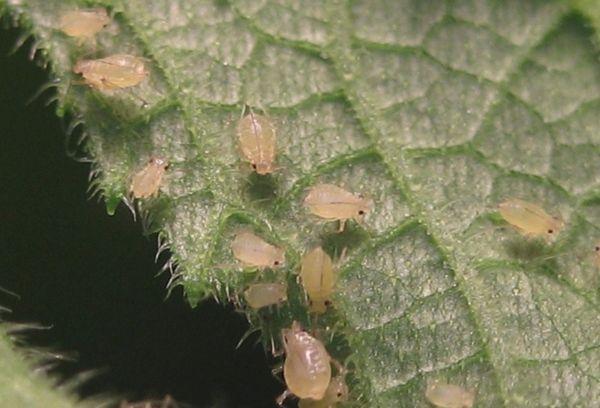
Immediately after detecting aphids, protective spraying should be carried out. The following are used to control aphids:
- infusion of onion peel;
- hydrogen peroxide solution;
- a mixture of soda and soap solution.
Whitefly
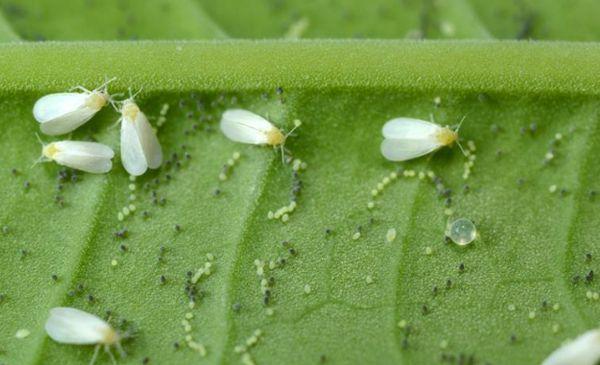
Once settled on cucumbers, whiteflies lay eggs and infest the plants themselves. Symptoms of infestation include:
- the appearance of white spots and sticky coating on the leaves;
- presence of larvae;
- large amounts of leaves falling;
- change in the original shape and color of the leaves.
An effective way to combat whiteflies is to treat them with brilliant green, dandelion infusion, and garlic solution. When growing cucumbers in greenhouses, you can use adhesive tape or pieces of cloth coated with honey.
Preventive maintenance work
Preventing the spread of diseases and pest infestations is possible through preventative measures. These include:
- Pre-sowing seed treatment. Since viruses can infect seeds, they must be disinfected and heat-treated before sowing.
- Hardening off. Before transplanting seedlings outdoors, they are periodically taken outside to allow for gradual adaptation to the new conditions. The time the seedlings remain outside should be gradually increased.
- Ensuring a favorable microclimate. To grow healthy cucumbers, it's necessary to control ambient temperature and humidity.
- Agricultural practices. Proper cucumber care is the primary disease prevention measure. To reduce the risk of plant damage, regular watering, loosening, weeding, and mulching are essential.
Preventative care doesn't guarantee healthy and proper cucumber growth, but it significantly reduces the likelihood of disease. Spending a little time caring for your vegetables can help prevent a number of complications.
Related posts:
 Why do cucumber leaves curl inward and what to do about it?
 Why cucumber leaves are drying out and what to do, how to treat them in a greenhouse and in the ground
 Description of unusual methods for planting and growing cucumbers
 How to care for cucumbers in open ground from planting to harvesting
 Reasons why cucumber leaves turn yellow and what to do, how to treat and feed them
 Description of the best varieties of Chinese cucumbers, planting, growing and care
 How to properly plant cucumbers in open ground with seeds, and at what depth
 Why are cucumber leaves turning yellow on the windowsill? What to do and how to treat them?