
Growing cucumbers has its own unique characteristics. This is due to the fact that the crop is capable of growing and developing in specific conditions. Many gardeners encounter the problem of yellow spots appearing on cucumber leaves and are unsure what to do. Control measures depend on the extent of the spots and the presence of additional symptoms.
How dangerous is yellowing leaves?
Yellowing can be caused by one or more factors. To determine why spots are appearing on seedlings or mature plants, it's necessary to analyze the plant's condition. Spots may be the result of disease, pests, or improper care.
Experienced gardeners warn that the leaves of the plant begin to turn yellow if the plant requires additional help.
Ignoring the fact that the leaves are turning yellow can lead to the development of the problem, and subsequently to the loss of one plant or part of the crop.
Causes of yellow spots on leaves
Yellowing can occur at any stage of the growing season. As the cucumber crop grows and develops, the list of causes that lead to spotting gradually expands.

The main factors that provoke the emergence of the problem are considered to be violation of care rules and external influences:
- Sunburn. This is an obvious cause, characterized by the appearance of dry, yellow spots. Sunburn is usually easy to recognize. Seedlings are often placed near windowsills, where they are likely to be exposed to direct sunlight. If the plant is in a garden bed, the cause is daytime watering. Moisture lingers on the leaves, causing scorch after evaporation.
- Insufficient light. This is the most common reason for lower leaves to turn yellow. Due to the plant's growth, they don't receive enough sunlight.
- Temperature fluctuations and low temperatures. Temperature has a significant impact on cucumbers. Low temperatures can cause extensive yellow-brown spots to appear.
- Nutrient deficiency in the soil. Leaves begin to develop spots during the period of active growth, color development, and fruit formation. They especially need additional nutrition.
- Improper watering. This leads to the formation of yellow spots, which eventually leads to the entire leaf turning yellow. Overwatering leads to root rot, which stunts the growth and development of the rest of the plant. Insufficient watering causes dehydration of plant parts, which then turn yellow. These parts gradually dry out.
- Damage to the root system. This can occur due to pests that interfere with root development, or due to rough handling of the roots during planting.
- Pest infestation. This becomes especially dangerous when pests are actively breeding. Infestations are indicated by yellow spots, which may become covered with brown spots, reddish veins, or other signs specific to the particular species.
- Cucumber diseases. Yellowing leaves are most often caused by fungal diseases, which can be difficult to treat.
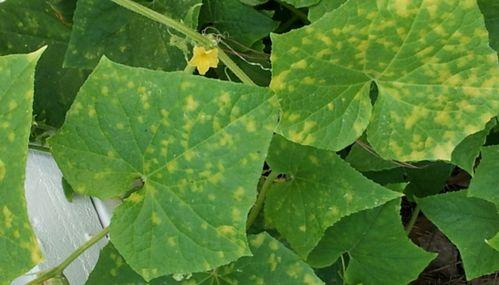
Lack of light
For this reason, discoloration occurs at the base of the foliage. If the growth is dense enough and there are no other symptoms, this symptom does not affect harvest yield. Damaged, dying parts should be carefully removed.
Advice! If the yellowing leaf problem affects seedlings, you should reconsider the planting system.
Incorrect watering
Disruption of root development leads to gradual wilting and yellowing of plant parts. To prevent this, follow these guidelines: water the soil several times a week, avoiding overwatering and drought.
Fungal diseases
The development of fungus on cucumbers is associated with several factors:
- defects in planting material that contributed to the development of fungus;
- spread of fungal microorganisms from neighboring crops by wind;
- presence of fungus in the soil.
Fusarium
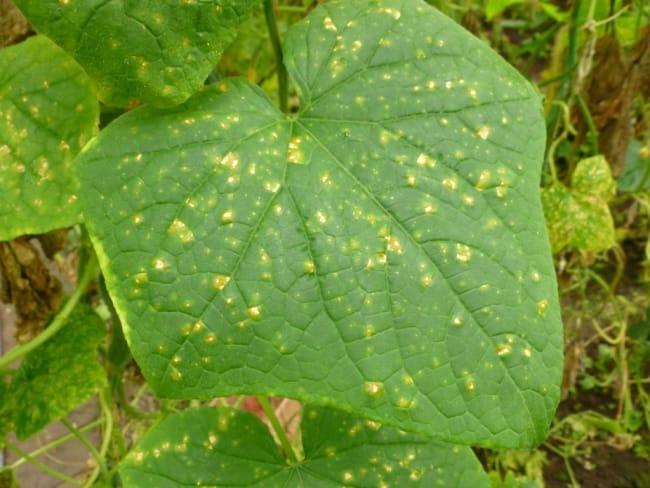
This is a disease that affects greenhouse crops. The main symptom is wilting of the leaves, accompanied by yellowing at the edges. The disease is dangerous because it spreads rapidly—plants can die within a few weeks without prompt treatment.
Root rot
This disease begins to affect the plant from below. The roots become rotted, unable to supply the stems with nutrients and unable to conduct moisture. This causes the foliage to wither and turn yellow. This disease is difficult to diagnose. If symptoms appear, stop watering, loosen the soil, and fertilize with tobacco leaves.
Cladosporiosis or brown spot
The fungus is recognized by the appearance of yellow and brown spots, and speckled lesions on the leaves. Favorable conditions for the disease's development include:
- temperature fluctuations;
- nighttime cold snap;
- the fall of a large amount of dew.
Pests
Parasitic insects cause a lot of trouble, and the fight against them is carried out throughout the entire growing season of cucumbers.
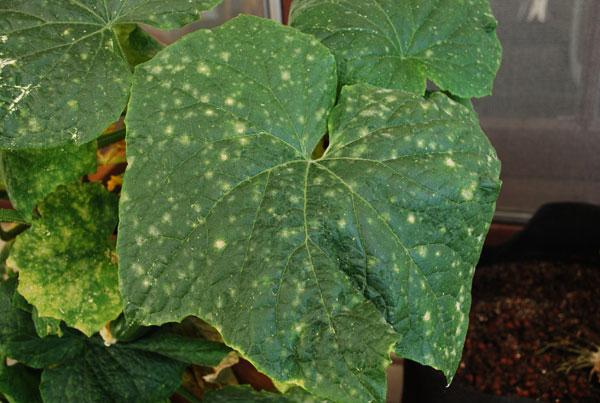
The most common pests of cucumber crops are:
- whitefly;
- spider mite.
The first signs of their infestation are yellowing and wilting of the leaf blades. Whiteflies are easily spotted on the inner surface of the leaf blades due to their white wings. Spider mites are detected by the secretion of a sticky white web. The mites themselves are very small and difficult to see, so it is recommended to protect plants by completely treating all adjacent bushes.
Fertilizer deficiency
Incorrect planning of fertilizing leads to wilting, curling and yellowing of leaf blades.
Information! During intensive growth, plants begin to experience a deficiency of magnesium, phosphorus, and potassium.
To correct the situation, experienced gardeners recommend applying complex fertilizers.
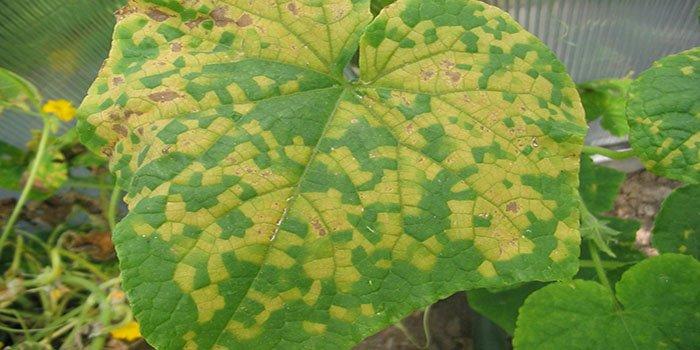
Mosaic virus
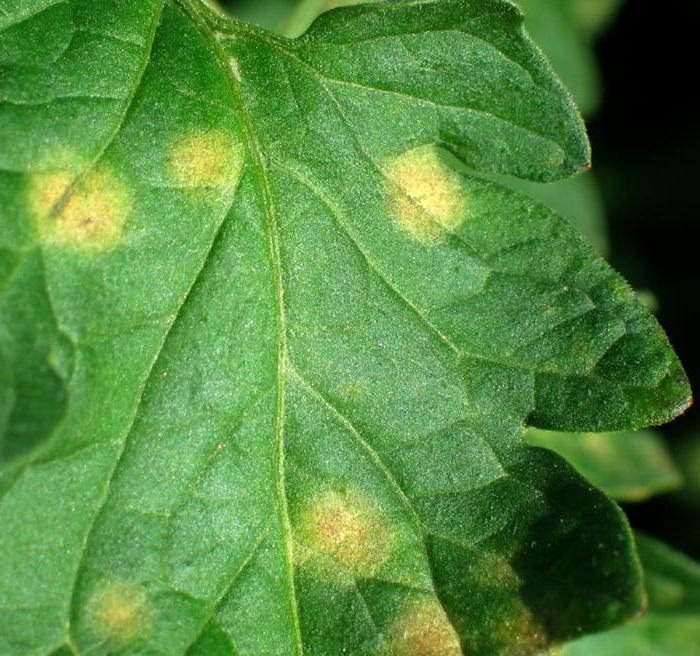
Cucumber mosaic virus is a unique disease. It develops regardless of proper care. For development to occur, cucumbers must experience temperature fluctuations over several days.
Greenhouse cucumbers are most often susceptible to the virus. Key symptoms:
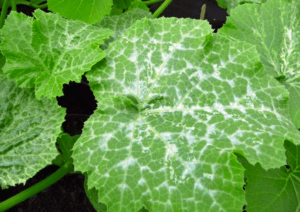
- marbled yellowing of the plates;
- twisting;
- shallowing;
- ovary shedding.
The virus cannot be cured and must be prevented through preventative measures.
Downy mildew
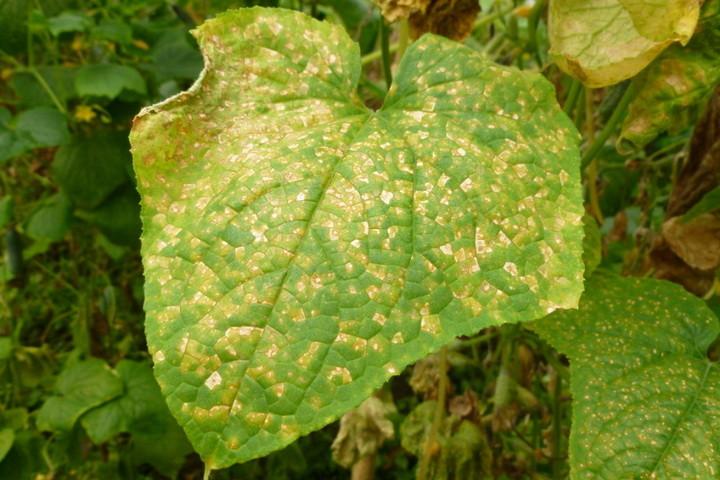
This is a fungal infection that develops due to non-compliance with watering rules, heavy rainfall, and temperature fluctuations.
The main difference between downy mildew and powdery mildew is the nature of the spots. With powdery mildew, they are brown, while with downy mildew, dry, yellow spots resembling burns form on the leaves.
Treatments for yellow spots
To eliminate yellow spots on cucumber leaves, it's important to correctly determine the cause. The main treatment methods are:
- Spraying the bushes with chemicals. We use Fitosporin, a new-generation, naturally derived fungicide. To spray, take 10 grams of powder and dilute it in 5 liters of water. Repeat the procedure after 10 days.
- A folk remedy for cucumbers is treating them with a solution of laundry soap. This solution is effective against aphids and spider mites.
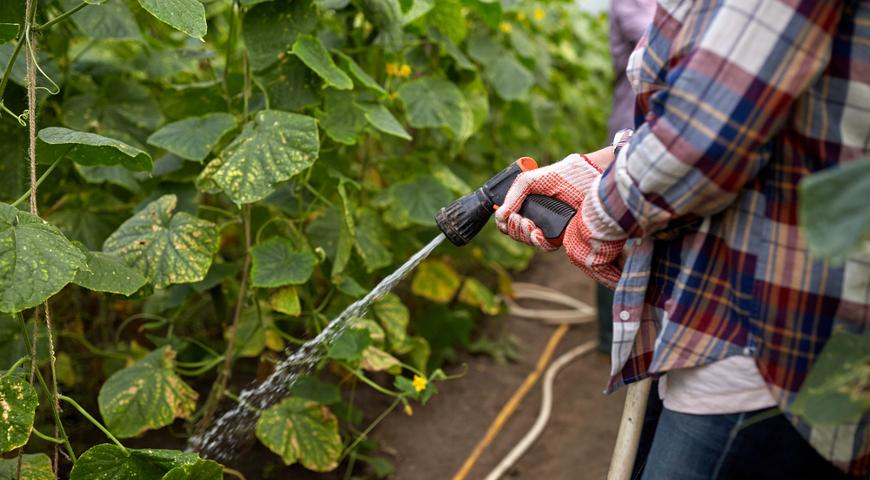
Fungal diseases are best prevented rather than treated. This is achieved by treating seeds, seedlings, and mature plants. Treating plants with a solution containing baking soda or laundry soap is also recommended as a preventative measure.
Information! If nutritional deficiencies are present, use complex fertilizers such as Tera Sol and Epin Extra.
How to prevent the disease from occurring
Proper crop care planning helps minimize the risk of yellowing. For cucumber growth and development, the following is essential:
- Annual change of location for planting seedlings.
- Regular and timely watering.
- Spraying with special agents to prevent the spread of fungus.
- Fertilizing and loosening the soil.
- Protection from temperature changes with covering material.
- Control over bush density, thinning.
- Systematic pruning of the lower layer, removal of fallen, damaged bushes.
Take a look Also
Following care instructions and promptly responding to plate discoloration will help eliminate potential causes and ensure a good cucumber harvest.
Related posts:
 Description of unusual methods for planting and growing cucumbers
 Why cucumber leaves are drying out and what to do, how to treat them in a greenhouse and in the ground
 Description of the best varieties of Chinese cucumbers, planting, growing and care
 How to make a cucumber trellis with your own hands from scrap materials
 How to care for cucumbers in open ground from planting to harvesting
 Why do cucumber leaves curl inward and what to do about it?
 How to properly plant cucumbers in open ground with seeds, and at what depth
 Types of fungicides for cucumbers in a greenhouse and instructions for use